

Chernobyl Today: What It Looks Like Now and Is It Safe?
When you hear the word “Chernobyl,” your brain probably jumps straight to glowing green sludge, mutated animals, and absolute devastation. Pop culture has done a massive number on our perception of this place. HBO’s hit mini-series definitely didn’t help dial back the dramatics.
But what actually happens when humans abandon a massive chunk of land for forty years? The answer will probably surprise you. Reality is vastly stranger — and in many ways, far more beautiful — than fiction. Nature has quietly staged an absolute masterclass in resilience.
Before you pack your bags for a dark tourism adventure, you need the real facts. The landscape has drastically shifted over the last few years. The ongoing war in Ukraine has turned this historical tragedy into a modern military flashpoint. Let’s dive into exactly what the Exclusion Zone looks like right now for history buffs and curious travelers.
Quick read
- Tourism is paused: The Exclusion Zone is completely closed to regular tourists right now due to the ongoing Russo-Ukrainian War.
- Nature is winning: Wolves, bears, lynx, and rare birds are thriving in what is now Europe’s third-largest accidental nature reserve.
- Radiation is highly localized: A typical two-day visit (when allowed) exposes you to less radiation than a long-haul flight, but hotspots remain deadly.
- New dangers exist: The massive arch covering the ruined reactor recently sustained drone damage, proving the site is still highly vulnerable.
- The 40-year mark: April 2026 officially marked four decades since the worst nuclear disaster in human history.
40 Years Since the Blast

April 1986 changed the world forever. Reactor number four at the Chernobyl Nuclear Power Plant violently exploded during a botched safety test. Radioactive fallout blanketed a massive swath of Europe.
Soviet authorities quickly evacuated roughly 115,000 people from the immediate vicinity. They established a 1,000-square-mile perimeter known as the Chernobyl Exclusion Zone (CEZ). Residents were told they would return in a few days. They never did.
Fast forward to 2026. Four whole decades have passed. The crumbling Soviet architecture of Pripyat now sits in eerie silence. Trees burst through the concrete floors of forgotten gymnasiums. Rusted bumper cars remain frozen in time at a local amusement park that never officially opened. It feels like stepping straight into a post-apocalyptic movie set.
War in Ukraine

You simply cannot talk about this region today without discussing the current geopolitical nightmare. Visiting Chernobyl was actually an exploding industry before 2022. Nearly 100,000 tourists flocked to the zone in 2019 to snap photos in front of abandoned Ferris wheels.
That industry ground to an absolute halt in February 2022. Russian forces crossed the border from Belarus and immediately occupied the power plant. The situation escalated rapidly.
Soldiers actually dug military trenches straight into the dirt of the highly toxic Red Forest. Why does that matter? Because the Red Forest is arguably the most radioactively contaminated outdoor space on the entire planet. Disturbing that soil kicked up decades-old radioactive dust. Reports from organizations like Greenpeace later confirmed that radiation levels in those trench areas spiked wildly.
The occupation was relatively short-lived, but the damage lingered. Looters stripped research laboratories of their equipment. Just recently, in early 2025, a Russian “Shahed” drone actually struck the New Safe Confinement. This $1.5 billion mega-arch was built to safely seal the ruined reactor for the next century. A drone hit poking holes in it is the last thing anyone wanted to deal with. Because of these persistent threats, the Ukrainian government keeps the zone locked down tight.
Accidental Sanctuary

Here is where the story pivots from bleak to fascinating. Without humans around to chop down trees, hunt, or pave over fields, the local ecosystem went into absolute overdrive.
Scientists and researchers from the United Nations Environment Programme (UNEP) have documented an incredible explosion of biodiversity. The CEZ is now effectively a massive, unmanaged wildlife refuge.
Are the animals glowing in the dark? No. Do they have extra heads? Absolutely not.
Instead, you will find thriving populations of Eurasian lynx, brown bears, and European bison. Wild boar populations multiplied rapidly in the 1990s. Wolf numbers in the CEZ are currently estimated to be seven times higher than in comparable nature reserves.
One of the most incredible success stories involves Przewalski’s horses. Conservationists released a small herd into the zone back in 1998 as a wild experiment. They have flourished incredibly well. The local population now exceeds 150 wild horses roaming the radioactive plains.
How Are Animals Surviving the Radiation?
This is the million-dollar question. Chronic radiation exposure definitely causes genetic mutations and lowers life expectancy in some local species. Birds native to the hottest zones often have smaller brains and abnormal feather patterns.
However, the complete lack of human interference offsets these negative health impacts. It turns out that getting shot by a hunter or run over by a tractor is significantly worse for an animal’s survival odds than low-level gamma radiation. Nature simply adapts. Biologists view the entire area as an unprecedented natural laboratory for studying evolutionary resilience.
The Dogs of Chernobyl
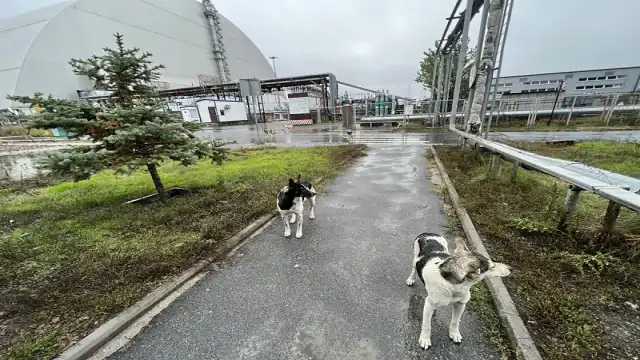
When families evacuated in 1986, soldiers forced them to leave their beloved pets behind. It was a heartbreaking reality. Many of those abandoned dogs somehow survived in the freezing woods. They bred, scavenged, and beat the astronomical odds.
Today, hundreds of their descendants roam the power plant grounds. Workers and guards often feed them. A massive genetic study recently proved these feral dogs are genetically distinct from any other dog population in the world. Generations of isolation and localized radiation exposure have literally altered their DNA. Volunteer groups occasionally enter the safer zones to vaccinate and spay these resilient mutts, ensuring the population doesn’t spiral out of control. It serves as a strangely heartwarming sliver of life amid so much devastation.
Remembering the Liquidators

We cannot discuss this landscape without honoring the brave people who saved Europe. More than 600,000 Soviet workers — dubbed “liquidators” — were sent straight into the radioactive meat grinder. Miners tunneled under the melting reactor. Firefighters fought invisible flames on the crumbling roof.
Many wore crude lead aprons and had only a few seconds to shovel radioactive debris before receiving a lifetime maximum dose of radiation. Thousands lost their lives shortly after. Countless others suffered lifelong health defects. Their staggering sacrifice is the only reason the surrounding countries remained habitable. When you look at the overgrown ruins today, you are looking at a battlefield where unarmed men fought a silent, deadly enemy.
So, Is Chernobyl Actually Safe?
Safety is totally relative when discussing a nuclear wasteland. If you define “safe” as setting up a permanent homestead, growing vegetables in the dirt, and drinking from the local river, then absolutely not. The ground remains heavily contaminated with Strontium-90 and Cesium-137. These nasty isotopes have half-lives of around 30 years, meaning they are only just now reaching half their original potency.
But what about a quick weekend visit? Surprisingly, yes.
When official tours were running, a standard two-day trip exposed a visitor to about 5 to 7 micro-Sieverts of radiation. That is roughly equivalent to the cosmic radiation you absorb during a typical trans-Atlantic flight. It is effectively harmless.
Tour guides operated under extremely strict safety protocols. You had to wear long sleeves and sturdy boots. Setting anything on the ground was strictly forbidden. Eating outside? Not a chance. You had to pass through rigorous radiation dosimeter scanners upon exiting the inner 10-kilometer zone. If your shoes picked up an unlucky microscopic particle of radioactive dust, you left them behind.
The Hidden Hotspots
The true danger lies in the invisible pockets of intense radiation. A piece of metal sitting in a field might emit lethal doses, while the patch of grass three feet away is perfectly normal.
The basement of the Jupiter factory in Pripyat, where liquidators dumped their contaminated firefighting gear, remains incredibly toxic. Going rogue and wandering off the paved paths is a surefire way to accidentally step into a hot zone. This is exactly why wandering around without a licensed, dosimeter-carrying guide was totally illegal even before the war.
The Sarcophagus and The Mega-Arch
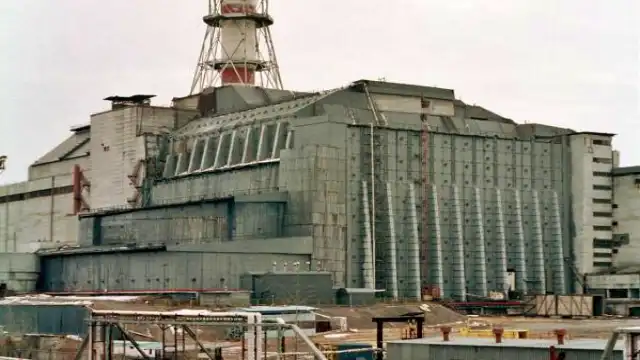
Containing the fiery core was an absolute engineering nightmare. Soviet crews hastily built a concrete and steel shell over the exposed reactor in just six months. They called it the Sarcophagus.
By the early 2000s, that hurried structure began to fail. Water leaked through the roof. Rust ate away at the massive support beams. If it collapsed, a brand new cloud of radioactive dust would have erupted into the atmosphere.
The international community pooled together $1.5 billion to solve the problem. They constructed the New Safe Confinement. This colossal, sliding metal arch is taller than the Statue of Liberty. In 2016, engineers slid it carefully over the old Sarcophagus to seal the reactor for another 100 years.
But as mentioned earlier, modern warfare respects no boundaries. The 2025 Russian drone strike against this very structure proved that even our greatest engineering feats are highly vulnerable to human conflict. You literally cannot tell radioactivity to stop being radioactive just because a war breaks out.

What Does the Ground Look Like Today?
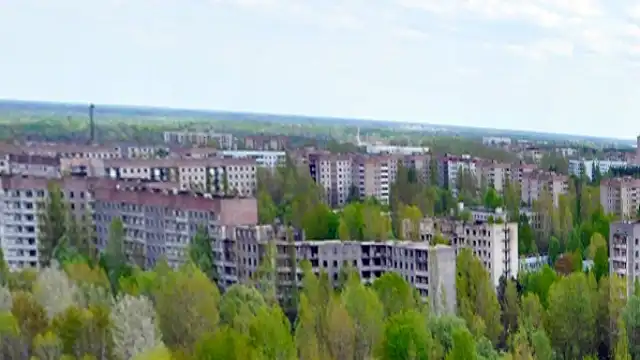
If you could magically bypass the military checkpoints and parachute into Pripyat today, the sheer scale of the abandonment would hit you hard.
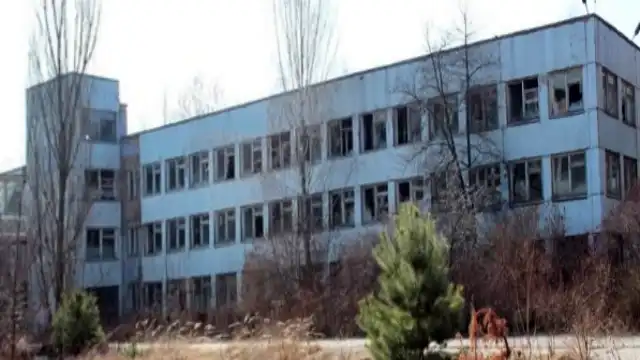
Concrete Soviet-era apartment blocks are slowly losing their battle against the elements. Roofs are caving in. Water damage has rotted away the floorboards of the famous cultural center. Thick, unruly forests have reclaimed the wide boulevards where military parades once marched.
Inside the Kopachi kindergarten, rusted metal beds still hold decaying dolls left behind by panicked families. Paint peels off the walls in massive sheets. The silence is profound. The only sounds you hear are the wind rushing through the broken glass and the occasional call of a wild bird. It stands as a chilling monument to human hubris.
Will Tourism Ever Return?
Wanderlust never really dies. People are naturally drawn to places of profound tragedy. Dark tourism provides a visceral connection to history that no textbook can ever replicate.
Right now, the priority is survival and military defense. Tour operators have pivoted to offering virtual tours or day trips to the Kursk Nuclear Power Plant across the border. But the Ukrainian government knows the immense value of this site. Before the 2022 invasion, President Volodymyr Zelensky signed decrees aiming to turn the CEZ into a major point of economic growth and international tourism.
Once the war eventually ends, officials fully intend to reopen the gates. The zone will likely become a global symbol of dual survival — enduring both a nuclear holocaust and a modern military invasion.
Reality check
Chernobyl remains a massive, glowing paradox. It is simultaneously a monument to catastrophic failure and a beacon of natural recovery.
We tried to harness the power of the atom, failed spectacularly, and poisoned a massive chunk of the earth. Yet, the moment we stepped away, the planet started healing itself. The trees grew back. The wolves returned. The earth simply swallowed our mistakes.
While you cannot physically walk the cracked streets of Pripyat today, the lessons of this place remain incredibly vital. The drone strikes on the containment arch remind us that our nuclear legacy is deeply fragile. We don’t just leave these massive problems in the past. We manage them every single day.
What do you think about the incredible return of wildlife to the Exclusion Zone? Drop your thoughts in the comments below! If you found this deep dive fascinating, share it with a friend who loves history, and make sure to subscribe to our newsletter for more incredible updates from around the globe.

