

The Loch Ness Monster Eel Theory: What the DNA Results Show
In 2019, a massive genetic study spilled the tea on exactly what lurks below. A team led by Professor Neil Gemmell of the University of Otago didn’t rely on blurry photos or shaky eyewitness accounts. They used cutting-edge genetics to test the water itself. Their findings shattered decades of wild theories.
Instead of a prehistoric beast, their data points to something way more grounded, yet incredibly fascinating: the giant eel theory.
Let’s dive into exactly what the Loch Ness Monster DNA results revealed, and why science thinks Nessie might just be a very slippery fish.
At a glance
- No reptiles here: The study found absolutely zero evidence of plesiosaurs or dinosaur DNA.
- Giant fish ruled out: Catfish, sturgeon, and Greenland sharks are officially off the suspect list.
- Eels dominate the loch: The water is absolutely packed with European eel (Anguilla anguilla) DNA.
- The new leading theory: The sheer volume of genetic material suggests that large eels might be responsible for many historical “Nessie” sightings.
The eDNA Hunt: How Science Swept Loch Ness
Let’s talk about the science first. How exactly do you “test” 7.4 cubic kilometers of freezing water? You look for eDNA.
What is eDNA Anyway?
Think of environmental DNA (eDNA) as an invisible biological fingerprint. Every living creature leaves behind traces of itself as it moves through its environment. Fish shed scales. Mammals leave behind skin cells, hair, and waste. All of this microscopic biological material floats around in the water.
Scientists can literally scoop up a bottle of lake water, sequence the genetic material inside, and match it against a massive global database of animal DNA. It gives researchers a complete inventory of exactly what lives in that ecosystem.
Prof. Gemmell’s team collected 250 water samples from different depths all across Loch Ness. They wanted to build a complete biological picture. If a prehistoric beast was splashing around down there, its genetic code would inevitably show up in the test tubes.

Busting the Jurassic Myth: No Dinosaurs Allowed

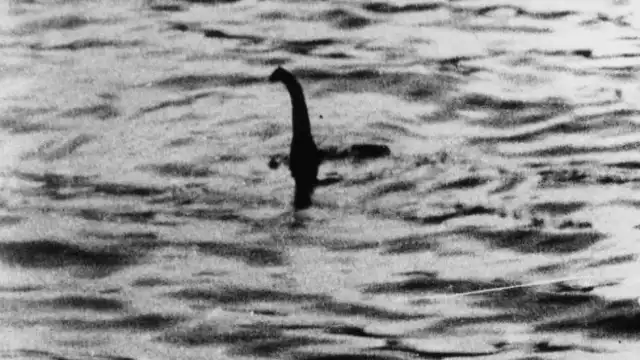
For decades, the most popular Nessie theory featured a plesiosaur. You know the image. A massive body with flippers and a long, graceful neck extending out of the water. It makes for a fantastic story. Fans argued that a small family of these prehistoric marine reptiles somehow survived extinction and got trapped in the Scottish Highlands.
The DNA results crushed this dream.
Gemmell’s team found absolutely no reptile DNA. Zero. They also tested for other massive creatures that people frequently misidentify as monsters. Some folks thought Nessie might be a giant catfish introduced for sport fishing. Others guessed it was a massive sturgeon or a rogue Greenland shark that wandered in from the ocean.
The water tests confirmed that none of these animals live in Loch Ness. The data wiped out almost every popular cryptid theory in one brutal sweep.
Enter the Giant Eel Theory
So, what did the scientists find?
Eels. So many eels.
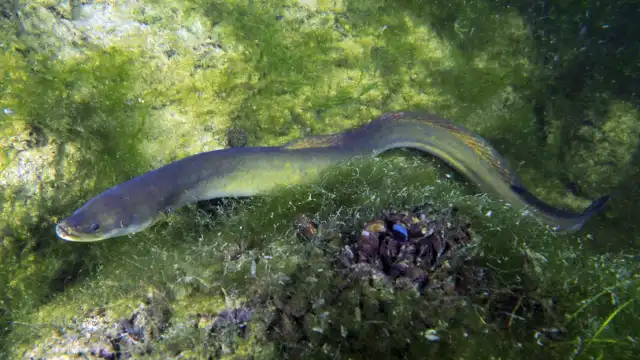
The researchers detected an astonishing amount of European eel DNA. They found it at almost every single location they sampled, from the sunlit surface all the way down to the dark, freezing depths.

This discovery breathed new life into an older, almost forgotten idea. Back in the 1930s, some researchers suggested that sightings of a long, dark creature undulating through the water were simply misidentified eels. Eels have a very distinct, serpent-like way of swimming. If you spot one near the surface, its long body rolling through the waves could easily look like the humps of a monster.
Back in 2007, a man named Gordon Holmes shot a famous video showing a dark, torpedo-like shape cruising across the surface of the loch. At the time, it caused a massive media frenzy. When you watch that footage through the lens of the eel hypothesis, it suddenly makes perfect sense. A large eel swimming just below the surface moves exactly like the creature in Holmes’ video.
Could a “Monster” Just Be a Freakishly Large Eel?
Here is the catch. European eels usually only grow to about 1 to 1.5 meters (3 to 5 feet) long. That hardly qualifies as a terrifying monster. Could a freakishly large eel really exist?
Prof. Gemmell admitted that their eDNA data couldn’t measure the physical size of the animals, only their presence. However, the sheer volume of eel genetic material made him pause. He noted that natural variation and genetic mutations happen all the time in biology. A massive eel, growing far beyond its normal limits, is theoretically possible.
European eels actually have one of the wildest lifecycles on the planet. They begin their lives thousands of miles away in the Sargasso Sea, near the Bahamas. These tiny glass eels drift across the Atlantic Ocean on currents for years. Eventually, they reach the coast of Europe and swim up rivers. Many navigate up the River Ness and settle in the deep waters of the loch. Once they mature, they migrate all the way back to the Sargasso Sea to breed.
With such a massive population funneling into Loch Ness, the odds of a few genetic outliers growing to unusual sizes increase.
The Math Behind the Monster: Are 6-Meter Eels Real?
Let’s get realistic about the math. If Nessie is an eel, she has to be absolutely huge to match the famous eyewitness accounts. Some historical sightings describe a creature up to 20 feet (6 meters) long.
In 2023, data scientist Floe Foxon published a statistical analysis in JMIRx Bio testing this exact idea. Foxon crunched the numbers on European eel populations, lake biomass, and standard growth rates.

The results? Finding a 1-meter eel in Loch Ness carries about a 1 in 50,000 chance. Given the estimated fish biomass in the loch, having a few 1-meter eels swimming around is perfectly reasonable. They definitely exist.
But what about a 6-meter monster eel? Foxon found that the mathematical probability is essentially zero. Eels simply do not grow that large. The biology just doesn’t support it. So while an unusually thick, 4-foot eel thrashing at the surface might trick a tourist’s eye, a true prehistoric-sized monster eel is scientifically off the table.
Why We Still Believe in Nessie
If science says the Loch Ness Monster is likely just a large eel — or maybe a floating log, a boat wake, or a stray deer — why do people still flock to Scotland hoping to see her?
Psychology plays a massive role. We desperately want to believe in the unknown. When you stand on the shores of Loch Ness, the water is black, cold, and intimidating. The sheer physical scale of the loch makes anything feel possible.
Plus, human memory is wildly unreliable. If you visit Scotland expecting to see a monster, your brain will try to give you one. A boat wake hitting a shadow suddenly becomes a scaly back. A diving bird looks like a prehistoric head. A 4-foot eel thrashing near the surface transforms into a legendary beast in the blink of an eye.
Keep the Mystery Alive
Science didn’t kill the magic of Loch Ness. It just shifted the focus. Knowing that this massive, ancient body of water is teeming with serpent-like eels adds its own kind of creepy, biological wonder. We might not have a Jurassic dinosaur, but we have an incredibly complex, thriving ecosystem hiding just beneath the surface.
What do you think? Does the giant eel theory ruin the fun, or does it make the legend feel more grounded and real? Drop a comment below, or share this article with your favorite cryptid-loving friend. Let’s keep the mystery alive!

