

The Pangboche Yeti Hand: History, DNA Results, and the True Story
The local monks show you something entirely impossible. It is a massive, mummified, blackened hand. For centuries, these villagers claimed this terrifying artifact belonged to an actual Yeti.
Would you believe them? Would you try to steal it?
The saga of the Pangboche hand remains one of the wildest chapters in the history of cryptozoology. It features a billionaire oil tycoon, a daring mountain heist, a massive Hollywood movie star, and a final scientific verdict that took over fifty years to uncover.
If you grew up watching late-night documentaries about the Abominable Snowman, you probably heard whispers about this legendary relic. For decades, it stood as the absolute best physical evidence that a giant, undiscovered primate stalked the snowy mountains of Nepal. But modern science has a funny way of ruining good ghost stories.
Here is the completely unbelievable true story of the Pangboche hand, and exactly what those modern Yeti DNA results finally revealed.
At a glance
- The Relic: A Buddhist monastery in Pangboche, Nepal, guarded a skeletal hand and skullcap for generations, believing them to be the remains of a Yeti.
- The Heist: In 1958, an explorer secretly cut off one of the Yeti fingers and wired a dried human finger in its place to fool the monks.
- The Hollywood Connection: Legendary actor Jimmy Stewart and his wife smuggled the stolen finger out of India by hiding it inside a lingerie case.
- The DNA Verdict: Advanced genetic testing in 2011 definitively proved the famous Pangboche finger was 100% human.
The Sacred Legend of the Pangboche Monastery
To understand why this artifact matters, you have to understand where it came from. Pangboche sits at an elevation of roughly 13,000 feet. It is the highest permanent settlement in the Khumbu valley of Nepal. The environment is brutal, isolating, and deeply spiritual.
According to local Sherpa folklore, a revered monk named Lama Sangwa Dorje retreated to a high mountain cave centuries ago to meditate. He didn’t survive up there alone. A wild Yeti supposedly visited the holy man, bringing him fresh water, food, and fuel for his fire. The beast eventually became his devoted Buddhist disciple.
When the creature eventually died, Sangwa Dorje collected its hand and scalp. He brought them back to the village. The monks housed these items inside the Pangboche temple, treating them as highly sacred relics. They believed the remains brought good luck, fertility, and protection to the village.
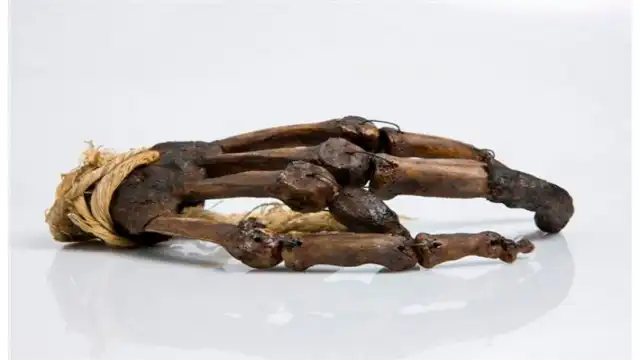
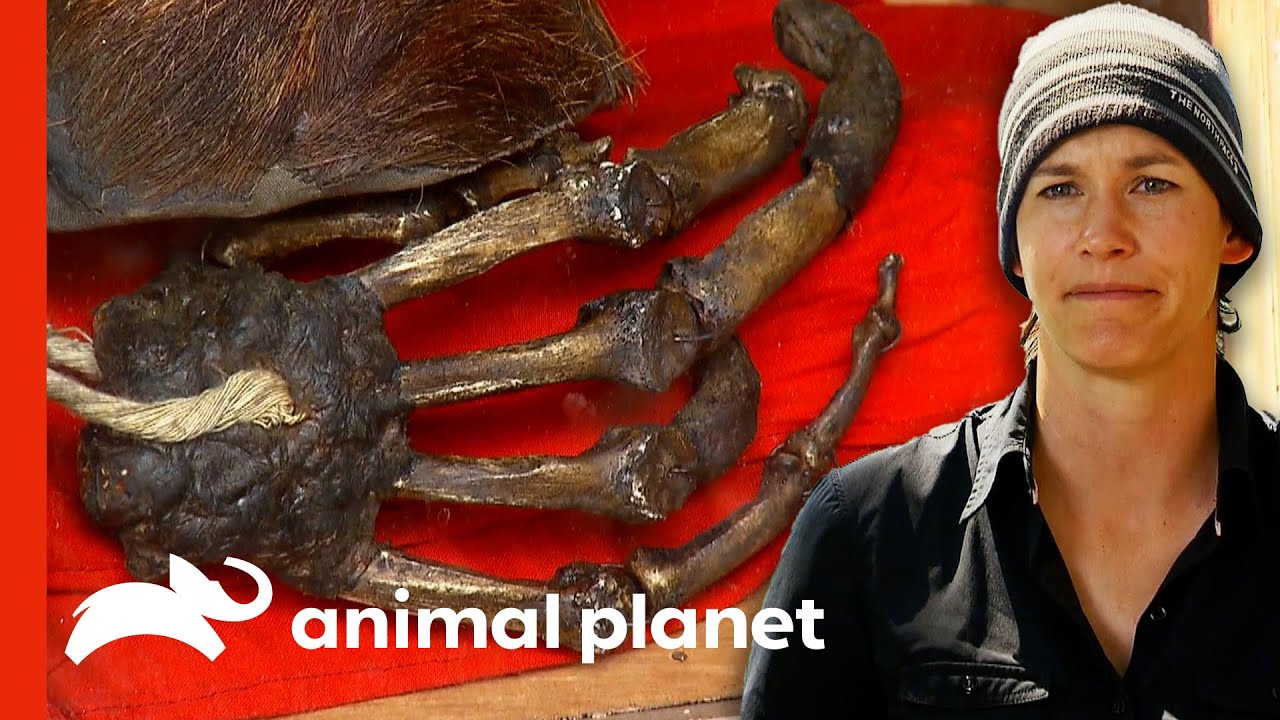
Western explorers didn’t even know the hand existed until the 1950s. When they finally laid eyes on it, they were stunned. The hand was huge. It looked oily from decades of exposure to temple candles. The skin was crusted and black. The fingers were deeply hooked and curled inward, sporting long, frightening nails.
Naturally, the West wanted to study it. The monks flatly refused. They believed removing the sacred object would invite disaster down upon their homes.
The Billionaire, the Explorer, and the Bone Swap
(If you want to see exactly what the Pangboche monastery looks like today, check out this incredible footage of investigators exploring the high-altitude temple.)
Enter Tom Slick. He was a wildly wealthy Texas oil millionaire with a massive obsession for the unknown. Slick funded several high-profile expeditions searching for the Yeti during the late 1950s.
During one of these trips in 1957, an Irish-born explorer named Peter Byrne actually viewed the relic. Byrne immediately cabled Slick and a London-based primatologist named Professor William Osman Hill. They wanted that hand. Since the monks refused to sell it, the wealthy backers hatched an incredibly shady, highly illegal plan.
Professor Hill gave Byrne a dried human hand. He told the explorer to go back to the monastery and make a trade.
In 1958, Byrne trekked back up the mountain. He negotiated privately with the temple custodian. The details are still murky. Some accounts claim Byrne got the monks drunk. Byrne himself later claimed he simply paid a “donation” of 10,000 rupees (about $160 today). Either way, the deal was struck.
Byrne took a knife and sliced the index finger right off the Yeti hand. He then took a finger from his decoy human hand and literally wired it onto the relic. He painted the wire with iodine to hide the sabotage. The monks kept their slightly modified sacred artifact, and Byrne walked away with a piece of cryptozoological history in his pocket.
Jimmy Stewart’s Secret Smuggling Run

Stealing a cultural artifact from a remote temple is one thing. Smuggling it across international borders is an entirely different nightmare.
Byrne hiked back into India, but he faced a major problem. Indian customs officials were notoriously strict. If they caught him with a severed, mummified finger in his luggage, he was going straight to a very unpleasant prison. He desperately needed a mule.
Tom Slick had friends in extremely high places. He reached out to Hollywood royalty: James Stewart. Yes, the wholesome star of It’s a Wonderful Life and Vertigo.
Stewart and his wife, Gloria, just happened to be vacationing at the Grand Hotel in Calcutta following a tiger hunting trip. Byrne met the famous couple at their hotel. He explained the absurd situation. Amazingly, the Stewarts agreed to help.
Gloria Stewart took the stolen Yeti finger and stuffed it deep inside her personal lingerie case. When the couple arrived at Heathrow Airport in London, the plan worked flawlessly. Customs officers took one look at the beloved Hollywood icon and his wife’s underwear bag and waved them right through.
The stolen finger had successfully arrived in the name of science.
Decades of Mystery and a Black Market Theft
Professor Hill finally got his hands on the prize. He studied the finger extensively. His initial conclusion? It was definitely hominid. Later in 1960, he confidently announced that the bone structure closely matched a Neanderthal.

This sent shockwaves through the scientific community. Could an ancient human cousin actually be surviving in the remote Himalayas?
Unfortunately, the momentum died quickly. Hill’s massive collection of specimens wasn’t well organized. When he passed away, his items were bequeathed to the Royal College of Surgeons in London. The famous Yeti finger was tossed into a storage box and largely forgotten.
Meanwhile, back in the United States, an anthropologist named George Agogino had quietly retained a small tissue sample from the original Slick expedition. In 1991, the popular television show Unsolved Mysteries got wind of this. They funded a basic DNA test on Agogino’s sample. The primitive 1990s technology couldn’t provide a definitive answer. The lab simply concluded the tissue was “near human.”
The television broadcast made the Pangboche monastery world-famous. Tourists flooded the tiny village to see the legendary beast’s hand.
Then, disaster struck.
In the late 1990s, thieves broke into the temple. They didn’t just take a finger this time. They stole the entire Pangboche hand and the accompanying Yeti skullcap. The artifacts vanished into the shadowy world of black-market antiquities. They have never been seen since. The monks were absolutely devastated. Their sacred protector was gone forever.
The 2011 Yeti DNA Results Explained
While the original hand remained missing, the smuggled finger was still sitting in London. In 2008, curators at the Hunterian Museum were digging through dusty archives. They opened an old box and found a blackened, curled digit with a handwritten note labeling it a “Yeti finger.”
By 2011, genetic technology had advanced lightyears beyond the primitive tests used in the 90s. The BBC requested permission to finally solve the mystery once and for all. The Royal Zoological Society of Scotland agreed to take the case.
Dr. Rob Ogden and his team went to work. How exactly do you test a relic like this?
Think of DNA like a massive biological barcode. When an animal dies, that barcode slowly breaks down into tiny, degraded fragments. Scientists extract these broken pieces of genetic material, clean them, and use chemicals to rebuild the sequence. Once they have a readable barcode, they plug it into GenBank. This is a massive, global database containing the DNA of thousands of known animals and human populations.
If the finger belonged to an unknown, giant primate, the computer would spit back an error. It wouldn’t match anything on record.
So, what did the results show?

Dr. Ogden didn’t mince his words. “Human was what we were expecting, and human is what we got,” he announced.
The Yeti DNA results showed a massive, undeniable match to existing human DNA sequences. Specifically, the genetic markers aligned perfectly with human populations living in China and the surrounding Asian regions.
It wasn’t a Neanderthal. It wasn’t an undiscovered ape. The sacred Pangboche hand belonged to a regular human being. Experts believe it was likely the mummified hand of an ancient monk, preserved through the freezing, dry air of the high altitude.
What This Means for Cryptozoology Today
If the best piece of physical Yeti evidence turned out to be human bone, does that mean the entire legend is a complete fabrication?
Cryptozoologists took a massive hit following the Pangboche DNA results. But the scientific nails in the Yeti’s coffin didn’t stop there. In 2014, Oxford geneticist Bryan Sykes decided to settle the debate globally. He put out a massive call for anyone holding alleged Bigfoot or Yeti hair samples to send them to his lab.
Sykes tested 37 different samples sourced from Nepal, Bhutan, India, and Russia. He found zero evidence of anomalous primates. The hairs belonged to cows, horses, porcupines, and dogs.
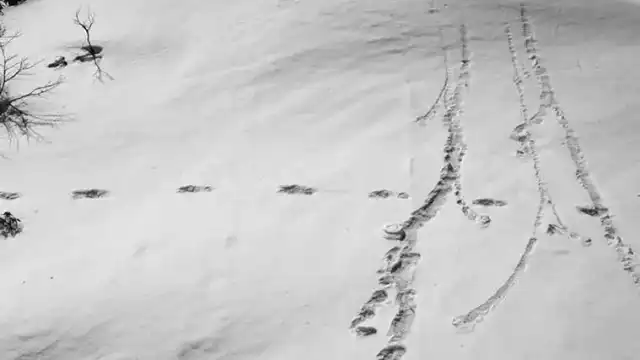
Crucially, the Himalayan “Yeti” hairs perfectly matched the DNA of two specific animals: the Himalayan brown bear and the Tibetan blue bear. These bears are massive. They can walk briefly on their hind legs. When they walk through deep snow, their overlapping paw prints melt and expand, creating tracks that look exactly like giant, human-like footprints.
Science has spoken. The monster haunting the snowy peaks isn’t a magical ape. It is a very large, very real bear.
The True Legacy of the Pangboche Hand
It is incredibly easy to feel disappointed by these results. We all want the world to hold a little more magic. We want unexplored forests to hide terrifying, wonderful secrets.
Yet, the true story of the Pangboche hand is actually far more fascinating than any monster movie. Think about the wild chain of events. A mummified human hand became a sacred religious icon. It was fiercely protected by mountain monks. It was brutally vandalized by a Texas-funded explorer. It rode in the underwear luggage of a legendary Hollywood actor. Finally, it sat in a dusty museum box until modern genetics unlocked its secret.
The Yeti might not be real in the biological sense. However, the cultural impact of the creature is entirely genuine. It drove exploration, funded conservation efforts, and created legends that will outlast us all.
Join the Expedition!
Are you disappointed that the Pangboche hand turned out to be human, or do you think the smuggling story makes it even cooler? Do you believe there are still undiscovered primates hiding out there in the deep wilderness? Drop your wildest theories in the comments below!

