

Farley Granger: Inside the Life and Legacy of a Hitchcock Star
Think of classic Hollywood, and a few massive names instantly pop into your head. Bogart. Grant. Brando. But what about the guys who played in the shadows? Farley Granger was one of those uniquely compelling actors. With his brooding good looks and intense vulnerability, he wasn’t your typical square-jawed, untouchable hero. Instead, he became Alfred Hitchcock’s go-to guy for moral ambiguity. Granger brought a quiet, nervous energy to the screen. You simply couldn’t take your eyes off him.
At a glance
- A Rags-to-Riches-to-Rags Story: Born into wealth, his family lost everything in the 1929 stock market crash.
- The Accidental Star: Discovered by talent scouts at age 17 and locked into a stifling studio contract.
- Hitchcock’s Muse: Achieved cinematic immortality via two Alfred Hitchcock masterpieces: Rope (1948) and Strangers on a Train (1951).
- Breaking the Mold: Risked his entire career by buying out his own contract for $50,000 in 1953 to pursue creative freedom.
- A Trailblazing Life: Lived openly as a bisexual man long before it was accepted, detailing his journey in his 2007 memoir, Include Me Out.
Riches to Rags in California
Farley Earle Granger Jr. came into the world on July 1, 1925, in San Jose, California. Life started out pretty sweet for the toddler. His father owned a highly successful Willys-Overland car dealership. They vacationed at a beautiful beach house.
Then the Great Depression hit. The 1929 stock market crash wiped the family out entirely.
They sold their homes and auctioned off their personal belongings to pay off mounting debts. Using the last car left on the dealership lot, the Granger family fled to Los Angeles in the middle of the night. Times were incredibly tough. They squeezed into a tiny apartment in a rough part of Hollywood. Both parents struggled with the financial whiplash, leading to heavy drinking and frequent arguments.
Granger stepped up to help out. He bagged groceries, mowed lawns, and took whatever odd jobs he could find. Acting wasn’t a lifelong obsession at first. It was just a fun escape from a stressful reality.
Accidental Actor Meets Sam Goldwyn
Granger’s big break sounds completely made up, but it is 100% true. His father landed a job as a clerk at a local unemployment office. There, he bumped into silent film comedian Harry Langdon. Langdon suggested the teenager audition for a small local play called The Wookey. The 17-year-old nailed a Cockney accent and snagged multiple roles.
Guess who was sitting in the audience on opening night? Talent scouts.
The very next day, a casting director dragged him in to meet legendary producer Samuel Goldwyn. Granger was immediately cast in the 1943 war drama The North Star. Goldwyn slapped golden handcuffs on the teenager: a seven-year contract paying just $100 a week. While that was decent money back then, it meant the studio system — a rigid structure where Hollywood executives controlled every aspect of an actor’s career — completely owned him.
He pumped out a couple of films before putting Hollywood on hold. World War II was raging. Granger enlisted in the U.S. Navy. Stationed in Hawaii with an entertainment unit, this period opened his eyes to the wider world. It was here that he began exploring his own fluid sexuality away from the prying eyes of the press.
Becoming Alfred Hitchcock’s Dark Dreamboat
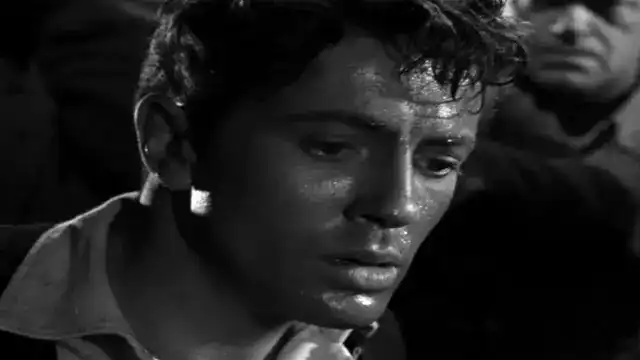
After the war, Granger returned to a shifting cinematic landscape. He caught his first major post-war break starring in the brilliant 1948 noir film They Live by Night. Directed by Nicholas Ray, Granger played a doomed, baby-faced escaped convict. His portrayal of a desperate kid on the run caught the eye of the Master of Suspense.
Alfred Hitchcock didn’t just want a handsome face for his upcoming thrillers. He desperately needed an actor who could project guilt, deep anxiety, and hidden desires. Granger delivered in spades.
The Experiment of Rope (1948)
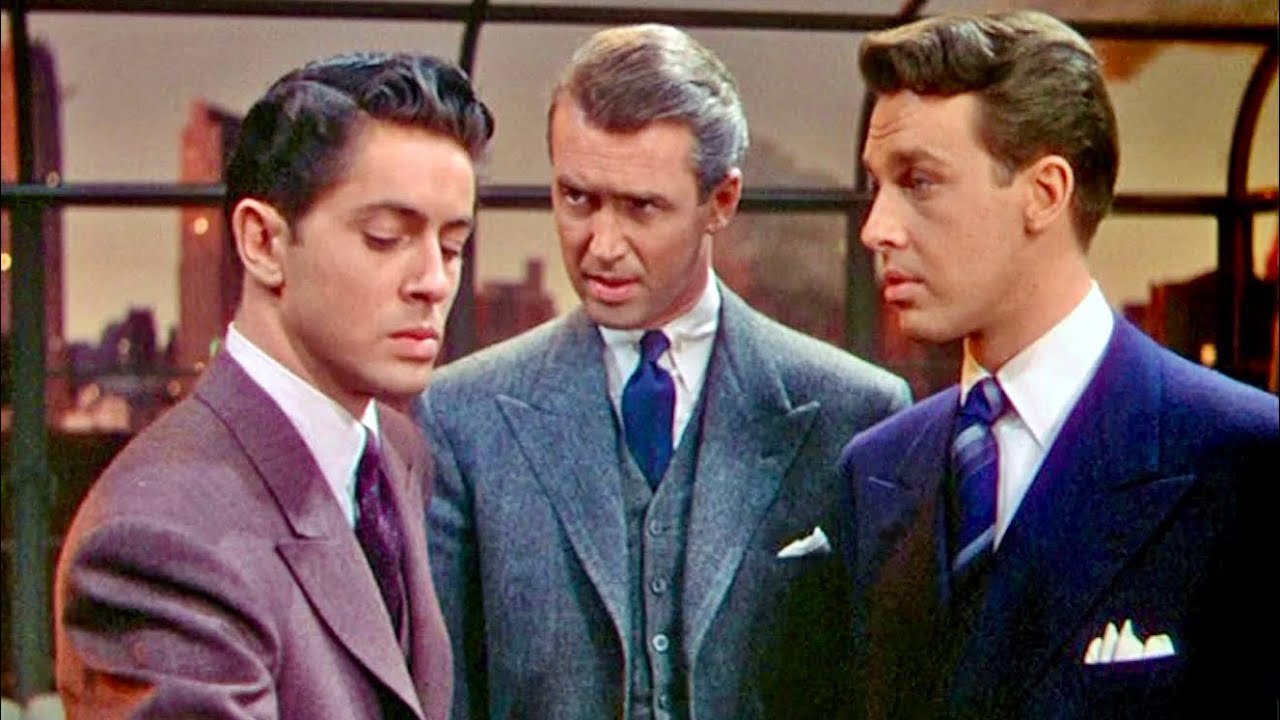
Have you ever tried to hide a massive secret while hosting a dinner party? That is the agonizing premise of Rope. Granger played Phillip Morgan, one half of an arrogant duo who murders a former classmate just to prove their intellectual superiority. They hide the body in a wooden chest in their living room. Then, they serve a buffet dinner on top of it.
Hitchcock shot the film as a massive technical experiment. He wanted the movie to look like one continuous, unbroken take. The physical gymnastics on set were exhausting. Actors had to constantly dodge heavy cameras swinging across the room. Cables were everywhere. Yet, Granger’s performance perfectly anchors the tension. He plays Phillip as fragile and rapidly unraveling, visibly sweating through his sharp suit.
Film historians consistently note the heavy queer subtext in the movie. Granger and his co-star, John Dall, infused their roles with a palpable, complicated intimacy that slipped right past the rigid censors of the 1940s.
Perfect Foil in Strangers on a Train (1951)
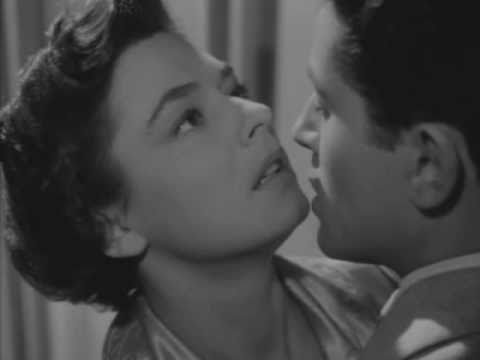
Then came the absolute masterpiece. In Strangers on a Train, Granger plays Guy Haines, an ambitious, clean-cut amateur tennis pro. He meets a wildly charming psychopath named Bruno Antony on a train. Bruno proposes a “criss-cross” murder scheme: I kill your cheating wife, and you kill my awful father. No motives, no clues.
Guy thinks it’s a bizarre joke. Bruno actually goes through with it.
Granger had an incredibly tough job here. Playing the “straight man” reacting to a flamboyant villain is notoriously difficult. Yet, he makes Guy Haines endlessly fascinating. Is Guy completely innocent? Does he secretly want Bruno to do his dirty work? Granger’s ambiguous, horrified reactions make the whole movie tick. He was the perfect, morally conflicted everyman.
Breaking the Chains of the Studio System
Most actors in the 1950s clung to their studio contracts like life rafts. Not Granger. He hated being forced into mediocre, cookie-cutter movies. He wanted to act on stage. He craved true artistic freedom.
So, he did the unthinkable. In 1953, he bought his way out of his Goldwyn contract.
It cost him roughly $50,000 — virtually his entire life savings at the time. Was it risky? Absolutely. Did it pay off? Yes, but strictly on his own terms. He packed his bags and headed to Europe. Granger teamed up with legendary Italian director Luchino Visconti for Senso (1954). Playing a cowardly, highly seductive Austrian lieutenant, he delivered what many international critics consider his finest cinematic performance. He proved to the world he was much more than just a studio puppet.
“Include Me Out” – A Life Lived Authentically
Decades before it was deemed safe for public figures to do so, Granger refused to hide who he really was. In 2007, he published a deeply personal memoir titled Include Me Out: My Life from Goldwyn to Broadway. The quirky title is actually a famous malapropism (a humorous misuse of a word) coined by his old boss, Sam Goldwyn.
Co-written with Robert Calhoun, his partner of over 40 years, the book is incredibly refreshing. It doesn’t apologize. It doesn’t deflect. Granger wrote frankly and beautifully about his bisexuality.
“I have loved men. I have loved women,” he declared in the book. “I will talk with affection and without guilt or remorse about both.”
The memoir spilled the tea on his many high-profile romances. He dated gorgeous leading ladies like Shelley Winters and Ava Gardner. He had intense affairs with composer Leonard Bernstein and playwright Arthur Laurents. But his longest, deepest connection was with Calhoun. They stayed together from 1963 until Calhoun passed away in 2008. In a town historically built on fake marriages and aggressively hidden lives, Granger’s honesty was quietly revolutionary.
The Second Act: Broadway and Television
Hollywood might have eventually faded into his rearview mirror, but Granger never stopped working. He successfully transitioned to the stage, finding the creative fulfillment he always chased. His theatrical talent earned him a prestigious Obie Award in 1986 for his powerhouse role in the off-Broadway play Talley & Son.
He also became a familiar, comforting face on daytime television. Soap opera fans adored him during his long runs on As the World Turns and One Life to Live. He didn’t mind the shift in mediums at all. He just loved the daily grind of the work. He once famously said, “I’ve always been open to things.” That easygoing philosophy carried him through a rich career spanning more than six decades.
Legacy of Farley Granger
Farley Granger passed away on March 27, 2011, in his Manhattan home. He was 85 years old. According to a tribute in The Guardian, he died of natural causes, leaving behind a massive, complicated cinematic footprint.
We remember him today because he deliberately refused to fit the traditional mold. He wasn’t the macho gun-slinger. He was vulnerable. He was nervous. He felt profoundly real. Classic films like Rope and Strangers on a Train still hold up perfectly today because of that twitchy, nervous energy. Granger gave Hitchcock the exact shade of moral grey those psychological thrillers demanded.
By walking away from the oppressive studio system and living openly as a bisexual man, he proved his intense bravery off-screen, too. Farley Granger didn’t just act in classic movies. He lived a classic, uncompromising life.
What’s your take on Farley Granger’s unique acting style? Have you watched Rope or Strangers on a Train recently? Drop a comment below and let us know which Hitchcock classic keeps you on the edge of your seat!

