

Lake Champlain’s Champ: Sightings, Photos, and Plesiosaur Theories
Lake Champlain has a monster legend that’s 400+ years old. Over 300 sightings, one famous photograph from 1977, mysterious echolocation sounds recorded in 2003, and a viral drone video from 2024 — Champ remains one of America’s most credible and captivating cryptids. Science hasn’t confirmed it. Science hasn’t killed it either.
Quick read
- Champ sightings date back to Indigenous Abenaki oral traditions, centuries before European settlers arrived.
- The 1977 Mansi photograph was analyzed by the University of Arizona and confirmed as unaltered — but unidentified.
- In 2024, drone footage captured during a film shoot went viral and was featured on William Shatner’s The UnXplained.
- Both Vermont and New York passed legislation in 1982–83 legally protecting Champ from harm.
- Scientists mostly point to giant sturgeon, optical illusions, and “seiches” (underwater currents) as explanations — but none fully closes the case.
America Has Its Own Loch Ness. And It’s Been Here Way Longer Than You Think.
Scotland gets all the glory with Nessie. But tucked between the Adirondack Mountains of New York and the Green Mountains of Vermont sits a 125-mile-long lake with a mystery of its own — one that predates the United States itself.
Lake Champlain. Home to Champ.
You’ve probably heard the name. But what’s the actual story? What do the photos show? What does science say? And why, after four centuries of searching, has nobody caught this thing — or definitively ruled it out?
Let’s go deep. Literally.
The Lake Itself: Why It’s the Perfect Monster Habitat
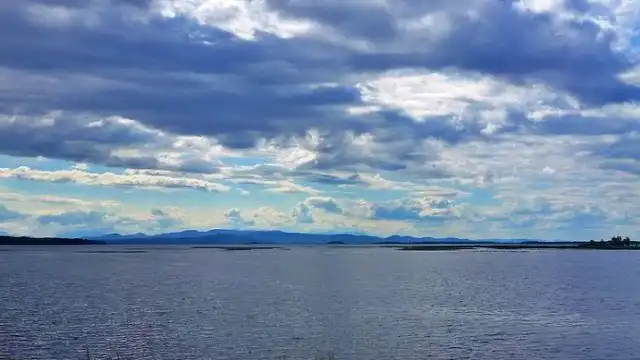
Before we even get to the sightings, consider where Champ supposedly lives.
Lake Champlain stretches 125 miles long, reaches depths of over 400 feet, and spans parts of Vermont, New York, and Quebec, Canada. It holds around 6.8 trillion gallons of water. Visibility in those depths? Nearly zero.
The lake was once connected to the Atlantic Ocean. As glaciers retreated around 10,000–12,000 years ago, sea levels shifted, and portions of the lake became landlocked. That geological detail is crucial — because it means marine creatures could theoretically have been sealed inside as the connection closed.
Cold, dark, vast, and ancient. If something wanted to hide in there, it absolutely could.
Before Europeans Arrived: The Abenaki and Iroquois Knew First
Here’s what most Champ articles skip right past.
Long before any European set foot near Lake Champlain, the Abenaki and Iroquois peoples already had names and stories for the creature in the water. The Abenaki called it Gitaskog or Tatoskok — a massive, serpentine water spirit capable of stirring storms and capsizing canoes.
Early in the 18th century, Abenaki people reportedly warned French explorers: do not disturb the waters. The serpent would not be pleased.
That’s not folklore invented after a colonial monster scare. That’s a deep, independent oral tradition describing the same kind of creature that would later terrify European settlers. When two completely different cultures — separated by language, religion, and worldview — independently describe the same thing in the same water? That’s worth paying attention to.
Samuel de Champlain: First European “Sighting” (Sort Of)
Samuel de Champlain, the French explorer who gave the lake its name, is often credited with the first European Champ sighting in 1609. And that credit is… mostly wrong.
Historians now believe Champlain was near the St. Lawrence River, not Lake Champlain proper, when he described a fish with a “snout two and a half feet long, a double row of sharp teeth, and scales so hard a dagger could not pierce them.” Most scholars think he was describing a garfish — a prehistoric-looking but perfectly real species still found in the lake today.
Still. A man described a prehistoric-looking giant fish in those waters in 1609. And it’s been downhill for skeptics ever since.

300+ Sightings: The Highlights You Need to Know
Estimates vary. The New England Historical Society puts reported Champ sightings at over 300. Cryptozoologist Nick Valenzuela puts the number closer to 600. Either way, that’s a lot of people seeing something they can’t explain.
Here are the biggest ones.
The 1873 Railroad Account
One of the earliest documented modern sightings came in 1873, when workers building a railroad along the lake’s shore reportedly saw a massive serpent rise from the water. It caused a panic. Work stopped. The story spread.
The 1977 Mansi Photograph: The Most Famous Champ Evidence Ever
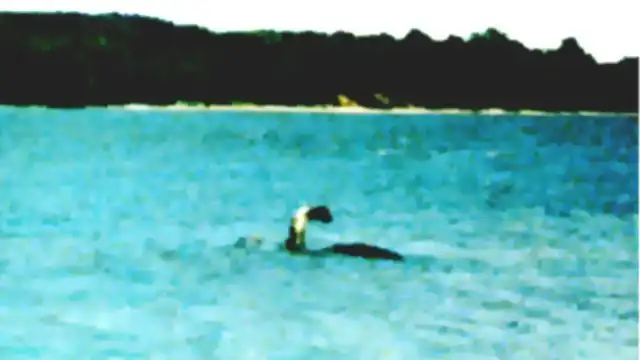
On July 5, 1977, Sandra Mansi was vacationing near St. Albans on the Vermont side of the lake. She was watching her kids play in the water when something surfaced.
“I think I saw some kind of dinosaur that day,” Mansi later told the Burlington Free Press. “It wasn’t a fish. No fish can hold itself up six or eight feet out of the water.”
She grabbed her Kodak Instamatic and snapped one shot before the creature slipped back below the surface.
The resulting image — now called the Mansi Photograph — shows a dark, long-necked shape rising from calm water, with what appears to be a rounded body and an arching neck. It looks, to put it plainly, like every artist’s rendering of a plesiosaur you’ve ever seen.
The photo was sent to the University of Arizona Optical Sciences Center for analysis. Their conclusion? The photo had not been tampered with. No signs of superimposition, no pulleys or ropes, no evidence of any kind of hoax — but they could not identify what the subject was.
Cryptozoologist Richard Greenwell, who ran the digital analysis, stated: “The object in the Mansi photograph resembled a plesiosaur, which is an aquatic reptile from the Cretaceous.”
One significant problem: Mansi lost the original negative. That makes further forensic analysis impossible. Skeptics point out the photo was taken in water reportedly no deeper than 14 feet — making a massive creature unlikely in that spot. Others argue the shape could be a floating log or a wave breaking oddly.
Believers counter: have you ever seen a log hold itself six feet above water?
The 2003 Echolocation Recordings
In 2003, researchers from the Fauna Communications Research Institute dropped hydrophones into Lake Champlain and recorded something unexpected — echolocation clicks and sounds eerily similar to those made by dolphins or beluga whales.
Neither dolphins nor belugas live in Lake Champlain.
The sounds weren’t fully explained. They weren’t matched to any known freshwater species. And while scientists stopped short of declaring “lake monster confirmed,” they couldn’t dismiss the recordings either. This is the kind of evidence that keeps serious researchers — not just enthusiasts — paying attention.
The 2005 Affolter-Bodette Video

Fishermen Dick Affolter and Pete Bodette were out on the lake in the summer of 2005 when they filmed something creating large, unexplained ripples and a dark movement beneath the surface.
Retired FBI analysts examined the footage and declared it authentic and unaltered. No CGI, no tricks. Something was there. What it was, exactly, remains debated.
The 2024 Tabor-Rossi Drone Footage: The Biggest Champ Story in Decades
Here’s where things get genuinely interesting for the modern era.

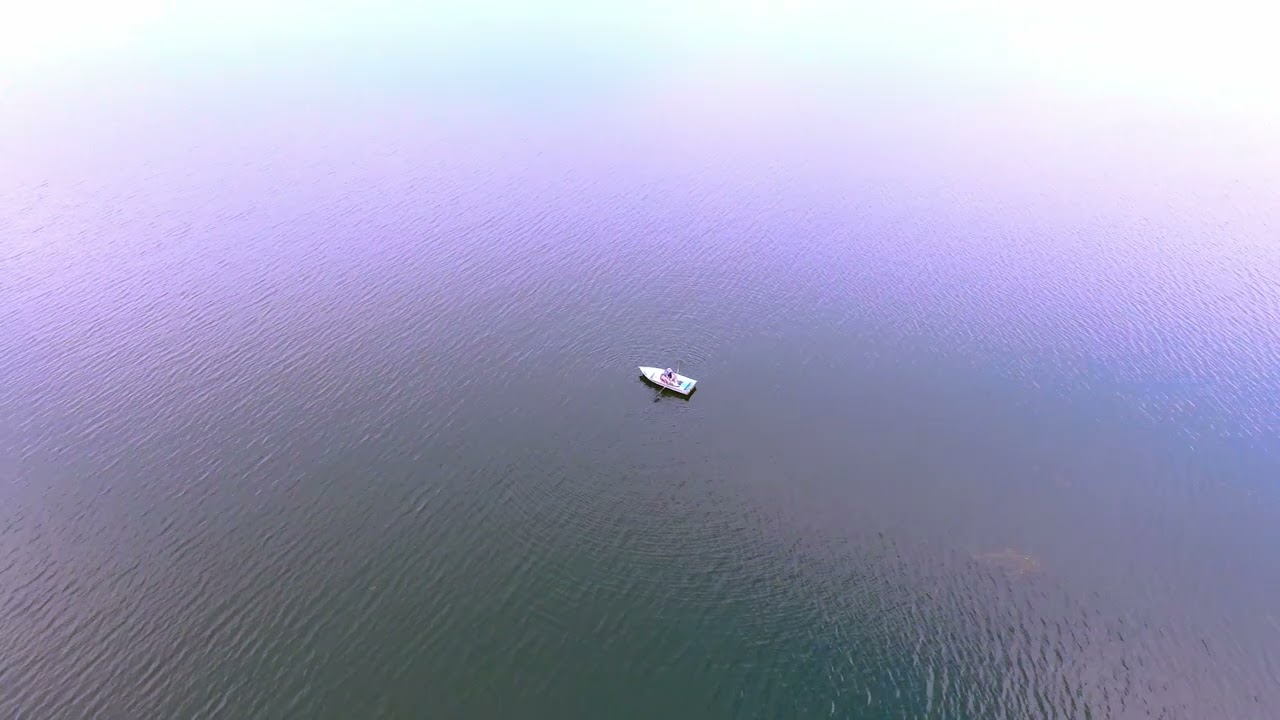
Filmmakers Kelly Tabor and Richard Rossi were shooting scenes for their movie The Secrets of Lake Champlain in Bulwagga Bay near Port Henry, New York, in 2024. Their drone operator sent the camera up to capture a simple shot of two actors in a rowboat on the lake’s surface.
What the camera caught instead stopped them cold.
The drone footage shows a massive, dark shape moving beneath the water’s surface, swimming behind the rowboat. Initial morphological assessments described features consistent with a “flattened plesiosaur head” and “locomotion via reptilian-like fins.” Critically — the object appeared larger than the boat itself, which measured nearly 12 feet in length.
For comparison: the largest documented lake sturgeon max out around 7–8 feet.
The footage was featured on an October 2024 episode of William Shatner’s The UnXplained on the History Channel, titled “Terrors of the Deep.” Shatner called it “extraordinary” and asked whether it could represent “a relic from the age of the dinosaurs, deep in the waters of Lake Champlain.”
The filmmakers described the raw five-minute footage (only 10 seconds of which circulated online, generating over 36,000 YouTube views) as containing more detail than any previous visual Champ evidence. A formal peer-reviewed scientific analysis was reportedly in progress as of 2024–2025.
The Plesiosaur Theory: Thrilling, But Complicated
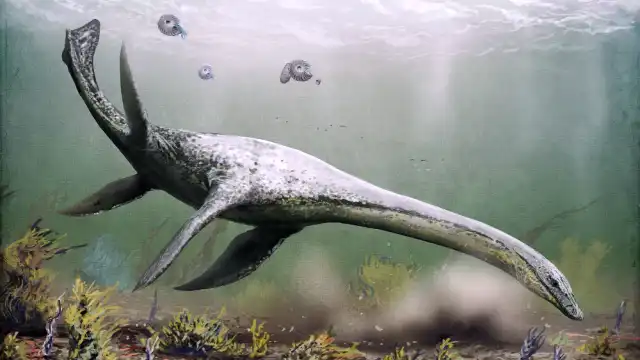
The most popular explanation among believers? Champ is a plesiosaur — a marine reptile from the Jurassic and Cretaceous periods, ranging 15 to 40 feet in length, with four large flippers and a long, snake-like neck.
Plesiosaurs were thought to have gone extinct 65 million years ago. But here’s the thing — we thought the coelacanth (a prehistoric fish) went extinct 65 million years ago too. Then one turned up alive off the coast of South Africa in 1938.
Science does have a word for animals that survive past their supposed extinction date: Lazarus taxa. They’re rare. But they exist.
The case for the plesiosaur theory in Lake Champlain:
- The lake is over 400 feet deep — plenty of room to hide
- Lake Champlain was once connected to the Atlantic Ocean, meaning marine creatures could have been sealed inside
- Multiple witnesses across centuries describe a long neck, rounded body, and flippers
- The Mansi photograph, 2005 video, and 2024 drone footage all show shapes that resist easy conventional explanation
The case against:
- Plesiosaurs may have been cold-blooded. Lake Champlain freezes in winter. A cold-blooded reptile would almost certainly not survive those temperatures.
- New paleontological research suggests plesiosaur necks weren’t nearly as flexible as pop-culture images suggest — the “head raised above water” pose may have been anatomically impossible.
- A breeding population small enough to stay hidden for 10,000 years would likely have gone extinct from inbreeding long ago.
- No remains — no bones, no scales, no carcass — have ever been recovered from the lake.
The plesiosaur theory is romantic. It’s also scientifically fragile. But “fragile” isn’t the same as “impossible.”
What Science Actually Says (The Boring But Fair Answer)
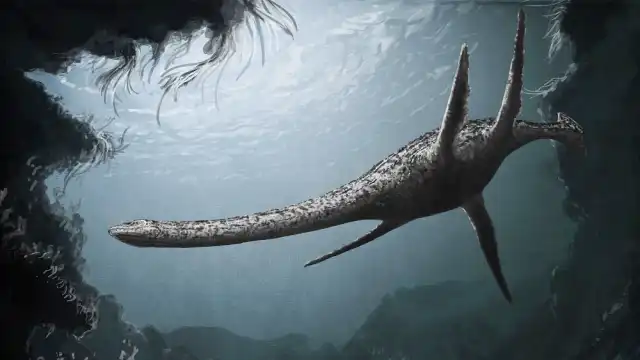
To be honest with you, mainstream science is skeptical — but not totally dismissive.
The most commonly cited rational explanations include:
- Giant Sturgeon: Lake sturgeon can grow over 7 feet long (some accounts suggest up to 27 feet for the largest historical specimens), have armored, ridged bodies, and habitually surface in ways that could startle observers. They look genuinely prehistoric because, well, they sort of are.
- Temperature Inversions: Layers of warm and cold air interacting over the lake’s surface can create optical distortions that make floating objects appear larger or more animate.
- Seiches: These are large underwater current oscillations unique to enclosed lakes. They can move submerged logs, debris, or gas bubbles in ways that look uncannily like a living, moving creature.
- Otters in Formation: Groups of otters swimming in a line can create what looks like a single large, undulating body.
None of these explanations, individually or together, have fully accounted for all the sightings — especially the echolocation recordings, the FBI-verified 2005 video, and the scale of the object in the 2024 drone footage.
Researchers from Middlebury College have reportedly used advanced side-scan sonar to map sections of the lake floor. So far, no conclusive evidence of a large unknown animal has been found. But Lake Champlain covers more than 1,000 square kilometers of water. Finding one elusive animal in there with sonar is like trying to find a specific fish in the Pacific.

Legally Protected. Yes, Really.
Here’s a detail that surprises most people.
In April 1982, the Vermont House of Representatives passed Resolution H.R. 19, protecting Champ from “any willful act resulting in death, injury, or harassment.” New York State followed with a similar resolution in 1983.
A monster — officially protected by two U.S. state governments. You genuinely cannot make this up.
It speaks to something beyond tourism gimmickry. The sheer number of eyewitness accounts, many from credible sources like fishermen, scientists, and law enforcement, gave lawmakers enough pause to take action. When politicians agree on something this weird, something is clearly going on.
The Cultural Weight of Champ
Champ isn’t just a campfire story anymore — it’s an economic and cultural institution.
- Port Henry, New York holds an annual Champ Day every first Saturday in August and has a giant Champ statue drawing visitors year-round.
- The Vermont Lake Monsters minor league baseball team is named after the legend.
- Burlington’s ECHO, Leahy Center for Lake Champlain unveiled a major multi-floor interactive exhibit in 2025 titled “Champ: America’s Lake Monster,” featuring a life-sized Champ sculpture installed in 2024.
- The documentary universe keeps expanding — from Discovery Channel specials to William Shatner’s The UnXplained in 2024, and an upcoming Rossi-Tabor film expected on Amazon Prime Video in summer 2026.
Champ has outlasted fads, outlasted skeptics, and outlasted most of the people who first reported seeing it. That kind of cultural staying power doesn’t come from nothing.
So — Is Champ Real?
That depends entirely on what you mean by “real.”
Is there definitive scientific proof of a large, unknown animal living in Lake Champlain? No. Not yet.
Is there a body of evidence — photographs, video, acoustic recordings, hundreds of eyewitness accounts spanning four centuries and multiple cultures — that resists total dismissal? Absolutely.
The honest answer is: we don’t know. And “we don’t know” is actually one of the most scientifically valid statements anyone can make about Champ.
What we do know is this — Lake Champlain is deep, cold, ancient, and enormous. It was once part of the ocean. It’s full of large, poorly understood species. And something has been making witnesses reach for their cameras, their notebooks, and their courage for over 400 years.
That something has a name. And it’s watching from 400 feet below.
Where to Learn More (And Go Looking)
Thinking about investigating for yourself? Here’s where to start:
- Visit the ECHO, Leahy Center for Lake Champlain in Burlington, VT — their new 2025 Champ exhibit is genuinely impressive.
- Head to Port Henry, New York for Champ Day (first Saturday of August every year).
- Watch the Tabor-Rossi drone footage on YouTube — search “Tabor Rossi Champ footage” and judge for yourself.
- Read the original 1981 New York Times coverage of the Mansi photograph.
And if you’re out on the lake on a still summer morning and something breaks the surface — grab your camera. You might be next on the list.
Have you seen something unusual on Lake Champlain? Drop your story in the comments below. We read every one.
Share this article if you think Champ deserves more attention than Nessie — because honestly? The evidence here is just as compelling.
References: Vermont Daily Chronicle, ECHO Leahy Center (echovermont.org), Religion News Service, University of Arizona Optical Sciences Center analysis (via New York Times, 1981), Fauna Communications Research Institute (2003), New England Historical Society, Discover Magazine, Vermont House Resolution H.R. 19 (1982).

