

Were Burke and Hare Grave Robbers? The Truth Behind Edinburgh’s Serial Killers
Burke and Hare were never grave robbers — that’s a myth. They were serial killers who murdered at least 16–17 people in Edinburgh between 1827 and 1828, selling fresh corpses to anatomy schools. Their crimes shook Victorian Britain and directly triggered the Anatomy Act 1832.
Most people hear “Burke and Hare” and picture two shady men digging up coffins under a full moon. Spades in hand. Mud on their boots. That image is wrong — and the real story is far darker.
Contrary to popular belief, Burke and Hare were not grave robbers. They were something more calculated, more cold-blooded. They skipped the graveyard entirely and went straight to murder. Understanding why — and how they got away with it for so long — means stepping into one of the most unsettling chapters of 19th-century Britain.
The Anatomy Crisis Nobody Talks About
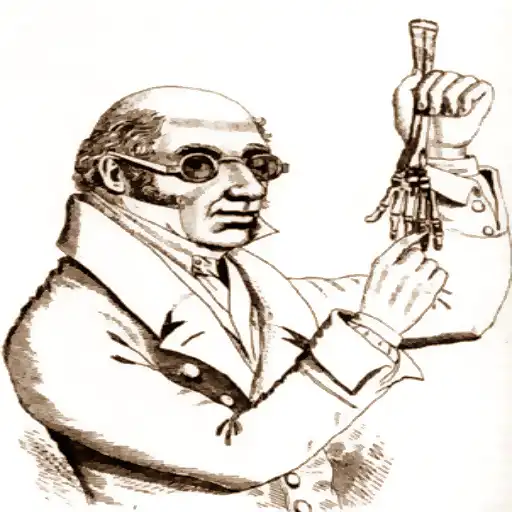
Before we get to the murders, you need to understand the world that made them possible.
Medical and anatomical schools were only legally allowed to dissect the bodies of those who had been condemned to death. Simple enough — until the Judgement of Death Act 1823 slashed the number of crimes punishable by hanging. Fewer executions meant fewer legal corpses. And Edinburgh’s medical schools were booming.
In 1828 alone, Knox required 400 cadavers to keep his classes supplied. Four hundred. Think about that for a second.
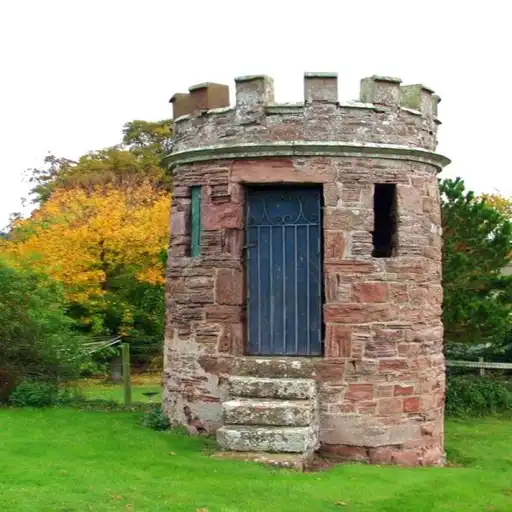
The financial compensation offered by medical schools meant that some unscrupulous types soon found a way around the shortage, leading to a rash of grave-robbing by those known as resurrectionists. Families hired guards. Cemeteries built watchtowers. Some families even paid for large stone slabs to be placed over the graves of loved ones until they had decayed past the point of being useful to anatomists.
The fresher the corpse, the higher the price. That one detail set everything in motion.
Two Irishmen, One Boarding House
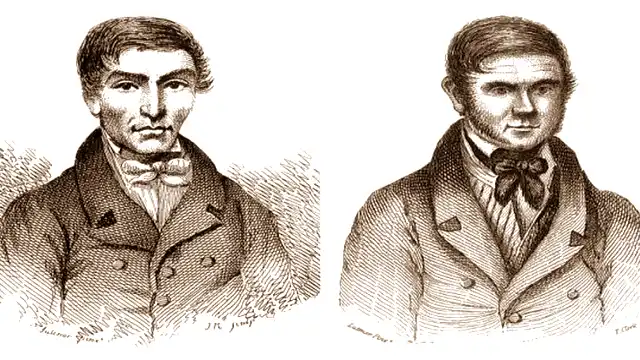
William Burke (born 1792, Orrery, Ireland) and William Hare both immigrated to Scotland from Ireland. Having both worked as labourers on the Union Canal — built to connect Glasgow and Edinburgh between 1817 and 1822 — neither of these men wanted to do any more digging. Fair enough.
Hare eventually became the keeper of a boarding house in the West Port area of Edinburgh, while Burke moved to the same street with his mistress Helen McDougal. The two became fast friends. Drinking buddies. Then something worse.
How It Started: A Dead Lodger and Four Pounds
It was a cold November evening in 1827. Hare’s lodger, a man by the name of Donald, had just died of dropsy shortly before receiving his quarterly army pension — and Donald owed Hare £4 in back rent, the equivalent of nearly £300 today.

Hare complained. Burke listened. They decided to sell the body to an anatomist at the University of Edinburgh. Burke’s testimony claims a student directed them to the residence of Dr Robert Knox on Surgeon’s Square.
Burke and Hare removed the body from its coffin and sold it to Knox’s private anatomy school for £7. Knox paid promptly. His assistant even encouraged them that Knox “would be glad to see them again when they had any other body to dispose of.”
That was the green light they needed.
The Murders: 16 (or 17) Victims in Under a Year
Realising the doctor needed a steady supply of fresh corpses, the pair escalated from grave robbing to murder. They lured victims into the lodge, plied them with alcohol, and suffocated them.
The method of killing they used became known as “Burking” — one man would kneel astride the victim’s chest, pinning their arms, while the other put a hand over the nose and mouth to cut off the air supply. It left no marks. No visible wounds. Nothing to raise suspicion.
Between 1827 and 1828, the men killed at least 16 people. They sold each body to Dr Robert Knox for between seven and ten pounds — bringing in some $24,000 in today’s currency.
Who were the victims? Quite a diverse group — a combination of men and women, both visitors to the city and local people, at least one child, ranging in age from 12 years to old age. These weren’t nameless statistics. Knox’s students actually recognised some of the victims, including prostitute Mary Paterson and the amiable street wanderer “Daft Jamie” Wilson. Yet no questions were asked.
Let that sink in. Students recognised the bodies. And still said nothing.
Dr Robert Knox: The Man Who Asked No Questions
Robert Knox was a widely respected anatomist in Edinburgh and head of a private anatomy school. As his extremely popular classes boomed in attendance — in 1828 he had a staggering 504 students — Knox promised them “an ample supply” of cadavers.
Upon their first meeting, Knox agreed a price of £7 and 10 shillings — and this set Burke and Hare on a murderous rampage. Knox received bodies in perfect, fresh condition. He asked no questions about provenance. As Knox didn’t personally deal with Burke and Hare, he wasn’t prosecuted. A Royal Society commission exonerated him.
The public was furious. Knox was burnt in effigy and his home was ransacked. His reputation in ruins, Knox moved to London to try and salvage a career in medicine. He died in 1862.
Was Knox guilty? Legally — no. Morally — that’s a different conversation entirely.
Caught, Tried, and Hanged
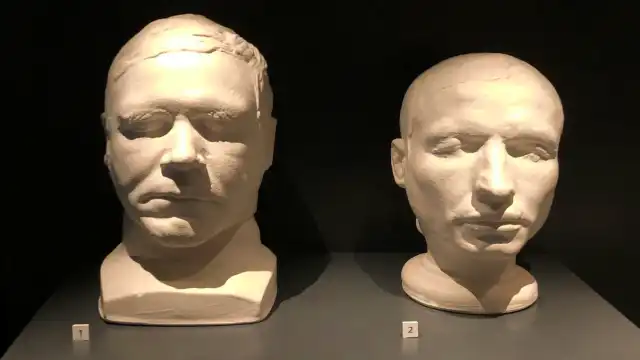
In early November 1828, Burke and Hare killed their 17th and final victim, Mary Docherty. Her body was discovered hidden under a bed in the lodging house by two lodgers, James and Ann Gray. Helen MacDougal tried to prevent them going to the police by offering to pay them £10 per week — they reported what they had found anyway.
The game was up.
Hare agreed to testify against Burke in exchange for immunity — and Burke was quickly sentenced to death. Burke’s fate was to be legally hanged, publicly dissected — causing a near riot amongst those who wanted to watch — and his skeleton put on display in the Anatomical Museum. As of Now, Burke’s skeleton remains on display at the Anatomical Museum of Edinburgh Medical School.
Poetic justice, in the darkest way.
Hare was released, and is said to have been blinded during an attack by a lynch-mob, later dying as a beggar in London. The women — Helen McDougal and Margaret Laird — were also released and fled Scotland. Helen MacDougal fled to Australia.
The Accidental Legacy: A Law That Changed Medicine
Here’s the part most people skip over — and it might be the most important piece.
The Burke and Hare murders, followed by the 1831 murders committed by the London Burkers in Bethnal Green, led to the Anatomy Act 1832, which allowed doctors, anatomy lecturers, and medical students greater access to cadavers and allowed for the legal donation of bodies to medical science.
The Act also regulated the practice by requiring anatomists to obtain a licence and employing government inspectors to ensure dissections were performed legally. As the incentive to dig up bodies had now been removed, the epidemic of grave robbings came to an end, and Edinburgh’s graveyards once again became places where loved ones could rest in peace.
Two killers. Sixteen victims. And — almost unbelievably — a reform that shaped modern medical ethics. Their crimes inadvertently made medicine safer, more transparent, and more humane.
Why the “Grave Robbers” Myth Stubbornly Persists
So why does the wrong label stick?
Partly because of the era they lived in — grave robbing was rampant across Edinburgh at the time. Instances of grave-robbing became so commonplace that relatives watched over recently dug graves, and watchtowers were installed in cemeteries across the land. Burke and Hare arrived at the tail end of that crisis, so they got lumped in with the resurrectionists by popular history.
Partly because “grave robbers” sounds almost… manageable. It softens the reality. Calling them serial killers — which is exactly what they were — forces you to reckon with something much more disturbing.
William Burke and William Hare were, in fact, among the first serial killers to capture mass media attention. The press covered every twist. Crowds gathered at Burke’s execution. The story gripped a nation — and never really let go.
The Word They Gave the English Language
Burke and Hare didn’t just change the law. They changed the dictionary.
Burke’s legacy left a mark on language in the form of the now-archaic word “burking” — meaning to kill by suffocation with the intent to sell the remains. Their story also inspired copycat crimes, with the London Burkers murdering people under similar circumstances, modelling their acts after the notorious killers from Edinburgh.
A murder method named after you. A skeleton on display in the city where you killed. That is one grim kind of immortality.
What This Story Really Tells Us
Burke and Hare didn’t operate in a vacuum. They were the product of a broken system — one that created demand for human bodies, paid no questions asked, and left the poorest, most vulnerable people in Edinburgh with no protection.
The victims were mostly the destitute, the sick, the elderly, the mentally ill — people society had already written off. That’s rarely part of the popular retelling. It should be.
The real lesson here isn’t about two bad men. It’s about what happens when institutions prioritise convenience over accountability — when the questions nobody asks become the silence that gets people killed.
Visiting Burke and Hare’s Edinburgh Today
Curious to see it for yourself? Tourists intrigued by the duo’s legend can follow their story through museum exhibits, interactive experiences, and walking tours such as “Blood and Guts: The Twists” through Edinburgh’s old town. Burke’s skeleton sits in the Anatomical Museum at the University of Edinburgh — a sobering reminder that history here isn’t abstract. It’s on display in a glass case.
The Bottom Line
Burke and Hare were not grave robbers. They were serial killers — calculated, opportunistic, and enabled by a system that asked no questions as long as the bodies kept coming. Their 16–17 murders across less than a year remain one of the most disturbing crime sprees in British history. And the law they accidentally triggered? Still shapes how medicine operates today.
Next time someone calls them body snatchers — gently correct them. The truth is stranger, darker, and far more worth knowing.
Want to go deeper? Check out historian Lisa Rosner’s book The Anatomy Murders (University of Pennsylvania Press) for a full scholarly account of the case and its social context. And if you’re studying Scottish history or criminal justice, the Britannica entry on Burke and Hare is a solid verified starting point.
Found this useful? Share it with your friends — and drop your thoughts in the comments below.

