

The Grim Sleeper’s Unidentified Victims: The Photos Lonnie Franklin Jr. Left Behind
For decades, Franklin operated under the radar. He was a former city sanitation worker and an LAPD garage attendant who chatted with neighbors and fixed their cars. But when the sun went down, he became the monster the media dubbed the “Grim Sleeper.” Why that nickname? Because police initially believed he took a 14-year break from his gruesome killing spree.
When authorities finally slapped handcuffs on him in the summer of 2010, they thought the worst was over. They were wrong. The arrest was just the beginning of a massive, agonizing puzzle. Investigators found a stash of roughly 1,000 photos and hundreds of hours of home video.
This discovery forced the LAPD to make an unprecedented move: releasing the faces of these women to the world. Decades later, a haunting question still echoes through the streets of Los Angeles. Who are the women left in those photos?
At a glance
- The Arrest: Lonnie Franklin Jr. was arrested in July 2010 after a familial DNA hit and an undercover sting involving a discarded pizza crust.
- The Evidence: Police found nearly 1,000 photos and hours of video depicting vulnerable, often naked women hidden in his garage and home.
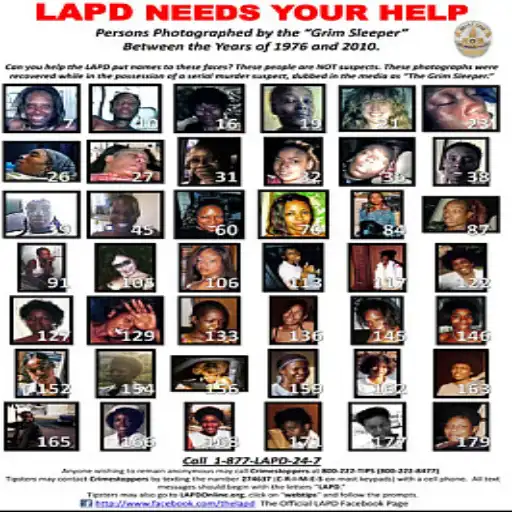
- The Public Plea: In December 2010, the LAPD released 180 heavily cropped photos to the public, hoping to identify the women and ensure they were safe.
- The Current Status: While many women were found alive and well, roughly 35 women remain unidentified.
- The Killer’s Fate: Franklin was sentenced to death in 2016 for 10 murders but died in prison in 2020, taking his darkest secrets to the grave.
The Mechanic Who Hunted in the Shadows
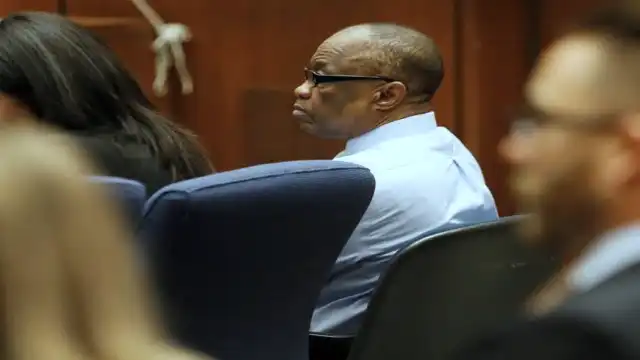
To understand the sheer horror of the photo collection, you first have to understand the man behind the camera. Lonnie Franklin Jr. wasn’t a drifter. He was deeply embedded in his community. People trusted him.
Starting in the mid-1980s, a terrifying wave of violence swept through South Central Los Angeles. Black women were being targeted, assaulted, and dumped in filthy alleyways under garbage. Many of the victims struggled with addiction or were forced into sex work. Because of this, their cases didn’t get the massive media frenzy or urgent police funding that other high-profile murders did.
The killings seemed to stop abruptly in 1988. The streets went quiet. The serial killer vanished. Then, in 2002, the nightmare sparked back to life. The DNA left at the fresh crime scenes matched the DNA from the 1980s murders. The killer hadn’t disappeared at all. He had just been flying under the radar.
The Pizza Crust That Cracked the Case
How do you catch a ghost who has evaded the law for 25 years? You look at his family.
By 2010, the LAPD was utilizing a brand-new technique called familial DNA testing. They ran the killer’s profile through the system and got a partial hit. It belonged to a young man currently in the prison system. The DNA was a familial match — meaning the killer was likely this man’s father.

The father was Lonnie Franklin Jr.
Police put Franklin under intense surveillance. They followed him to a local pizza joint. When Franklin finished his meal, an undercover officer posing as a busboy swooped in and grabbed his discarded plates, silverware, and a half-eaten pizza crust. The saliva on that crust was the golden ticket. It perfectly matched the DNA found on multiple murder victims.
A House Built on Secrets
On July 8, 2010, the police raided Franklin’s green house in South Los Angeles. They expected to find typical evidence — maybe a weapon or some trophies. What they uncovered was a true crime nightmare.
Hidden behind walls, shoved into the backs of cabinets, and locked inside toolboxes were decades’ worth of memories. But these weren’t family vacations. Investigators pulled out polaroids, 35mm prints, undeveloped film, and digital files. Nearly 1,000 photos of women.
Why did he keep them?
For serial killers, photos often serve as trophies. Taking a picture allows the predator to relive the crime over and over again. We know this was part of Franklin’s sick ritual. Enietra Washington, the only confirmed victim to survive the Grim Sleeper, bravely testified in court. She told the jury that after Franklin shot her in the chest and sexually assaulted her, the flash of a Polaroid camera went off. He was capturing her suffering.
The Unprecedented Decision: Releasing the Photos
Detectives were suddenly staring at hundreds of faces. Some women were smiling warmly at the camera. Others looked dazed, asleep, or possibly dead.
The LAPD faced a massive ethical wall. Should they release these highly sensitive, explicitly vulnerable photos to the public?
“We are very cognizant of not causing embarrassment or anguish to the people depicted in the photographs,” said LAPD Detective Dennis Kilcoyne at the time. But the fear that these women were lying in unmarked graves heavily outweighed the risk of embarrassment. The department had to know if they were alive.
To protect the women’s dignity, technicians spent hours cropping the photos so only their faces and shoulders were visible. In December 2010, the LAPD officially published a grid of about 180 unidentified women on their website.
The Public Responds: Putting Names to Faces
The moment the photos hit the internet, absolute chaos ensued. The LAPD’s servers slowed to a crawl and eventually crashed under the sheer weight of global web traffic. The dedicated tip line (1-877-LAPD-24-7) rang off the hook.
Over the next few weeks and months, investigators worked around the clock to sort through the noise. Bit by bit, they started pulling pictures down from the website.
Here is what the police found as the tips rolled in:
- The Survivors: A large number of the women were identified as alive and well. Many were deeply shocked to learn their old photos were sitting in a serial killer’s garage.
- Natural Causes: Families called in to confirm that a few of the women had passed away years ago from entirely natural causes.
- The Missing: Tragically, several photos belonged to women who had been reported missing in the 1980s, 1990s, and 2000s. Their families finally had a terrifying clue as to who they were last seen with.
- Unsolved Murders: Police linked some of the photos to cold-case homicides. One heartbreaking discovery was a photo of Janecia Peters. She was found murdered in a dumpster in 2007. Her photo was in the batch before police realized she was already one of his confirmed victims.
The Forgotten 35: Why Do They Still Have No Names?
Fast forward to today. The original batch of 180 photos was painstakingly reduced. First to a “Final 48,” and eventually, the number settled around 35.
Roughly 35 women are still staring out from that LAPD webpage. Thirty-five faces with no names.
Why is it so incredibly hard to identify them? Think about the context of the era. Many of these photos were snapped in the 1980s and 90s. Hairstyles change. People age. Some of the women lived highly transient lifestyles, battling addiction or moving from city to city. Their families might have assumed they just started a new life somewhere else.
Worse still, some of these families might not have access to the internet, or they simply actively avoid looking at true crime stories because the trauma is too raw.
“It baffles me how he is so successful at getting women to do what he asks them to do,” Detective Kilcoyne told reporters. In almost every photo, the women look like willing participants. They trusted him. That betrayal of trust is what makes looking at the remaining unidentified photos so bone-chilling. They didn’t know they were smiling at a predator.

Justice Delayed and a Quiet End
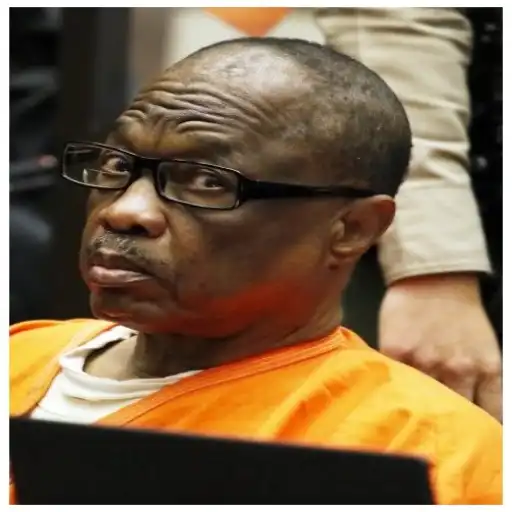
Lonnie Franklin Jr. finally faced a jury of his peers in 2016. The trial was long, emotional, and devastating for the families of the victims. He was convicted of 10 counts of first-degree murder and one count of attempted murder. The judge handed down a death sentence.
But the families would never see him walk into the execution chamber. On March 28, 2020, guards at San Quentin State Prison found the 67-year-old killer unresponsive in his solitary cell. He died of natural causes.
Franklin took his deepest secrets with him to the morgue. He never confessed. He never bragged. And most importantly, he never revealed the names of the remaining women in his horrifying photo collection.
We Can Still Help
The story of the Grim Sleeper is a dark stain on the history of Los Angeles, but the search for truth isn’t over. Law enforcement hasn’t closed the book on the remaining unidentified photos. Every single face in that collection belongs to a human being. A daughter. A sister. A friend.
They deserve to have their names back.
What can you do?
If you lived in the Los Angeles area between 1980 and 2010, or if you have older relatives who did, take a moment to look at the official case files. The LAPD still maintains the remaining unidentified photos on their public portals. You never know what a simple share on social media might accomplish. One click could finally bring closure to a family that has spent decades waiting by the phone.
Have a tip? You can still reach out to the LAPD anonymously at 1-877-LAPD-24-7.
Let’s not let the Grim Sleeper have the final word.

