
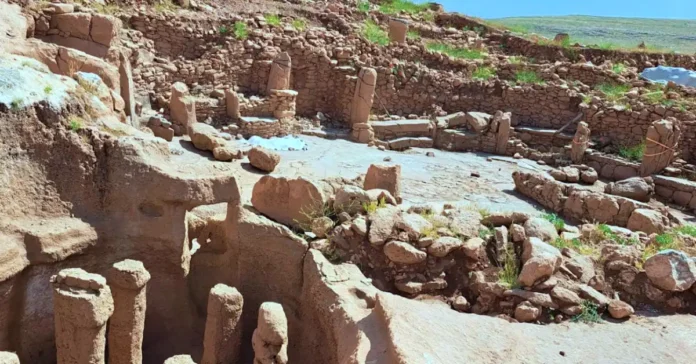
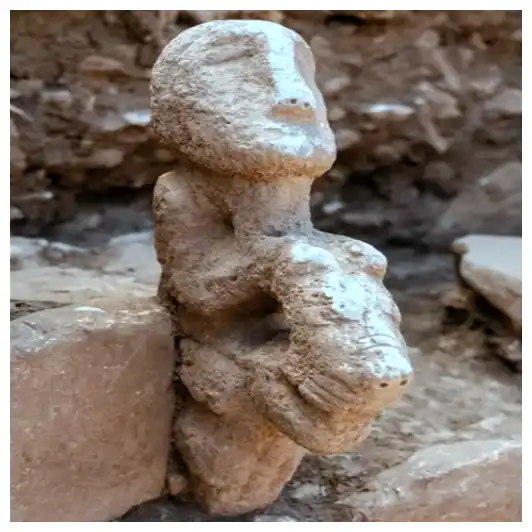
Archaeologists digging in southeastern Turkey just uncovered an 11,000-year-old stone statue showing a human figure perched directly on the back of a leopard. Found inside a circular stone building at Karahantepe, the 28-inch limestone sculpture marks the earliest known artwork of a person riding an apex predator. This single discovery upends what we thought we knew about how Stone Age people saw their place in the wild world.
The Big Reveal at Karahantepe
Imagine walking into a small, rounded room that has stayed untouched for 110 centuries.
During the excavation season under Turkey’s national “Heritage for the Future” project, researchers hit bedrock paydirt. Excavation director Professor Necmi Karul and his team uncovered a 70-centimeter (about 28 inches) tall composite carving. The artifact rested in situ — right on a built-in stone bench along the curved wall of a 10-foot-wide circular room paved with smooth, flat flagstones.
KARAHANTEPE LEOPARD RIDER: QUICK FACTS
- Age: Approx. 11,000 Years Old (c. 9000 BCE)
- Location: Karahantepe, Şanlıurfa Province, Türkiye
- Material & Height: Carved Limestone; 70 cm (27.6 inches)
- Architectural Context: Placed on a bench in a 3-meter circular structure
- Significance: Oldest known statue depicting a mounted human
Türkiye’s Minister of Culture and Tourism, Mehmet Nuri Ersoy, announced the find as a composite statue sporting a visual style unlike anything documented before.
Why does this matter?
Most statues recovered from the Stone Age are broken, discarded in ancient trash heaps, or moved far from their original spots. This leopard rider was intentionally placed on an architectural bench. Ancient builders deliberately embedded it into the spiritual and social layout of the room.
Taş Tepeler: The Prehistoric Powerhouse
To understand why this carving is such a massive deal, look at the wider neighborhood.
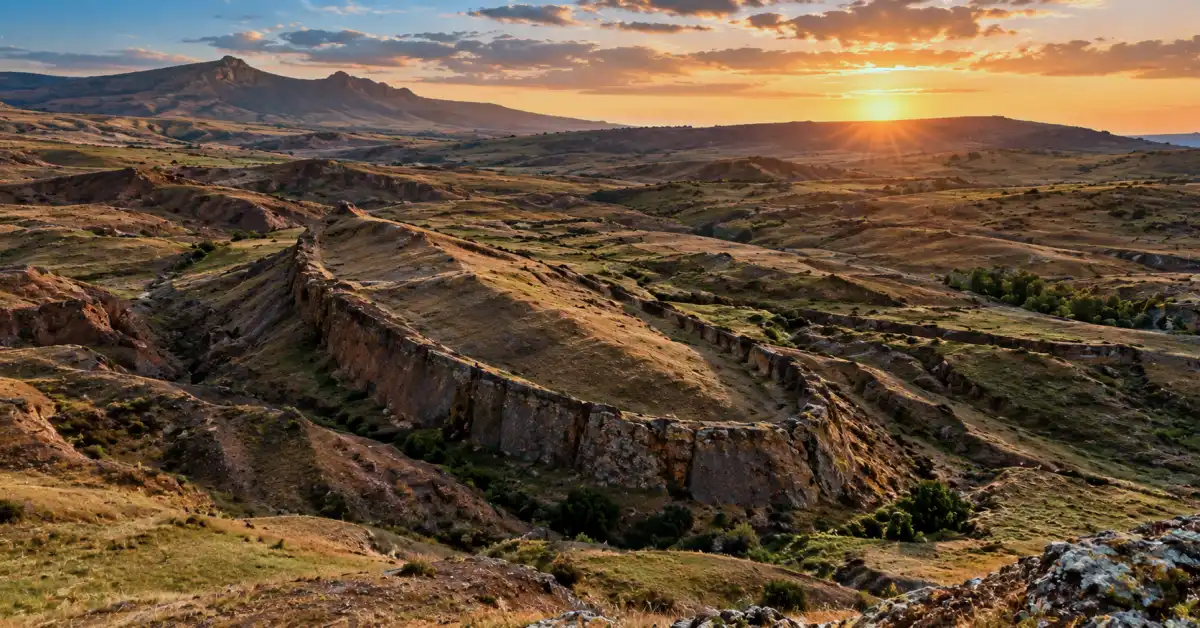
Karahantepe sits in the rugged hills of Şanlıurfa, roughly 27 miles east of its world-famous sister site, Göbekli Tepe. Both belong to Taş Tepeler (literally “Stone Hills”), a network of early Pre-Pottery Neolithic settlements dating between 9600 BCE and 8200 BCE.
For decades, textbook history taught that humans were simple, wandering foragers until farming forced them to settle down, invent religion, and build permanent structures. Göbekli Tepe blew that theory out of the water by proving complex stone architecture came before farming.
Karahantepe turns the dial up even further.
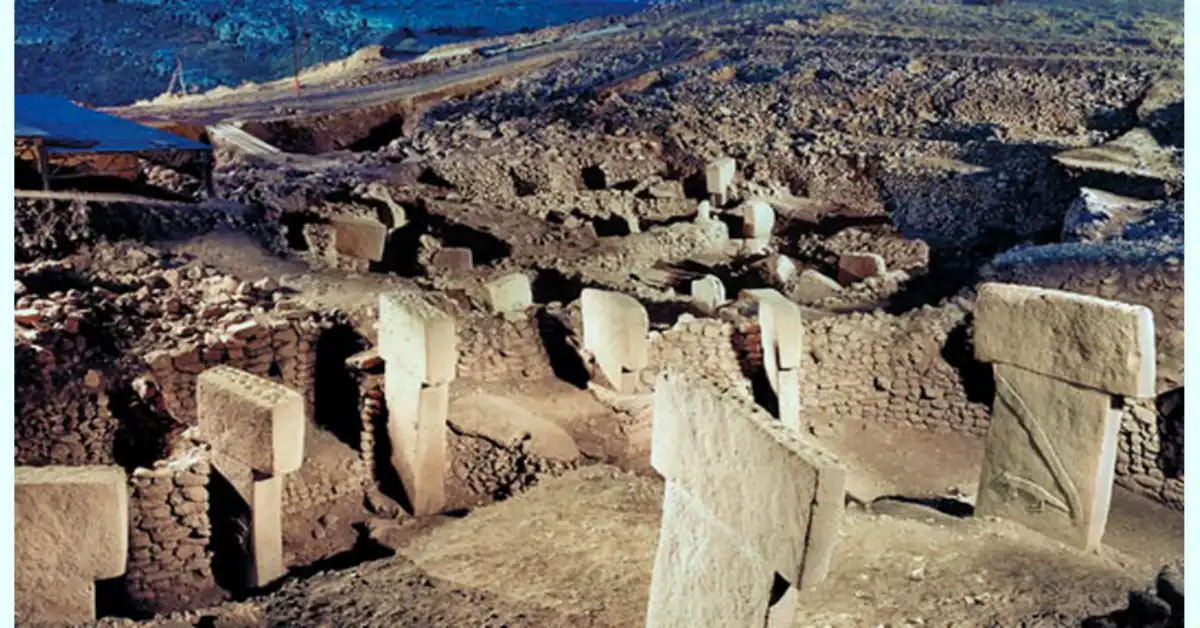
While Göbekli Tepe features monumental T-shaped limestone pillars carved with wild animals, Karahantepe takes a distinct artistic direction:
- Bedrock Architecture: Instead of building walls purely out of stacked stone, Karahantepe’s builders carved entire rooms directly out of living bedrock.
- Three-Dimensional Statues: Rather than flat low-relief carvings on pillars, artisans crafted fully freestanding, 3D human and animal figures.
- Human-Centric Focus: Karahantepe puts people front and center. You see realistic human faces, life-sized statues, phallic pillars, and complex narratives carved in stone.
The newly recovered karahantepe leopard rider statue sits at the absolute intersection of these two worlds: raw beast and calculated human presence.

Contrasting Sayburç and Early Karahantepe Art
Here is where the archaeology turns into a fascinating detective story.
Before this 2026 excavation season, researchers had already discovered several depictions of leopards across the Taş Tepeler hills. Big cats — specifically the Anatolian leopard — were the kings of this ecosystem. They were fast, silent, and lethal.
How did ancient artists depict them before?
1. The Threatening Predators of Sayburç
At nearby Sayburç, a relief carved along an interior bench shows a man surrounded by snarling leopards baring long, sharp fangs. The predator is terrifying, active, and threatening. The human stands between them, grasping his torso in what seems like a dramatic assertion of courage or a dangerous ritual confrontation. The animals possess the upper hand in raw physical dominance.
2. The Leopard Burden of Karahantepe
Earlier digs at Karahantepe turned up three striking statues where humans and leopards interact. In those figures, a person carries a live leopard on their back. The cat clings tightly to the human’s shoulders, jaws open and snarling aggressively. The person bears the massive weight of the predator. It looks heavy, dangerous, and exhausting. The human is either struggling with the beast or performing an extreme feat of sacrificial endurance.
THE EVOLUTION OF HUMAN-PREDATOR ICONOGRAPHY
| Artwork | Visual Arrangement | Implied Hierarchy |
|---|---|---|
| Sayburç Reliefs | Predators confront humans side-by-side | Humans on equal/defensive footing with wild nature |
| Early Karahantepe Sculptures | Human carries live, snarling cat on back | Human bears the crushing physical burden of nature |
| 2026 Karahantepe Rider Statue | Human is seated atop the leopard’s back | Human exerts mastery, control, and supremacy |
Now look at the newly unearthed statue.
The visual formula is flipped upside down. The human is no longer cornered. The human is no longer carrying the beast.
Instead, the human sits calmly astride the animal’s back.
As reported by Live Science, Neolithic specialist Dr. Jens Notroff noted that this piece represents a mirrored inversion of the “animal on top of human” motif. Placing the person above the apex predator completely changes the visual power dynamic.
What Was Happening in the Human Mind 11,000 Years Ago?
Why did this artistic shift occur?
Art never happens in a vacuum. When an entire culture changes how it depicts its most dangerous neighbors, something profound has changed in how those people view the universe.
| Hunter-Gatherer Mindset (Göbekli Tepe Era) | Early Sedentary Mindset (Karahantepe Transition) |
|---|---|
| Humans are part of nature | Humans organize space |
| Predators are terrifying | Humans dominate animals |
| Nature controls survival | The human ego takes root |
| Animal spirits rule art | Man sits atop nature |
During the Pre-Pottery Neolithic A and B periods, our ancestors did something radical. They stopped moving. They built round houses, carved massive gathering halls, and stayed put season after season.
Living in one place creates a psychological boundary.
Inside the settlement, humans made the rules. Outside the settlement lay the unpredictable wild. As Professor Necmi Karul explained in past research, the surge of human statues at Karahantepe reflects communities gradually distancing themselves from nature, placing the human experience squarely at the center of existence.
Think about that for a second.
When you spend hundreds of generations tracking animals across open savannahs, you know you are prey just as much as you are a hunter. You respect the lion, the bear, and the leopard as equals or superiors. But when you start reshaping hills, building stone walls, and gathering in organized thousands, your collective ego grows.
The leopard rider statue reflects that mental milestone: the dawn of human self-exaltation.
Shamanic Flight or Symbolic Domestication?
Did Stone Age people actually ride leopards?
No. That would be suicidal.
Leopards are solitary, agile ambush predators with flexible spines designed for stalking, not for carrying 160-pound humans. The statue is symbolic, mythic, or shamanic.
Archaeologists and anthropologists consider three compelling explanations:
1. The Shamanic Master of Beasts
In many hunter-gatherer societies, shamans act as bridges between human clans and animal spirits. A shaman might enter a trance state, spiritually taking control of a dangerous creature or borrowing its predatory power. Sitting atop a leopard might represent a revered spiritual leader who has mentally “tamed” the spirit of the hunter.
2. The Mythological Founding Hero
Every culture has stories of legendary ancestors who achieved impossible deeds. Think of Hercules wrestling the Nemean lion, or Gilgamesh slaying the Bull of Heaven. This 11,000-year-old carving could represent an early folklore hero whose supernatural strength allowed them to ride the fiercest cat in Anatolia.
3. Domestication of the Mind Before the Herd
Long before humans bred cattle, sheep, and horses, they had to imagine controlling nature. You cannot domesticate an animal physically until you believe you have the right to govern it mentally. This statue might show the birth of that mindset — a conceptual blueprint for subduing the wild world.
Connecting the Dots Across Taş Tepeler
The karahan tepe neolithic discoveries sanliurfa are rewriting art history piece by piece.
When you look at the region as an interconnected network, you see an artistic revolution spanning centuries:
- Göbekli Tepe (c. 9600 BCE): Animals dominate the pillars. Humans appear mostly as abstract T-shapes or headless figures, overshadowed by foxes, vultures, scorpions, and boars.
- Sayburç (c. 9000 BCE): Humans and dangerous animals interact directly in horizontal storyboards, but the threat is palpable and immediate.
- Karahantepe (c. 9000–8500 BCE): 3D human faces take over. Giant statues hold their ground, humans bear beasts, and finally, a human sits triumphantly atop a leopard.
| Site | Era/Theme | Description |
|---|---|---|
| Göbekli Tepe | Animals Reign | Menacing relief carvings on towering T-pillars; beasts dwarf humanity. |
| Sayburç | Direct Confrontation | Story-panel reliefs of men flanked by snarls; perilous parity. |
| Karahantepe | Human Ascendancy | Freestanding statues; human mounted atop the apex predator. |
This artistic trajectory shows humanity moving from awe-struck reverence toward confident dominion.
Why This Discovery Changes Prehistory
It is easy to look at an ancient stone carving and dismiss it as crude folk art.
Look closer at the craftsmanship.
Whoever chiseled this figure out of hard limestone 11,000 years ago understood proportions, weight distribution, and emotional storytelling. They knew how to make stone convey tension, authority, and balance. They did this without metal chisels, wheels, or pottery, using nothing more than flint tools, obsidian blades, and pure human ingenuity.
The karahantepe necmi karul statue discovery reminds us that prehistoric people were not primitive survival machines. They possessed rich imaginations, complex spiritual philosophies, and deeply layered cultural mythologies.
When that ancient sculptor sat down on a stone floor in Anatolia 11,000 years ago and carved a human riding high on the back of a snarling beast, they were making a bold statement:
We are no longer hiding in the shadows of the wild. We are taking the reins.
Frequently Asked Questions
How old is the leopard rider statue found at Karahantepe?
The sculpture dates to approximately 9000 BCE (roughly 11,000 years old), placing it squarely within the Pre-Pottery Neolithic period.
Where was the statue located inside the site?
Archaeologists uncovered the 70 cm statue resting on a stone bench lining the interior wall of a 3-meter-wide circular room with a flat-stone floor.
Why is this discovery so significant for archaeology?
It represents the earliest known sculpture of a human mounted on an apex animal, marking a major visual shift from earlier artworks where dangerous animals threatened or overpowered humans.
Who led the excavation team?
The dig is directed by Professor Necmi Karul of Istanbul University as part of Turkey’s broader Taş Tepeler and “Heritage for the Future” research initiatives.

