
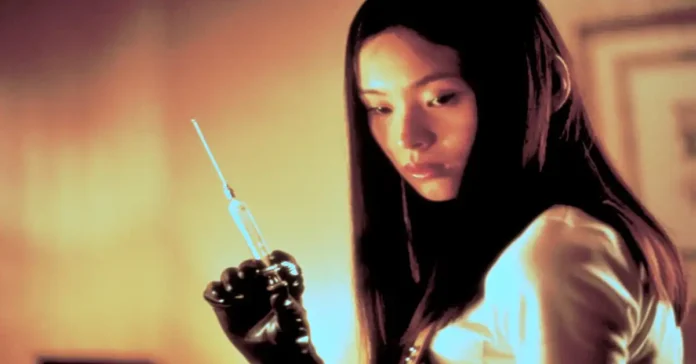
Audition (1999) ending explained: was the torture real or a hallucination?
Walk into any late-night film forum, and you will see the exact same debate playing out. Half the audience swears the climax of Audition is a literal crime. The other half insists the entire bloodbath is a guilt-ridden dream cooked up by a lonely middle-aged guy who feels dirty about taking advantage of young women.
Why does this split exist in the first place?
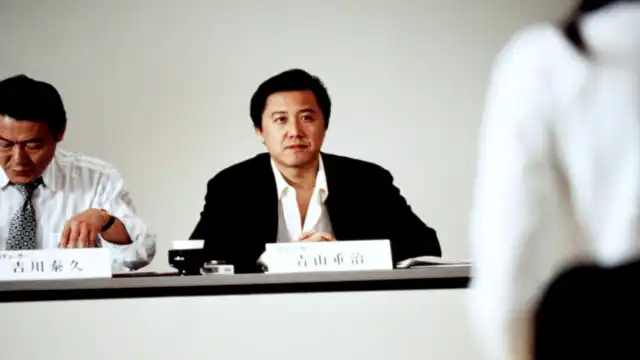
Because director Takashi Miike pulls the rug out from under your feet. The movie starts as a quiet, glossy romantic drama. Widowed documentary producer Shigeharu Aoyama (played with understated vulnerability by Ryo Ishibashi) mourns his late wife Ryoko for seven long years. Pushed by his teenage son Shigehiko, he finally decides to date again. His producer buddy Yoshikawa schemes up a mock casting call for a non-existent feature film so Aoyama can handpick his dream woman from thirty hopeful applicants.
Enter Asami Yamazaki (played by Eihi Shiina), dressed in pristine white, radiating silence, fragility, and classical grace. Aoyama falls hard. He ignores every warning sign flashing in neon red. Then, ninety minutes in, the film shatters into a fractured kaleidoscope of melting timelines, floating memories, vomit-filled dog dishes, acupuncture needles, and severed limbs.
When Aoyama suddenly wakes up tucked into a sunny seaside hotel bed with both feet intact, you breathe a sigh of relief. You think: Phew, it was just a bad dream.
Then the camera snaps back to his living room rug. The needles sink in. The wire tightens.
To settle this dispute once and for all, we have to look closely at three pieces of evidence: the parallel visual cues Takashi Miike leaves on screen, the author’s original canon in the Ryu Murakami novel, and the chemical nature of the paralytic drug pulsing through Aoyama’s veins.
The 13-minute fever dream: deconstructing the hallucination

The root of all the confusion sits inside a surreal thirteen-minute sequence that hits right after Aoyama drinks a glass of whiskey at home.
Aoyama returns from searching for Asami, pours a drink, and feels his body turn to heavy lead. As he wobbles and falls, time collapses. Miike plunges the audience into an altered state of consciousness where memories no longer behave.
If you want to know what was real, you first need to catalog what was indisputably inside Aoyama’s head during this transitional fugue.
1. The warped dinner date
We see Aoyama and Asami sitting across from each other at the elegant restaurant where they had their first date. Only the conversation has mutated. The pleasantries are gone. Asami speaks in cold, accusing riddles about love and betrayal.
Suddenly, Aoyama glances around the dining room. Sitting at nearby tables are people who have no business being there: his dead wife Ryoko, his son’s teenage girlfriend, and Rie, the office colleague he flirted with earlier. Characters exchange faces mid-conversation.
This is pure psychological projection. Aoyama’s buried shame is bubbling up. He feels guilty for replacing his deceased wife. He feels guilty for using a fake audition to trick young women. His brain mashes all these feminine figures together into a single trial where he is the accused criminal.
2. The abused ballerina and the wheelchair man
Aoyama witnesses Asami’s childhood flashbacks. He watches a younger version of her being burned with smoking irons and sexually abused by an older ballet instructor whose own feet have been amputated.
How could Aoyama see this? He never visited her childhood home. He never saw those private events.
This moment is a cinematic blend. The film allows Asami’s personal history to bleed into Aoyama’s fading awareness. She is physically in the room with him, whispering her life story into his ear while he lies frozen on the carpet. His unconscious mind converts her spoken trauma into vivid, terrifying pictures.
3. The burlap sack in aoyama’s mind
During this fever dream, Aoyama walks through the door of Asami’s apartment. He unties the mysterious burlap sack resting on the tatami mats. Out spills a horribly maimed man – Asami’s missing music producer, Mr. Shibata. The man has no tongue, missing ears, chopped fingers, and no feet. Asami enters, vomits into a dog dish, and the starving prisoner laps it up like an animal.
Is Aoyama literally standing in her room watching this happen? Of course not. He is lying on his floor in Tokyo.
His dream is constructing an elaborate visual metaphor out of the dark warnings his friend Yoshikawa gave him. Yoshikawa had warned him that Asami’s references vanished into thin air. A bar manager had told him about body parts found in an alley. Aoyama’s dreaming mind connects the dots, producing a grotesque horror show that explains where those missing men went.
4. The false awakening at the hotel
This is the scene that tricks most first-time viewers.

Right as the nightmare reaches peak intensity, Aoyama gasps and wakes up in the hotel room. Sunlight streams through the window. The breeze is soft. He throws off the bedsheets and frantically inspects his ankles. Both feet are completely intact. Asami walks in wearing comfortable clothes, smiling gently. Aoyama grabs her hand and asks her to marry him. She agrees.
Have you ever had a dream inside a dream? You dream that you wake up from a nightmare, get out of bed, brush your teeth, and only then realize you are still fast asleep.
That is exactly what Takashi Miike stages here. It is a textbook psychological defense mechanism. Aoyama’s brain cannot handle the sheer terror of what is happening to his body, so it creates a desperate, romantic fantasy where everything turned out fine. He drifts back to sleep inside the hotel illusion, and the camera cuts straight back to cold reality: he never left his living room floor.
The parallel visual cues: proof the torture was physical
If the middle of the climax is packed with fever dreams, does that mean the torture itself was imaginary?
No. In fact, Miike leaves unmistakable visual breadcrumbs throughout the film that prove Asami’s violence was one hundred percent real.
The moving sack: the ultimate litmus test
The single most important shot in the entire movie happens around the forty-minute mark, long before any drugs or dreams enter the story.
Aoyama sits in his brightly lit office, staring at Asami’s resume. He decides to pick up the phone and call her.
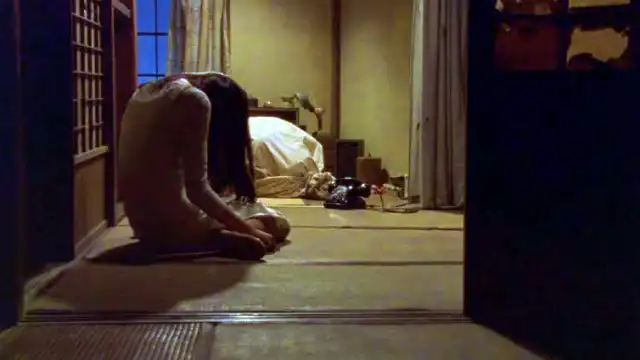
Miike cuts away from Aoyama entirely. We are transported to a dark, desolate apartment. Asami is sitting on the tatami mats, motionless, staring at a black rotary phone on the floor. She has clearly been sitting there for days, waiting for him to call.
When the telephone rings, she doesn’t answer right away. She lets it ring. A broad, sinister grin slowly spreads across her face.
And then, in the murky background behind her, a giant burlap sack on the floor suddenly rolls over and groans.
Ask yourself this critical question: Whose perspective are we seeing?
Aoyama is not there. He does not know what her apartment looks like. He does not know she owns a burlap sack. He hasn’t ingested any drugs. This scene is filmed from an objective, omniscient camera angle.
Miike deliberately shows us this moment to prove to the audience that Asami is a functioning, active psychopath in the real world. She has already kidnapped and dismembered someone before she ever set eyes on Aoyama. If the sack is real — and the objective camera proves it is — then Asami’s capacity for surgical torture is an established physical fact, not an anxious fantasy.
NARRATIVE REALITY CHECK
| Objective Reality (Real) | Subjective Projection (Dream) |
|---|---|
| Moving sack in apartment | Dead wife at dinner table |
| Poisoned whiskey bottle | Swapping faces in memories |
| Paralytic drug injection | Man eating vomit from bowl |
| Acupuncture needles | Waking up safe at hotel |
| Severed foot with wire saw | Hallucinatory flashbacks |
| Son kicks Asami down stairs | Asami whispering to corpse |
The pharmacology of the paralytic drug
When Asami reveals herself in Aoyama’s living room, she doesn’t just tie him up with ropes. She pulls out a massive glass syringe filled with a clear fluid and plunges it into his body.
As she depresses the plunger, she explains the science behind her weapon with eerie calmness.
She informs him that she is administering a paralytic drug. This chemical completely shuts down somatic motor function. His muscles refuse to respond to commands from his brain. He cannot stand, punch, kick, or even scream.
Crucially, she notes that the drug does not numb the sensory nervous system. His pain receptors remain fully awake, active, and firing on all cylinders.
This medical detail explains the surreal nature of the scene. When human beings are given powerful neuromuscular blockers combined with sedatives, their consciousness drifts into a twilight state. Patients who experience anesthesia awareness frequently report bizarre dissociative hallucinations, out-of-body experiences, and temporal distortion.
Aoyama’s brief mental escape to the hotel room was not evidence that the room was real. It was the pharmacological reaction of a terrified mind trying to detach from agonizing sensory input. His physical body was paralyzed on the floor, absorbing every single needle prick.
The broken dowry: kiritanso vs the barren tatami floor
To truly grasp the tragedy of Audition, you have to understand the cultural expectations clashing beneath the surface.
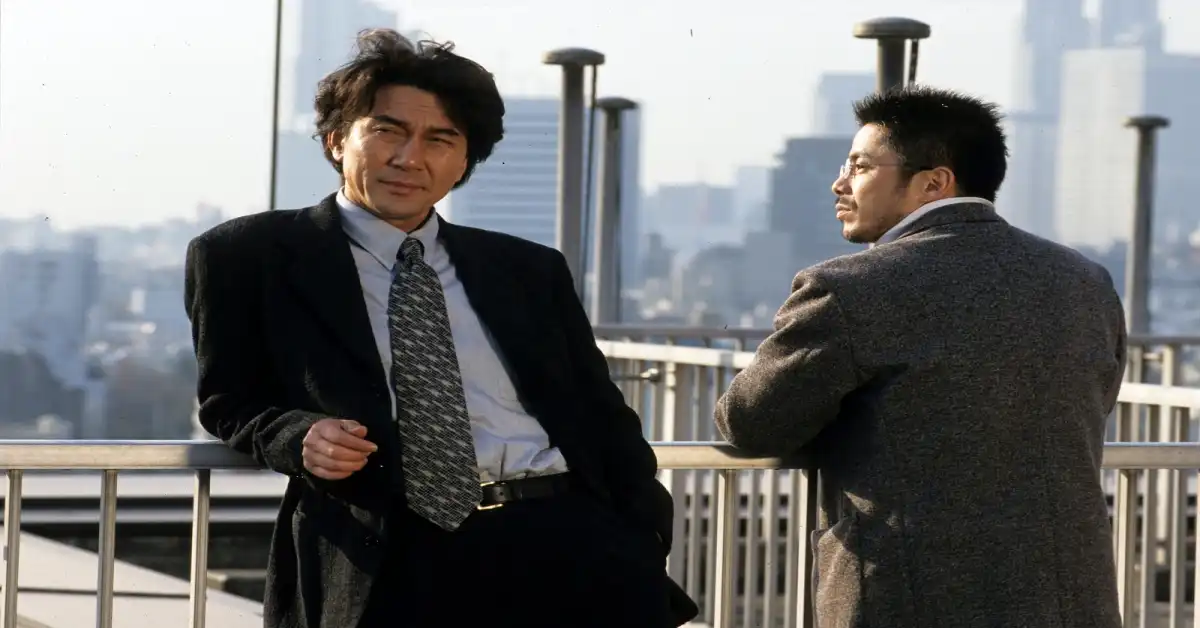
Aoyama represents the conventional, comfortable middle-class Japanese male. In traditional Japanese culture, when a respectable woman enters marriage, her family prepares a dowry chest known as a kiritansu (a traditional wardrobe crafted from paulownia wood). The kiritanso symbolizes domestic order, ancestral heritage, feminine obedience, and the quiet promise of a peaceful, well-managed household.
When Aoyama holds his audition, he is searching for a woman who fits that antique picture-frame fantasy. He reads Asami’s resume and sees an obedient, quiet ex-ballerina who knows her place, honors discipline, and will step seamlessly into his home like a bride with her pristine dowry. He wants a living doll who will preserve his domestic comfort without making messy emotional demands.
What does Asami’s actual home look like?
There is no polished wooden kiritanso holding fine silk kimonos. There is no domestic warmth. Her apartment is a barren, rotting void with nothing inside except a cold floor, a disconnected black telephone, and a squirming burlap sack stuffed with human misery.
The horror of Audition is the violent collision between Aoyama’s patriarchal daydreams and the grim, broken reality of the woman he tried to objectify. The violence is real because the clash of worlds is real. Asami tears down his tidy fantasy with cold steel.
What Takashi Miike and the Ryu Murakami Novel Confirm
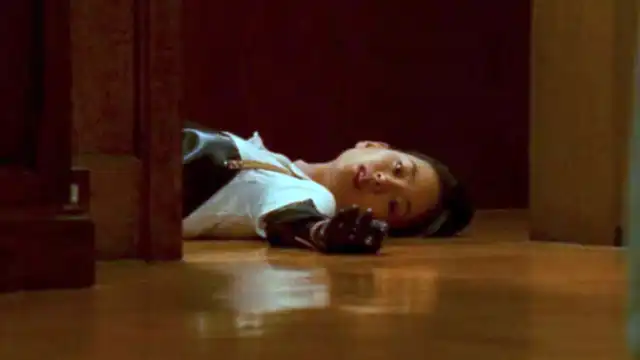
If the visual clues still leave room for doubt, external primary sources eliminate all ambiguity.
1. The Canon of Ryu Murakami’s Novel
Takashi Miike’s film is a faithful adaptation of the 1997 novel Audition, written by celebrated author Ryu Murakami.
In Murakami’s novel, there is no psychedelic ambiguity. There are no shifting faces at dinner tables, no phantom wives appearing in restaurants, and no confusing hotel resets.
The novel is written as a tight, procedural psychological thriller. Asami Yamazaki is explicitly depicted as a cunning, deeply damaged serial predator. She targets men who pretend to love her while treating her like a collectible possession. She poisons Aoyama’s drink, injects him with a paralytic drug, drives needles into his flesh, cuts off his foot with wire, and is eventually stopped by his son.
Screenwriter Daisuke Tengan and director Takashi Miike preserved Murakami’s plot beat for beat. The only thing Miike added was cinematic flair: he visualized Aoyama’s internal mental collapse while the neurotoxin invaded his brain. The events of the plot remained completely intact.
ADAPTATION COMPARISON
| Ryu Murakami’s Novel (1997) | Takashi Miike’s Film (1999) |
|---|---|
| Linear thriller structure | Surreal, dream-logic shift |
| Zero hallucinatory doubts | 13-minute drug fugue state |
| Explicit serial killer lore | Psychological horror style |
| Torture is 100% physical | Torture is 100% physical |
| Son saves father with axe | Son saves father with kick |
2. Takashi Miike’s Explicit Statements
Does the director consider the ending a dream?
In interviews and director commentaries following the film’s premiere at the Rotterdam International Film Festival, Takashi Miike has repeatedly dismissed the theory that the torture was just a nightmare.
Miike explained that reducing the final act to a simple dream would rob the movie of its moral weight. In his eyes, the physical agony Aoyama experiences is the unavoidable harvest of the seeds he sowed.
Miike once remarked that he viewed the horrific climax as a bizarre form of romantic fulfillment. In Asami’s twisted mind, genuine love can only exist through absolute, shared agony. As she famously whispers while sliding needles into his flesh: “Words create lies. Pain can be trusted.”
If Aoyama woke up with his foot intact, the tragedy would vanish. The story demands that he suffer genuine, irreversible mutilation.
The Foot-Cutting Climax: Decoding the “Kiri-Kiri” Scene
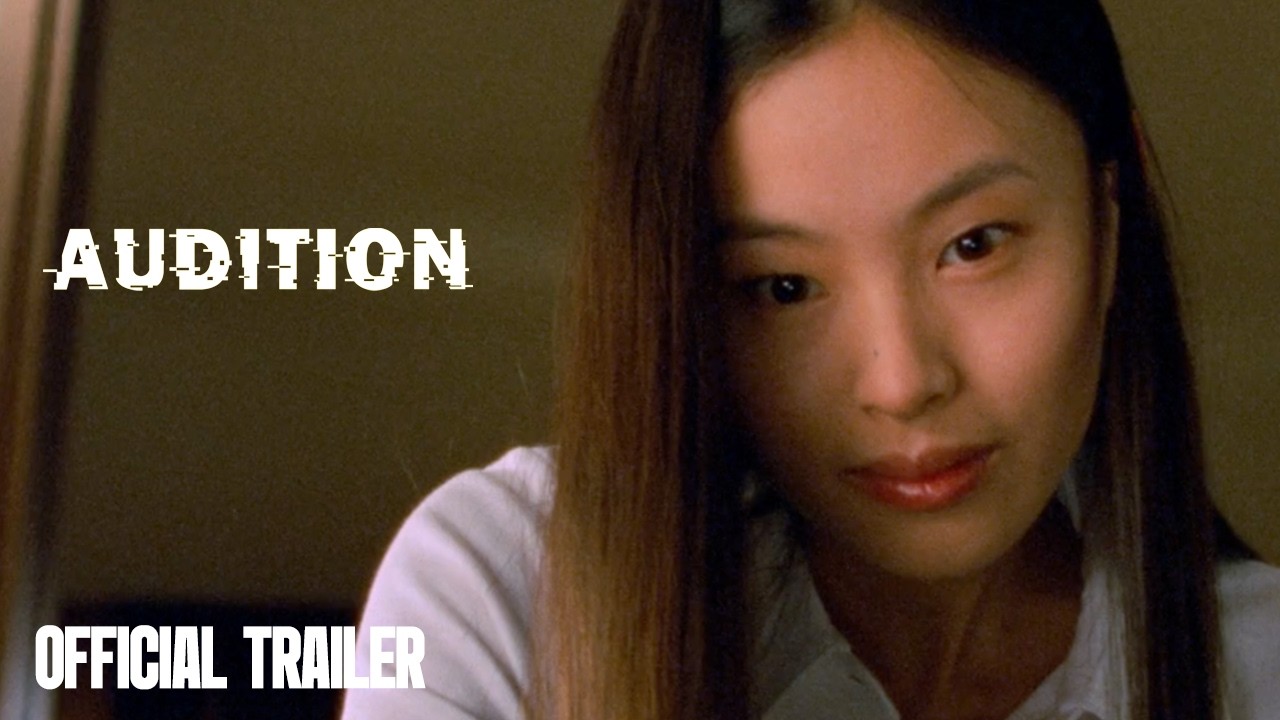
Let’s look closely at the mechanics of the torture scene itself.
Asami straps on a heavy black leather apron and pulls on long protective gloves. She opens her medical kit. She produces long acupuncture needles and inserts them into Aoyama’s chest, his stomach, and directly into the soft skin beneath his eyes.
As she presses each needle down, she repeats a rhythmic, sing-song chant that has haunted viewers for decades:
“Kiri, kiri, kiri, kiri… motto, motto.”

What does that mean? In Japanese, kiri-kiri is an onomatopoeia describing a sharp, grinding, piercing pain, while also acting as a play on the verb kiru (to cut). She is gleefully saying, “Deeper, deeper… cut, cut, cut.”
Interestingly, Eihi Shiina revealed that this chilling phrase was not in the original shooting script. Takashi Miike improvised it on set, whispering the lines to Shiina right before the cameras rolled.
Next comes the infamous wire saw. She loops a flexible steel wire around Aoyama’s left ankle. Grasping the ring handles on either side, she begins a rhythmic back-and-forth sawing motion. The sickening sound of metal chewing through cartilage and bone fills the room.
Notice how Miike shoots this sequence. The camera does not cut away to an abstract cloud. It lingers on the physical physics of the injury. When the blade finishes its job, Aoyama’s foot drops onto the floor with a wet, heavy thud.
Then comes the final anchor of reality: the son’s arrival.
Aoyama’s teenage son, Shigehiko, walks through the front door. Asami stalks into the hallway with a can of mace to eliminate the witness. Shigehiko reacts on pure instinct, delivering a desperate kick that sends Asami tumbling backward down the stairs. Her neck snaps against the floorboards.
If this were all an internal hallucination about Aoyama’s sexual guilt, why would his son be the one to end the fight? Why would the narrative resolve with a clumsy, realistic physical tumble down a staircase?
The presence of a third-party witness who was completely unaware of the fake audition grounds the climax entirely in objective reality. Shigehiko sees the blood. He sees his father’s severed foot. He sees the dying woman at the bottom of the stairs.
Reality vs Hallucination
To keep everything clear, here is a direct breakdown comparing the film’s subjective dream elements against its physical facts:
| Climax Element | Subjective Nightmare (Aoyama’s Mind) | Cold Physical Reality (What Happened) | Narrative & Cinematic Proof |
|---|---|---|---|
| The Restaurant Shift | Yes | No | Dead wife Ryoko and secretary Rie appear at nearby tables; impossible in real life. |
| The Burlap Sack Prisoner | Mental projection of real trauma | The prisoner was already dead or hidden | Aoyama was never in her apartment; his brain assembled rumors told by Yoshikawa. |
| The Hotel Room “Awakening” | Yes | No | Classic dissociative fugue; Aoyama’s mind fled the trauma of the paralytic injection. |
| The Paralytic Drug | No | Yes | Asami spiked his liquor bottle; neurotoxin causes complete somatic motor loss. |
| Acupuncture Needles | No | Yes | Needles physically inserted into chest and ocular tissue while sensory nerves fired. |
| The Amputated Foot | No | Yes | Severed with a surgical wire saw; confirmed by both Miike’s statements and the novel. |
| Asami’s Death | No | Yes | Shigehiko kicks her down the stairs, breaking her spine/neck; she dies whispering. |
Why Aoyama’s Guilt Twists the Violence
Why did Takashi Miike scramble reality and dreams together so intensely? Why not just shoot a straightforward slasher sequence?
Because Audition is not a simple slasher movie. It is a psychological post-mortem on loneliness, entitlement, and the male gaze.
Aoyama never saw Asami as a real human being with past trauma, flaws, and agency. He saw an aesthetic object. He saw an application form with a pretty headshot. When he slept with her at the hotel, he made grandiose promises of eternal devotion that he had no intention of keeping. He kept his son a secret. He kept his true motivations buried.
When Asami turns the tables, she does not just punish his body — she shatters his self-image.
The hallucinatory sequence exists because Aoyama’s psyche is collapsing under the weight of its own hypocrisy. He has to confront his dead wife, his deceitful audition, and the ruined lives of others before he can face the wire saw. The dream is where he admits his guilt to himself; the torture is where he pays the physical bill.
THE THREE-STAGE CLIMAX
| Stage | Title | Description |
|---|---|---|
| 1 | The Chemical Drop | Aoyama drinks spiked whiskey > motor paralysis sets in. |
| 2 | The Dissociative Dream (13 mins) | Guilt hallucination > restaurant date > hotel illusion. |
| 3 | The Cold Reality | Acupuncture needles > wire saw > son terminates Asami. |
The Authoritative Ruling
So, what is the final verdict?
The intermediate sequences — the strange dialogue at the restaurant, the dead wife watching from across the room, the false awakening in the hotel bed — were vivid, drug-induced hallucinations born from guilt and chemical sedation.
However, the torture itself was cold, brutal, physical reality.
Aoyama was genuinely paralyzed on his carpet. Asami genuinely inserted needles into his flesh. She genuinely sawed off his left foot. And his son genuinely killed her on the stairs.
Aoyama survives the ordeal, but his life as a comfortable, detached observer is over forever. Asami took his foot so he could never run away again. She forced him to share her agony. In the brutal, unforgiving universe of Takashi Miike, you don’t get to wake up from your mistakes — you carry their scars for the rest of your days.
For a closer look at the physical mechanics and unsettling sound design behind the film’s legendary climax, check out the Audition Torture Scene Analysis. This video clip illustrates how director Takashi Miike uses real-time sound and slow pacing during the living room sequence to emphasize visceral physical trauma over dream-like abstraction.

