
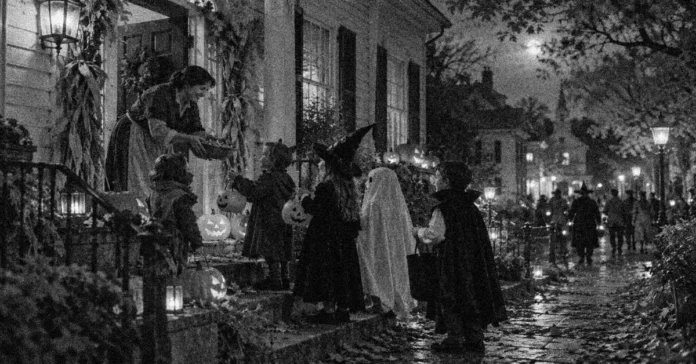
The Ancient Spark: Samhain and the Celtic New Year
To understand why kids walk the streets disguised as ghouls or superheroes, you have to wind the clock back more than two thousand years. Ancient Celtic communities across Ireland, Scotland, and the Isle of Man structured their entire lives around two main seasons: the light half and the dark half.
The Samhain festival (pronounced sow-in) marked the sunset of the harvest and the dawn of the Celtic new year on November 1. Winter in northwestern Europe was harsh, dark, and dangerous. Crops were gathered, livestock were brought down from high pastures, and weak animals were culled for meat to survive the freezing months ahead.
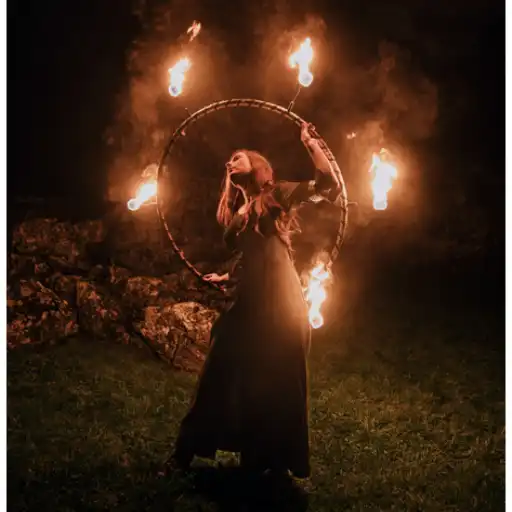
Celts viewed this seasonal shift as a liminal moment — a crack between two worlds where normal rules ceased to apply. During the night of October 31, the invisible boundary separating the living from the dead wore thin. Roaming spirits, otherworldly fairies known as the Aos Sí, and departed ancestors could slip directly into our world.
Some returning spirits brought comfort, but others brought disaster. Farmers worried that mischievous entities would sour their milk, kill their cattle, or ruin winter crop stores.
How did families protect their households? They placed offerings of milk, porridge, and bread outside their front gates to appease the unseen wanderers. Villagers gathered atop sacred hills to extinguish their domestic hearths and ignite massive communal bonfires. These roaring blazes provided spiritual protection, ritual warmth, and a way to burn away agricultural refuse before the hard frost set in.
Costumes played a protective role from the very start. People feared meeting a hostile spirit on a dark country road. If a ghost crossed your path, you certainly did not want it to realize you were a living human being.
Travelers disguised themselves in animal hides, woven straw masks, and cloaks, often smearing soot across their skin to blend in with the shadows. By masquerading as spirits themselves, they walked the fields unbothered. This survival trick marks the earliest chapter in the history of Halloween costumes, turning fearful disguise into a communal habit.
The Ghoulish Turnip Lantern
Pumpkins are everywhere in autumn displays today, but they are native to North America. Ancient Celts did not have large orange squash sitting in their gardens. Instead, they relied on a vegetable that was tough, knobby, and notoriously difficult to hollow out: the turnip.
Folks hollowed out large rutabagas, turnips, and beets, carving grotesque grimaces into the flesh to scare off restless souls. An ember lifted directly from the communal Samhain bonfire was placed inside, transforming the root vegetable into a portable lantern.
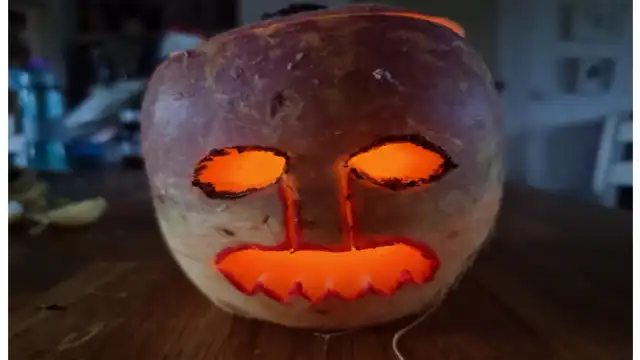
Irish folklore later personified these eerie lights through the legend of Stingy Jack, a notorious drunkard and trickster who deceived the Devil multiple times. According to local myth, Jack’s sins kept him out of Heaven, while the Devil banished him from Hell. Cursed to wander the earth in perpetual darkness, Jack received a single burning coal from the underworld, which he dropped into a hollowed-out turnip to light his endless path.
Gazing at an authentic Irish turnip lantern shows just how genuinely terrifying early Halloween decor was compared to modern smiling porch pumpkins. These gnarly, shriveled root faces were meant to frighten demons, not welcome trick-or-treaters.
Souling, Purgatory, and Sweet Charity
The Christian church moved across Celtic territories throughout the early Middle Ages. Church leaders routinely absorbed existing seasonal holidays rather than attempting to wipe them out completely.

In the 8th century, Pope Gregory III designated November 1 as a feast day honoring all Christian martyrs and saints: All Saints’ Day, formerly known as All Hallows’ Day. The evening prior — the traditional night of Samhain — became All Hallows Eve, which eventually contracted into the name Halloween. Several decades later, the Church placed All Souls’ Day on November 2, creating a three-day observance known as Allhallowtide.
This liturgical shift fundamentally changed the doorstep interaction. Christianity introduced the doctrine of Purgatory — a holding place where souls of the deceased experienced purification before ascending to Heaven. Families believed fervent prayers from the living could shorten their loved ones’ stay in these purifying fires.
The custom of souling and guising emerged directly from this theological belief. Impoverished peasants and young children walked from manor to manor during Hallowtide. They knocked on doors and made a simple offer to wealthy landowners: give us food, and we will pray for your dead kin.
Homeowners handed out small, spiced shortbread biscuits known as soul cakes.These round treats were packed with cinnamon, ginger, nutmeg, and sweet dried currants. Before slipping the dough into the oven, bakers stamped a cross into the center to mark them as holy charity.
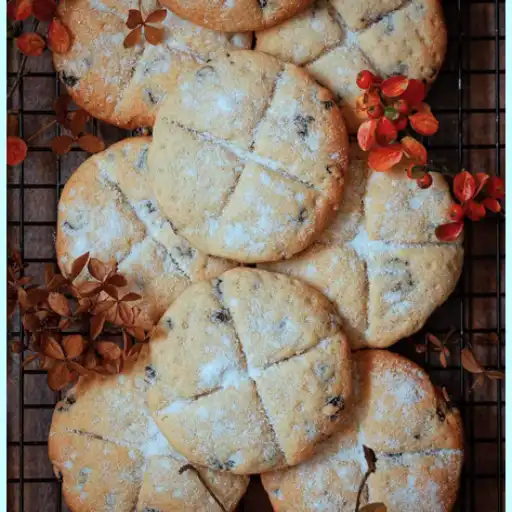
Every soul cake eaten meant one soul released from spiritual torment. Children sang traditional ballads as they went souling through muddy English and Irish lanes:
“A soul! A soul! A soul cake!
Please, good Missus, a soul cake.
An apple, a pear, a plum, a cherry,
Any good thing to make us all merry.”
The custom grew so common that William Shakespeare referenced it casually in his 1593 play The Two Gentlemen of Verona, describing a man who whined like “a beggar at Hallowmas.”
Notice how the sociological dynamic operated here. Door-to-door food gathering was not an entitlement or a corporate marketing stunt. It was an essential social contract balancing rural poverty, religious devotion, and community charity.
Scottish Guising
Souling underwent another major evolution across Scotland and northern Ireland during the 18th and 19th centuries. The tradition separated from Church dogma and took on a theatrical, secular flavor called guising.
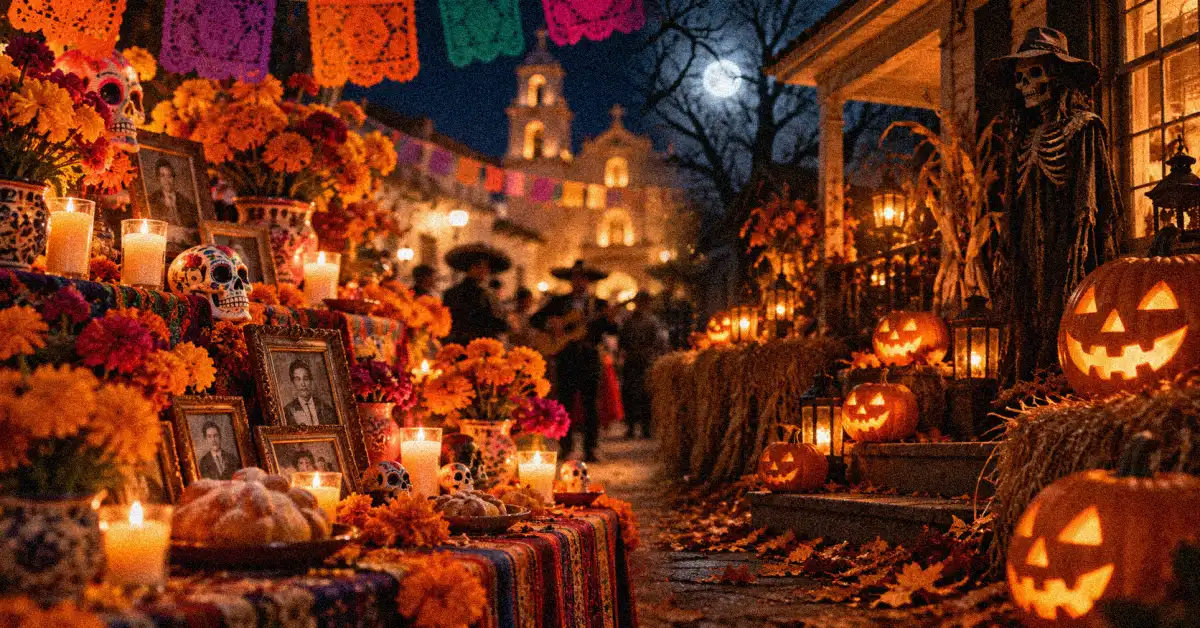
The term came straight from the word “disguising.” Children dressed up in makeshift costumes, blackened their faces with burned cork, and carried hollowed-out turnip lanterns from cottage to cottage.
The rules shifted dramatically. You were never allowed to simply hold out your hand and beg. If you wanted a treat, you had to earn it through an actual performance.
Guising children stood on doorsteps singing folk ballads, reciting poems, reciting tongue-twisters, or dancing a quick jig. Once the child performed their “trick” or routine, the homeowner rewarded them with apples, hazelnuts, coins, or ginger biscuits.
That distinction flips our modern assumptions upside down. The “trick” was not a threat of vandalism — it was a creative talent showcased on the spot!
Transatlantic Chaos
Millions of Irish and Scottish immigrants crossed the Atlantic Ocean during the mid-19th century, pushed by the devastating Irish Potato Famine. They carried their customs, superstitions, and folk celebrations into North American cities and frontier settlements.
The immigrants quickly abandoned stubborn turnips after discovering pumpkins, which were softer to carve, much larger, and readily available across American farms. The festive social atmosphere, however, took an aggressive detour.
Halloween in late 19th-century America was not the sweet family event we recognize. It became a night of unchecked, semi-organized mischief led by bored teenagers and young men.
Known colloquially as “Mischief Night,” the celebration leaned heavily on petty vandalism. Pranksters removed garden gates, tied doorknobs to neighboring houses, soaped shopfront windows, and jammed chimneys with wet turf. In farming communities, teenagers disassembled horse-drawn wagons in fields and rebuilt them completely intact atop barn roofs.
When the Great Depression struck in the 1920s and 1930s, the mood darkened further. Frustrated youths smashed streetlights, set fires in trash bins, slashed tires, and tipped over outhouses. Halloween had become a serious public safety issue that cost towns thousands of dollars in property damage.
Communities realized they had to step in before someone burned down a city block. The answer was simple: bribe the troublemakers.
The Prairie Extortion: Alberta, 1927
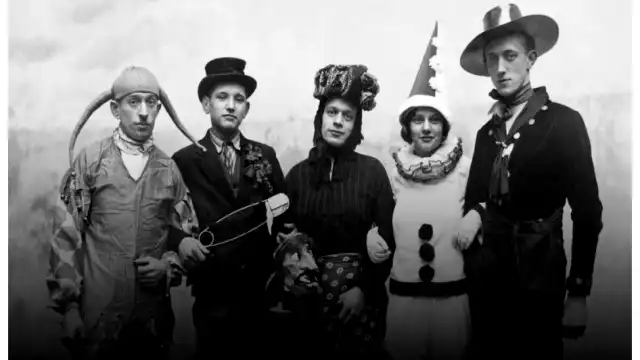
Historians spent decades searching for the exact moment the phrase “trick or treat” entered the historical record. For years, people assumed it sprang from 1950s Madison Avenue ad agencies or California suburbia.
The truth sits in the windy prairie towns of Alberta, Canada.
On November 3, 1927, The Blackie Times published an article describing Halloween night in the small village of Blackie. The local reporter noted that youth pranks had decorated the main street with barrels, gates, and wagon wheels. The article then recorded a striking sentence:
“The youthful tormentors were at back door and front demanding edible plunder by the word ‘trick or treat’ to which the inmates gladly responded and sent the robbers away rejoicing.”
The very next day, the Calgary Daily Herald reported a nearly identical scene in the nearby town of High River.
Notice the phrasing: “edible plunder” and “robbers.” This was low-stakes extortion! The kids were laying their terms out clearly: give us treats, or we will play a destructive trick on your house.
The concept spread rapidly across western Canada and crept southward into the American Midwest throughout the 1930s. It gave adults an easy bargain: hand over donuts, popcorn balls, or apples, and your fence stays intact.
Suburban Pacification
World War II temporarily silenced the tradition due to wartime sugar rationing. When the war ended, America experienced the largest suburban building boom in its history.
Millions of young families moved into newly constructed tracts with identical sidewalks, close-set houses, and hundreds of children per block. Civic clubs, schools, and neighborhood associations seized this suburban layout to domesticate Halloween permanently.
They shifted the holiday’s target audience downward. Instead of teenagers pulling late-night stunts, Halloween became an event for five-to-ten-year-olds accompanied by parents.
Popular culture solidified this transformation:
- In 1951, Charles Schulz featured trick-or-treating in his widely read Peanuts comic strip.
- In 1952, Walt Disney released the hit cartoon Trick or Treat, featuring Donald Duck facing off against Huey, Dewey, Louie, and Witch Hazel.
- In the mid-1950s, UNICEF launched its famous orange coin boxes, turning the evening into an organized charity drive for children worldwide.
Candy manufacturers watched this explosive suburban growth with dollar signs in their eyes. Up until the late 1950s, treats were mostly homemade: caramel apples, popcorn balls, spiced cookies, or roasted nuts. Candy companies successfully marketed individually wrapped chocolate bars as cleaner, safer, and far more convenient for busy parents greeting dozens of visitors. By the 1970s, mass-produced miniature candy bars completely took over the trick-or-treat bag.
The Sociological Mirror
Tracing the history of trick or treating reveals a fascinating sociological evolution. Look at how the central dynamic morphed across centuries:
- Samhain (Ancient Celtic): Leaving food outside to protect crops and herds from wandering ancestral spirits.
- Souling (Medieval European): Needy villagers trading vocal prayers for spiced cakes to help souls escape Purgatory.
- Guising (Scottish & Irish): Youth staging doorstep performances of jokes, songs, and poems in exchange for orchard fruit.
- Pranking (Early 20th Century): Frustrated adolescents demanding “edible plunder” to spare property from destruction.
- Modern Suburbia: Community socialization where neighbors open their doors to celebrate childhood fantasy and bond over treats.
Consider how rare this ritual is in our society. On almost any other night of the year, knocking on a stranger’s door after sunset would raise immediate suspicion. Halloween suspends our normal social boundaries.
Neighbors who rarely talk step onto brightly lit porches, greet local children, and admire homemade outfits. It remains one of the few shared community rituals left where ordinary neighborhoods voluntarily become an open village. The fear of ghosts and the threat of stolen wagon wheels may have vanished, but the ancient instinct to open the door and share food in the dark heart of autumn lives on.

