
The Core Philosophy: Running From Ghosts vs Setting the Dinner Table
If you boiled both holidays down to a single emotional impulse, what would you find?
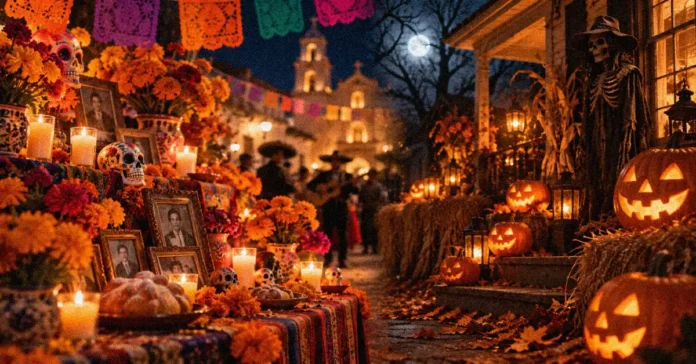
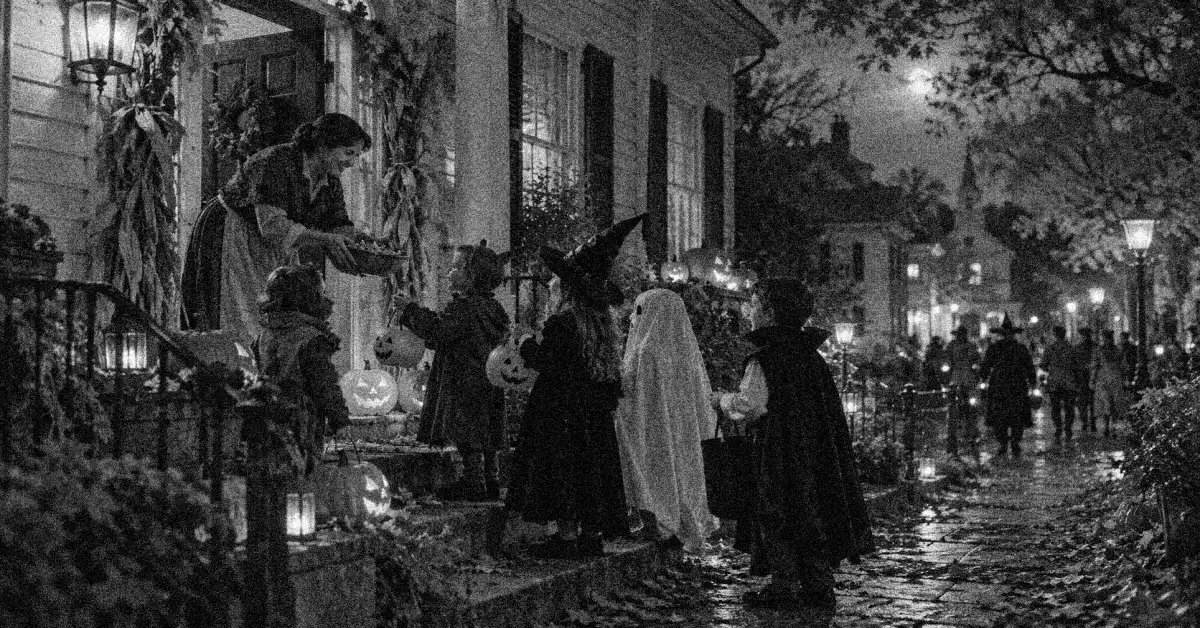
Halloween is rooted in defense. Its earliest rituals emerged from the human desire to ward off the dark, hide from malicious phantoms, and survive the cold bite of winter. Death, in the traditional Halloween framework, is eerie, chilling, and dangerous. You hang fake spiderwebs, carve menacing faces into gourds, and wear disguises so restless spirits do not recognize you as prey.
Día de los Muertos — or Day of the Dead — turns that entire concept upside down. It is not an exercise in fear; it is an act of pure hospitality.
Rather than locking the doors and hiding from spirits, Mexican families throw open their gates and prepare an elaborate feast for them. The dead are not gruesome ghouls coming to haunt the living. They are cherished grandparents, siblings, parents, and friends returning home for a joyful twenty-four-hour family reunion.
Think about the psychological contrast for a second. Halloween asks, “How do we keep the dead away?” Día de los Muertos asks, “How do we make our ancestors feel welcome after their long journey back?” That simple shift in perspective changes everything from the music you play to the food you put on the table.
The Calendar Clash
People frequently mix up the dates, assuming the Day of the Dead is simply “Mexican Halloween” celebrated on October 31. That is factually wrong.
The celebrations occupy distinct calendar slots with separate theological roots:
- October 31 (Halloween / All Hallows’ Eve): The traditional Celtic eve of the new year, later absorbed by the Western Christian calendar as the vigil before All Saints’ Day.
- November 1 (Día de los Inocentes / Día de los Angelitos): Dedicated entirely to honoring children and infants who have passed away. This day coincides with the Catholic All Saints’ Day.
- November 2 (Día de los Muertos): Dedicated to deceased adults, coinciding with the Catholic All Souls’ Day.
While trick-or-treaters pack away their plastic buckets before midnight on October 31, families celebrating Día de los Muertos are just getting started. The preparation often takes weeks, culminating in graveyard vigils, communal music, and shared storytelling that stretch through the first forty-eight hours of November.
All Saints Day vs Samhain and Aztec Eternity
Where did these traditions actually originate? Neither of them appeared out of thin air. Both represent centuries of cultural collision, colonial history, and religious survival.
Halloween traces its lineage back to the ancient Celtic fire festival of Samhain. More than two thousand years ago in Ireland, Scotland, and northern France, Celts marked November 1 as their new year. They believed the barrier between the physical world and the supernatural realm grew porous on the night before. Bonfires were lit atop hills, and villagers wore animal skins to disguise themselves from roving fairies and demons.
When the Catholic Church expanded across Europe, Pope Gregory III in the eighth century shifted the feast of All Saints to November 1. Samhain did not disappear. It blended with church customs, eventually giving birth to All Hallows’ Eve, or Halloween.
Día de los Muertos has an entirely separate origin story rooted in Mesoamerica. Long before Spanish ships reached the Americas, civilizations like the Nahua, Maya, Mixtec, and Zapotec viewed death not as an ending, but as another phase in the universe’s infinite cycle.
The Aztecs dedicated an entire month to honoring the dead, overseen by Mictecacihuatl, the Queen of Mictlán (the underworld). The deceased did not go to Heaven or Hell based on their moral deeds. Instead, their destination depended on how they died — whether in battle, during childbirth, by drowning, or from old age. Reaching Mictlán was not an easy stroll. Souls had to traverse nine grueling levels of obstacles, from crossing sharp obsidian hills to swimming raging subterranean rivers.
When Spanish conquistadors and friars arrived in the sixteenth century, they tried to stamp out indigenous rituals. Aztec families did what oppressed cultures often do: they adapted.
They blended their ancestral veneration rituals with the Catholic calendar’s All Saints’ and All Souls’ Days. The Queen of Mictlán retreated into memory, but the practice of building altars, burning aromatic copal tree resin, and feeding returning ancestors survived. Today, the tradition is so distinct and vital that UNESCO recognized the Indigenous Festivity Dedicated to the Dead on its Intangible Cultural Heritage list.
Anatomy of an Ofrenda
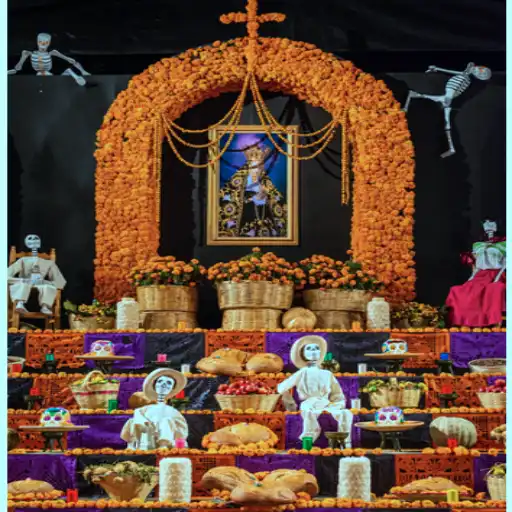
At the very heart of Day of the Dead traditions sits the ofrenda (altar). An ofrenda is not a shrine built for worship. Nobody prays to an ofrenda; it is a reception station designed to refresh exhausted spiritual travelers after their cosmic commute.
Families build these altars inside their living rooms, on public plazas, and across cemetery plots. Altars typically feature two tiers (representing earth and heaven), three tiers (adding the concept of purgatory or the underworld), or seven tiers, which mirror the seven stages a soul must climb to reach ultimate rest.
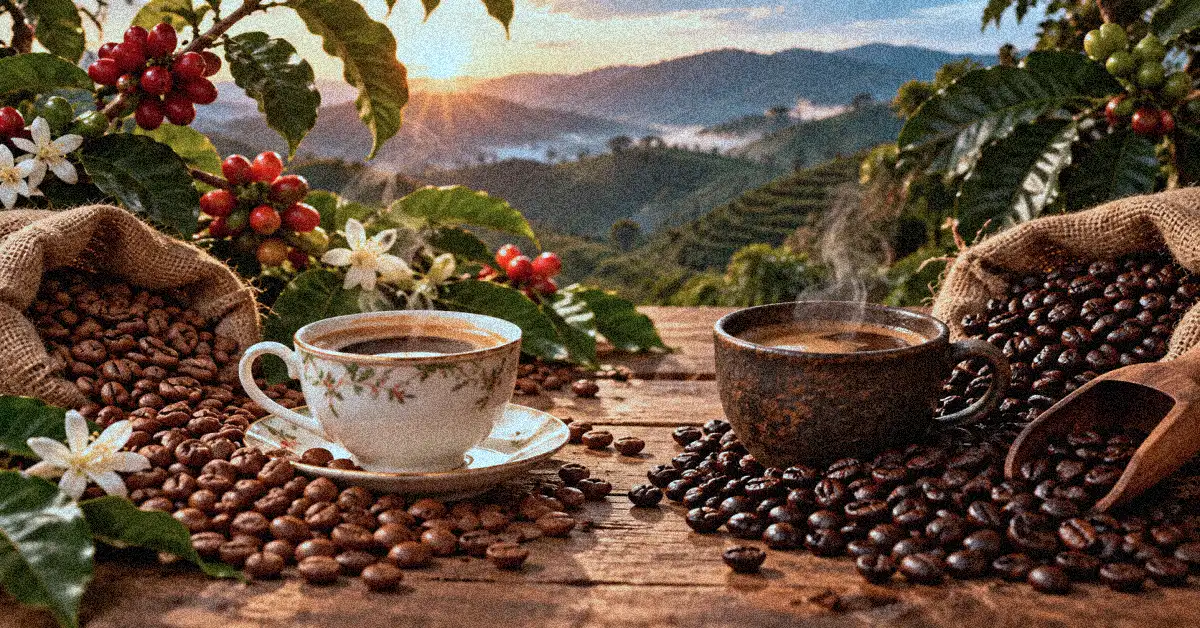
Every item placed on an ofrenda serves an exact, symbolic function grounded in the four classical elements:
- Earth (Food and Harvest):Pan de muerto (bread of the dead) is the centerpiece. This sweet, anise-scented bread is adorned with dough shapes that look like crossed bones and a teardrop. Families also cook their loved ones’ favorite meals — rich mole poblano, tamales, fresh tortillas, and seasonal pumpkin dulces. If grandpa loved black coffee and a small glass of smoky mezcal, those sit right beside his plate.
- Wind (Papel Picado): Delicately chiseled tissue paper banners flutter in the slightest breeze. When the paper moves, family members know the spirits have slipped quietly into the room.
- Water (Purity and Thirst): Wandering between realms is thirsty work. A simple, clear glass of water sits waiting so the traveler can quench their thirst upon arrival. A small dish of sea salt is placed beside it to purify the spirit and prevent spiritual decay during their journey.
- Fire (Candles and Illumination): Wax candles, or veladoras, are lit in abundance. Each flame honors an individual relative, acting as a beacon of warmth and guidance through the shadowy void.
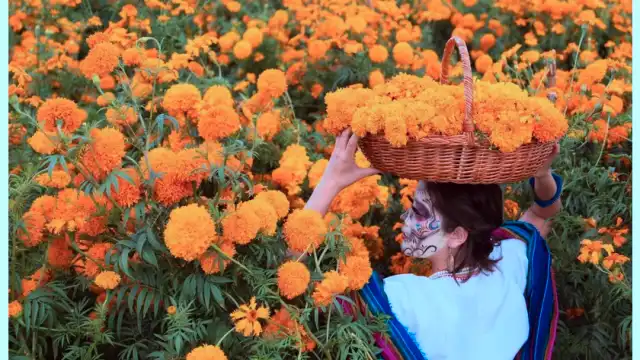
- Scent and Color (Cempasúchil Marigolds): The brilliant orange Mexican marigold, known in Nahuatl as cempohualxochitl (meaning “twenty flowers”), is everywhere. Why this flower? The petals have a potent, musky fragrance that ancestral spirits can detect across dimensions. Families scatter loose petals from the front doorway all the way to the altar, laying down a golden sensory runway so nobody loses their way home.
- Memory (Photographs and Personal Trinkets): Framed pictures of deceased relatives occupy the top tier. Without a photograph or spoken memory, a soul cannot cross over — a poignant reminder that people only truly die when their living descendants forget them. Alongside pictures, you will find children’s toys, favorite books, or well-worn tools.
The Tale of La Calavera Catrina
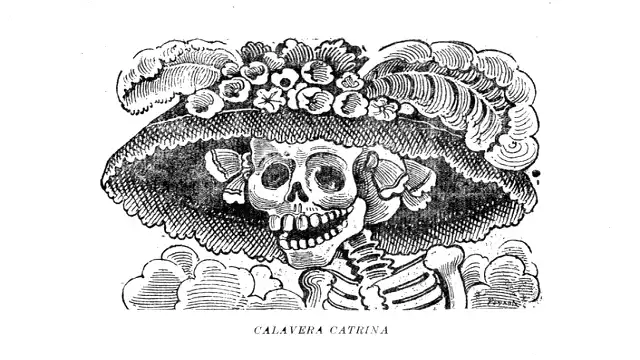
Walk into any department store around Halloween, and you will see masks featuring skulls painted with intricate flowers and lace patterns. People call them “sugar skull masks.” Yet the figure behind that design has a fascinating, biting political history that has nothing to do with monsters.
Her name is La Calavera Catrina.
Around 1910, Mexican printmaker and illustrator José Guadalupe Posada created a famous zinc etching. It depicted a grinning skeleton wearing a huge, flamboyant European-style hat packed with ostrich feathers and ribbons. He called her La Calavera Garbancera.
What was Posada’s point? In early twentieth-century Mexico, garbanceros was a slang insult for indigenous people who sold chickpeas (garbanzo beans) and tried desperately to deny their native roots. They powdered their dark skin white, dressed in aristocratic Parisian clothing, and acted like wealthy Europeans while ignoring their own heritage.
Posada drew a skeleton wearing that ridiculous hat to deliver an unforgettable cultural punchline: you can coat yourself in expensive European clothes all you want, but underneath it all, you are just a bag of bones. Death is the ultimate equalizer. Rich, poor, politician, peasant — everyone ends up a skeleton in the ground.
Decades later, muralist Diego Rivera took Posada’s skeleton, gave her a full body draped in an elegant gown, and placed her dead-center in his monumental 1947 mural, Dream of a Sunday Afternoon in Alameda Central Park. Rivera renamed her Catrina (slang for a wealthy, dapper lady).
Today, people paint their faces as Catrinas and Catrines during celebrations. It is not an attempt to scare children or look demonic. It is a bold, humorous embrace of mortality — a creative reminder to laugh at death because none of us get out of here alive anyway.
Halloween Costumes vs Día de los Muertos Calavera Attire
Comparing the outfits worn during both events reveals just how wide the cultural gulf truly is.
Halloween costumes are about disguise and escapism. You dress up as a superhero, a pop star, a vampire, or an alien. You take on an alter ego for an evening to step outside your everyday identity, collect candy, or deliver a fun jump-scare.
Día de los Muertos skull makeup (calavera face paint) is about celebration and connection. When people paint half or all of their face to resemble a decorated skull, they are not putting on a monster disguise. They are honoring mortality itself, walking in solidarity with the dead, and acknowledging that life and death are intertwined dancing partners.
Wearing plastic vampire fangs to a Día de los Muertos event feels completely out of place. Similarly, treating authentic sacred rituals as a cheap costume party ignores generations of resilience and family love.
Side-by-Side Reality Check
To see how these two holidays stack up across everyday rituals, consider these practical contrasts:
- Primary Mood: Halloween thrives on adrenaline, spooky thrills, horror cinema, and high-energy mischief. Día de los Muertos radiates warmth, nostalgic joy, familial love, and reflective storytelling.
- The Role of Candy: Halloween revolves around children collecting mass-produced candy from neighbors as part of the trick-or-treat tradition. Día de los Muertos uses handcrafted sugar skulls (calaveritas de azúcar) primarily as altar adornments, often inscribed with the names of the living or the dead across the forehead.
- Graveyard Atmosphere: Halloween portrays cemeteries as eerie places filled with cracked headstones, zombies, and fog machines. Día de los Muertos treats cemeteries as lively party venues. Families bring brooms and buckets to scrub tombstones, decorate graves with armfuls of marigolds, hire mariachi bands, share bottles of tequila, and spend all night laughing and reminiscing beside their ancestors.
- Attitude Toward Decay: Halloween highlights the grotesque nature of decay — rotting skin, cobwebs, and bloody bandages. Día de los Muertos embraces clean, stylized bone art surrounded by bright colors, satin ribbons, and fragrant flowers to celebrate the beauty of what remains.
Understanding the Difference
Does it really hurt if someone calls Día de los Muertos “the Mexican version of Halloween”?
Words carry history. When we flatten a 3,000-year-old indigenous survival ritual into a simple spin-off of an Anglo-Celtic holiday, we erase the cultural resistance that kept the tradition alive. Spanish colonizers tried for centuries to ban these native beliefs. They labeled them pagan, savage, and sinful. Mexican communities preserved their ancestral connection through covert syncretism, quietly maintaining their bond with the dead under the noses of colonial authorities.
Halloween has blossomed into an imaginative global party driven by pop culture, cinema, and seasonal consumer excitement. That is wonderful in its own right.
Día de los Muertos, however, serves a deeply therapeutic, communal purpose. Grief can feel isolating. It leaves people feeling broken and quiet. This holiday creates a designated annual space where talking about dead loved ones is not awkward or sad — it is mandatory and cheerful. Children grow up listening to wild, funny stories about great-grandparents they never met, keeping family lineages vibrant and unbroken.
The next time late October rolls around and you see orange marigolds glowing beside carved pumpkins, take a breath and notice the two paths before you. One invites you to brave the spooky dark with a bag of sweets; the other invites you to set an extra plate at the table, light a golden candle, and tell a great story about someone you miss.

