
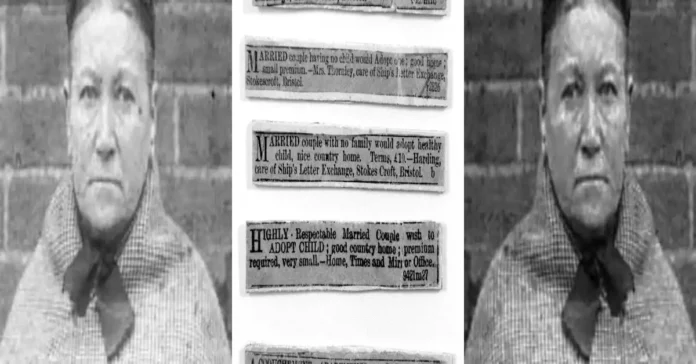
In the spring of 1896, a bargeman pulled a soggy brown paper parcel from the River Thames near Reading, England, exposing one of history’s deadliest criminals. Inside lay the body of a baby girl, strangled with a strip of white dressmaker’s tape. That single discovery unraveled a decades-long murder operation run by Amelia Dyer, a former nurse estimated to have killed up to 400 infants.
How victorian baby farming worked
To understand how Amelia Dyer got away with murder for nearly thirty years, you have to look at the brutal social rules of 19th-century Britain. If an unmarried woman got pregnant during the Victorian era, society practically shunned her. She could lose her job as a servant or shopgirl overnight, get kicked out of her home, and face total poverty.
Worse still, the 1834 Poor Law Amendment Act had stripped away most financial support from unmarried fathers, leaving mothers entirely on their own. Formal adoption didn’t even exist in British law until 1926.
Enter baby farming.
In theory, baby farming was just an informal version of foster care or private adoption. Desperate mothers paid a caretaker either a small weekly fee or a lump sum to look after their child. Many women genuinely tried to raise these kids properly. Yet the system had a horrifying financial flaw built right into its business model:
- The lump-sum trap: When a baby farmer took a one-time payment of £10 to £80 (a massive sum back then) to “adopt” a child forever, every day that baby stayed alive ate directly into their profit margin.
- Zero government oversight: Nobody registered private adoptions or checked in on foster homes.
- High infant mortality: Because diseases like typhus, measles, and malnutrition killed babies routinely in Victorian slums, a sudden infant death rarely raised eyebrows.
If a baby died in a foster home, a doctor would usually sign a death certificate without asking tough questions. Why would anyone suspect foul play when sickness took children every single day?

Amelia’s methods: from neglect to cold blooded efficiency
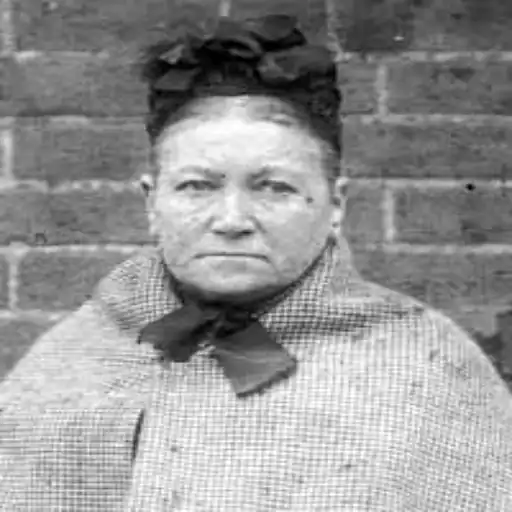
Born Amelia Elizabeth Hobley in 1837 near Bristol, Dyer wasn’t always a monster. She trained as a nurse and midwife, skills that gave her medical credibility and taught her how easy it was to pass off a murder as a natural illness. After her first husband died in 1869, leaving her broke with a young daughter, an acquaintance introduced her to the lucrative world of taking in lodgers and unwanted infants.
At first, Dyer killed slowly. Like many corrupt caretakers of the era, she dosed the babies with laudanum — an opium-based syrup sold over the counter under comforting names like “Mother’s Friend” or “Godfrey’s Cordial”. Drugged into a stupor, the infants stopped crying and stopped eating, eventually starving to death while Dyer collected burial fees or kept their adoption money.
In 1879, her luck briefly ran out. A suspicious doctor noticed how many babies were dying under Dyer’s roof and alerted the authorities. Shockingly, she wasn’t charged with murder. Courts back then struggled to prove intentional starvation, so she walked away with just six months of hard labor for criminal neglect.
That prison stint changed her tactics completely. Instead of risking doctors’ questions over slow starvation, Dyer decided to cut out the medical middleman altogether.
Her new system was ruthlessly fast:
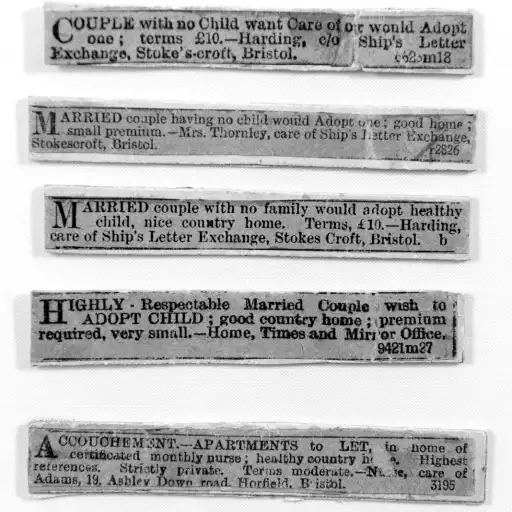
- The pitch: Using fake names like Mrs. Thomas, Mrs. Harding, and Mrs. Smith, she placed newspaper ads posing as a respectable, married Christian woman longing for a child to love.
- The transaction: She met distraught mothers at train stations, accepted a one-off fee (usually around £10) plus a bundle of nice baby clothes, and promised to write with updates.
- The execution: Often within hours of collecting the child, Dyer wrapped a length of white cotton edging tape twice around the baby’s neck and tied a tight knot.
- The cover-up: She pawned the baby’s clothes for extra cash, weighted the tiny body down with bricks inside a carpet bag or brown paper parcel, and dropped it into the nearest river.
Whenever neighbors grew curious or mothers started asking to visit, Dyer packed her bags and moved to a new town. Twice, when investigators closed in, she even faked suicide attempts and got herself committed to local mental asylums — a clever dodge that paused police inquiries until the heat died down.

The police investigation at caversham lock

By late 1895, Dyer had settled in the town of Reading, right along the River Thames. On March 30, 1896, a bargeman near Caversham Lock spotted a brown paper package floating in the water. Inside was the body of a baby girl, later identified as Helena Fry, alongside a brick used as a sinker.
Most killers leave no trail, yet Dyer made one fatal mistake. On the soaked wrapping paper, detectives from the Reading Borough Police spotted faint writing. Under a microscope, they deciphered a railway label addressed to a “Mrs. Thomas” at a local Reading address.
Detective Constable Anderson and his team didn’t rush in blindly. They placed Dyer’s house on Kensington Road under round-the-clock surveillance and even set up a sting operation, sending a young undercover woman to pose as a mother looking to place her baby. On April 3, 1896, police raided the property.
Inside, officers were hit by an overwhelming stench of human decay. While no bodies remained in the house, the physical paper trail was massive:
- Stacks of telegrams arranging adoptions
- Pawn tickets for dozens of sets of infant clothing
- Receipts for newspaper advertisements
- Heartbreaking letters from mothers begging for news about their children
- Spools of the exact white dressmaker’s tape found around Helena Fry’s neck
Over the next few weeks, police hired drag-net crews to search the Thames riverbed. They pulled up six more infant bodies — including Doris Marmon and Harry Simmons, two babies Dyer had collected just days before her arrest. Every single victim had the same white tape knotted tightly around their throat. When questioned about how investigators could identify her victims among other drowned infants, Dyer reportedly offered a chilling answer: “You’ll know all mine by the tape.”
The trial of the “Ogress of Reading”
Press coverage exploded across Britain, with newspapers branding her the “Ogress of Reading” and the “Baby Butcher”. When Amelia Dyer stood in the dock at London’s Old Bailey in May 1896, prosecutors decided to try her on just one rock-solid sample charge: the murder of four-month-old Doris Marmon.

| Case Milestone | Key Date | Details & Outcome |
|---|---|---|
| First Neglect Conviction | 1879 | Sentenced to 6 months of hard labor in Bristol after multiple infants died under her care. |
| Thames Discovery | March 30, 1896 | Bargeman recovers Helena Fry’s body near Caversham Lock, revealing the faded railway label. |
| Police Raid & Arrest | April 3–4, 1896 | Reading police raid Dyer’s home, finding pawn tickets, letters, and white tape. |
| Old Bailey Trial | May 21–22, 1896 | Prosecuted by Horace Avory; jury rejects insanity plea in under five minutes. |
| Execution | June 10, 1896 | Hanged at Newgate Prison in London at age 58. |
Dyer’s defense team tried the only strategy available — pleading insanity. They pointed to her family history of mental illness and her previous stays in Gloucester and Wells lunatic asylums. However, lead prosecutor Horace Avory dismantled that argument piece by piece. He showed the court how Dyer used multiple aliases, negotiated prices like a sharp businesswoman, pawned clothes for profit, and only “lost her mind” whenever authorities started asking questions.
Her own daughter, Polly, even took the witness stand to testify against her, helping seal her fate. On May 22, 1896, the jury needed less than five minutes to find Dyer guilty. Less than three weeks later, on June 10, 1896, Amelia Dyer was hanged at Newgate Prison.
How many Amelia Dyer victims were there in total? Only six bodies were pulled from the Thames in 1896, and police tied her directly to around a dozen deaths. Yet looking at her pawn tickets, correspondence, and nearly thirty-year career across Bristol, Cardiff, London, and Reading, historians and criminologists estimate she likely murdered between 200 and 400 babies — making her arguably Britain’s most prolific serial killer.
How the scandal changed child protection laws
Amelia Dyer’s execution didn’t just end one woman’s killing spree; it forced Victorian Britain to confront a system that treated poor children as disposable property. Public outrage over the baby farming scandal gave massive momentum to the National Society for the Prevention of Cruelty to Children (NSPCC), which had just received its Royal Charter from Queen Victoria in 1895.
Within a year of Dyer’s hanging, Parliament passed the Infant Life Protection Act 1897. Earlier laws from 1872 had massive loopholes — they only applied if a caretaker took in two or more babies under age one, allowing killers like Dyer to slip right through the cracks. The 1897 Act finally gave the state real teeth:
- Mandatory registration: Local authorities now had to be notified whenever anyone took in a child under age five for payment for more than 48 hours.
- Lump-sum scrutiny: Any caretaker accepting a lump-sum payment under £20 to adopt an infant faced strict legal oversight and mandatory reporting.
- Home inspections: Local councils gained the legal power to appoint inspectors to enter foster homes unannounced, check living conditions, and remove neglected children on the spot.
Later reforms, including the Children Act 1908 and the Adoption of Children Act 1926, closed the remaining loopholes by banning the insuring of foster children’s lives and establishing formal court-supervised adoptions. It took an unthinkable tragedy along the banks of the Thames to wake Britain up, proving that protecting society’s most vulnerable lives requires shining a bright legal light behind closed doors.

