

Vanished into the Blue: The Unexplained Disappearances of Pioneering Female Pilots
The image is etched into our collective memory: a lone aircraft, a silver speck against an endless expanse of ocean or cloud, flying towards a horizon that it will never reach. When we think of pilots lost to the unknown, one name inevitably comes to mind: Amelia Earhart. Her 1937 disappearance remains one of the 20th century’s most profound and persistent mysteries.
But her story, while the most famous, is not the only one.
Let’s be clear: this isn’t about conspiracy theories or sensationalism. This is about honoring the women who strapped themselves into primitive machines and aimed for the impossible. They were pioneers in an age when many thought a woman’s place was anywhere but the cockpit. Their stories are not just about a final, silent flight; they are about the immense courage it took to even get off the ground.
To understand why they vanished, you first have to understand the brutal reality of what it meant to fly in their era.
Flying Blind: The Brutal Realities of 20th-Century Aviation
Today, we take GPS, satellite communication, and real-time weather data for granted. For these pilots, none of that existed. Their cockpits were a chaotic mix of courage and calculated guesswork.
- The Aircraft: We’re not talking about Boeings. These were often fabric-and-wood or early metal aircraft, vulnerable to structural failure and at the mercy of the weather. Engines could and did fail. Fuel tanks were often auxiliary, strapped into any available space, turning the plane into a flying bomb.
- Navigation: There was no “Google Maps for the sky.” Pilots relied on dead reckoning—calculating your position based on your speed, time, and compass heading. One strong, unpredicted crosswind could push you dozens, then hundreds, of miles off course. For long-distance flights over water, they used celestial navigation, calculating their position using a sextant to measure the angles of the sun and stars. Now, imagine trying to do that complex trigonometry in a vibrating, bouncing cockpit, often through cloud cover.
- Communication: Radio was unreliable at best. Long-range high-frequency (HF) radio was subject to atmospheric interference, time of day, and solar flares. It was more like shouting into the wind and hoping for a faint echo than a conversation. There was no radar coverage over the oceans. Once a pilot was out of sight of land, they were truly, utterly alone.
They weren’t just flying planes. They were navigating the very edge of technological possibility. And sometimes, that edge gave way.
The Hon. Elsie Mackay (1928): The First to Dare the Atlantic
The Pioneer: Before Earhart became a household name, Elsie Mackay, a British actress, designer, and aristocrat, was determined to conquer the Atlantic. She was a skilled pilot who wanted to be the first woman to fly east-to-west across the treacherous ocean—a feat many considered suicidal.
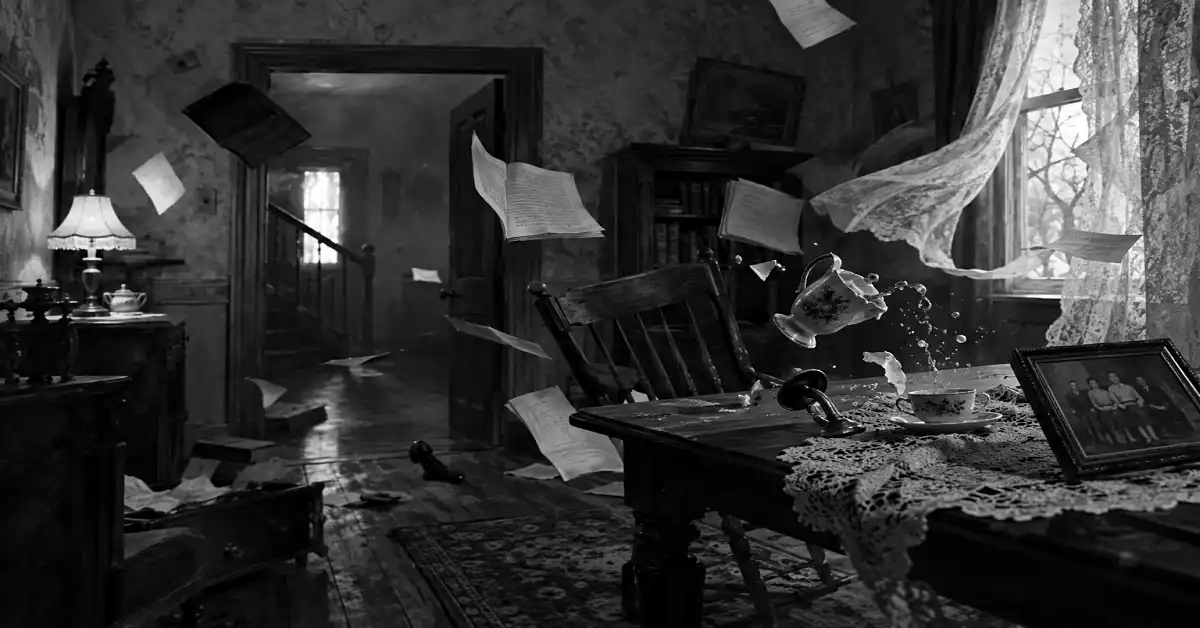

The Flight: On March 13, 1928, Mackay, along with her co-pilot Captain Walter Hinchliffe, took off from England in a single-engine Stinson Detroiter named Endeavour. To maximize their chances, they flew in secret, avoiding the publicity that had plagued other attempts. Their destination was Long Island, New York.
The Disappearance: A lighthouse keeper off the coast of Ireland reported seeing their plane heading west, right on course. It was the last confirmed sighting. After that, only silence. Naval ships scoured the Atlantic. Hope flickered when a French steamer reported seeing a plane, but it was a false alarm. Weeks later, a piece of the Endeavour‘s undercarriage washed ashore in Ireland. It was the only trace of the plane, or its pilots, ever found.
The Cold Reality: Mackay and Hinchliffe flew into what was likely a ferocious storm system. In their single-engine plane, with no way to de-ice their wings and rudimentary navigation, they stood almost no chance against the Atlantic’s winter fury. Their story is a stark reminder of the extreme dangers faced by the very first generation of long-haul aviators.
Amelia Earhart (1937): The Icon Lost in the Pacific
The Icon: By 1937, Amelia Earhart was the most famous female pilot on Earth. Her goal was audacious: to circumnavigate the globe at the equator. The final, most dangerous leg was a 2,556-mile flight from Lae, New Guinea, to Howland Island—a tiny, flat speck of land in the middle of the vast Pacific Ocean, barely two miles long and a half-mile wide.
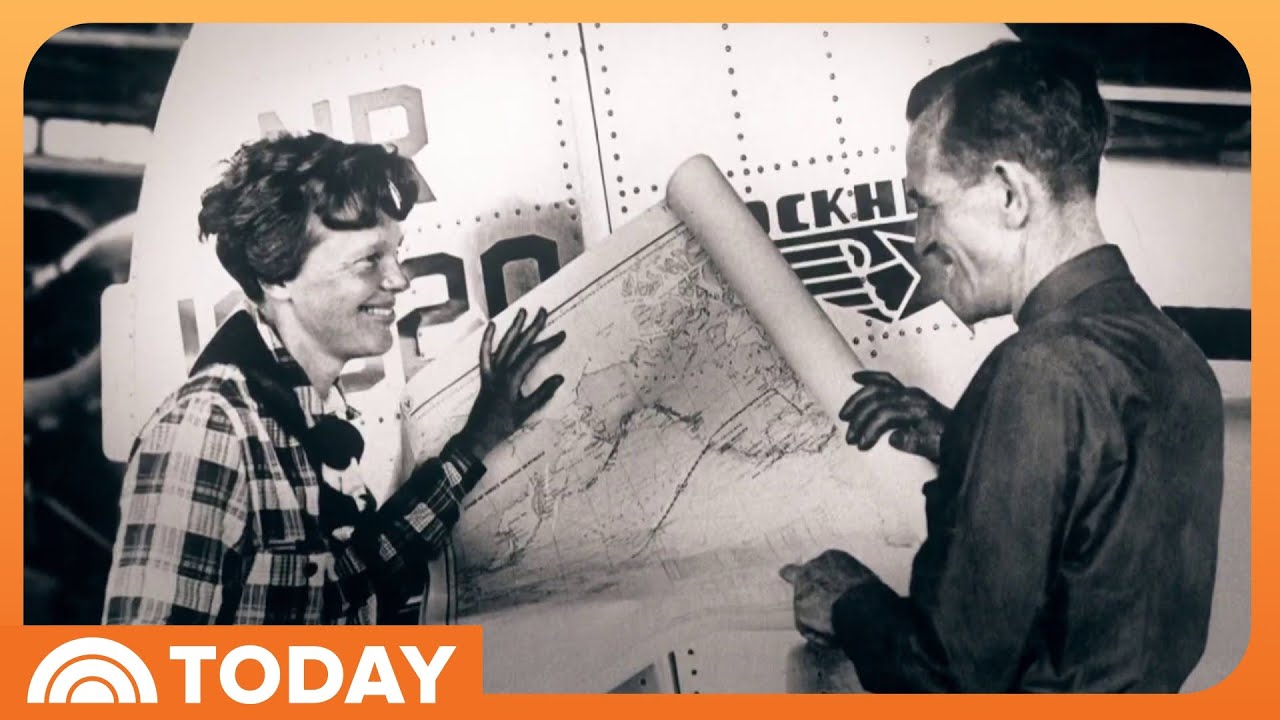
The Flight: On July 2, 1937, Earhart and her navigator, Fred Noonan, took off in their advanced, twin-engine Lockheed Model 10-E Electra. The US Coast Guard cutter Itasca was waiting for them at Howland Island, tasked with providing radio and navigation support.
The Disappearance: The radio transmissions from the Electra are haunting. Early on, they were faint but readable. As the plane neared Howland Island, Earhart’s voice became stronger, but she seemed unable to hear the Itasca‘s replies. Her final messages were increasingly desperate:
“We must be on you, but cannot see you—but gas is running low. Have been unable to reach you by radio.”

And then, her last confirmed transmission:
“We are on the line of position 157-337… We are running north and south.”
She was flying a search pattern, hoping to spot the island. She never did. The Itasca broadcast continuously, even emitting thick black smoke from its funnel to give her a visual target. There was no response. Despite the largest sea and air search in naval history at the time, no wreckage was ever verifiably found.
The Enduring Mystery: The most accepted theory, supported by organizations like The International Group for Historic Aircraft Recovery (TIGHAR), is that Earhart and Noonan missed Howland Island. They likely ran out of fuel and ditched the plane in the ocean. The Electra would have sunk within minutes. Other theories persist, but the simplest explanation remains the most probable: they got lost. In the immense blue of the Pacific, missing a two-mile target after flying 2,500 miles was tragically easy.
Gertrude “Tommy” Tompkins Silver (1944): The Patriot Who Vanished at Home
The Patriot: Not all disappearances happened on daring, record-breaking flights. Gertrude Tompkins was one of the elite female pilots of the Women Airforce Service Pilots (WASP) program during World War II. These women were not combat pilots; they were trailblazers who ferried new aircraft from factories to military bases, freeing up male pilots for combat duty.

The Flight: On October 26, 1944, Tompkins, an expert pilot with a fear of heights she had conquered, took off from Mines Field (now Los Angeles International Airport – LAX). Her mission was to fly a powerful P-51D Mustang fighter plane to New Jersey. The first leg was a short hop to Palm Springs. She was the only WASP pilot to ever fly the legendary Mustang.
The Disappearance: She took off into an overcast sky and was scheduled to land less than an hour later. She never arrived. The flight was so short, and the route so routine over land, that her disappearance was utterly baffling. An extensive search turned up nothing. Because the WASP records were classified and later sealed, her story faded into obscurity. For decades, her family had no idea what happened.

A Partial Answer: In 2010, wreckage of a P-51 Mustang was discovered in Santa Monica Bay. While it has not been definitively identified as her aircraft, it’s the most compelling lead to date. The likely scenario is that she became disoriented in the coastal fog and crashed into the ocean shortly after takeoff. She is the only WASP pilot who went missing during the war whose fate remains unconfirmed. Her story is a poignant reminder of the forgotten women who served and sacrificed.
Common Threads in the Silence
These women were from different countries and flew in different decades for different reasons. Yet, their stories are bound by chillingly similar threads.
- The Ocean’s Indifference. The sea is the ultimate eraser of evidence. Mackay, Earhart, and likely Tompkins were all consumed by water, which can swallow a plane whole, leaving no trace.
- The Technological Ghosts. In every case, a technological failure was the likely catalyst. A faulty radio that could transmit but not receive. A primitive navigation tool rendered useless by clouds. An engine sputtering its last breath miles from safety.
- The Razor’s Edge of Human Endurance. These pilots were pushing the limits not just of their machines, but of their own bodies. Fatigue, stress, and hypoxia (lack of oxygen at altitude) can impair judgment. One small mistake, compounded by exhaustion, could be fatal.
Their Legacy is Not the Mystery
It’s easy to focus on the “what if” scenarios and the haunting silence they left behind. But to do so is to miss the point.
These women weren’t defined by their disappearance; they were defined by their audacity. Elsie Mackay dared to cross an ocean when it was considered impossible. Amelia Earhart inspired millions by proving a woman could be a master of technology and exploration. Gertrude Tompkins served her country with a skill and bravery that went unrecognized for far too long.
They flew into the unknown, and in a way, they never came back. But the paths they blazed in the sky, and the barriers they shattered on the ground, remain with us today. Their stories are not just about being lost, but about having the courage to find a new way forward for everyone who followed.
What Do You Think?
Which of these stories resonates with you the most? Do you know of other forgotten aviators whose legacies deserve to be remembered?
Share your thoughts in the comments below. Let’s keep their memory alive.

