

Raudonė Castle Secrets: The Red Marvel of Lithuania
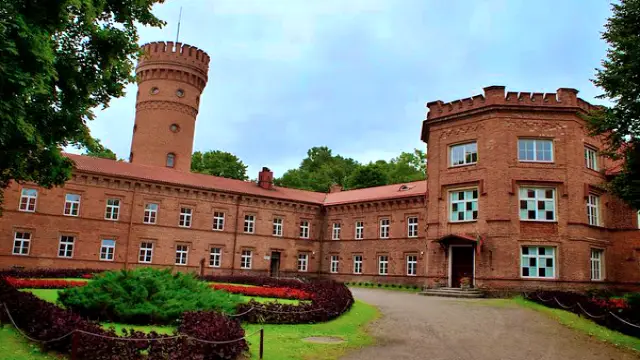
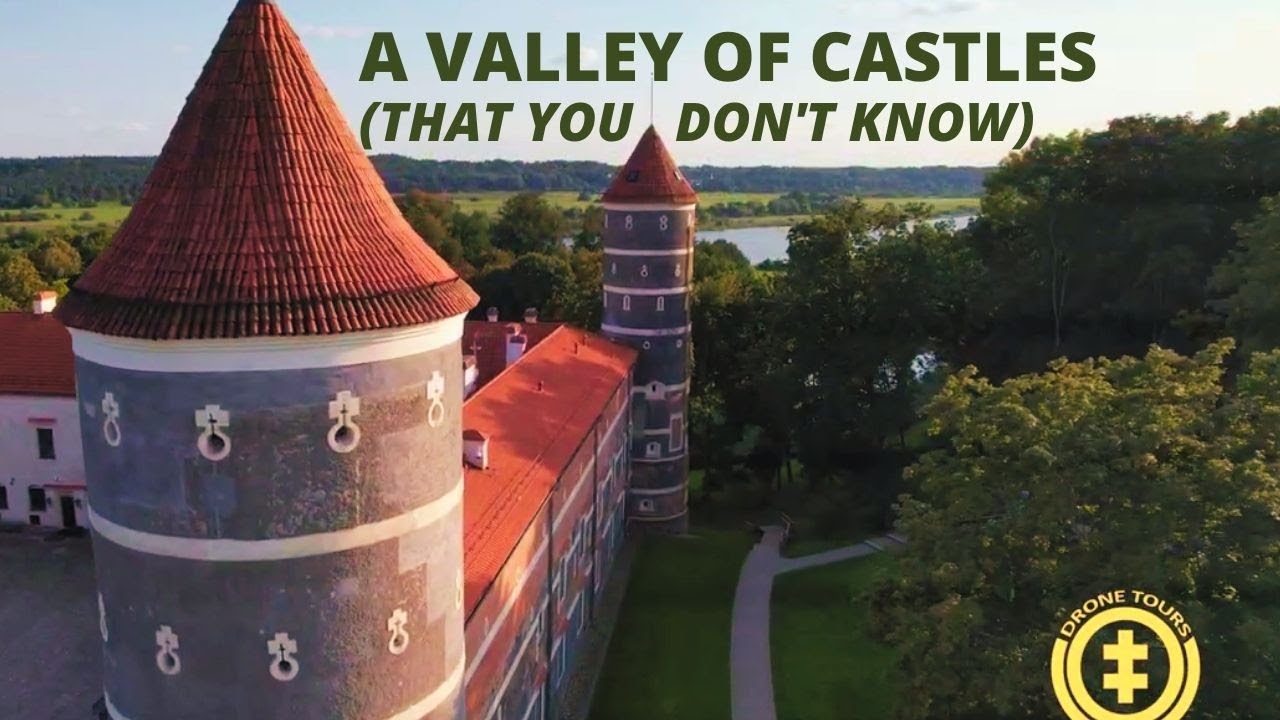
Standing guard over the mighty Nemunas River, its red-brick towers piercing the green canopy, Raudonė Castle looks like a direct page from a Brothers Grimm fairytale. It’s the kind of place you see in pictures and think, “That can’t be real.”
But it is. And its story is so much weirder, deeper, and more fascinating than a simple fairytale.
For centuries, this castle part of the “Panemunė” castle road along the Nemunas has been a fortress, a noble residence, a love nest, a school, and a silent keeper of secrets. Its bricks are saturated with stories of Teutonic Knights, powerful princes, tragic duchesses, and a heartbroken Portuguese writer.
Most people come for the 35-meter tower. They pay their €1.50, climb the stairs, snap a stunning photo of the river valley, and leave.
They miss everything.
Today, we’re not just climbing the tower. We’re going into the cellars. We’re digging up the legends, separating fact from fiction, and uncovering the true, hidden marvels of Lithuania’s “Red Castle.”
The Castle That Sits on a Sunken Fortress
To understand Raudonė, you have to know what’s under it.
Before a single red brick was laid for the palace you see today, this was a land of crusaders and kings. This strategic hill on the riverbank was home to a formidable Teutonic Order castle named Bayersburg. Built in the 14th century, it was an iron-fisted outpost for the German knights in their holy war against the pagan Grand Duchy of Lithuania.
This original fortress is gone. Completely gone. It wasn’t just destroyed; it was, according to legend, swallowed by the Earth.
And that’s where we find our first, and darkest, secret.
Secret #1: The Legend of the White Maiden of Bayersburg
This isn’t just a castle ghost story; this is the original East Prussian legend of the castle, known as ‘Die weiße Jungfrau der Bayerburg.’
The story goes that the 40 Teutonic Knights stationed at Bayersburg were not the pious men they claimed to be. They were cruel, greedy, and lived a life of sin and debauchery. One day, they captured a beautiful and devout Christian noblewoman and brought her to the castle, intending to force her to join their sinful life.
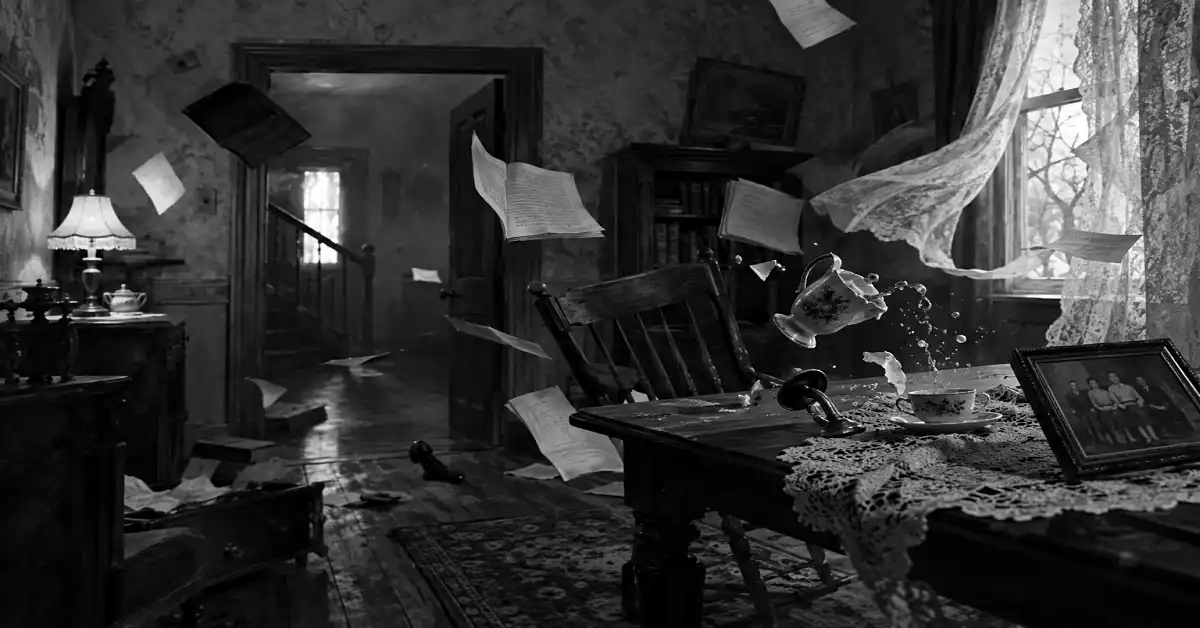
Terrified, the maiden prayed to God, not for her own rescue, but for an end to the knights’ blasphemous evil.
The legend says her prayer was answered. Violently.
The ground shook, a chasm opened up, and the entire fortress of Bayersburg with all 40 knights and the maiden inside was swallowed by the earth, vanishing in an instant.
But the story doesn’t end there. Because of her purity and self-sacrifice, the maiden was not damned. She was transformed into a Schutzgeist, a protective spirit.
- The Legend Says: She still haunts the hill, appearing as a “White Maiden” to warn good people of impending danger.
- The Legend Says: She guards the sunken treasure of the knights, which is hidden in the chasm beneath the castle.
- The Legend Says: She is destined to one day defeat a black devil who also lives in the abyss, after which she will be free to distribute the treasure to the local people.
So, when you walk the grounds, know this: you’re walking on top of a sunken, haunted fortress.
A Castle Built by Nobility, Love, and War
The fortress was gone, but the hill remained. In the late 16th century, after the Teutonic Order’s power was broken (thanks to the decisive Battle of Grunwald in 1410), the ruins became part of the Polish-Lithuanian Commonwealth.
King Sigismund II Augustus gifted the land to a Prussian merchant and knight, Hieronymus Krispin-Kirschenstein. He’s the one who built the first residential manor here, a grand Renaissance-style palace. He and his family owned the estate for over a century.
The castle you see today is a “remix,” a layer cake of architectural history.
- Late 16th Century (Krispin-Kirschenstein): The original Renaissance bones and the towering 35-meter main tower.
- 18th Century (Olędzki Family): The Polish noble Olędzki family acquired the castle and commissioned renovations, adding fashionable Classicism features.
- 19th Century (The Zubov Transformation): This is the big one. The castle was acquired by Prince Platon Zubov.
Secret #2: The Russian Prince and the Romantic Makeover

Who was Platon Zubov? Oh, just the last official lover of Catherine the Great.
Yes, that Catherine the Great. Zubov was a famously handsome, 22-year-old officer when he caught the eye of the 60-year-old Russian Empress. He became one of the most powerful men in the Empire. After Catherine’s death, he was involved in the plot to assassinate her son, Emperor Paul I, and eventually retired to his vast estates, which included Raudonė.
It was his descendants, namely his niece Sophia von Pirch-Kaiserov and her granddaughter Sophia Waxell, who gave the castle its current, unforgettable look. In 1877, they oversaw a massive reconstruction, transforming the aging palace into the Neo-Gothic marvel you see today.
This is why the castle looks like a German fairytale. It was designed to.
Secret #3: The Tragic Love Story of the Last Owner
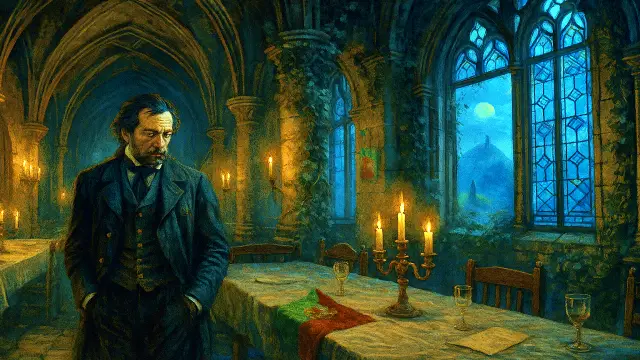
The castle’s final private chapter is a poignant love story. Sophia Waxell’s husband, José Carlos de Faria e Castro, was a noble writer from Madeira, Portugal.

When Sophia died at a young age, everyone assumed he would sell the massive, cold, foreign estate and return to the warmth of Portugal.
He didn’t.
José Carlos was so enchanted by Raudonė and the beauty of the Nemunas valley that he stayed. He lived in the castle, alone, for another 23 years, a heartbroken Portuguese writer wandering the Neo-Gothic halls of his late wife’s Lithuanian home. He died there and is buried on a nearby hill, forever overlooking the castle he refused to leave.
The Living Legends of the Castle Park
The castle itself is only half the story. The surrounding 60-acre park is a “living museum” of ancient trees and even more legends.
The Gediminas Oak: A Royal Lunch Spot
The most famous resident of the park is the “Gediminas Oak,” one of the oldest oaks in Lithuania.
The legend is simple, but powerful: Grand Duke Gediminas, the legendary 14th-century founder of Vilnius and a unifier of Lithuania, once ate his lunch under this very tree.
A darker version of the legend claims he was mortally wounded by a Teutonic crossbow bolt here in 1337, but history doesn’t back this up. The “royal lunch” story, however, has stuck, giving the tree a national importance. Sadly, after standing for what may be 700 years, the Gediminas Oak is no longer living, but its mighty, lightning-scarred trunk is still preserved as a monument.
The Duchess and the Crusader
If the “White Maiden” haunts the cellars, the park belongs to another spirit.
A local legend tells of Duchess Balanda, the daughter of the Lithuanian Duke Kęstutis. During the wars, a handsome Crusader knight was taken prisoner and held at the castle. Balanda, tasked with tending to him, fell in love with the enemy.
They began to meet in secret. When her father, the fierce Duke, discovered his daughter’s “treason,” his rage was absolute. He cursed her and, in some versions, killed her on the spot.
Locals say you can still hear her spirit. On dark nights, her sad mourning is the sound of the wind rustling through the leaves of the ancient linden trees in the park.
A Quick Note: The “Plater” Family Mystery
Let’s clear up a common mistake. You will often hear Raudonė Castle mentioned in connection with the Plater family, one of the most powerful noble houses in Lithuanian history.

It’s a good story, but it’s not true.
The Platers were massively influential, but they owned other estates, like Švėkšna Manor. The owners of Raudonė were the Krispin-Kirschensteins, the Olędzkis, and the Zubovs. It’s an easy mistake to make—all these great families and their stunning castles can get tangled—but the Plater connection is one secret that’s pure fiction.
Visiting Raudonė Today: A People-First Guide
so you’re ready to visit. Here’s the 100% real guide.
The Big Secret: The castle is a public primary school.
That’s right. On a Tuesday in October, the grand halls are full of kids learning math and Lithuanian. This is awesome, but it means you need to set your expectations.
- You cannot tour the whole castle interior. You can’t just barge into a 3rd-grade classroom.
- The interior is not a restored museum. Visitors who have been inside the public sections describe it as… a “Soviet-era school.” It’s functional, not opulent.
- This does not matter. You are not going for the interior.
You are going for two things: the park and the tower.
The Tower: The Best €1.50 You’ll Spend
This is the main event. For a tiny fee (around €1.50), you get to climb the 35-meter (110-foot) main tower. The staircase is narrow, but the payoff is unbelievable.
From the top, you get a god-tier, 360-degree panoramic view of the Nemunas River Valley. You’ll see the river snaking through the endless green forest, the tiny town of Raudonė below, and the sheer scale of the landscape. It is, without question, one of the best photo ops in all of Lithuania.
The Itinerary: How to Do It Right
Don’t just drive to Raudonė and leave. It’s the crown jewel of a string of “Panemunė Castles.” Make a day of it:
- Start at Raudonė: Climb the tower, get the big view, and walk the park. Ponder the Gediminas Oak and listen for Duchess Balanda.
- Go to Panemunė Castle: Just a 10-minute drive away, this castle is different. It’s a more classic, sprawling fortified manor. It has a great museum and its own tower you can climb.
- End at Gelgaudiškis Manor: A bit further down, this is a stunning white-and-yellow Neoclassical palace. It’s less “castle” and more “Downton Abbey,” and its park is beautiful.
Raudonė isn’t just a building. It’s a 700-year-old story of war, architecture, sin, tragedy, and love. It’s a place where a Teutonic ghost, a Lithuanian duke, a Russian prince, and a Portuguese poet all share the same patch of land.
Don’t just climb the tower. Walk the grounds, and listen to the secrets.
Every castle has its secrets. Have you been to Raudonė? Did you feel the history (or the ghosts)? What’s the most underrated, secret-filled castle you’ve ever explored?
Share your own hidden marvels in the comments below!

