

Table of contents
I. Introduction: The Enduring Enigma of the Flores Hominins
A. The “Hobbit” Revelation and its Impact on Paleoanthropology
The field of paleoanthropology was profoundly stirred by the announcement in 2004 of an exceptionally small-bodied hominin species, Homo floresiensis, discovered on the Indonesian island of Flores. Nicknamed the “Hobbit” for its diminutive stature, this species challenged deeply entrenched narratives concerning hominin evolution, particularly regarding morphological diversity, the relationship between brain size and cognitive capabilities, and the established timelines of hominin dispersals beyond Africa.
The discovery underscored that the genus Homo exhibited a greater degree of morphological variation and adaptive flexibility than previously conceived. The initial reports, published in the journal Nature, detailed skeletal remains with a unique mosaic of primitive and derived features, sparking immediate global scientific interest and initiating years of intense debate. The existence of such a hominin on an isolated island highlighted the significant role that insular ecosystems can play in shaping unique evolutionary trajectories.
The implications of Homo floresiensis extend to our understanding of the broader patterns of human evolution. Prevailing “Out of Africa” dispersal models, often centered on specific waves and timings such as the migration of Homo erectus around 1.8 to 1.5 million years ago (Ma), are confronted by the Flores evidence. The presence of hominins on a geographically isolated island like Flores, requiring successful oceanic dispersal—a considerable adaptive challenge—by at least one million years ago, suggests a more complex picture.
If these early Flores inhabitants were indeed more primitive than classic Homo erectus, as some anatomical interpretations suggest, this would imply either an earlier, hitherto unrecorded dispersal of such hominins from Africa, or a more intricate local evolutionary history in Southeast Asia, possibly stemming from an early H. erectus variant or even a pre-erectus hominin stock. This possibility forces a re-evaluation of the simplicity of some dispersal narratives and points towards greater adaptive flexibility and migratory capabilities in early hominins than has often been assumed.
B. New Discoveries Pushing Back the Timeline
Further complicating the story, subsequent research has indicated an even deeper antiquity for hominin presence on Flores. A study published in 2010 by Brumm and colleagues reported stone tools from the site of Wolo Sege, dated to approximately one million years ago (Ma). This finding significantly extended the known period of hominin occupation on the island by roughly 200,000 years, compared to the previously accepted dates of around 800,000 to 880,000 years ago (ka) for other early sites in the Soa Basin, such as Mata Menge.
Such a remarkably long period of continuous or intermittent hominin presence on Flores raises fundamental questions about the identity of these early toolmakers, their evolutionary relationship to the later Homo floresiensis, and their capacity to survive and adapt in an isolated island environment for such an extended duration.
C. Scope and Significance of the Report
This report aims to synthesize the current state of knowledge regarding Homo floresiensis and its potential antecedents on the island of Flores. It will critically examine the available evidence pertaining to their antiquity, distinctive physical characteristics, technological behaviors, and the multifaceted controversies that continue to surround their interpretation within the broader context of human evolution. The objective is to provide a nuanced and comprehensive understanding of one of the most fascinating and debated hominin species discovered to date, a species that continues to prompt re-evaluation of core tenets in paleoanthropology.
The enduring controversies themselves are instructive, reflecting not only the inherent complexities and fragmentary nature of the fossil record but also the ways in which new, unexpected data can challenge established scientific expectations about human evolutionary trends, such as the general trajectory towards progressive encephalization. The initial resistance from some quarters to accepting a small-brained, tool-using hominin that survived until relatively recently illustrates how scientific paradigms grapple with anomalous evidence, revealing the human element in the process of scientific interpretation and the gradual, often contentious, path towards new understanding.
II. The Discovery and Characteristics of Homo floresiensis

A. The Landmark Discovery at Liang Bua Cave (2003-2004)
The story of Homo floresiensis began in earnest in August 2003, with excavations at Liang Bua, a large limestone cave in western Flores, Indonesia. A joint Indonesian-Australian team, co-led by the late Michael Morwood and the late Radien Soejono, unearthed the partial skeletal remains of a hominin characterized by an unusually small body and brain. This individual, designated LB1, consisted of a remarkably complete cranium and mandible, along with bones of the right arm, pelvis, legs, and feet, and less well-preserved parts of the rest of the skeleton.
The initial findings were published in the journal Nature on October 28, 2004, where the research team, including Peter Brown, formally assigned these remains to a new species, Homo floresiensis, named after the island of its discovery. A striking feature of the LB1 remains, and other hominin fossils subsequently found at Liang Bua, was their state of preservation: they were not fossilized in the traditional sense, but were described as having the consistency of “wet blotting paper,” necessitating meticulous excavation techniques and careful drying before they could be fully studied. Subsequent excavations at Liang Bua yielded remains of at least eight other diminutive individuals, reinforcing the interpretation that LB1 was not an isolated anomaly.
B. Distinctive Physical Morphology
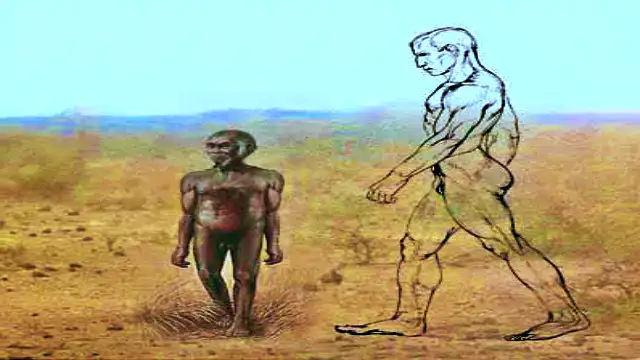
The anatomy of Homo floresiensis presents a unique mosaic of features, some aligning with early hominins and others with later members of the genus Homo, albeit in a diminutive form.
- Stature and Body Mass: LB1, an adult female, is estimated to have stood approximately 1.06 meters (3 feet 6 inches) tall and weighed between 25 and 30 kilograms (55-66 lbs). This stature is considerably shorter than even the smallest known modern human populations and is comparable to, or even smaller than, some early Pliocene australopithecines like Australopithecus afarensis.
- Cranial Capacity and Brain Structure: The endocranial volume of LB1 is estimated to be between 380 and 420 cubic centimeters (cm3). This brain size is remarkably small, comparable to that of living chimpanzees and early australopithecines, and represents about one-third the average brain size of anatomically modern humans. Despite this small absolute brain size, the internal organization of the brain, inferred from endocasts, has been argued by some researchers to show derived features consistent with higher cognitive functions.
- Cranio-dental Features: The cranium of H. floresiensis is characterized by a receding forehead and the absence of a chin, features considered primitive within the genus Homo. The teeth are relatively large for the small body size. Some dental characteristics, such as the elongated and asymmetrically rooted mandibular first premolars, are reminiscent of australopithecines and early Homo species like Homo habilis. However, other aspects of skull morphology are more generally suggestive of the genus Homo.
- Postcranial Anatomy: The postcranial skeleton reveals a unique combination of traits. The shoulders were “shrugged-forward” in posture. The limbs display a mix of primitive and derived characteristics: relatively long arms compared to leg length, a flared pelvis, and certain features of the wrist bones are similar to those seen in australopithecines. The feet were relatively large for their short legs. While clearly adapted for bipedal locomotion, the foot structure exhibited some ape-like dimensions, which has raised questions about its efficiency for endurance running or sprinting. Conversely, the anatomy of the shoulder has been described as more similar to that of Homo erectus than to modern humans.
This mosaic nature of H. floresiensis morphology—combining primitive traits reminiscent of australopithecines or early Homo with some derived traits seen in later Homo—is central to the ongoing debate about its evolutionary origins. If H. floresiensis were merely a scaled-down version of Homo erectus due to insular dwarfism, one might expect a more consistent retention of H. erectus-like proportions and features, albeit reduced in size. However, the presence of features in the wrist, foot, and dentition described as more primitive than those typically found in H. erectus complicates this simple narrative.

This anatomical amalgam suggests either a very early divergence from a pre-erectus lineage that retained many plesiomorphic (ancestral) traits, or a more complex evolutionary trajectory for an isolated H. erectus population that involved not only significant size reduction but also the potential re-emergence or retention of ancestral polymorphisms. This complexity makes pinpointing its exact phylogenetic position exceptionally challenging and fuels the discussion about whether it represents a deeply rooted lineage or a peculiar offshoot of a more recent ancestor.
C. Chronology of H. floresiensis at Liang Bua
The initial dating of the sediments containing H. floresiensis remains at Liang Bua suggested a surprisingly recent survival, possibly as late as 12,000 to 18,000 years ago. This implied a long period of contemporaneity with anatomically modern humans (Homo sapiens), who are thought to have arrived in the broader Australasian region by around 50,000 years ago. However, more extensive stratigraphic and chronological analyses, including redating efforts published in Nature in March 2016, have significantly revised this timeline.
The skeletal material of H. floresiensis from Liang Bua is now dated to a period between approximately 100,000 and 60,000 years ago. Associated stone tools recovered from archaeological horizons alongside these remains span a broader range, from about 190,000 to 50,000 years ago. This revised chronology indicates that H. floresiensis likely went extinct around, or shortly after, the time modern humans are thought to have arrived on Flores or in the surrounding region, approximately 50,000 years ago.
This earlier extinction date, coinciding more closely with the inferred arrival of H. sapiens in Island Southeast Asia, carries significant implications. While direct evidence of interaction—such as conflict, interbreeding, or resource competition—between H. floresiensis and H. sapiens on Flores is currently lacking, the temporal overlap is highly suggestive. The pattern of archaic hominin populations disappearing following the arrival or expansion of modern human populations is a recurring theme in later Pleistocene paleoanthropology, notably observed with Neanderthals in Europe and Western Asia.
This raises the possibility that even if H. floresiensis was well-adapted to the specific ecological conditions of Flores for hundreds of thousands of years, the arrival of H. sapiens, potentially possessing more sophisticated technologies, complex social organization, or broader adaptive capabilities, could have tipped the ecological balance, leading to increased competition for resources and the eventual demise of the endemic “hobbits.” This scenario frames the extinction of H. floresiensis not merely as a local event but as part of a larger, global pattern of modern human expansion and archaic hominin replacement.
III. The Lithic Landscape of Flores: A Million Years of Hominin Technology
The archaeological record of Flores provides a long, albeit debated, sequence of hominin technological behavior, primarily evidenced by stone tool assemblages recovered from several key sites.
A. Key Archaeological Sites and Their Chronology
Three primary localities anchor the timeline of hominin presence on Flores:
- Wolo Sege: This site, located in the Soa Basin, has yielded stone tools from volcanic sediments dated to approximately 1.02±0.02Ma. These artifacts currently represent the earliest known evidence for hominin activity on Flores, pushing back their arrival to the Early Pleistocene.
- Mata Menge: Also situated in the Soa Basin, Mata Menge has produced a significant assemblage of stone tools. These artifacts were initially dated to between 0.88±0.07Ma and 0.80±0.07Ma. More recent discoveries at Mata Menge include hominin fossil remains—specifically teeth and jaw fragments—dated to approximately 700,000 years ago. These fossils, potentially ancestral to H. floresiensis, are described as being of similar size to, or even somewhat smaller than, the later Liang Bua remains, suggesting a degree of size stability in this lineage over a considerable period. The stone tools from Mata Menge are considered broadly similar to those from other Soa Basin sites and Liang Bua.
- Liang Bua Cave: This is the type site for Homo floresiensis. Stone tools are found in direct association with the hominin skeletal remains and in layers spanning from approximately 190,000 to 50,000 years ago. Many tools were discovered in contexts containing remains of the extinct pygmy elephant, Stegodon florensis insularis, suggesting that hunting or scavenging of these animals was part of the subsistence strategy of H. floresiensis.
The following table summarizes the key hominin sites on Flores and their associated evidence:
Table 1: Key Hominin Sites on Flores and Associated Lithic/Hominin Evidence
| Site Name | Approx. Age Range (years ago) | Key Lithic Characteristics | Associated Hominin Evidence |
|---|---|---|---|
| Wolo Sege | 1,020,000±20,000 | Simple sharp-edged flakes from volcanic sediments | None directly associated; hominin presence inferred from tools. |
| Mata Menge | 700,000−880,000 | Simple flakes, cores; Oldowan-like; volcanic raw materials; technological continuity with Liang Bua | Hominin teeth and jaw fragments (potentially ancestral to H. floresiensis), ~700,000 years old |
| Liang Bua | 50,000−190,000 (tools) | Simple flakes, points, perforators, blades, microblades; Oldowan-like; volcanic tuff, chert; various knapping techniques | Homo floresiensis skeletal remains (LB1, etc.), dated 60,000−100,000 years ago |
B. Characteristics of the Flores Stone Tool Assemblages
The stone tool technology across these Flores sites exhibits a consistent, relatively simple character.
- General Description: The assemblages are predominantly composed of “simple sharp-edged flakes”. They are often described as being technologically similar to the Oldowan industry of Africa, which is the earliest widespread stone tool tradition. The toolkit includes choppers, flakes of various sizes, points, perforators, blades, and even microblades, some of which may have been hafted as barbs. Despite the presence of blade-like forms, the overall technology is generally regarded by analysts as “simple” or “expedient”.
- Raw Materials: The primary raw material utilized was volcanic tuff, readily available in local riverbeds. Silicified tuff was also common. A smaller proportion of tools were made from fine-grained chert, chalcedony, jasper, and opal, likely procured as river gravels. This contrasts with the later modern human occupants of Liang Bua, who showed a greater preference for chert.
- Knapping Techniques:
- Core Reduction: Hominins on Flores primarily reduced locally sourced volcanic cobbles into flakes, which appear to have been the desired end-products. Cores were often worked bifacially (flaked on two opposing faces) and rotated frequently during reduction, leading to the production of multiplatform and bifacial centripetal (also known as radial or discoidal) cores. Bifacial radial cores were flaked towards the center from the periphery on both surfaces, while unifacial radial cores were flaked similarly but on a single surface.
- Flake Production: The dominant method for detaching flakes was hard-hammer direct percussion, where a hammerstone is struck directly against the core. Despite the overall simplicity of the toolkit, the hominins demonstrated considerable skill in striking flakes, capable of producing well-struck flakes up to 12 centimeters long from tough volcanic stones. Larger flakes were sometimes used as cores themselves (flake-blank cores) to produce additional sharp-edged flakes, a technique particularly noted at Liang Bua.
- Specific Techniques at Liang Bua: Detailed analyses of the Liang Bua assemblages have identified several specific knapping techniques. These include: freehand percussion, where the core is held in one hand and struck by a hammerstone held in the other; burination, which involves striking flakes off the edge of a stone, often producing elongated flakes with a triangular cross-section; truncation, where a flake is placed on an anvil and its surface is struck with a hammer, typically shattering the flake; and bipolar percussion, where a flake or small cobble is placed on an anvil and struck on its edge from above, often resulting in characteristic crushing at both ends.
- Retouch: Some flakes exhibit evidence of retouch, meaning their edges were modified by the removal of smaller flakes, presumably to shape or resharpen them for specific tasks. Perforator-like projections are noted on some retouched flakes and cobbles, suggesting specialized tools, though their exact function remains unknown.
C. Technological Continuity and Stasis
A striking feature of the Flores lithic record is the apparent technological continuity, or stasis, observed over an exceptionally long period. Stone tools from the Early Pleistocene site of Mata Menge (dating to around 700,000-880,000 years ago) exhibit notable similarities in raw material choice, core reduction strategies, and flake characteristics to those found in the much later Late Pleistocene levels at Liang Bua (50,000-190,000 years ago) associated with H. floresiensis. If the tools from Wolo Sege (circa 1Ma) are included in this sequence, it suggests a technological tradition that remained remarkably uniform for over 900,000 years.
This long-term conservatism is significant because the Mata Menge evidence, demonstrating that similar “simple” tools were being made long before the appearance of H. sapiens, effectively negates claims that the stone artifacts found with H. floresiensis at Liang Bua are too complex for such a small-brained hominin and must therefore have been produced by contemporaneous modern humans.
The apparent technological stasis on Flores for nearly a million years, particularly if it occurred alongside significant morphological changes (such as insular dwarfism if H. floresiensis descended from a larger-bodied H. erectus ancestor), presents a fascinating evolutionary puzzle. In many other regions of the Old World, stone tool technology underwent significant transformations over similar or even shorter timescales, for example, the transition from Oldowan to Acheulean industries in Africa and Europe, or the later development of Middle Stone Age/Mousterian technologies. The persistence of a relatively simple, Oldowan-like toolkit on Flores is therefore unusual. Several factors could contribute to this phenomenon.
The existing toolkit may have been sufficiently adaptive for the specific ecological challenges and resource base of Flores, providing little strong selective pressure for major technological innovation. Alternatively, cognitive constraints related to the brain size or organization of Flores hominins might have limited their capacity for developing more complex technologies. Demographic factors, such as potentially small and isolated population sizes, can also dampen the rate of cultural innovation and increase the likelihood of innovations being lost before they can become established. This observed stasis challenges models of hominin technological evolution that assume an inherent, universal drive towards increasing complexity in all lineages.
Furthermore, the proficient manufacture and utilization of a consistent stone tool technology by Homo floresiensis—a hominin with an estimated brain volume comparable to that of a chimpanzee or an early australopithecine—for tasks such as hunting and processing animal carcasses compels a re-evaluation of the commonly assumed direct correlation between brain size and sophisticated tool-making capabilities in human evolution. While a certain level of cognitive capacity is undoubtedly necessary for tool production, which involves controlled flaking, selection of appropriate raw materials, and an understanding of conchoidal fracture mechanics, the Flores evidence suggests that absolute brain volume may be a less critical determinant for foundational hominin behaviors than previously thought.
It is plausible that specific aspects of neural organization, rather than sheer encephalization, are more crucial for these abilities. The case of H. floresiensis implies that once a certain cognitive threshold for tool-making was crossed by early members of the genus Homo (or perhaps even earlier hominins), this fundamental capacity could be maintained and effectively employed even in lineages that subsequently experienced significant reductions in brain size (e.g., through insular dwarfism) or in lineages that possessed this ability from an ancestral state with a comparatively small brain.
IV. Unraveling the Hobbit Mystery: Key Debates and Interpretations

The discovery of Homo floresiensis ignited a series of intense scientific debates that continue to shape research in the field. These controversies revolve around its fundamental status as a species, its evolutionary ancestry, the validity of the dating of associated archaeological materials, and its role in the island’s paleoecology.
A. Species Status: A Distinct Hominin or a Pathological Modern Human?
The most fundamental debate concerns whether the Liang Bua remains represent a genuinely new and distinct hominin species or are merely specimens of anatomically modern Homo sapiens afflicted with some form of pathology, most commonly suggested to be microcephaly.
- Arguments for Distinct Species (H. floresiensis): Proponents of H. floresiensis as a valid species point to the unique constellation of primitive (ancestral) and derived (newly evolved) traits observed not just in the type specimen LB1, but also in other individuals recovered from Liang Bua (such as LB6). These features, particularly in the wrist, feet, skull, jaw, brain architecture, and shoulder girdle, are argued to distinguish these hominins clearly from H. sapiens, including pygmy populations and individuals with known developmental disorders.
- Detailed anatomical comparisons have suggested that the closest affinities of H. floresiensis might lie with much earlier Plio-Pleistocene African hominins such as Homo habilis or even species of Australopithecus, rather than with Homo erectus or Homo sapiens. Several morphological analyses have specifically aimed to test the microcephaly hypothesis and concluded that the cranial and postcranial features of LB1 are not consistent with this condition as seen in modern humans, nor do they align with typical pygmy anatomy. For instance, one study found that LB1’s features were closer to those of a typical modern human than to those of a person with microcephaly, when specific diagnostic criteria were applied.
- Arguments Against Distinct Species (Pathology Hypothesis): From the outset, a number of commentators expressed skepticism, proposing that LB1 was a modern human individual suffering from a pathological condition, usually identified as microcephalic dwarfism. The late Indonesian paleoanthropologist Teuku Jacob was a prominent proponent of this view, arguing that LB1 was likely a member of an omnivorous subspecies of H. sapiens, perhaps related to the Rampasasa pygmy population who inhabit Flores today, and that its small skull was a result of microcephaly.
- Jacob and colleagues also pointed to perceived asymmetries in the LB1 skull as indicative of a pathological condition. Another line of argument, advanced by Robert Martin and colleagues, focused on allometric scaling (the study of how body proportions change with size). They contended that if H. floresiensis were a dwarfed descendant of the larger-brained Homo erectus, its brain size should be considerably larger than the observed ~400 cm3; therefore, they concluded, the small brain of LB1 must be pathological, specifically microcephalic.
The following table summarizes the main arguments in the species status debate:
Table 2: Summary of Arguments For and Against H. floresiensis as a Distinct Species
| Argument Category | Evidence Supporting Distinct Species (H. floresiensis) | Evidence Supporting Pathological H. sapiens | Key Researchers/Papers (Examples) |
|---|---|---|---|
| Overall Morphology | Unique mosaic of primitive (e.g., australopith-like wrist, foot) and derived features across multiple individuals | Argued to fall within pathological range of H. sapiens | Brown, Morwood, Larson, Jungers, Falk (pro-species); Jacob, Martin, Henneberg (pro-pathology) |
| Cranial Capacity & Brain Structure | ~380-420 cm3; some argue for derived internal organization despite small size | Brain size too small for a healthy, dwarfed H. erectus; consistent with microcephaly | Falk et al. (derived brain features); Martin et al. (pathological brain size) |
| Specific Anatomical Features (e.g., Wrist, Shoulder, Foot) | Wrist bones share primitive morphology with apes/australopiths, unlike H. sapiens or H. erectus; shoulder more H. erectus-like; unique foot structure | Some features (e.g., skull asymmetry) argued as pathological markers | Larson, Jungers, Tocheri (unique/primitive postcrania); Jacob et al. (pathological asymmetry) |
| Comparison with Known Pathologies | Detailed studies conclude LB1 morphology is inconsistent with known forms of microcephaly or other developmental disorders causing dwarfism | Similarities cited to local pygmy populations (e.g., Rampasasa) with potential for congenital conditions | Argue, Eckhardt, Henneberg (pathology); Falk, Brown, Aiello (refuting pathology) |
The debate over the species status and evolutionary ancestry of H. floresiensis is intrinsically linked to fundamental questions about how the genus Homo is defined and how hominin phylogeny is reconstructed. The traditional definition of Homo has often included criteria such as a significant increase in brain size relative to earlier hominins and the consistent manufacture of stone tools. Homo floresiensis, with its australopithecine-sized brain yet clear association with a persistent stone tool tradition and its relatively late survival, blurs these conventional definitional boundaries.
If it is accepted as a distinct species descended from a more primitive, pre-erectus hominin, it implies that such hominins dispersed out of Africa much earlier than widely thought, that they survived in isolated regions of Asia for an extensive period, and that the genus Homo itself might require a broader, more inclusive definition. Some researchers have even questioned whether floresiensis should be classified within Homo at all, given its archaic features. Thus, the “Hobbit” is not merely an isolated curiosity but a critical data point that forces a re-examination of the very framework used to classify and understand our ancient relatives.
B. Ancestry: Descendant of Homo erectus or a More Primitive Lineage?
Closely tied to its species status is the question of its ancestry. Two main hypotheses have dominated this discussion:
- Hypothesis 1: Insular Dwarfing of Homo erectus: The original interpretation proposed by Brown, Morwood, and colleagues in 2004 was that H. floresiensis represented the outcome of long-term isolation and subsequent endemic dwarfing of an ancestral population of Homo erectus that had reached Flores. Homo erectus is known to have been present in Southeast Asia, notably on the nearby island of Java, from a relatively early period. The phenomenon of insular dwarfism, where large-bodied animals isolated on islands with limited resources and fewer predators tend to evolve smaller body sizes, is well-documented in the paleontological record. Indeed, Flores itself provides a classic example with the pygmy Stegodon (an extinct elephant relative), which was found in the same deposits as H. floresiensis and also underwent significant size reduction. Some cranial and dental features of H. floresiensis have been noted as sharing similarities with Javanese H. erectus.
- Hypothesis 2: Descendant of a More Primitive, Small-Bodied Hominin (pre-H. erectus): An alternative and increasingly supported hypothesis posits that H. floresiensis descended from an even earlier and more primitive hominin lineage, perhaps one related to Homo habilis or even late australopithecines. This view is based on the suite of anatomical features in the wrist, feet, skull, jaw, and shoulder that appear more primitive than those of typical H. erectus. Study co-leader Adam Brumm stated that their working hypothesis was that the early colonizers of Flores could have been more primitive than H. erectus.
- Paleontologist Chris Stringer also found this scenario “increasingly likely from its anatomy”. If this hypothesis is correct, it would imply a previously undetected dispersal of small-bodied, small-brained hominins out of Africa, potentially prior to 1.75Ma. The interpretation of the ~700,000-year-old hominin fossils from Mata Menge is also relevant here. While some researchers, like Kaifu and colleagues, interpret these small-bodied remains as evidence for early and rapid dwarfing of H. erectus on Flores, Peter Brown has argued that these same fossils could equally support the idea that the first hominins to reach Flores were already small-bodied and possessed a host of primitive traits.
C. Chronological and Technological Controversies
The extended timeline and the nature of the stone tool record on Flores have also been subjects of debate.
- Validity of the Million-Year Tool Dating: The claim of million-year-old stone tools at Wolo Sege, based on their discovery in volcanic sediments, has faced criticism. Anthropologist James Phillips, for example, questioned whether the mere presence of artifacts in million-year-old sediments guarantees that the artifacts themselves are of that age. He pointed out that natural processes, such as water-driven erosion and redeposition, can move artifacts through sediments, potentially mixing older and younger materials or depositing older artifacts into younger contexts.
- This critique highlights a critical methodological challenge in archaeology: ensuring the secure association between artifacts and their dated stratigraphic context. Establishing that artifacts are in a primary, undisturbed context is crucial for accurate dating, especially in dynamic environments like those characterized by volcanic activity and fluvial systems. While the researchers who reported the Wolo Sege finds described the site as stratified and securely dated, employing radiometric methods on the enclosing strata, Phillips’ cautionary note underscores the ongoing need for rigorous taphonomic analysis and demonstration of site integrity in all archaeological interpretations.
- Technological Stasis Debate: Phillips also expressed dismay at the implication of extreme technological conservatism on Flores, with the stone tool technology purportedly remaining largely unchanged for over a million years. He emphasized that “Everywhere else on Earth, change was slow but always—and I emphasize always—occurred”. The archaeological evidence from Flores does indeed suggest a remarkable degree of technological uniformity, with tools from Mata Menge (~700-880 ka) showing strong similarities to those from Liang Bua (50-190 ka). This apparent stasis is used by some to argue for the cognitive capabilities of H. floresiensis, as it demonstrates a long-lived, functional technological adaptation.
- While some archaeological theorists argue that technological evolution is not always linear and can be multidirectional, recursive, or characterized by periods of stability, the Flores case, if interpreted as near-total stasis for such an immense duration, would be exceptional. This debate may also reflect differing scales of analysis or expectations. While major technological innovations akin to the Oldowan-Acheulean transition are absent on Flores, it is conceivable that subtle changes in raw material preferences, core reduction intensity, specific flake attributes, or tool use patterns might have occurred over this vast timespan. Such finer-grained variations might not be immediately obvious without detailed quantitative analyses of large assemblages from different periods and might not constitute a major “industrial” shift, yet would still represent “change.” The perception of “stasis” might thus be accurate regarding the overarching technological system but could potentially overlook more subtle, local adaptive modifications within that tradition.
D. Impact on Faunal Extinctions
The revised, earlier dating of hominin arrival on Flores also has implications for understanding their impact on the island’s endemic fauna. It was previously thought by some that the ancestors of the “hobbits” might have rapidly hunted certain large species, such as the pygmy Stegodon and giant tortoises, to extinction shortly after their colonization of the island.

However, if stone tool-wielding hominins were present on Flores as early as one million years ago, as the Wolo Sege evidence suggests, and these megafaunal species persisted for many hundreds of thousands of years thereafter (with Stegodon florensis insularis coexisting with H. floresiensis at Liang Bua), then the initial impact of the earliest colonizers on these faunal populations “must have been minimal,” according to study co-leader Adam Brumm. This finding shifts the narrative away from a scenario of immediate, devastating overkill by newly arrived hominins and suggests a longer period of coexistence, though the eventual extinction of these species still needs to be explained, possibly through later environmental changes, continued hunting pressure, or the arrival of modern humans.
V. Island Arrival: The Challenge of Reaching Flores
The presence of hominins on Flores, an island that has remained geographically isolated by deep sea straits throughout the Pleistocene, raises the fundamental question of how they first arrived.
A. The Necessity of Oceanic Dispersal
Flores is part of Wallacea, a group of Indonesian islands separated by deep oceanic trenches from both the Asian continental shelf (Sunda) and the Australian continental shelf (Sahul). Even during periods of glacial maxima, when global sea levels were significantly lower, these water barriers, such as the Lombok Strait, persisted. Consequently, the ancestors of Homo floresiensis, and any earlier hominins on the island, must have reached Flores by some form of oceanic dispersal—they could not have simply walked there. This feat represents one of the earliest known instances of hominins successfully crossing significant water bodies.
B. Theories of Arrival
Several theories have been proposed to explain how early hominins might have made these water crossings:
- Accidental Rafting Hypothesis: The most widely accepted explanation is that hominins arrived on Flores accidentally, by rafting on natural flotillas of vegetation. Large storms, such as cyclones, or seismic events like earthquakes and tsunamis, which are known to occur in this tectonically active region , could have dislodged large mats of vegetation, trees, or sections of riverbank, washing them out to sea with animals, including hominins, trapped upon them. Prevailing ocean currents could then have carried these natural rafts across the sea. Specifically, it has been suggested that hominins (and other fauna like rodents) may have rafted from the island of Sulawesi to the north of Flores, as ocean currents in the region generally flow southwards towards Flores.
- Paleontologist Chris Stringer specifically proposed a “tsunami-rafting” scenario, where ancient humans on Sulawesi might have been swept out to sea by a tsunami. This hypothesis, while reliant on chance, offers a plausible mechanism for the involuntary transport of a group of individuals, potentially addressing the “founder population” problem more effectively than scenarios involving only one or two individuals drifting accidentally. To establish a viable, breeding population on a new island, more than just a solitary individual or a very small group is typically required. A large, stable vegetation raft dislodged by a major event like a tsunami could theoretically transport multiple individuals simultaneously, increasing the probability of a sufficiently large group surviving the journey and founding a new population. This connects a known geological hazard of the region directly to a potential solution for a major paleoanthropological question.
- Intentional Watercraft (More Controversial for Early Hominins): A more controversial hypothesis suggests that early hominins, possibly Homo erectus, were capable of constructing and using some form of simple watercraft, such as rafts or basic boats, to intentionally cross water barriers. Proponents like the late Mike Morwood and Robert Bednarik have argued that the evidence of repeated hominin presence on Flores and other Wallacean islands implies a degree of seafaring capability. However, this view faces considerable skepticism. Critics like Robin Dennell and colleagues find it unlikely that H. erectus was making watercraft a million years ago or willingly undertaking planned sea voyages. Direct archaeological evidence for such early watercraft is entirely lacking, as rafts made of perishable materials like bamboo or logs would not be expected to preserve in the archaeological record for such immense periods.
C. Cognitive Implications of Seafaring/Rafting
The mode of arrival has significant implications for assessing the cognitive abilities of these early hominins.
- Accidental Rafting: This scenario requires less in terms of cognitive foresight, planning, or technological sophistication from the hominins themselves. However, survival during an uncontrolled sea journey and the subsequent establishment of a population in a new environment would still demand considerable resilience, adaptability, and social cohesion from the individuals involved. Even if the journey was accidental, the ability of a group to survive and thrive after such an ordeal speaks to their inherent capabilities.
- Purposeful Seafaring: If early hominins were indeed capable of constructing and using watercraft for intentional crossings, this would imply a significantly higher level of cognitive function. Such endeavors would necessitate:
- Planning and Foresight: Conceptualizing the voyage, understanding the need for a craft, and anticipating challenges.
- Cooperation and Communication: Working together to build the craft, provision it, and navigate it. This would likely involve complex communication, potentially including a form of language for giving instructions, making corrections, and coordinating efforts. The act of paddling in unison across strong ocean currents, such as the Indonesian Throughflow which affects the waters around Flores, would almost certainly require a shared understanding and system of commands.
- Technological Skill: The ability to select appropriate materials and assemble them into a functional watercraft, even a simple one, represents a form of “extended hafting” – joining multiple parts to function as a whole.
The debate about accidental rafting versus purposeful seafaring for the initial colonization of Flores mirrors a broader discussion in paleoanthropology concerning the tendency to potentially underestimate the capabilities of earlier hominin species. The default assumption often leans towards simpler, less cognitively demanding explanations (like accidental events) for the behaviors of archaic hominins. However, if evidence were to increasingly support purposeful, albeit basic, water crossings by hominins like H. erectus or their contemporaries, it would necessitate an upward revision of their perceived cognitive and behavioral capacities, challenging the narrative of them being purely reactive or solely opportunistic in their interactions with the environment.
VI. Conclusion: Implications for Human Evolution and Future Research
The discoveries on the island of Flores, centered around Homo floresiensis and the evidence for a much deeper history of hominin occupation, have profoundly impacted our understanding of human evolution, revealing unexpected complexities and challenging long-held assumptions.
A. Flores Hominins: Reshaping the Narrative of Human Evolution
The “Hobbit” and its potential ancestors have reshaped the narrative of human evolution in several key ways:
- Diversity: Homo floresiensis demonstrates that the genus Homo was morphologically and adaptively more diverse than previously appreciated, especially in isolated island ecosystems which can drive unique evolutionary pathways. The combination of a small body, tiny brain, and a mosaic of primitive and derived features is unparalleled among known hominins.
- Dispersal: The evidence for hominin presence on Flores extending back to at least one million years ago suggests that early hominin dispersals out of Africa and across Asia may have been earlier, more widespread, or involved more diverse hominin forms than traditionally modeled. The ability to cross water barriers, even if accidental, was a crucial factor in these dispersals.
- Adaptation: Flores provides a compelling case study of insular dwarfism potentially affecting a hominin lineage, mirroring adaptations seen in other mammals on the island like Stegodon. Furthermore, the apparent long-term technological stability, or stasis, in the Flores lithic record suggests that simple toolkits could be highly effective and persistent in specific ecological contexts for vast periods.
- Cognition: The association of a hominin with a brain size comparable to an australopithecine with the consistent manufacture and use of stone tools for activities like hunting challenges simplistic correlations between absolute brain volume and the cognitive thresholds required for “human-like” behaviors. It underscores the possibility that neural organization, rather than sheer size, might be more critical for certain foundational hominin capacities.
The Flores case study serves as a crucial natural experiment for understanding the intricate interplay between biological evolution (e.g., changes in body and brain size due to insular dwarfism), cultural evolution (as reflected in stone tool technology), and environmental factors (such as island isolation and resource availability) over immense geological timescales. On Flores, we observe clear evidence of biological adaptation in hominins and other fauna alongside a remarkably long and continuous record of cultural behavior in the form of stone tool use.
The juxtaposition of apparent technological stasis with potentially significant morphological change (if H. floresiensis indeed evolved from a larger-bodied ancestor on the island) presents a unique opportunity to investigate how these different evolutionary tracks—biological versus cultural—can diverge, remain coupled, or influence each other under specific ecological pressures. This makes Flores a key locality for testing broader theories about hominin adaptability and the complex drivers of evolutionary change.
B. Outstanding Questions and Directions for Future Research
Despite years of intensive research, many questions surrounding the Flores hominins remain unanswered, paving the way for exciting future investigations:
- Identity of the Earliest Toolmakers: A primary question is the identity of the hominins who manufactured the million-year-old stone tools at Wolo Sege and other early Soa Basin sites. Were they an early form of Homo erectus, a more primitive hominin species that had dispersed into Asia, or an early representative of the lineage that eventually led to Homo floresiensis?. Fossil discoveries from these older sites are crucial.
- Precise Ancestry of H. floresiensis: The debate between an H. erectus origin (via insular dwarfism) and a pre-erectus origin (from an already small-bodied, primitive hominin) remains unresolved. Resolving this requires more complete fossil evidence from Flores and surrounding islands, particularly from the Middle Pleistocene. The potential recovery of ancient DNA from H. floresiensis remains, though unsuccessful to date, could provide definitive answers regarding its phylogenetic relationships with other hominins.
- Nature of Technological Stasis: More detailed comparative analyses of lithic assemblages from different Flores sites spanning the entire period of hominin occupation are needed. Such studies could reveal subtle changes in raw material procurement, core reduction strategies, tool function, or efficiency that are not apparent from general characterizations, thereby testing the true extent and nature of the perceived technological conservatism.
- Arrival Mechanism: Further research, including more sophisticated oceanographic modeling of past sea currents and sea levels, coupled with geological investigations into the frequency and impact of past tsunami events in the region, could help refine the probabilities of different rafting scenarios. Crucially, continued archaeological survey and excavation on Sulawesi and other potential source islands for earlier hominin sites are needed to trace the path to Flores.
- Interaction with H. sapiens: The period of potential overlap between H. floresiensis and arriving H. sapiens (around 50,000 years ago) warrants further investigation. Archaeologists will be looking for any subtle signs in the material culture or faunal records that might indicate interaction, competition, or the impact of modern humans on the Flores ecosystem and its endemic hominins.
- Behavioral Complexity: Beyond tool use and hunting, did H. floresiensis possess other complex behaviors, such as symbolic communication (language), art, or ritualistic practices like deliberate burial?. Current evidence from Liang Bua suggests an absence of the typical symbolic markers associated with H. sapiens from similar time periods, such as pigments, ornaments, or formal burials in the layers associated with H. floresiensis. However, the absence of evidence is not definitive evidence of absence, and future discoveries could alter this picture.
The ongoing quest to fully understand Homo floresiensis and its place in the human family tree underscores the iterative and technologically advancing nature of paleoanthropological research. Each new fossil find, each refined dating technique, and each novel analytical approach has the potential to radically alter existing interpretations. The story of the “Hobbit” is a vivid illustration of science in action, complete with its vigorous debates, necessary revisions of thought, and the incremental, painstaking progress towards a more complete, albeit ever more complex, picture of our shared evolutionary past. This dynamic process ensures that our understanding of human evolution is itself constantly evolving.
Key Citations:
- periodicos.capes.gov.br
- ncbi.nlm.nih.gov
- humanorigins.si.edu
- anthromuseum.missouri.edu
- pages.upd.edu.ph
- journal.ipb.ac.id
- wikipedia.org
- cambridge.org
- researchgate.net
- peterbrown-palaeoanthropology.net
- theextinctions.com
- stonetoolsmuseum.com
- dewi-nusantara.com
- livescience.com
- australian.museum

