

In the world of Catholic miracles, approval is everything. A stamp of supernatural legitimacy from the Vatican can turn a humble village into a global pilgrimage site. But when the Church says no? It can erase a movement, silence a visionary, and lock the gates of a would-be holy site.
This is the story of what happened when the Church said no.
It’s a story from the sun-baked heel of Italy, in a place called Jaddico. And it revolves around a vision so unusual, so specific, that it drew thousands before being officially condemned. This is the story of the Nun in Red.
The Visionary and the Olive Grove
Our story begins in 2009. The place is a small hamlet named Jaddico, near the city of Brindisi in southern Italy’s Puglia region. The visionary is a young man named Mario D’Ignazio.
Mario claimed to have begun receiving apparitions of Jesus and the Virgin Mary. The location for these holy encounters? A humble olive grove he called the “Giardino della Vergine” (Garden of the Virgin). It started small. But word of the visions spread like wildfire.
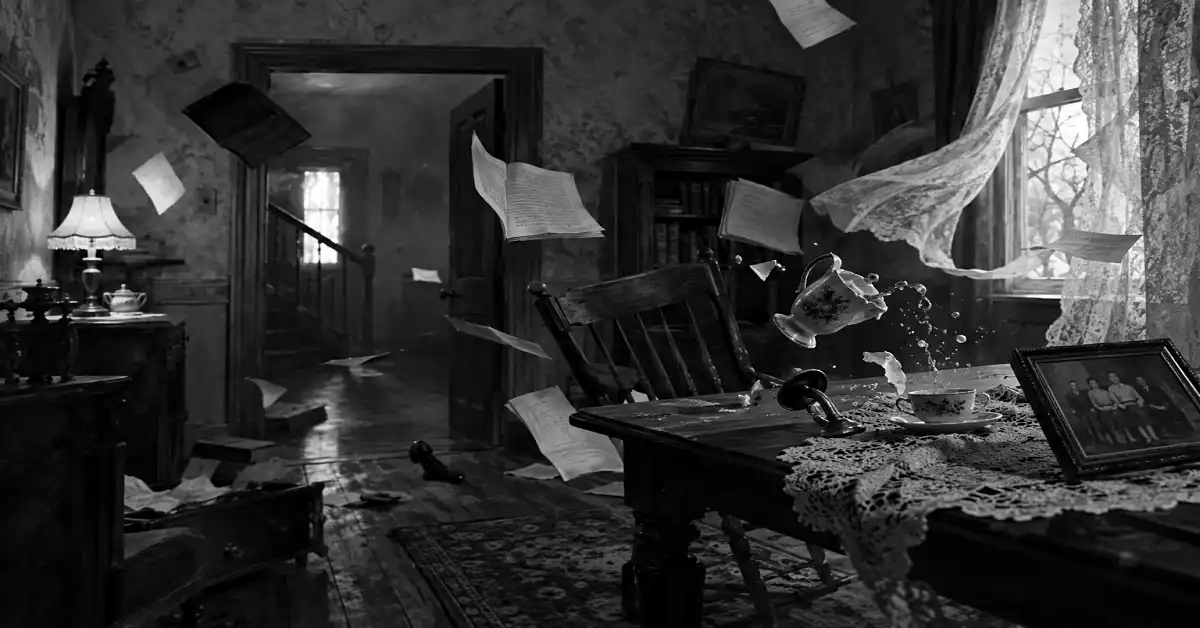
Soon, a trickle of curious locals became a flood of pilgrims from all over Italy and beyond. They came seeking messages, miracles, and healing. Mario would hold public prayer sessions, during which he would fall into an ecstatic state and relay messages he said were from Heaven. To accommodate the crowds, a chapel was built on the site—a chapel the local diocese never approved.
This was the first red flag. But the true anomaly was yet to come.
Enter the Nun in Red: A Mystical Anomaly
This wasn’t just a standard vision of Jesus and Mary. There was someone else who began appearing in the olive grove. A figure who doesn’t fit the typical pattern of approved apparitions.
It was a nun, dressed in a striking red habit.
Who was she? Was she a known saint? An angel in a different guise? This mysterious figure became a central part of the Jaddico phenomena. For the followers, her presence was proof of the site’s unique importance. For the Church, she was a theological puzzle—and a major problem. Apparitions are vetted based on their alignment with established doctrine. A new, unidentified heavenly character is a serious complication.
The Luisa Piccarreta Connection: Unlocking the Secret
So, who did the followers think she was? Here’s where the story gets really deep, and you see why the Church got nervous. this is the key to the whole mystery.
The followers identified the Nun in Red with the Servant of God Luisa Piccarreta (1865-1947).
Never heard of her? You’re not alone, but she’s a huge deal in certain mystical circles. Luisa was a mystic from Corato, also in the Puglia region, who spent most of her life bedridden. She produced voluminous writings about a spiritual concept she called living in the “Divina Volontà” (the Divine Will).
Here’s why that’s a big deal:
- Complex Theology: Luisa’s writings are theologically dense and have been under Vatican scrutiny for decades. At one point, her works were on the Church’s index of forbidden books. While her cause for sainthood is now open, her teachings remain sensitive.
- A Regional Figure: By linking the apparition to a beloved—and controversial—local mystic, the Jaddico movement was tapping into a deep well of regional folk belief.
- The Red Habit: Why red? Red can symbolize many things in Catholicism: the blood of martyrdom, the fire of the Holy Spirit, or divine love. Tying this potent color to Luisa was a powerful symbolic statement.
By claiming Luisa Piccarreta was appearing as the “Nun in Red,” the Jaddico movement was making a bold theological claim, one that stepped far outside the bounds of established, safely approved apparitions.
The Church Investigates: “Non Constat de Supernaturalitate”
You can’t have thousands of people flocking to an unsanctioned shrine based on the visions of a layman without the local bishop getting involved. The Archdiocese of Brindisi-Ostuni, led by Archbishop Domenico Caliandro, launched a formal investigation.
The Church has a three-tiered verdict system for alleged apparitions:
- Constat de supernaturalitate: It is certain it is of supernatural origin. (Approved, like Fátima).
- Constat de non supernaturalitate: It is certain it is not of supernatural origin. (Condemned as fraudulent).
- Non constat de supernaturalitate: It is not certain that it is of supernatural origin.
This third verdict is the most common. It’s the Church’s way of saying, “We’ve looked into it, and we can’t confirm this is from God. It might be a psychological phenomenon, a mistake, or even a deliberate deception. Whatever it is, it’s not an approved miracle. Catholics should stay away.”
In 2015, after years of investigation, this is exactly the verdict the Archbishop rendered for Jaddico. The hammer fell.

Why the Hammer Fell: The Reasons
The official decree laid out the reasons clearly. It’s a masterclass in how the Church handles these situations.
- Doctrinal Errors: The messages Mario D’Ignazio claimed to receive were judged to contain “serious doctrinal errors” contrary to the teachings of the Catholic Church.
- Scandal and Disobedience: This is often the real killer. Mario and his followers had repeatedly disobeyed the directives of the Archbishop. They continued their activities even when told to stop. In the rigidly hierarchical Catholic Church, obedience to the local bishop is non-negotiable.
- Unauthorized Worship: The chapel was illegal in the eyes of the Church. You can’t just build your own church and declare it holy.
- Financial Concerns: While not always stated explicitly, the Church is always wary of financial gain and the commercialization of alleged holy sites.
The “Nun in Red” and the link to Luisa Piccarreta‘s complex theology were almost certainly part of the “doctrinal errors.” It was too much, too new, and too uncontrolled. This wasn’t just a spiritual movement; it was a rogue franchise, and the head office shut it down.
The Aftermath: A Silenced Shrine
The decree was absolute. It forbade priests and lay Catholics from participating in any activities at the Jaddico site. The chapel was to be closed. The movement was, from an official standpoint, finished.
Of course, faith isn’t a switch you can just turn off. A core group of believers continues to follow Mario D’Ignazio, viewing the Church’s condemnation as a form of persecution—proof of their righteousness. The site in the olive grove has become a strange kind of monument: a testament to a spiritual phenomenon that shone brightly for a few years before being extinguished by the very authority its followers sought to honor.
The story of the Nun in Red is a perfect lesson. It shows that for a miracle to survive, it needs more than just a visionary and believers. It needs permission.
Call to Action:
This case pits personal, ecstatic faith against the ancient, structured authority of an institution. Do you think the Church was right to protect its doctrine and order, or should it have allowed this unique expression of faith to continue? Let me know your thoughts in the comments.

