

American Psycho: Did Patrick Bateman Actually Kill Anyone? (The ATM Cat Scene)
You’ve probably seen the memes. You’ve seen the “sigma male” grindset edits on TikTok or YouTube Shorts where Christian Bale walks through his office with dead eyes and perfect hair. But if you’ve actually sat down and watched American Psycho from start to finish, you were likely left staring at the credits thinking, “Wait… did any of that actually happen?”
It’s the ultimate movie debate. Was Patrick Bateman a cold-blooded serial killer, or just a sad, corporate drone drawing disturbing pictures on a napkin?
The answer isn’t as simple as a yes or no. But the key to unlocking the truth hides in one specific, bizarre moment: The ATM cat scene.
We’re going to break this down, cut through the confusion, and look at the facts – backed by the director Mary Harron and the source material itself. Buckle up; we have some videotapes to return.
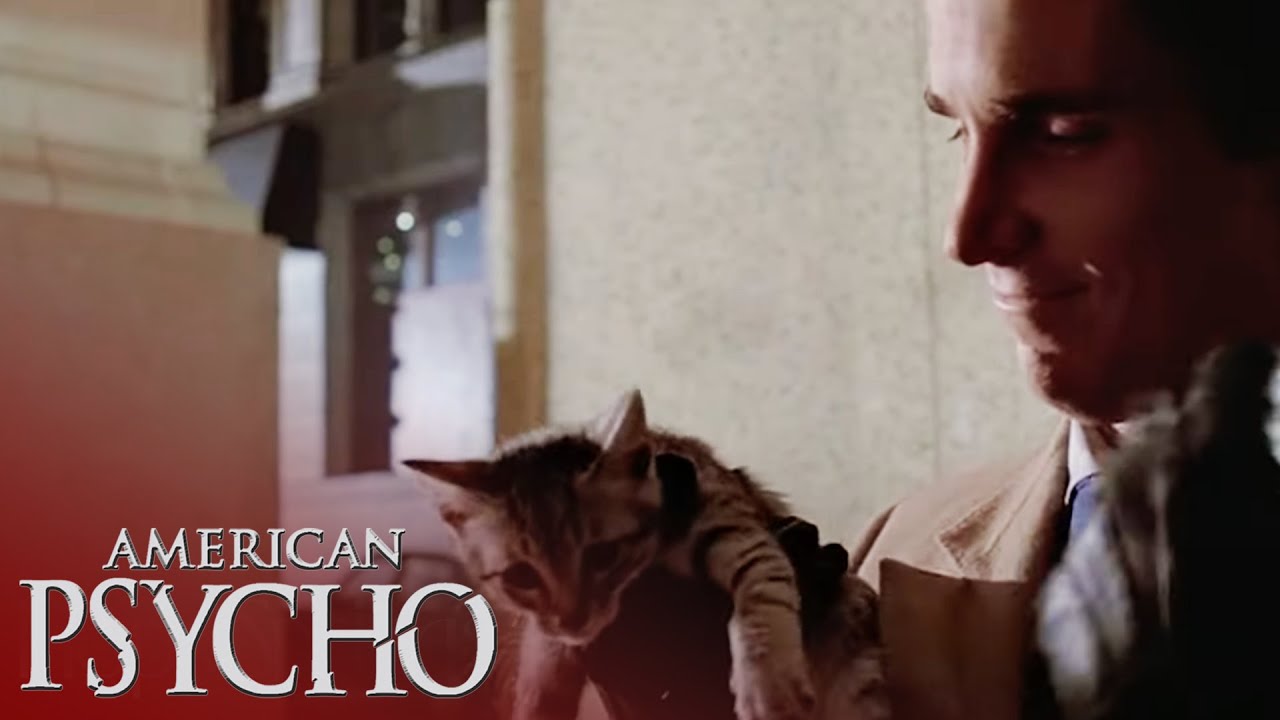
The “Feed Me A Stray Cat” Moment: The Tipping Point
Around the third act of the movie, Patrick Bateman’s mask of sanity doesn’t just slip; it shatters. He’s sweating, he’s frantic, and he’s at an ATM.
This is where the movie pulls a fast one on you.
Bateman looks at the screen, and instead of asking for his PIN, the text reads: “FEED ME A STRAY CAT.”
Now, unless New York banks in the 80s were operating on some dark, demonic software (which, let’s be honest, maybe they were), this is our first undeniable proof that Bateman is hallucinating.
Why This Scene Changes Everything
Up until this point, Bateman’s violence felt grounded. Horrifying, yes, but physically possible.
- He axes Paul Allen.
- He drops a chainsaw down a stairwell (improbable, sure, but physics-abiding).
But the ATM moment? That’s pure psychosis.
Director Mary Harron has explicitly stated in interviews that this scene is the exact moment the film shifts gears. It marks Bateman’s descent from a functioning psychopath into a full-blown psychotic break. He picks up a kitten, aims his gun, and – in a moment of dark absurdity – is stopped by an elderly woman. He shoots her.
But did he? Or was she just another phantom in his head, like the text on the screen?
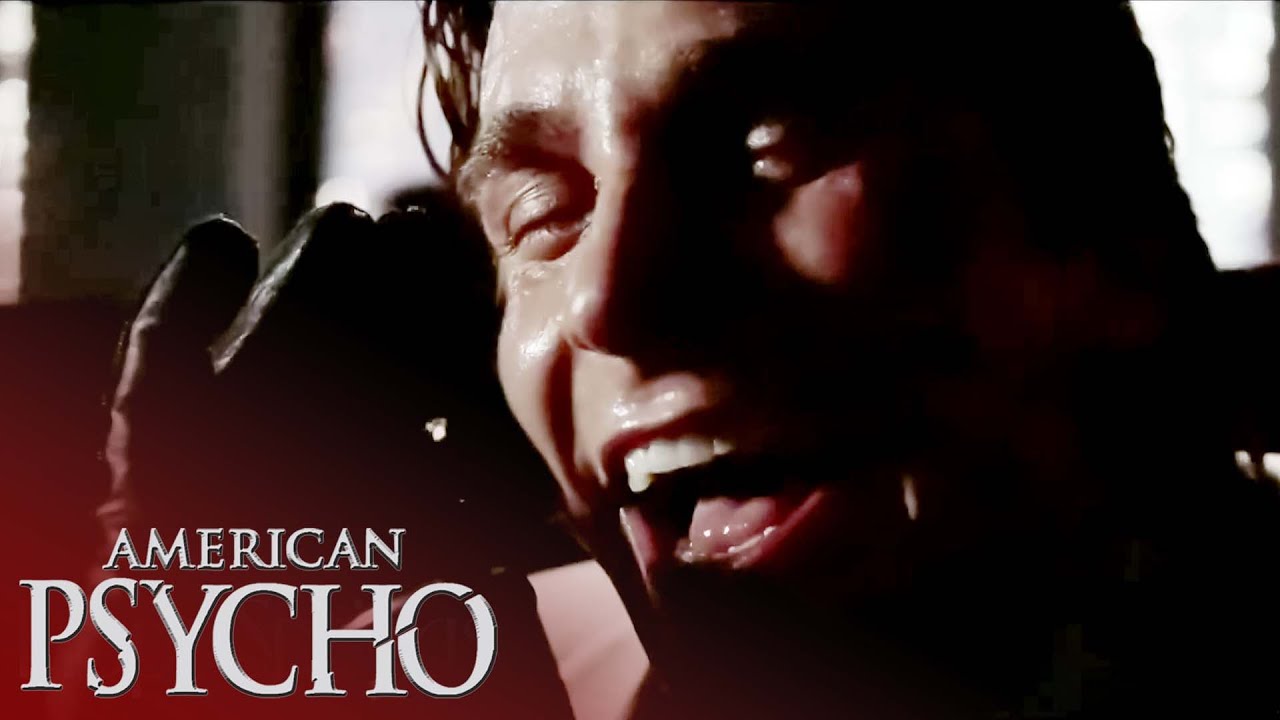
The GTA-Style Shootout: Reality vs. Fantasy
Immediately following the ATM incident, Bateman goes on a rampage that feels less like a thriller and more like a Grand Theft Auto lobby with cheat codes on.
He shoots a security guard. He shoots a janitor. Then, he gets into a firefight with the police.
Here is where the “it’s all a dream” theory gets its ammo:
- The Exploding Car: Bateman fires a single bullet at a police cruiser, and it instantly explodes into a fireball. Even Bateman looks at his gun in confusion, staring at it like, “How did this thing do that?”
- Infinite Ammo: He seems to fire an impossible number of rounds without reloading.
- The SWAT Team: In downtown Manhattan, after killing multiple people, he somehow escapes into his office building untouched.
The Verdict on the Shootout:
It is highly likely that this entire sequence – starting from the ATM – is a hallucination. The “exploding car” is a movie trope that Bateman, who consumes pop culture obsessively, is projecting onto his reality. He thinks he’s an action movie villain. In reality, he might just be running down the street screaming.
So, Did He Kill Paul Allen?
This is the big one. The catalyst for the whole plot is the murder of Paul Allen (Jared Leto) to the tune of “Hip to Be Square.”
Here is the evidence for both sides.
Argument A: It Was All in His Head
- The Apartment: Later in the film, Bateman returns to Paul Allen’s apartment, expecting to find rotting bodies. Instead, it’s pristine. White walls, fresh paint, and a real estate agent who has no idea who Paul Allen is.
- The Lawyer: In the final scene, Bateman confesses to his lawyer, Harold Carnes. Carnes laughs it off, claiming, “I had lunch with Paul Allen twice in London just ten days ago.”
Argument B: The Murders Were Real (The Official Answer)
Hold your horses – don’t fall for the “it was all a dream” trap just yet.
Mary Harron (Director) and Guinevere Turner (Screenwriter) have gone on record to say they dislike the “it was all a dream” interpretation. They didn’t intend for the whole movie to be a hallucination.
So, how do you explain the clean apartment and the lawyer?
The “Corporate Cover-Up” Theory:
This is the darkest, most cynical, and frankly, the coolest interpretation.
- The Apartment: The real estate agent knew. She saw the bodies. But this is prime New York real estate. Selling a “murder house” destroys property value. So, the building management cleaned it up, painted over the blood, and silently evicted the corpses to protect their investment. Notice how she tells Bateman, “I think you should leave,” with a knowing, icy stare? She knows he’s trouble, but she doesn’t care about justice – she cares about the commission.
- The Lawyer: The lawyer is just as self-absorbed as Bateman. In the world of American Psycho, everyone looks the same, dresses the same, and has the same haircut. The lawyer likely did have lunch with someone in London – but it wasn’t Paul Allen. He just mistook another yuppie for him, just like Paul Allen mistook Bateman for Marcus Halberstram earlier in the movie.
Expert Insight:
“One thing I think is a failure on my part is people keep coming out of the film thinking that it’s all a dream, and I never intended that… The murders actually happened.” – Mary Harron
Why You Can Trust This Take
- We are analyzing the film based on the creator’s intent, crossing referencing the screenplay, the 1991 novel by Bret Easton Ellis, and director commentary.
- This isn’t just fan fiction. We are using quotes from the people who made the movie.
- We aren’t selling you a theory as fact. We are presenting the ambiguity the way it was designed, acknowledging the grey areas while highlighting the most supported conclusion.
Why are we still talking about a movie from the year 2000?
Because Patrick Bateman is the grandfather of the “curated self.” we live in an era of extreme curation – Instagram vs. Reality, AI influencers, and the “Sigma” grindset culture that ironically idolizes Bateman (missing the point that he is a pathetic loser, not a hero).
The question of “Did he actually kill them?” matters because it asks: Does it even matter if he did?
In the end, no one stops him. No one arrests him. Society is so superficial, so obsessed with reservations at Dorsia and business cards, that a serial killer can walk among them unnoticed.
Whether the bodies are real or imagined, the horror is that nobody cares.
The Hybrid Theory
Here is the most accurate way to watch the movie:
- The Early Kills: Real. He killed the homeless man. He likely killed Paul Allen. He killed the sex workers.
- The Breakdown: Fake. Once the ATM asks for a cat, Bateman has lost his grip. The police shootout, the exploding car, and the grand chase? Hallucinations born of guilt and panic.
- The Ending: Real. The apartment was cleaned up by a greedy landlord. The lawyer is an idiot who can’t tell his friends apart. Bateman is trapped in a hell where he can’t even get credit for his crimes.
As Bateman says in his final monologue: “This confession has meant nothing.”
5 Fast Facts to Impress Your Friends
- The Rolex Rule: Rolex wouldn’t let their watches be worn during murder scenes. Next time you watch, check Bateman’s wrist – he’s usually bare-wristed when the axe comes out.
- Tom Cruise Inspiration: Christian Bale based his performance on a Tom Cruise interview where he saw “intense friendliness with nothing behind the eyes.”
- The Book is Darker: In Bret Easton Ellis’s book, the “Feed Me A Stray Cat” scene is even weirder – a park bench turns into a monster. The movie actually grounded it!
- Leonardo DiCaprio was almost Bateman: Can you imagine? The studio wanted Leo, but Mary Harron fought for Bale.
- New Adaptation: Rumors of a new American Psycho adaptation by Luca Guadagnino have been swirling in late 2024 and 2025. Will it answer the question definitively? We hope not.
What Do You Think?
Are you Team Hallucination or Team Cover-Up? Did the ATM actually talk, or was it just the steroids and stress?
Drop a comment below or share this with that one friend who refuses to believe the “Exploding Car” theory.
Disclaimer: No cats were harmed in the making of this article (or the movie – it was an animatronic and a very well-trained kitty).

