

Martyrs (2008): What the Old Lady Saw in the Afterlife
You know that feeling when a movie ends, the credits roll, and you’re just sitting there, staring at a blank screen, questioning your entire existence? Yeah. That’s Martyrs.
If you’ve clicked this, you’ve likely survived Pascal Laugier’s 2008 French horror masterpiece. You’ve endured the brutal violence, the heartbreak, and that gut-wrenching final act. But one question still claws at your brain, keeping you up at night: What did Anna whisper to Mademoiselle? And why, immediately after hearing it, did the old lady calmly put a bullet in her head?
It’s 2025, and nearly two decades later, this film remains the Mount Everest of extreme horror. It hasn’t aged a day in its ability to traumatize and fascinate. Today, we aren’t just recapping the plot; we’re diving deep into the philosophical abyss to figure out exactly what the old lady saw in the afterlife.
Buckle up. It’s going to get heavy.
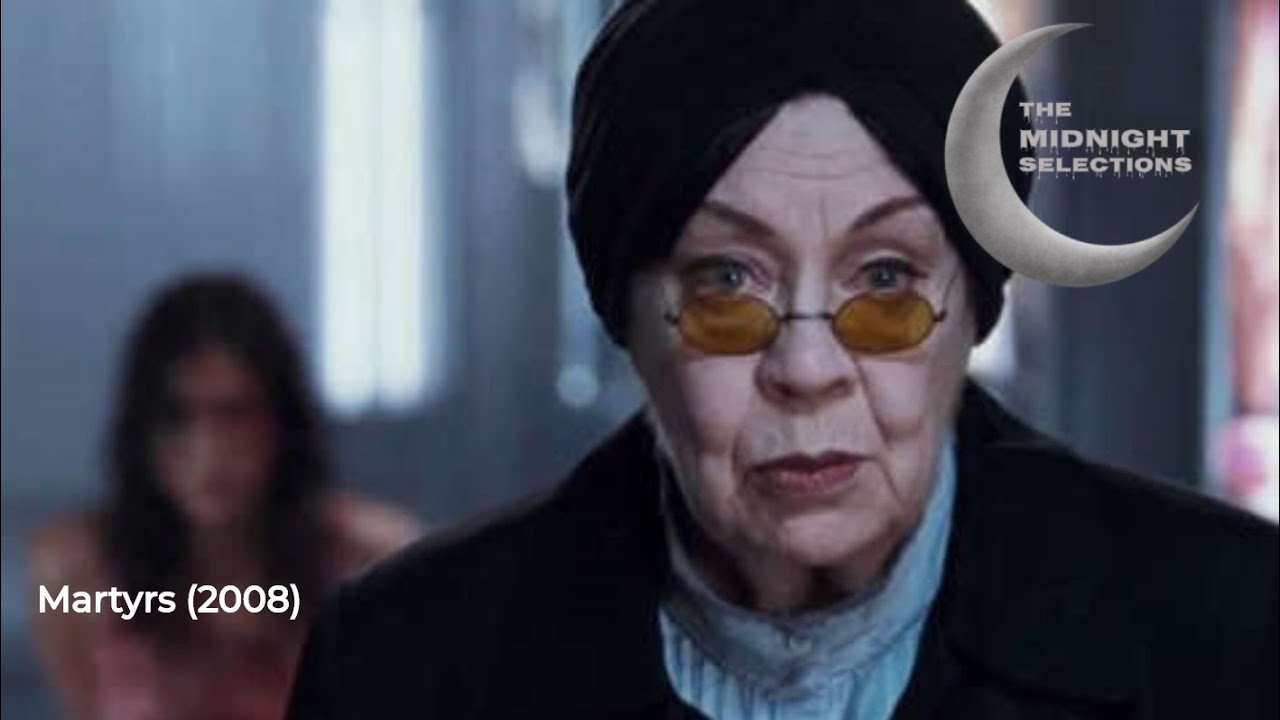
The Cult’s Obsession: Victim vs. Martyr
To understand the whisper, you have to understand the listener. Mademoiselle isn’t just a sadistic villain; she’s a woman possessed by a singular, theological obsession. She leads a secret society – a collective of wealthy, elderly elites – desperate to know what lies beyond the grave before they get there themselves.
But they don’t want to die to find out. They want a messenger.
The distinct difference
Mademoiselle explains early on that suffering is a gateway. But there’s a catch. She distinguishes between two types of suffering subjects:
- Victims: People who break under torture. They scream, they beg, they mentally collapse. They offer nothing but the reflection of their own pain.
- Martyrs: Rare individuals who transcend the pain. They endure suffering so profound that they dissociate, their eyes glazing over in a state of ecstasy. They stop being “here” and start seeing “there.”
Anna, our tragic protagonist, becomes the ultimate Martyr. She survives the un-survivable. Flayed alive, hanging in chains, she enters that transfixed state. Her eyes look past the room, past the pain, and gaze directly into the infinite.
That is when Mademoiselle rushes down. She asks the million-dollar question: “What did you see?”
Anna whispers. Mademoiselle listens.
Then, the old lady walks upstairs, removes her makeup, and addresses her followers. When asked if the afterlife is clear, she says, “Is there any room for interpretation? None.” But instead of sharing the news, she asks a fellow member, “Etienne, can you imagine what comes after death?” When he says no, she replies, “Keep doubting.”
Bang. She’s dead.
Theory 1: The Nothingness (Nihilism)

This is the bleakest interpretation, and frankly, the one that hurts the most.
Imagine Anna whispers that there is nothing. No heaven. No hell. Just a void. The “light” was just the brain’s neurons firing one last time before fading into black.
Why would Mademoiselle kill herself?
Because her entire life’s work was a lie. All the torture, all the children she destroyed, all the money spent – it was for absolutely zero purpose. The weight of that guilt would be crushing. If there is no judgment and no afterlife, she has no reason to fear death, but she also has no reason to live with the knowledge of her atrocities.
However, this theory has a hole. If there was truly nothing, why tell Etienne to “keep doubting”? Doubt implies a possibility of something. If she knew it was a void, she might have said, “It’s empty,” or simply nothing at all. “Keep doubting” suggests that the mystery itself is valuable.
Theory 2: The Unbearable Heaven
Let’s flip the coin. What if Anna saw something impossibly beautiful? What if she confirmed the existence of a glorious, forgiving Paradise?
Why commit suicide?
- Impatience: Mademoiselle is old. She’s terrified of death. If she knows for a fact that eternal bliss is waiting, why wait another second in this grey, cold world? She took the express ticket.
- Greed: She didn’t tell the others because she wanted it for herself, or perhaps she felt they were unworthy.
- The Ultimate Mercy: This is a twist. Maybe she realized that knowing for sure ruins the test. If you know Heaven is real, faith becomes meaningless. By killing herself and silencing the truth, she allows the others to continue “doubting,” which might be a requirement for entering that paradise. Faith, by definition, requires the absence of proof.
Theory 3: The Lovecraftian Horror
This is where we get into Cosmic Horror territory.
What if the afterlife exists, but it is not human? What if it’s a dimension of abstract geometry, screaming colors, and entities that view human souls as food? Anna’s “transcendence” might have been her mind snapping as she gazed upon an eldritch abomination.
The Suicide Logic:
Mademoiselle realized that we are safer here than there. Or perhaps, she realized her actions had drawn the attention of something terrible. Killing herself could have been an act of pure terror – an attempt to escape the inevitable, or a reaction to a mind-shattering realization that reality is a cruel joke.
Theory 4: The Paradox of Knowledge (The Leading Theory)
This is the most nuanced take, and it aligns with the film’s heavy philosophical undertones.
The theory posits that the act of knowing changes the outcome.
Anna might have whispered that the afterlife is a reflection of your life, or that it is shaped by your final moments. But here is the kicker: You cannot share it.
If Mademoiselle tells the group, “There is a Heaven,” they will all commit suicide to get there. But suicide might be a sin that bars them from entry. If she tells them “There is Hell,” they will live in terror.
“Keep Doubting” Explained:
The phrase “Keep doubting” is the key. It suggests that uncertainty is essential to our experience.
- If you know there is an afterlife, life loses its value. You stop trying to fix this world because you’re obsessed with the next.
- If you know there is no afterlife, morality might crumble (in the eyes of a religious zealot).
Mademoiselle realized that the quest for the answer was the only thing giving her life meaning. Once she had the answer, the purpose vanished. She became a martyr of her own curiosity. She died because the burden of the truth was too heavy for a living mind to carry.
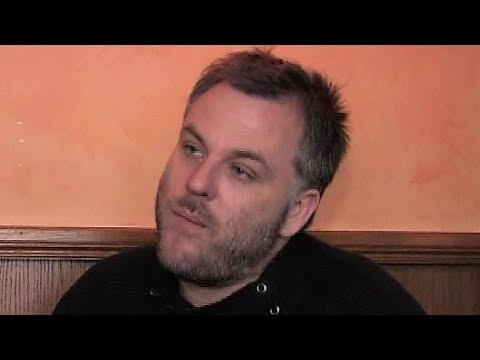
What the Director Says (Pascal Laugier’s Intent)
We can speculate all day, but what about the man who wrote it?
Pascal Laugier has been notoriously cagey about the ending, and that is by design. In interviews, he has stated that the film is about suffering, not just torture. He wanted the audience to feel the pain, to be dragged through the mud so that the ending would feel like a release.
Laugier has hinted that the ending is meant to be ambiguous. He didn’t write a specific line for Anna to whisper. The whisper is a narrative device – a mirror.
- If you are a nihilist, you hear “Nothing.”
- If you are religious, you hear “Heaven.”
- If you are a pessimist, you hear “Hell.”
The movie judges you based on what you think she said.
“The film is an experience. It’s not a message. I’m not trying to say something about the world, I’m trying to make you feel something about the world.” – Pascal Laugier
Why This Movie Still Matters
Martyrs is a masterclass in the “New French Extremity” wave. Critics and scholars often cite it alongside Inside (2007) and High Tension (2003). It’s not just gore; it’s high art disguised as a slaughterhouse.
It doesn’t lie to you. It doesn’t use jump scares. It hurts you honestly. That is why we trust it, even when we hate it.
Key Takeaways for the Viewer:
- The whispered truth is personal: It reflects your own fears of death.
- Mademoiselle is a tragic figure: She destroyed countless lives for an answer that ultimately destroyed her.
- Doubt is a gift: The movie suggests that not knowing is what makes life livable.
The “Keep Doubting” Philosophy
So, what did the old lady see? She saw the end of the question.
As humans, we are defined by our search for meaning. We build religions, write books, and yes, make horror movies, all to answer one question: What happens next? Mademoiselle found out that the answer renders the question – and the questioner – obsolete.
She saw that the answer was not meant for the living.
Maybe Anna said, “It’s exactly what you deserve.”
Maybe she said, “It’s lonely.”
Or maybe, just maybe, she said, “They are waiting for you.”
Whatever it was, it was enough to pull the trigger.
What do you think Anna whispered? Does the ambiguity make it a masterpiece or a frustration? Drop your theories in the comments below – let’s argue about the afterlife (civilly, please). And if you haven’t watched Martyrs yet… well, don’t say we didn’t warn you.
Share this post with a brave friend who needs their day ruined.
Sources:
- Laugier, P. (Director). (2008). Martyrs [Film]. Canal+.
- Interview with Pascal Laugier regarding New French Extremity and religious themes.

