

The Ancient Canaanite Temple at Tel Lachish: History and Archaeological Discoveries
Picture this. You are standing in the scorching heat of the southern Judean foothills. Armed with nothing but a small trowel and a brush, you carefully scrape away a layer of dirt that hasn’t seen sunlight in over 3,000 years. Suddenly, a glint of tarnished bronze catches your eye. You pull it out, wipe away the dust, and find yourself staring directly into the silver-plated face of an ancient, forgotten god.
That isn’t a scene from an Indiana Jones movie. It is exactly what happened to archaeologists excavating the ancient city of Tel Lachish.
When we talk about biblical history, things often feel incredibly abstract. We read ancient texts filled with epic battles, towering walls, and furious deities. It all sounds like mythology. But every so often, experts dig a literal hole in the ground and pull out the physical proof that these ancient worlds actually existed.
The unearthing of the Northeast Temple at Tel Lachish did exactly that. Dating back to the 12th century BCE, this 3,100-year-old structure is the first major Canaanite temple found in the region in over half a century. It completely revolutionized our understanding of how the Canaanites lived, worshiped, and ultimately died.
Grab your virtual trowel. We are digging deep into the ruins of a city that changed history.
Quick read
- A rare architectural find: The Northeast Temple features a square layout with side rooms and standing stones, mirroring later structures like King Solomon’s Temple.
- Weapons of the gods: Archaeologists uncovered bronze “smiting god” figurines, representing warlike Canaanite deities like Baal or Resheph.
- The birth of the alphabet: A tiny pottery shard found inside holds the oldest known engraving of the Hebrew/Canaanite letter Samekh.
- A fiery, violent end: The temple’s thick layers of ash perfectly align with historical accounts of Lachish’s absolute destruction, sparking intense debates about the biblical conquests of Joshua.
Welcome to Ancient Lachish: The Bronze Age Metropolis
Before we walk through the temple doors, you need to understand the neighborhood.
If you wanted to control the ancient Middle East, you absolutely had to control Tel Lachish. Located squarely between the Mediterranean coastal plain, Hebron, and Jerusalem, Lachish was essentially the ultimate trade hub. Think of it as an ancient superhighway intersection. Merchants, soldiers, and kings constantly passed through its massive gates.
Established around 1800 BCE, the city grew into a fabulously wealthy Canaanite stronghold. The local residents controlled massive portions of the Judean lowlands. They traded extensively with Egypt, Cyprus, and Greece.
However, wealth attracts heavy violence. Lachish was destroyed by the Egyptians around 1550 BCE. The resilient locals rebuilt it. It fell again. They rebuilt it once more. By the time the 12th century BCE rolled around — during the chaotic period historians call the Late Bronze Age Collapse — Lachish was one of the few prominent Canaanite cities left standing.
They were surviving, but the clock was loudly ticking.
Unearthing the Northeast Temple
Finding a pristine temple wasn’t actually the original goal.
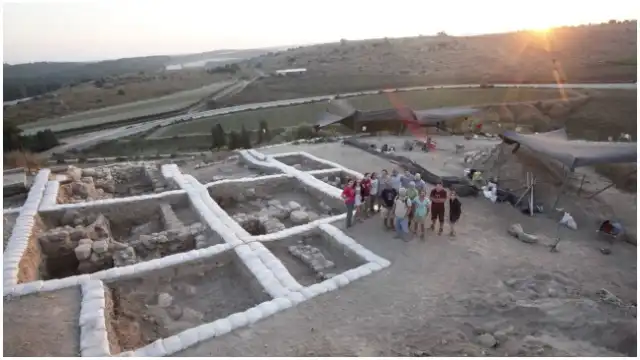
Between 2013 and 2017, the Fourth Expedition to Lachish set up camp. Co-directed by Professor Yosef Garfinkel of the Hebrew University of Jerusalem and experts from Southern Adventist University, the team originally went looking for Iron Age fortifications. They wanted to see if the biblical King David was a real historical figure by finding walls from his era.

Instead, they hit an absolute archaeological jackpot from a much older period.
As they dug into the northeastern corner of the site, they struck thick layers of collapsed mudbrick and ash. Beneath that violent destruction layer rested the Northeast Temple. Professor Garfinkel famously remarked that getting the chance to excavate a Canaanite temple in Israel only happens once every 30 or 40 years.
The preservation was stunning. Because the walls and ceiling collapsed during a sudden, fiery attack, the building was effectively sealed. The ruins acted as a perfect time capsule, trapping the daily religious life of the Canaanites directly under the rubble.
A Layout That Shaped Future Religions
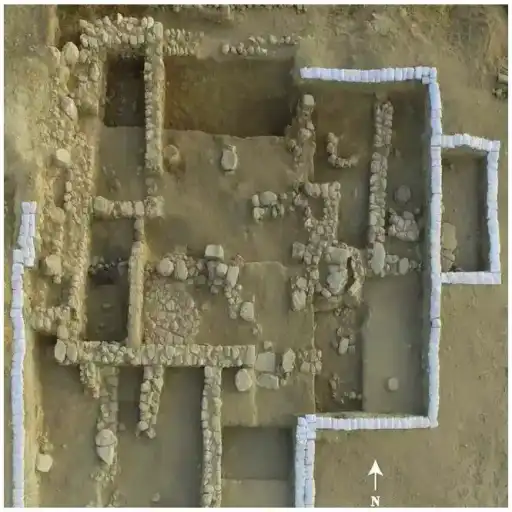
Ancient architecture tells us exactly what people valued. When archaeologists mapped out the Northeast Temple, they noticed something highly familiar.
The compound started with an impressive front area marked by two massive columns and two imposing towers. If you walked between those towers, you entered a large central hall. Beyond that sat the inner sanctum — the holy of holies.
Inside this sacred space stood four supporting columns. In the center sat several large, unhewn “standing stones.” These raw, uncut rocks were a staple of Canaanite worship, likely serving as physical focal points for the gods. The building also featured numerous smaller side rooms wrapping around the central hall.
Why does this specific blueprint matter?
Because it represents an architectural bridge. The square-shaped design and the specific layout of the columns look incredibly similar to the descriptions of later Israelite sanctuaries. Yes, that includes the legendary Temple of Solomon built centuries later in Jerusalem. The Israelites clearly borrowed and adapted the architectural genius of the very people they replaced.
The Treasures Left Behind in the Ash
A temple is just an empty stone shell without the objects inside it. Luckily, the Canaanites left their most precious items right on the floor.
When the invasion hit, the priests didn’t have time to pack up. The excavation team found an incredible trove of artifacts scattered around the holy of holies. They uncovered heavy bronze cauldrons used for rituals. They found intricate jewelry inspired by the Egyptian goddess Hathor. Sharp daggers and heavy axe-heads adorned with striking bird images emerged from the dirt.
But three specific discoveries blew the lid off the archaeological world.
1. The Smiting Gods and Silver Faces
If you walked into a modern church, you would expect to see a cross or figures of peaceful saints. Canaanite religion was completely different. Their ancient world was brutal, and they wanted their gods to be brutal too.

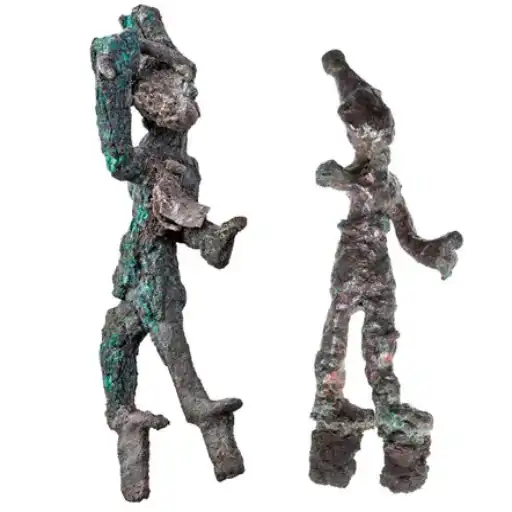
Right near the holy of holies, the team brushed the dirt off two tiny, spectacular bronze figurines.
These weren’t cute, winged cherubs. They were aggressively warlike male figures holding clubs or maces high above their heads in a striking pose. Scholars call these “smiting gods.” They most likely represented Baal (the god of storms and war) or Resheph (the god of plague and fire).
The details were immaculate. The bronze bodies still carried the faint remnants of a shiny silver coating, mostly concentrated on their faces. They even had tiny metal pegs extending straight down from their feet. Priests used these wooden pegs to mount the violent little deities onto wooden stands so they could be carried in religious processions.
Finding these intact felt like shaking hands with an extinct religion.
2. The Ramses II Connection
Lachish didn’t exist in a vacuum. It was heavily influenced by its massive neighbor to the south: Egypt.
Among the cultic items, archaeologists found a gorgeous gold-plated bottle. When they examined it closely, they noticed Egyptian hieroglyphs. The inscription bore the name of Ramses II, arguably the most powerful pharaoh in Egyptian history.
This bottle wasn’t a cheap souvenir. It was a luxury import. Finding it inside the sanctuary proves that the Canaanite elite at Lachish maintained incredibly close ties with the Egyptian empire. It shows a highly interconnected ancient economy right before the whole system came crashing down.
3. A Simple Shard with Massive Implications
Gold and bronze look great in museum display cases. However, the most important artifact found in the Northeast Temple was a broken piece of garbage.
The team found a small, jagged pottery shard featuring an engraving. It showed a long vertical line crossed by three short, perpendicular horizontal lines.
That tiny scratch is the letter Samekh.
It represents the oldest known example of this specific letter in the ancient Canaanite script. Why should you care about a random ancient letter? Because the Canaanite alphabet is the literal grandfather of modern writing. Their brilliant invention of using specific symbols for sounds eventually evolved into Hebrew, which influenced Greek, which gave birth to Latin.
You are reading this exact article today because, over 3,000 years ago, a Canaanite scribe scratched those intersecting lines onto a clay pot. That is where history jumps directly off the page and enters your daily life.
The Biblical Connection: Joshua and the Fire
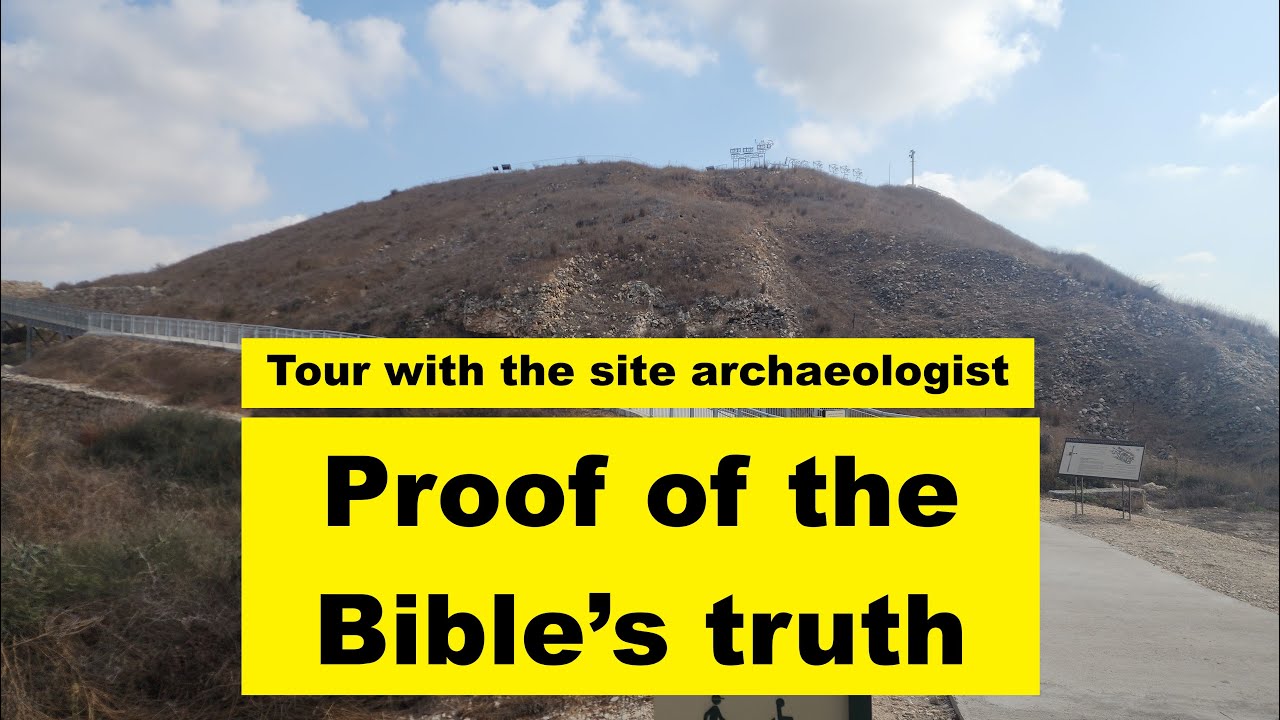
We know exactly how the Northeast Temple met its end. It burned. The ash layer was thick, undeniable, and catastrophic. Someone intentionally put Lachish to the sword around 1150 BCE.
This brings us to the most controversial and exciting part of the discovery. The Bible explicitly claims that the Israelites destroyed this exact city.
“Joshua proceeded with all Israel to Lachish; he encamped against it and attacked it. God delivered Lachish into the hands of Israel. They captured it on the second day and put it and all the people in it to the sword.” — Joshua 10:31-32
Does the dirt match the scripture? Yes, but it is complicated.
The Canaanite culture didn’t vanish overnight. History tells us the destruction of the Canaanite city-states was a brutal, drawn-out process spanning roughly a hundred years. Tel Lachish actually shows two separate, massive destruction layers during this window. One happened at the end of the 13th century BCE. The final, fatal blow happened in the middle of the 12th century BCE.
Which one was Joshua? That remains a heavily debated question in university lecture halls today.
The biblical text doesn’t give us specific calendar dates. It also doesn’t specifically mention burning a temple. However, the physical evidence of total societal collapse aligns perfectly with the narrative of a massive cultural shift. The Canaanites were entirely wiped out, and the Israelites rose from their ashes to claim the Judean lowlands.
What This Means for History Buffs Today
By the time we hit the 2020s, the excavation of Lachish had wrapped up, but the scientific analysis was just hitting its stride. As of 2026, researchers are still running advanced chemical tests on the bronze figurines and mapping the exact trade routes of the pottery found inside.
The Northeast Temple teaches us that ancient religions rarely lived in total isolation. They borrowed ideas, architecture, and even gods from their neighbors. The Canaanites built a sanctuary that looked like an Israelite temple, filled it with Egyptian gold, and wrote in a script that would one day conquer the globe.
They were incredibly advanced. They were deeply religious. And ultimately, they were totally completely vulnerable.
History isn’t just a list of dates to memorize for a high school exam. It is the story of real people who built massive towers to protect their families, prayed to silver-faced gods when the rain didn’t fall, and watched their entire world burn to the ground. Tel Lachish gives us a front-row seat to that human drama.
What fascinates you the most about ancient archaeology? Is it the glittering gold artifacts, the mysterious ancient alphabets, or the intense thrill of proving historical texts right? Drop your thoughts in the comments below! If you loved digging into the past with us, share this article with your favorite history buff and keep the conversation going.

