

The Book of Soyga: John Dee’s Vanished Grimoire, The 36 Mysterious Tables (What We Can & Can’t, Decode)
Have you ever stumbled upon a puzzle so complex that people thought it was literally cursed? Welcome to the bizarre world of the Book of Soyga. Also known as Aldaraia, this 16th-century Latin treatise blends magic, astrology, and intense cryptography. For centuries, scholars believed it had vanished completely. Then, unexpectedly, it resurfaced in the 1990s.
Who owned this mysterious text? None other than Dr. John Dee. He served as the court astronomer, mathematician, and occult adviser to Queen Elizabeth I. Dee cherished this manuscript deeply. However, he could never decipher its final pages. Those sections contained 36 massive grids of seemingly random letters. Legend claimed that anyone who solved them would die within two and a half years. So, what exactly is hidden inside these grids?
Let’s dive into the history, the math, and the ultimate cracking of John Dee’s favorite enigma.
What Exactly is the Book of Soyga?
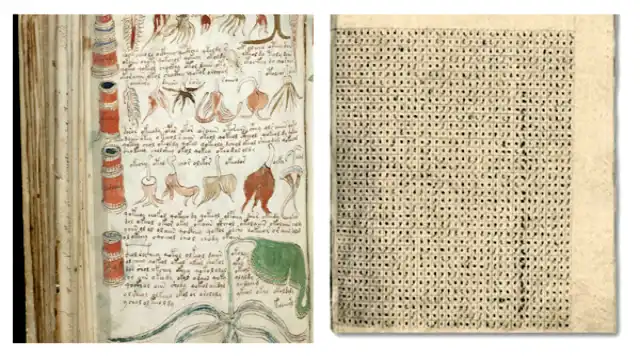
At its core, the Book of Soyga is a Renaissance magical manual. Written entirely in Latin, it covers a wide array of esoteric topics. You will find detailed sections on angelology, demonology, and astrological conjunctions. Interestingly, the word “Soyga” itself is a massive clue. If you spell it backwards, you get “Agyos.” That stems from the Greek word hagios, which translates to “holy.”
During the 1500s, Europe was absolutely obsessed with hidden divine knowledge. Think of it as an era where science and magic frequently overlapped. Consequently, folks believed that God encoded the secrets of the universe into language. Dee firmly bought into this idea. Furthermore, he spent a massive chunk of his life trying to uncover that divine speech.
Quick History Lesson
John Dee built the largest personal library in England, boasting over 3,000 volumes. Unfortunately, while he traveled through Europe in the 1580s, thieves ransacked his collection. He lost countless priceless texts. Among the missing items was his beloved Book of Soyga.

For nearly 400 years, historians assumed the grimoire was gone forever. Then, in 1994, an American scholar named Deborah Harkness made a massive breakthrough. While digging through archives, she found not one, but two surviving copies. One sat securely in the British Library under the label Sloane MS 8. Meanwhile, the other rested at Oxford University’s Bodleian Library as Bodley MS 908. They had simply been misfiled under a different title. Talk about hiding in plain sight!
John Dee and the Angelic Consultation
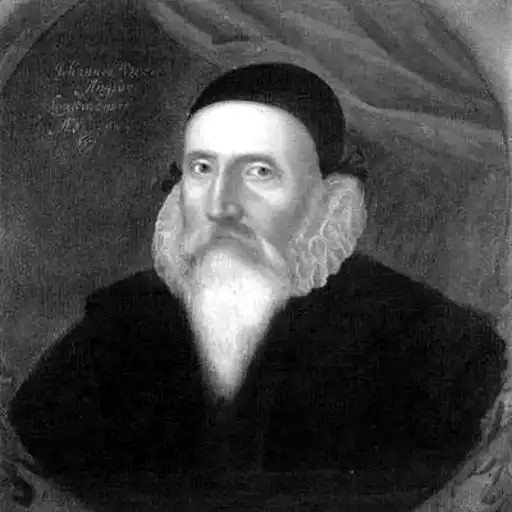
Dee was an incredibly brilliant mathematician. Yet, the final 36 pages of this book utterly stumped him. These pages featured 36 tables, each containing a 36×36 grid of letters. That totals over 46,000 characters. No obvious patterns existed.
Frustrated, Dee turned to the supernatural. He teamed up with Edward Kelley, a highly controversial spirit medium and scryer. Together, they conducted “angelic conferences.” On March 10, 1582, Dee supposedly contacted the Archangel Uriel. He desperately asked the angel how to read the encrypted tables.
Enter Archangel Uriel
What did Uriel say? The angel gave a rather unhelpful response. According to Dee’s private diaries, Uriel claimed the book was initially revealed to Adam in the Garden of Eden. Because of its divine origin, only the Archangel Michael possessed the key to decipher it. Basically, Uriel passed the buck. Dee died in 1608 without ever knowing the solution.
The Mystery of the 36 Letter Tables
Let’s talk about the real meat of the puzzle. The 36 letter tables look like absolute gibberish to the naked eye. Each grid forms a massive wall of text without any spaces or punctuation.
Why are they so important?
- Unique Structure: Every single letter is calculated based on the letters surrounding it.
- Astrological Ties: The first 24 tables correspond directly to zodiac signs and planets.
- The Death Curse: Occult rumors strongly insisted that decoding the tables brought a swift death sentence.
Despite the spooky warnings, modern minds couldn’t resist the challenge.
James Reeds Cracks the Code
Enter Jim Reeds, a brilliant cryptographer. In the late 1990s, he caught wind of the newly discovered manuscripts. Reeds had previously worked on the famous Voynich Manuscript, so he absolutely loved complex historical codes.
Reeds decided to apply modern mathematical analysis to the grids. Surprisingly, he discovered that the tables were not random at all. Instead, they relied on a highly structured algorithm. In fact, computer scientists today consider the Book of Soyga to be one of the earliest historic examples of a cellular automaton.
How did the original author do it? Reeds figured out that every table starts with a “seed word” (essentially a password). From that starting point, a rigid mathematical formula dictates every subsequent letter. The anonymous creator had to perform this calculation over 40,000 times by hand. One single mistake would ruin the entire page. It was a mind-boggling feat of 16th-century computing.
And just in case you were wondering, Jim Reeds survived well past the two-and-a-half-year curse limit. He formally published his findings in a 2006 essay, proving the old legends completely wrong.
How the Magic Tables Work
Are you curious about the actual math? Let’s break it down simply. Imagine you are filling out a blank grid from left to right, top to bottom.
- The Seed Word: You choose a six-letter magical word (like NISRAM).
- The Top Row: You write this word vertically down the first column. Then, you use a specific shifting rule to figure out the rest of the first row.
- The Grid Formula: For every other square, you look at the letter directly above it, and the letter directly to its left.
- The Calculation: Based on those two neighboring letters, you consult a master rulebook. It tells you exactly how many steps to move forward in the alphabet to find your new letter.
It sounds tedious because it definitely is. Doing this without a modern computer requires insane dedication. This intense level of complexity is exactly why Dee thought the grids held genuine magical power.
Where to Read The Book of Soyga Today
Want to peek at this legendary grimoire yourself? You no longer have to visit London or Oxford to see it. Thanks to the internet, digitized versions and translations are widely available.
- Original Scans: You can view high-quality digital scans of the original Latin manuscripts directly on the Bodleian Library’s digital archives.
- English Translations: Jane Kupin completed a comprehensive English translation of the text. You can often find her version, titled Aldaraia sive Soyga vocor, on academic databases or sites like HolyBooks.
- Colin D. Campbell’s Book: For a deep dive into the history and meaning, pick up Colin D. Campbell’s modern printed edition. It provides excellent context for beginners trying to understand the magic system.
Renaissance Grimoire
You might be asking, “Why should I care about a 500-year-old magic book?” The answer lies deep within human nature. We are inherently drawn to the unknown.
First, it highlights the fascinating early history of computer science. The algorithmic nature of the 36 tables proves that Renaissance thinkers were actively experimenting with complex data generation. Second, it gives us a rare window into the brilliant mind of John Dee. He was a man who straddled the fine line between logical scientist and devout mystic. Finally, it reminds us that some historical mysteries simply take time to solve.
The Book of Soyga stands as a powerful testament to human curiosity. We will gladly spend lifetimes, consult angels, and invent new math just to uncover a hidden truth.
Did this deep dive into historical cryptography blow your mind? If you loved learning about John Dee’s lost grimoire, share this article with your fellow history buffs! Leave a comment below: If you found a cursed manuscript hidden in your attic, would you try to decode it yourself, or leave the mystery alone?

