

The Haunted Doll of Joliet: True Curse, Chilling Family Stories & Historical Evidence
It’s a nightmare passed down from mother to daughter. A dark inheritance tucked away in an attic, a dreadful heirloom that cannot be discarded.
It’s just a baby doll. But to the family that owns it, it’s a vessel. A prison. A tomb.
This is the story of Joliet, the haunted doll. It is, without question, one of the most chilling and tragic paranormal legends in modern folklore. It’s not about a demon like Annabelle or a mischievous spirit like Robert. It’s about a curse, a family’s grief, and a collection of tiny, stolen souls.
But here’s the real question. In a world full of documented hauntings, verifiable artifacts, and named witnesses, where does Joliet fit? Is this a true, terrifying curse? Or is it something else a perfect ghost story, a modern myth so powerful it’s become real in its own right?
We are going to tell the full legend. Then, we’re going to do what few others have: investigate the “historical evidence” and confront the chilling mystery at the heart of this tale.
A Curse Passed Down for Four Generations
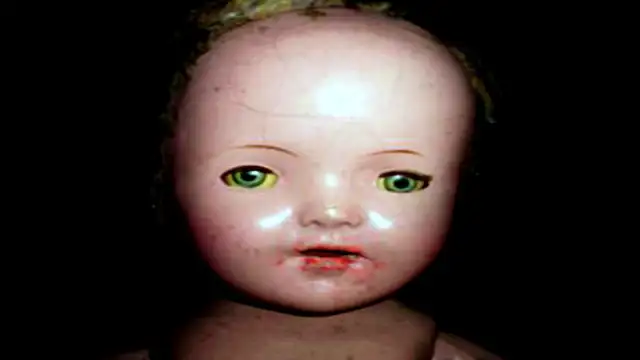
The story, as it’s been passed across the internet and through paranormal blogs, centers on a woman named Anna.
Anna is the current owner of Joliet. She didn’t buy it. inherited it. She is the fourth generation of women in her family to be the doll’s caretaker. This “caretaking” is not an act of love. It’s an act of terrified obligation.
The curse, according to the legend, is brutally specific.
For four generations, every woman in Anna’s family has given birth to two children: one girl and one boy. And for four generations, the baby boy has mysteriously and inexplicably died on his third day of life.

The girl always lives. The girl, in time, inherits the doll. The curse continues.
The Malicious Origin
The story begins with Anna’s great-grandmother, who was pregnant with her first child. She had a friend who, the legend says, was deeply and secretly vengeful or jealous. As a “gift” for the new baby, this friend gave her the doll.
Days later, Anna’s great-grandmother gave birth to a healthy baby boy. Three days later, he was dead.
Soon after the tragedy, the family began to hear it: the faint, unmistakable sound of an infant crying, coming from the room where the doll was kept. They were horrified. They believed the spirit of their lost son had become trapped inside the doll.
The Vessel of Souls
The curse, the family believes, is twofold. First, the doll’s presence ensures the death of every male heir. Second, and perhaps more tragically, the doll then claims the infant’s soul.
When Anna’s great-grandmother had her next child, a daughter, the girl lived. She eventually grew up, inherited the doll, and had two children of her own. Her son died on the third day.
Then the sounds from the doll changed.
The family no longer just heard a single infant crying. They began to hear the giggles and cries of multiple babies. With each generation, with each lost boy, another “voice” was added to the chorus.
Anna, the current owner, also had a son. He, too, died on the third day.

She now lives with the doll, the same doll that holds what she believes is the spirit of her own child, her uncle, her grandfather, and her great-uncle. This is the legend’s cruelest twist. How can you destroy the very thing that holds the last remnant of your lost family?
The family is trapped. They keep Joliet, passing it from mother to daughter, out of a terrible, paralyzing fear. If they get rid of the doll, what happens to the souls inside?
Where Is the “Historical Evidence”?
This is the story of Joliet as it is told. It’s horrifying, it’s heartbreaking, and it’s a perfect ghost story.
Too perfect.
As paranormal researchers, investigators, and folklorists, our job is to ask the hard questions. that we adhere to demand we look for proof. A story is one thing; evidence is another.
When you pull back the curtain on the Joliet legend, you find something far stranger than a ghost. You find… nothing.
- No last name for “Anna.”
- No family surname for her great-grandmother.
- No city, state, or even country. (Despite the name, there is zero evidence linking the doll to Joliet, Illinois.)
- No death certificates.
- No newspaper clippings of these strange, serial infant deaths.
- No named paranormal investigators who have ever seen, studied, or recorded the doll.
The story of Joliet exists in a vacuum. It is a terrifying tale that appears fully formed on countless paranormal websites, blogs, and listicles, often right next to the world’s most documented haunted objects.
And that is the key. To find the truth of Joliet, you must compare its story to the dolls it’s always grouped with.
A Tale of Two (Verifiable) Dolls vs. A Ghost Story
Let’s compare it to the “heavy hitters” of the haunted doll world.
Case Study #1: Robert the Doll
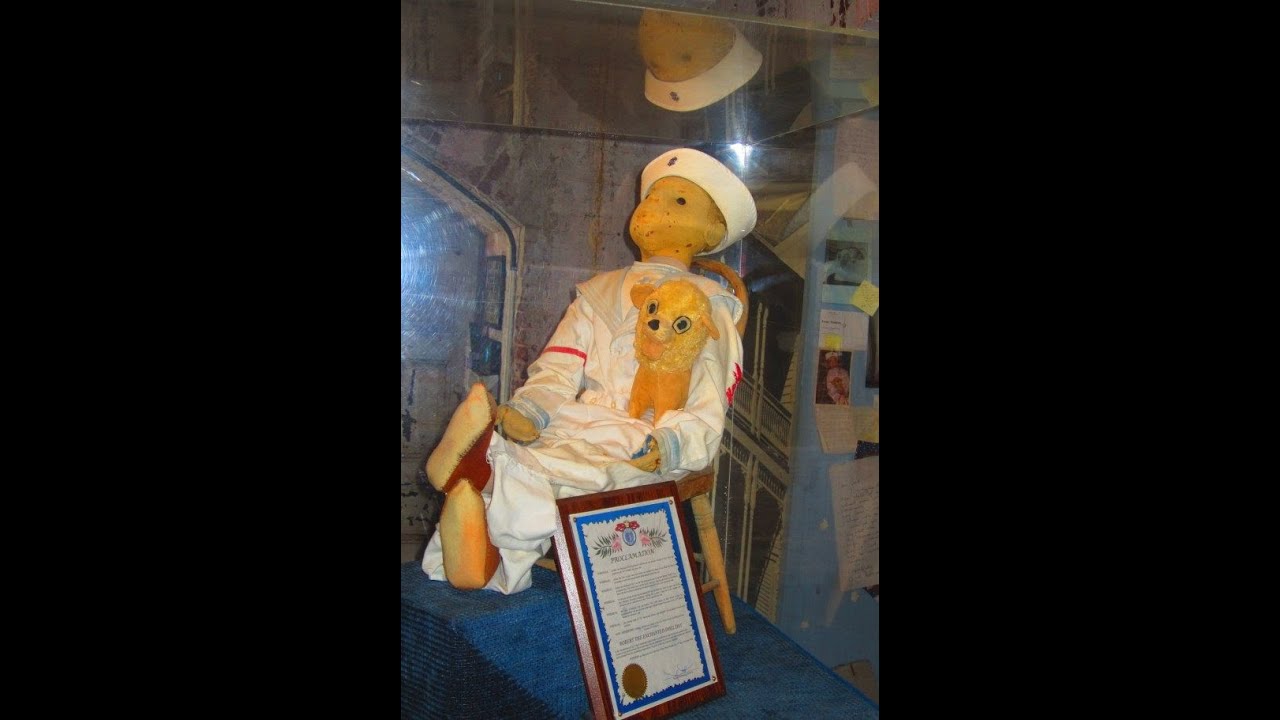
- The Legend: A turn-of-the-century doll given to a boy named Robert Eugene “Gene” Otto. The doll was said to move, giggle, and cause mischief.
- The Historical Evidence:
- Names: We have the owner’s full name, Robert Eugene Otto, a known Key West artist.
- Dates: We have a timeline. Robert was gifted the doll in 1904. Gene Otto died in 1974.
- Origin: The doll has been identified. It was likely manufactured by the Steiff company of Germany around the turn of the century.
- Location: The doll is a publicly viewable artifact. It is on display at the Fort East Martello Museum in Key West, Florida.
- Testimony: We have decades of reports from museum staff and visitors, documented in letters of apology to the doll.
Case Study #2: Annabelle the Doll
- The Legend: A Raggedy Ann doll given to a nursing student named Donna in 1970. The doll moved, left notes, and attacked a friend, leading paranormal investigators Ed and Lorraine Warren to intervene.
- The Historical Evidence:
- Names: We have the primary witnesses, Donna (the nurse) and famed paranormal investigators Ed and Lorraine Warren.
- Dates: The haunting is dated to 1970.
- Origin: We know the doll’s make: a standard Raggedy Ann doll.
- Location: The doll was a publicly viewable artifact for decades, housed in the Warren’s Occult Museum in Monroe, Connecticut.
- Testimony: We have the full case file and first-hand accounts from the Warrens, as well as the testimony from the original nurses.
The “Evidence” for Joliet
Now, let’s apply the same level of scrutiny to Joliet.

- Names: “Anna” (no last name). “Vengeful friend” (no name).
- Dates: “Four generations ago.”
- Origin: Unknown.
- Location: Unknown.
- Testimony: A single, unattributed story repeated verbatim across the internet.
There are no primary sources. No investigator and journalist, and no researcher has ever interviewed “Anna.” No museum claims to have the doll or one has ever produced a photograph of it that can be authenticated. The “Joliet” doll is, in every sense, a ghost.
A Masterpiece of Modern Folklore
The story of Joliet the haunted doll is not a verifiable, historical case. It is, instead, a powerful and brilliant piece of digital folklore, or “creepypasta.”
It is a ghost story for the internet age.
Its origin is impossible to pin down, but one of its earliest significant appearances is a 2015 blog post by the “Museum of the Weird,” which simply recounts the legend and links to a now-elusive YouTube video. From there, it was copied, pasted, and re-blogged, with each paranormal listicle treating it as “true” and placing it beside Robert and Annabelle.
This repetition, this mimicry of a true case, is what gives it power. It feels real because it’s presented alongside things that are real.
But its true power comes from the story itself. It’s a masterpiece of psychological horror.
- It preys on our deepest fear: The loss of a child.
- It creates a perfect trap: The family cannot get rid of the doll because it holds the very souls of their children. This is a far more tragic and complex motive than just being “scared” of a demon.
- It has a chilling “soundtrack”: The idea of hearing your own dead child giggling from a doll is a terrifying, visceral image that stays with you.
The Haunted Doll of Joliet is not a physical object you can visit in a museum. Its “curse” is not one of spiritual evil, but of narrative power. It’s a story so well-crafted that it haunts the internet itself, proving that a good ghost story doesn’t need a single shred of “historical evidence” to be real to the people who tell it.
What do you think is scarier: a doll haunted by a demon you can fight, or a doll haunted by a loved one you can never let go?
Share your thoughts!

