

Ever wonder what it takes to push good men to do the unthinkable? To risk everything—their careers, their freedom, their very lives—for a desperate grab at a different future? That’s the raw, beating heart of the mutiny on the HMS Bounty. It’s a story you think you know, probably from a movie starring a swashbuckling Marlon Brando or a grim-faced Anthony Hopkins.
But the real story? Oh, it’s so much messier, more human, and frankly, more fascinating than Hollywood ever let on.
This isn’t just a simple tale of a tyrannical captain and a heroic rebel. It’s a complex saga of duty, temptation, class tension, and the intoxicating, dangerous allure of paradise. It’s about how five months on a beautiful island could unravel the strict discipline of the British Royal Navy and set in motion a chain of events that would become one of the greatest survival and adventure stories ever told. So grab a cup of grog (or coffee, your call) and let’s set sail into the real, unvarnished history of the 1789 mutiny on the Bounty.
The Ship and the Mission: More Than Just a Breadfruit Run

Before she was the infamous Bounty, she was the Bethia, a humble merchant vessel built in 1784. The Royal Navy bought her in 1787 and refitted her for a very peculiar, and very specific, mission. Her name was changed to His Majesty’s Armed Vessel Bounty. She wasn’t a sleek warship; she was a small, full-rigged ship, just 90 feet long. Cramped doesn’t even begin to cover it for the 46 men on board.
So, what was this grand mission that sent them halfway around the world? War? Exploration? Nope. Breadfruit.
Seriously. The expedition, championed by Sir Joseph Banks of the Royal Society, had a simple goal: transport over 1,000 breadfruit plants from Tahiti in the South Pacific to the British colonies in the West Indies. The idea was that this cheap, high-carbohydrate food would be a perfect, low-cost way to feed the enslaved populations working the sugar plantations. It was an economic venture, plain and simple, dressed up as botanical science.
The ship’s great cabin, usually the captain’s spacious quarters, was converted into a greenhouse with a lead-lined floor and drainage systems for the potted plants. The comfort of the flora was prioritized over the comfort of the men. That little detail tells you a lot about what was to come.
The Players: A Captain on Edge and a Troubled First Mate
You can’t understand the mutiny without understanding the two men at its center: Captain William Bligh and his Acting Lieutenant, Fletcher Christian. Their relationship is the fuse that lights the powder keg.
Captain William Bligh: Tyrant or Top-Tier Seaman?
History, and Hollywood, has painted William Bligh as a one-dimensional monster. The truth is far more complicated.
Was he a harsh captain? By modern standards, absolutely. But by the brutal standards of the 18th-century Royal Navy, he was relatively lenient. His logbook shows he flogged his men far less than other captains of the era. Captain Cook, for example, flogged his men at a rate more than three times higher. Bligh’s real “crime” wasn’t physical cruelty; it was his tongue. He was a master of the verbal lashing, known for his foul temper, sharp criticisms, and humiliating insults, often in front of the entire crew. He was a perfectionist who held everyone to his impossibly high standards.
But here’s the kicker: William Bligh was one of the most brilliant sailors of his generation. He had served as the sailing master for the legendary Captain James Cook on his final voyage. His skills in navigation and cartography were second to none. He was a meticulous professional who cared deeply about his crew’s health, insisting on cleanliness and a ration of scurvy-preventing sauerkraut. So, was he a sadistic tyrant? Probably not. Was he a difficult, abrasive, and deeply frustrating man to serve under? You bet your life he was.
Fletcher Christian: Romantic Hero or Impulsive Rebel?
Fletcher Christian is often seen as the dashing hero, the man who stood up to tyranny. He was young, handsome, and from a respectable, albeit financially troubled, family. This wasn’t his first voyage with Bligh; they had served together twice before, and Bligh had considered him a protégé, promoting him to Acting Lieutenant for the Bounty voyage.
But Christian was also described as sensitive and emotional. He took Bligh’s constant criticism personally. While Bligh saw his outbursts as just letting off steam, Christian felt them as deep, personal attacks on his honor as a gentleman. He was caught between the world of a gentleman officer and the harsh reality of life under a demanding commander. This internal conflict would ultimately tear him apart.

Paradise Found, Then Lost: The Ticking Time Bomb in Tahiti
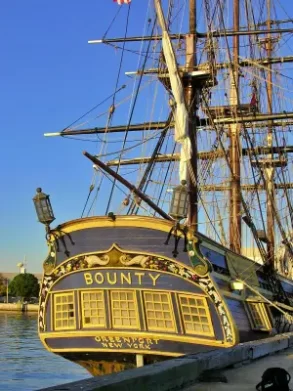
After a grueling ten-month voyage, the Bounty arrived in Tahiti in October 1788. And it was everything the sailors had ever dreamed of.
Imagine it. You’ve been crammed on a small, stinking ship for the better part of a year, living on salted meat and stale biscuits, under the constant watch of a short-tempered captain. Suddenly, you arrive on a lush, tropical island with warm weather, abundant fresh food, and beautiful, welcoming people.
For five months, while they waited for the breadfruit plants to mature, the crew of the Bounty lived in this paradise. The Tahitian culture was far more relaxed about, well, everything. The sailors formed relationships with local women, had families, and many, including Fletcher Christian, got traditional tattoos. They were living a life of freedom and ease they had never known.
Can you blame them for not wanting to go back?
This idyllic stay was the worst thing that could have happened for discipline. When it was time to leave in April 1789, cramming themselves back into the ship’s rigid hierarchy felt like being thrown back into a cage. The paradise they had found was now lost, and the memory of it festered.
The Breaking Point: “I Am in Hell!”
The return journey was tense from the start. Bligh was on edge, worried about the precious plants and the lax discipline of his crew. He ramped up his verbal assaults, and his prime target was often Fletcher Christian.
The final straw came on April 27, 1789. It was over… coconuts.
Bligh noticed a pile of coconuts had gone missing and flew into a rage, accusing his officers of stealing them. He directly accused Christian, calling him a thief and a scoundrel in front of the crew. For Christian, a man of gentle birth, this was the ultimate humiliation. It was an attack on his honor, the one thing a gentleman held dear.
That night, a distraught Christian reportedly wept, lamenting to his shipmates, “I am in hell, I am in hell!” He initially planned to build a small raft and escape the ship alone, preferring a near-certain death in the ocean to another day of Bligh’s abuse.
But his fellow sailors talked him out of it. They were just as fed up. They suggested a different plan: why not take the ship instead?
In the pre-dawn hours of April 28, 1789, near the island of Tofua, the mutiny began. It was surprisingly bloodless. Christian and about a third of the crew, armed with muskets and cutlasses, stormed Bligh’s cabin and dragged him on deck in his nightshirt. Chaos reigned, but the mutineers quickly gained control.
An Unbelievable Journey: Captain Bligh’s 3,600-Mile Voyage
The mutineers cast Captain Bligh and 18 loyal crewmen adrift in the ship’s launch—a 23-foot open boat, so overloaded the water was just inches from the gunwale. They were given a few days’ worth of food and water, a quadrant, a compass, and no charts. They were in the middle of the Pacific, thousands of miles from the nearest European settlement. It was a death sentence.
But they hadn’t counted on William Bligh’s sheer genius as a navigator.

What followed is one of the greatest feats of survival in maritime history. For 47 days, Bligh navigated that tiny, open boat across 3,618 nautical miles of treacherous ocean, from Tofua to the Dutch port of Kupang in Timor. They endured punishing storms, starvation, and attacks from hostile islanders (one man was killed). Bligh, using only a pocket watch and his knowledge of the stars, meticulously rationed their meager supplies—a single breadfruit per day, divided among the men—and kept his crew’s spirits from breaking.
He got 18 men across the Pacific in a rowboat. Let that sink in. This incredible journey proves that whatever his faults as a manager, Bligh was a leader and seaman of unparalleled skill and determination. When he finally returned to England, he was hailed as a hero.
The Mutineers’ Fate: Paradise, Prison, and the gallows
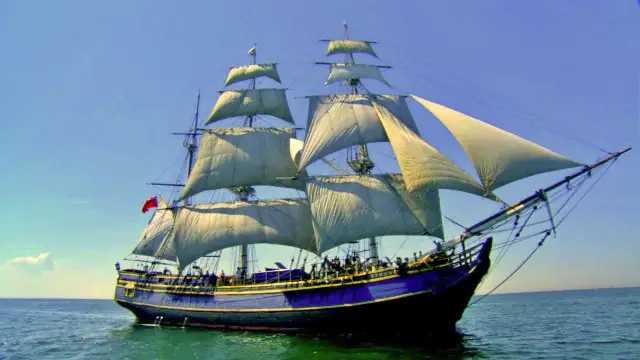
So what happened to Christian and his fellow mutineers? Their paths diverged dramatically.
The Tahiti Group
Sixteen of the mutineers decided to try their luck back in the paradise of Tahiti. They wanted to settle down and live out their lives. Bad idea. The Royal Navy, incensed by the mutiny, dispatched the HMS Pandora under the command of the ruthless Captain Edward Edwards to hunt them down.
The Pandora found 14 of the mutineers in Tahiti in 1791 (two had been killed by this point). Edwards had a special cage built on the deck of his ship to imprison them, a cruel cell they nicknamed “Pandora’s Box.” On the journey back to England, the Pandora struck the Great Barrier Reef and sank. Four of the mutineers and 31 of the ship’s crew drowned.
The ten surviving mutineers were eventually brought to trial in England. Four were acquitted, but six were sentenced to hang. Of those six, three were pardoned, but three were ultimately hanged from the yardarm of a warship in Portsmouth harbour.
The Pitcairn Group
Fletcher Christian knew the Royal Navy would come for them. He knew Tahiti wasn’t safe. So he, along with eight other mutineers, six Tahitian men, and twelve Tahitian women, sailed the Bounty off into the vast unknown, searching for a permanent hideout.
In January 1790, they stumbled upon Pitcairn Island—a remote, uninhabited volcanic rock that was misplaced on all British naval charts. It was the perfect hiding place. To ensure they could never leave and that the ship would never be discovered, they ran the Bounty ashore and set her on fire, watching her burn to the waterline. They were marooned.
Life on Pitcairn: A Brutal Utopia
The paradise they sought on Pitcairn quickly turned into a living hell. The dream of a utopian society dissolved into a nightmare of jealousy, alcohol-fueled violence, and murder.
The conflict started almost immediately. The English mutineers treated the Tahitian men as slaves, not partners. Arguments over women and land escalated into a brutal cycle of revenge killings. Within a few years, all the Tahitian men and most of the mutineers, including Fletcher Christian, were dead. The exact circumstances of Christian’s death are murky; he was likely killed during an uprising by the Tahitian men.
By 1800, only one mutineer was left alive: John Adams. Surrounded by nine women and numerous children, Adams had a religious conversion. He took it upon himself to build a new, peaceful society based on the ship’s Bible.
The tiny, isolated community remained hidden from the world until 1808, when an American sealing ship stumbled upon the island. The world was stunned to discover the last of the Bounty mutineers and their descendants. John Adams was granted a pardon for his role in the mutiny. Today, the few dozen inhabitants of Pitcairn Island are the direct descendants of the mutineers and their Tahitian companions.
Legacy of the Bounty: Why Does This Story Still Grip Us?
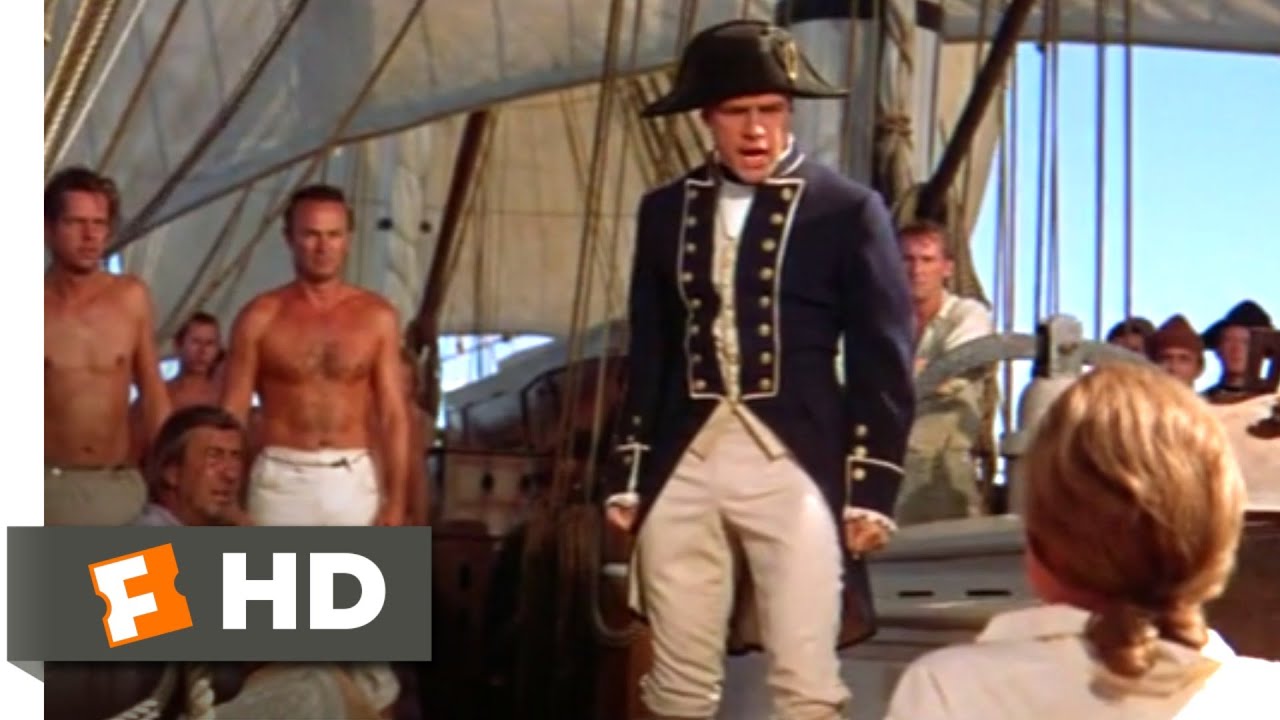
The mutiny on the Bounty is more than just a historical event; it’s a modern myth. It has been retold countless times in books and films, each generation recasting Bligh and Christian to fit its own values.
So why does it endure?

Because it touches on timeless human themes:
- Authority vs. Freedom: Is it ever right to rebel against a lawful but oppressive authority?
- Civilization vs. Nature: What happens when “civilized” men are exposed to a life of natural freedom?
- The Flawed Hero: The story lacks a clear hero or villain. Bligh was a brilliant navigator but a terrible manager. Christian was a charismatic rebel whose actions led to death and misery. Their moral ambiguity makes them endlessly compelling.
The story isn’t a neat and tidy narrative. It’s a raw exploration of human nature under pressure. It reminds us that paradise is often a state of mind, and that running away from our problems sometimes leads us to a darker place than the one we fled.
The tale of the Bounty is a stark, unforgettable lesson from the high seas: the line between duty and desire, order and chaos, is as thin and treacherous as a ship’s railing in a storm.
Frequently asked questions
How far did Bligh travel in the launch?
About 3,500 nautical miles to Coupang in 47 days, with one casualty at Tofua during an attempted stop for supplies.
Why no marines aboard?
Bounty was a small, lightly armed transport refit to carry breadfruit, and the absence of marines reduced the captain’s coercive options.
Was breadfruit ever delivered?
This first voyage failed; Bligh later succeeded in a second expedition, but on the first, the mutiny ended the mission.
When did the mutiny on the Bounty occur?
28 April 1789.
Who led the mutiny on the Bounty?
Fletcher Christian.
What happened to Captain William Bligh?
He and 18 loyal crew were set adrift and later navigated to Timor; Bligh returned to England and reported the mutiny. Q: Where did the mutineers settle?
Where did the mutineers settle?
Pitcairn Island; they burned the Bounty and most original mutineers later died there.
Why did the mutiny happen?
Historians cite harsh discipline, long layover in Tahiti, personal conflicts (not a single cause).
So, what’s your take? Was Fletcher Christian a hero who stood up to a tyrant, or was Captain Bligh a dedicated officer unfairly maligned by history? Drop your thoughts in the comments below!
Sources
- https://en.wikipedia.org/wiki/Mutiny_on_the_Bounty
- https://en.wikipedia.org/wiki/HMS_Bounty
- https://www.historyhit.com/mutiny-bounty/
- https://www.rmg.co.uk/stories/maritime-history/mutiny-on-bounty
- https://historicalmaritime.com/blogs/historical-maritime/the-mutiny-on-the-bounty-1789-a-voyage-from-scientific-mission-to-seafaring-rebellion
- https://en.wikipedia.org/wiki/William_Bligh
- https://www.britannica.com/biography/Fletcher-Christian
- https://library.puc.edu/pitcairn/pitcairn/history.shtml
- https://library.puc.edu/pitcairn/bounty/voyage.shtml
- https://famous-trials.com/bounty/392-story
- https://famous-trials.com/bounty/393-chronology
- https://www.britannica.com/biography/William-Bligh
- https://whalesite.org/pitcairn/fatefulvoyage/misc/chronology.html
- https://museum.maritimearchaeologytrust.org/2023/08/30/the-mutiny-of-hms-bounty/
- https://www.worldhistory.org/article/2786/the-bounty-mutiny/
- https://manxnationalheritage.im/wp-content/uploads/2023/07/Library-Fact-Sheet-Mutiny-on-the-Bounty.pdf
- https://christianhistoryinstitute.org/it-happened-today/10/18

