

The Hats That Killed: Why Fashion’s Plume Trade Nearly Wiped Out the Birds
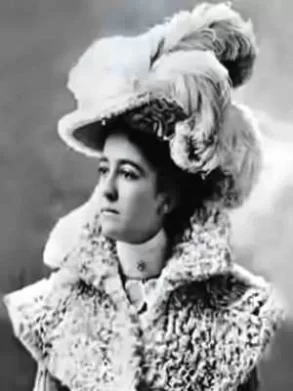
Take a look at a photograph of a fashionable woman from the 1890s. What do you see? A high-necked blouse, a corset cinching her waist, a long skirt. And on her head? A hat.
But it’s not just a hat. It’s an explosion of silk, ribbon, and… feathers.
Not just a few feathers. We’re talking entire wings, stuffed hummingbirds, and, most prized of all, the delicate, snow-white plumes of an egret. That hat wasn’t just an accessory; it was a status symbol. And it was a death warrant for millions of birds.
Today, we talk about “fast fashion” and its environmental cost. But in the late 19th and early 20th centuries, the fashion industry fueled one of the first global conservation crises: the plume trade.
This wasn’t just a quaint hobby of collecting a few feathers. It was a brutal, global industry that slaughtered birds on a scale that is hard to comprehend today. It pushed entire species to the brink of extinction, all so a woman could have a fashionable hat.
But this story isn’t just about the problem. It’s also about the solution. It’s the story of how a handful of people, outraged by the carnage, created the modern conservation movement from scratch.
So, how did a hat trend become a full-blown ecological disaster? Let’s get into it.
What Exactly Was the “Plume Trade”?
When we say “plumes,” we aren’t talking about the chicken feathers in a cheap boa. The trade was obsessed with the spectacular, show-off feathers that birds grow only for courtship and mating.
The ultimate prize was the aigrette.
An aigrette isn’t just a regular feather. It’s the cascade of impossibly fine, silky plumes that a snowy egret or great egret grows on its back during breeding season. They are, without a doubt, stunning. And in the 1880s, they became the absolute height of fashion in London, Paris, and New York.
The millinery industry—that’s the hat-making business—was a juggernaut. It was like the sneaker industry today. It set the trends, and the trends demanded feathers. The demand was so insane that, at its peak, the trade was a multi-million dollar global enterprise. We’re talking billions of birds.
One 1886 estimate, cited by the National Audubon Society, claimed that five million birds a year were being killed just for the North American millinery trade.
Let that sink in. Five. Million.

The Horrifying Math of “Murderous Millinery”
This is where the story gets dark. And to understand why it was so devastating, you have to understand the brutal biology of the hunt.
So, when is the best time to get these perfect, pristine breeding plumes?
Ding ding ding. During breeding season.
Hunters didn’t just randomly shoot a bird here or there. That wasn’t efficient. Instead, they would wait until the birds had gathered by the thousands in their nesting colonies, called rookeries. The birds were nesting, tending to their eggs, or raising their brand-new chicks. They were distracted. They were easy targets.
The hunters would storm the rookery, guns blazing. They shot the adults, ripped the valuable aigrettes from their backs—sometimes while the birds were still alive—and left the carcasses to rot.
But here’s the kicker. What did they leave behind?

The nests. Full of eggs and starving chicks.
The hunters killed the parents. The orphaned chicks, unable to feed or protect themselves, would die of starvation, exposure, or predation. For every adult egret killed for a hat, two, three, or four more chicks and eggs were destroyed.
This wasn’t just hunting. It was systematic extermination.
The industry wasn’t just wiping out the current generation; it was guaranteeing there would be no next generation. The Snowy Egret, once common across the American South, was hunted so relentlessly that it was nearly erased from the continent.
And the money? It was staggering. In the late 1800s, plumes were worth more than their weight in gold. One 1915 report stated plumes sold for $32 an ounce—the same price as gold at the time. When that much money is on the line, people get ruthless.
The Victims: A Catalog of the Hunted
While egrets were the poster child of the crisis, they were far from the only victims. The fashion demanded variety.
- Snowy Egrets & Great Egrets: Hunted for their white “aigrettes.” Their populations in Florida, the epicenter of the hunt, were reduced by an estimated 95 percent.
- Birds-of-Paradise: Their surreal, vibrant plumes were shipped by the tens of thousands from New Guinea to Europe.
- Hummingbirds: These tiny iridescent birds were killed and stuffed, often mounted on hats whole.
- Roseate Spoonbills & Herons: Targeted for their colorful wings and feathers.
- Atlantic Puffins & Terns: Their wings became common adornments.
An ornithologist named Frank Chapman, walking through New York City in 1886, counted 40 different native bird species on 700 women’s hats he passed. It was a walking graveyard.

The Tipping Point: Two Women, a Tea Party, and a Boycott
For decades, the slaughter went on. Most people had no idea where the feathers came from. They were just… fashion.
Then, the backlash began. And it wasn’t led by politicians or scientists, at least not at first. It was led by the very people the industry was marketing to: high-society women.
In 1896, two Boston socialites, Harriet Hemenway and Minna B. Hall, read a newspaper article detailing the gruesome reality of the plume hunt. They were horrified. They were consumers of high fashion, and they realized, in that moment, that they were part of the problem.
So what did they do? They didn’t just write a letter. They used their social power as a weapon.
They got a copy of the Boston Social Register—basically a “who’s who” of the city’s elite. They went down the list, targeting the most fashionable women, and invited them to a series of tea parties. But they weren’t serving just tea and scones. They were serving the ugly truth.
They explained, in graphic detail, how their beautiful hats were made from the feathers of slaughtered mother birds, leaving their babies to starve. It was a brilliant, shocking, and wildly effective campaign.
They convinced these fashionable women to take a pledge: to boycott all hats with wild bird plumes.
This wasn’t a small thing. This was like getting today’s top influencers to suddenly denounce a major brand. It created a scandal. These tea parties were the birth of the Massachusetts Audubon Society, and within a few years, similar Audubon societies had popped up in states across the country.
The women who started the trend were now the women working to end it.
The War for the Rookeries and the First Martyr
The new Audubon societies had a plan: education, boycotts, and legal protection. They started pushing for laws to ban the trade. But laws are useless without enforcement.
The Audubon Society began using its funds to hire game wardens to protect the last remaining rookeries from poachers. This was not a safe job. This was front-line, guerrilla warfare.

The most famous of these wardens was Guy Bradley.
Bradley was a former plume hunter in South Florida. He knew the trade, he knew the territory, and he knew how dangerous the poachers were. Hired by the Florida Audubon Society in 1902 for $35 a month, his job was to single-handedly patrol a vast, lawless territory of the Everglades and Florida Keys.
He was, in effect, a lone sheriff trying to shut down a cartel.

For three years, he confronted poachers, made arrests, and protected the nesting colonies. The egret populations in his area slowly, miraculously, began to recover. The poachers hated him for it.
On July 8, 1905, Guy Bradley saw a boat sailing toward a protected rookery. He went to confront the poachers, a father and his sons. An argument broke out. Bradley was shot and killed.
He was 35 years old.
Bradley’s death was a national outrage. He was widely called “America‘s first martyr for conservation.” His murder galvanized the public in a way no pamphlet ever could. The movement now had a hero, and the public demanded justice.
The Law Finally Strikes Back
The political will was finally there. The plume trade was no longer seen as fashionable; it was seen as murderous. This public pressure, started by Hemenway and Hall and cemented by Bradley’s sacrifice, led to a cascade of landmark legislation.
- The Lacey Act (1900): This was the first major blow. This federal law, championed by Congressman John Lacey, made it a federal crime to transport illegally-killed wildlife across state lines. It didn’t ban the killing (states had to do that), but it destroyed the business model. A poacher could kill an egret in Florida, but he couldn’t legally ship it to a hatmaker in New York. It was a brilliant piece of legislation that U.S. Fish & Wildlife Service still uses today to fight wildlife trafficking.
- The Audubon Plumage Bill (1910): This New York state law, pushed by the Audubon Society, outlawed the sale of any wild bird plumes in the state. Since New York City was the center of the US millinery trade, this bill effectively choked the life out of the industry.
- The Migratory Bird Treaty Act (1918): This was the final nail in the coffin. This powerful law, a treaty between the U.S. and Canada (and later Mexico, Japan, and Russia), made it illegal to “pursue, hunt, take, capture, kill…possess, offer for sale, [or] sell” any migratory bird, or any of its parts, nests, or eggs, without a federal waiver. This law is still in effect today and is the single most important piece of bird-protection legislation ever passed. It saved the Snowy Egret. It saved the Great Egret. It saved countless other species from oblivion.
The Legacy: Have We Really Learned Anything?
The plume trade is dead. Egrets, once on the brink of extinction, are now a common sight in the wetlands of the U.S. It is, unequivocally, one of conservation’s greatest success stories.
It’s a powerful lesson. It proves that a few determined people can change the world. It proves that public awareness, combined with smart legislation, can pull species back from the edge.
But the story isn’t just a pat on the back for a job well done 100 years ago. It’s a mirror.
The forces that drove the plume trade are still with us.
- The demand for exotic wildlife products still fuels a massive illegal trade in elephant ivory, rhino horns, and pangolin scales.
- The desire for status through consumption still drives fast fashion, an industry with a staggering environmental footprint.
- The disconnect between a product and its source is wider than ever. Do you know where the materials in your smartphone came from? Or the clothes you’re wearing?
The plume trade seems barbaric to us now. They killed millions of birds… for hats?
But what will future generations say about us? They destroyed rainforests… for cheap palm oil? They acidified the oceans… for convenience?
The battle Harriet Hemenway and Guy Bradley fought is the same battle we’re fighting today. It’s a battle against our own thoughtless consumption and a fight for the idea that the natural world is worth more than just the sum of its parts.
What do you think? Is fast fashion today’s plume trade? And what’s a modern conservation issue that gets you fired up? Share your thoughts in the comments below.

