

Identifying Joseph Augustus Zarelli: How DNA Solved the “Boy in the Box” Case
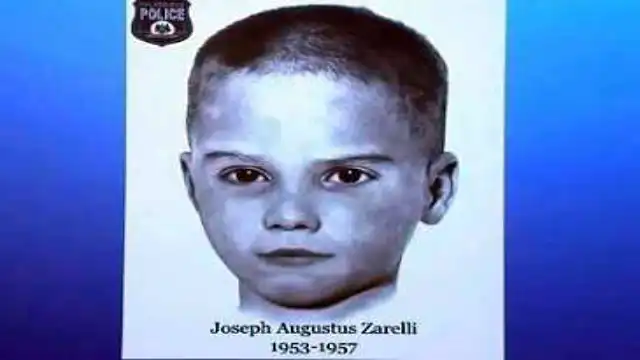
For 65 years, a four-year-old child found beaten inside a bassinet box in Fox Chase, Philadelphia, was known only as “America’s Unknown Child.” Despite 400,000 flyers, physical evidence, and relentless detective work, his identity remained a mystery from 1957 until late 2022. By combining cutting-edge single nucleotide polymorphism (SNP) DNA extraction from highly degraded bone with forensic investigative genetic genealogy, scientists at Identifinders International and the Philadelphia Police Department finally gave him back his name: Joseph Augustus Zarelli (born January 13, 1953).
Key takeaways
- A 65-Year Mystery: Discovered on February 25, 1957, the victim suffered extensive physical abuse and severe malnutrition before his death.
- The DNA Obstacle: Standard CODIS DNA testing failed for decades because the child’s genetic material was severely degraded by time and moisture.
- The Breakthrough: It took forensic geneticists 2.5 years just to extract usable DNA from re-exhumed remains to build a genealogical SNP profile.
- Family Tree Mapping: By locating third and fourth cousins on public databases like GEDmatch, genealogists traced the family tree back to his birth parents in West Philadelphia.
- A New Era for Cold Cases: This identification proved that even the most degraded, mid-century biological samples can yield answers through genetic genealogy.
February 25, 1957: The Discovery on Susquehanna Road
Winter woods in Northeast Philadelphia are quiet, cold, and unforgiving. On a damp February afternoon in 1957, a young college student checking his muskrat traps spotted a discarded cardboard bassinet box wedged among the brambles along Susquehanna Road in Fox Chase.
Inside lay the body of a little boy.
He was naked, wrapped tightly in a cheap, faded green plaid blanket. He weighed barely 30 pounds. Whoever left him there had crudely hacked off his brownish-blonde hair — clumps of it still clung to his bruised shoulders. Autopsy reports later confirmed that the child had suffered extensive blunt force trauma to the head, along with horrific signs of chronic malnutrition and neglect.
Detectives arrived expecting a swift resolution. How hard could it be to identify a four-year-old boy in a major American city? Somebody had to be missing a son, a nephew, or a grandson.
Instead, police ran headfirst into a brick wall of silence. No frantic parents called the precinct. No neighbors reported a missing child matching his description. Within weeks, the Philadelphia Police Department (PPD) distributed over 400,000 flyers bearing the boy’s postmortem facial photograph across gas stations, post offices, and utility bills nationwide.
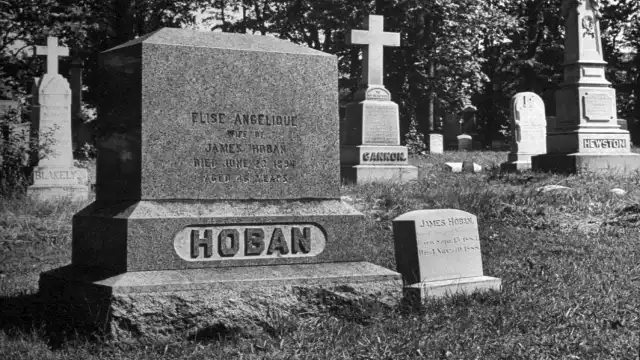
Nobody claimed him. The city buried him in a potter’s field, eventually moving his remains to Ivy Hill Cemetery under a headstone that wept for America’s Unknown Child.
Why Old Detective Work Fell Short
When you don’t have DNA, you rely on paper trails, physical evidence, and human memory. Investigators pursued thousands of leads over six decades, but three major theories dominated the investigation — and every single one led nowhere.
1. The J.C. Penney Bassinet Box
The cardboard box originally held a white baby bassinet sold exclusively at J.C. Penney stores between December 1956 and February 1957. Only 12 of those bassinets had been sold in Upper Darby, just outside Philadelphia. Detectives tracked down 11 of the buyers. The 12th buyer vanished into thin air, leaving the box’s origin a permanent question mark.
2. The Foster Home Theory
In 1960, medical examiner investigator Remington Bristow consulted a New Jersey psychic who directed him to a foster home located just 1.5 miles from the discovery site. Bristow found a similar J.C. Penney bassinet on the property and theorized that the boy was the illegitimate child of the foster home owner’s stepdaughter. Decades later, DNA testing and rigorous re-interviews by the legendary Vidocq Society definitively cleared the foster family.
3. “Martha” and the Purchased Child
In 2002, a woman referred to as “M” or Martha came forward with a harrowing tale. She claimed her abusive mother purchased the boy (whom she called “Jonathan”) from his birth parents in 1954. Martha alleged the child was subjected to extreme abuse in their suburban home before being killed in a fit of rage. While her detailed descriptions of the boy’s behavior and physical scars raised eyebrows, police couldn’t find a single piece of corroborating physical evidence.
Science That Changed Everything: CODIS to SNPs
How do you solve a murder when witnesses die, paper trails crumble, and the victim has no social security number?
You turn to the genome.
For years, law enforcement relied on Short Tandem Repeat (STR) analysis — the standard technology behind the FBI’s CODIS database. STR looks at just 20 to 24 specific markers across the human genome. It works exceptionally well if you already have a suspect’s DNA on file, or if a direct parent or sibling has submitted a reference swab.
When investigators exhumed the Boy in the Box in 1998, they extracted a basic STR profile from one of his teeth. They plugged it into national databases. Zero matches. Why? Because none of his immediate relatives were convicted felons sitting in the CODIS system.
[Standard CODIS STR Analysis]
   └── Looks at ~24 genetic markers
   └── Requires exact match in law enforcement database (Felons/Direct Missing Persons)
   └── Result: DEAD END (No direct family in database)

[Forensic Genetic Genealogy (SNPs)]
   └── Looks at ~800,000+ genetic markers across the whole genome
   └── Compares against public ancestry databases (GEDmatch / FamilyTreeDNA)
   └── Result: BREAKTHROUGH (Identifies distant cousins to build family trees)
In April 2019, Philadelphia police obtained a court order to exhume the child’s remains a second time. This time, they partnered with forensic scientist Colleen Fitzpatrick and her team at Identifinders International, alongside the PPD Office of Forensic Science. Their objective wasn’t another simple STR profile; they needed a massive Single Nucleotide Polymorphism (SNP) profile containing hundreds of thousands of genetic markers.
The 2.5-Year Lab Nightmare
Getting that SNP profile almost didn’t happen. Moisture and soil acidity at Ivy Hill Cemetery had wreaked havoc on the boy’s skeletal remains. Early extraction attempts on his left femur and teeth at international research labs yielded heavily degraded fragments that shattered under standard sequencing machines.
“This was the most challenging case of my whole career,” Fitzpatrick later explained. It took two-and-a-half years of painstakingly cleaning, amplifying, and reconstructing fragmented genetic material just to build a dataset stable enough to upload to commercial research tools.
How Genealogists Found His Name
Once scientists generated a viable SNP profile in 2021, they uploaded the data to consumer-facing genealogical platforms like GEDmatch and FamilyTreeDNA — databases where everyday people voluntarily upload their raw DNA files to explore their family history.
Detectives didn’t find a direct match to a parent. Instead, they hit on distant genetic cousins — third and fourth cousins sharing fractions of a percent of shared DNA measured in centimorgans (cM).
Here is how genetic genealogists turned distant cousins into a confirmed identity:
- Triangulating Maternal Clusters: Genealogist Misty Gillis and investigators grouped matching DNA profiles to isolate the child’s maternal lineage, eventually pointing directly toward a prominent family originating in West Philadelphia.
- Digging Through Vital Records: By cross-referencing census records, birth announcements, and tax rolls from the 1940s and 1950s, detectives identified a woman who had given birth to three children between 1954 and 1956. Two of those children were accounted for. The third birth certificate belonged to a male child born on January 13, 1953.
- Confirming the Paternal Line: That birth certificate listed the father’s full name. Investigators discreetly reached out to surviving paternal relatives, collected voluntary DNA buccal swabs, and ran direct comparison tests.
- The Final Verification: The DNA matched completely. The unknown child finally had a birth certificate, a bloodline, and an indisputable identity.
On December 8, 2022, Philadelphia Police Commissioner Danielle Outlaw stepped up to the podium at PPD headquarters and spoke the words the city had waited 65 years to hear: “Today, we are able to announce that the Boy in the Box has a name. Joseph Augustus Zarelli.”
Key Milestones in the Investigation
Discovery in Fox Chase
February 25, 1957
A young man discovers the battered, malnourished body of a little boy inside a J.C. Penney bassinet box along Susquehanna Road in Northeast Philadelphia.
First Exhumation & CODIS Entry
1998
Philadelphia police exhume the child’s remains from Potter’s Field to extract mitochondrial and nuclear DNA from a tooth, entering his standard STR profile into CODIS with no matches.
Second Exhumation for Advanced Forensics
April 2019
Investigators exhume the body again from Ivy Hill Cemetery, extracting degraded bone samples to attempt whole-genome sequencing and SNP generation.
Genealogical Breakthrough
October 2021
After 30 months of complex laboratory work, Identifinders International successfully generates a workable SNP profile and begins mapping family clusters via GEDmatch.
Public Identification
December 8, 2022

Philadelphia Police officially identify the victim as four-year-old Joseph Augustus Zarelli, born January 13, 1953 in West Philadelphia.
What Happened to Joseph’s Parents?
Once the euphoria of the identification settled, hard questions remained. Who raised Joseph? And more importantly, who struck the blows that ended his life?
Through genetic testing and birth records, investigative reporters later revealed the names of Joseph’s biological parents: Augustus John Zarelli and Mary Elizabeth Plunkett. Both parents had passed away long before their son’s identity was restored — Mary in 1991 and Augustus in 2014.
Did his biological parents know what happened to him? The investigation indicates a complex, tragic family dynamic. Joseph was born out of wedlock during an era when social stigma weighed heavily on unwed mothers. Police confirmed that Joseph has several living half-siblings on both his maternal and paternal sides. Out of respect for the surviving family — many of whom had no idea Joseph ever existed — police have kept specific household details under close guard.
However, PPD Homicide Captain Jason Smith confirmed that investigators still treat Joseph’s death as an active, open homicide investigation. Detectives continue vetting neighborhood records around 61st and Market Streets in West Philadelphia, where Joseph lived during his earliest years, searching for that one crucial neighbor or family friend who remembers where the little boy went during the winter of 1956.
(To see how the Philadelphia community honored his restored identity, watch FOX 29’s coverage of the memorial mass held for Joseph Augustus Zarelli. This news report provides moving footage of the cemetery tribute and historical context directly from local investigators who worked the case.)
Why Joseph’s Case Rewrites Forensic History
The identification of Joseph Augustus Zarelli isn’t just a emotional milestone for the city of Philadelphia; it represents a seismic shift in forensic science.
Before this case closed, many lab technicians assumed that heavily degraded skeletal remains from the mid-20th century were simply beyond the reach of modern genetic genealogy. Environmental exposure destroys the long molecular chains required to build accurate profiles. By proving that 65-year-old rootless hair, fragile teeth, and weathered femur bones can still yield actionable SNP data, investigators unlocked a blueprint for thousands of cold cases worldwide.
Law enforcement agencies no longer have to accept that an unknown victim’s identity is lost to time. If a bone fragment exists, the genome exists. And if the genome exists, a family tree is waiting to be built.
Help Speak for Those Who Can’t
Joseph Augustus Zarelli spent 65 years beneath a gravestone that didn’t bear his name, but dedicated citizens, scientists, and detectives refused to let him fade into history. There are still thousands of unidentified missing children and Jane/John Does resting in cemeteries across the nation right now.
Want to play a direct role in bringing them home? You can support active cold-case investigations today:
- Opt-In Your DNA: If you use consumer testing services like AncestryDNA or 23andMe, consider downloading your raw data file and uploading it to GEDmatch or FamilyTreeDNA. Make sure to explicitly opt-in to law enforcement matching to help genealogists identify missing persons and unknown victims.
- Support Forensic Charities: Organizations like the National Center for Missing & Exploited Children (NCMEC) and the DNA Doe Project fund specialized DNA extraction for agencies that can’t afford expensive private lab testing.
Do you think someone in your family tree holds a missing piece to an unsolved mystery? Take a closer look at your historical records today — you might just help solve the next breakthrough case.

