

Where is Joseph DeAngelo Now? Inside the Golden State Killer’s Prison Life
For over forty years, the Golden State Killer was the ultimate American bogeyman. He was a phantom who crept through sliding glass doors in the dead of night, terrorizing California subdivisions between 1974 and 1986. He shattered families, mocked the police, and vanished like smoke.
Then, in April 2018, the phantom finally got a face. Joseph James DeAngelo Jr., a seemingly ordinary suburban grandfather and former police officer, was slapped in handcuffs while standing outside his Sacramento-area home.
The man who committed at least 13 murders, 51 rapes, and over 120 burglaries was finally caught. But after the cameras stopped rolling on his highly publicized 2020 sentencing, DeAngelo vanished from the public eye once again — this time, into the California penal system.
If you are a true crime follower, you are probably wondering what happened to him next. Where exactly is Joseph DeAngelo right now? What does daily life look like for one of the most prolific serial killers in American history?
Here is an unfiltered look inside the Golden State Killer’s life behind bars.
Key takeaways
- Current Location: Joseph DeAngelo is incarcerated at California State Prison, Corcoran.
- The Sentence: He is serving 13 consecutive life sentences without the possibility of parole, plus an additional eight years.
- Prison Routine: As a high-profile inmate and former cop, he is housed in a Protective Housing Unit (PHU) to keep him away from the general population. He spends up to 23 hours a day locked in his cell.
- The Plea Deal: DeAngelo pled guilty to avoid the death penalty, a move prosecutors supported to spare elderly victims a grueling trial during the COVID-19 pandemic.
- Health Status: Despite faking severe frailty during his court appearances, prosecutors proved he was physically active in his cell. However, born in 1945, he is now an octogenarian receiving standard prison medical care.
The Final Judgment: 13 Life Sentences Without Parole
To understand his current reality, you have to look at how his trial concluded. The sheer volume of DeAngelo’s crimes created a logistical nightmare for prosecutors. The offenses spanned 11 different California counties. Decades had passed. Key witnesses had died.
Instead of pursuing a circus-like trial that could drag on for years, six county district attorneys formed a united front. They offered a plea deal.
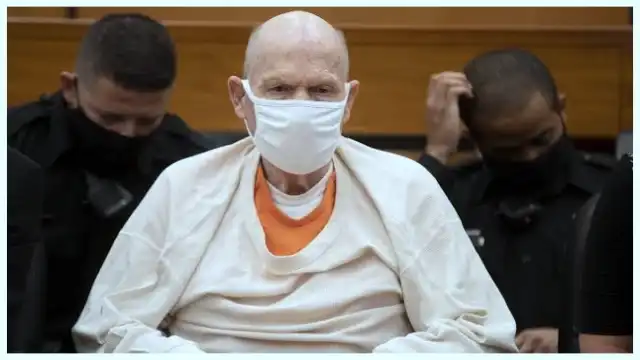
In June 2020, inside a makeshift courtroom at Sacramento State University — moved there to allow for social distancing during the pandemic — DeAngelo finally spoke. The 74-year-old stood in an orange jumpsuit, looked at the judge, and repeatedly muttered the word “guilty.”
He admitted to 13 murders and 13 kidnapping-related charges. Crucially, as part of the agreement, he also admitted to dozens of uncharged rapes where the statute of limitations had already expired.
Two months later, Judge Michael Bowman handed down the ultimate punishment: 13 consecutive life sentences without the possibility of parole. DeAngelo was guaranteed to die in a concrete box.
Where is Joseph DeAngelo Currently Incarcerated?

Shortly after his sentencing, DeAngelo was quietly transferred out of the Sacramento County Jail. In November 2020, he arrived at North Kern State Prison, a reception center where inmates are evaluated before receiving their permanent housing assignments.
California Department of Corrections and Rehabilitation (CDCR) officials had a massive headache on their hands. You cannot simply toss the Golden State Killer into a standard prison yard.
First, his notoriety makes him an instant target for inmates seeking to make a name for themselves. Second, he is a former police officer. In the prison hierarchy, former cops are considered the lowest of the low. Placing him in the general population would equal an immediate death sentence.
After evaluation, officials sent DeAngelo to California State Prison, Corcoran.
Inside Corcoran’s Protective Housing Unit
Located in the dusty agricultural heart of the San Joaquin Valley, Corcoran is one of California’s most secure and notorious facilities.
DeAngelo was placed in Corcoran’s Protective Housing Unit (PHU). This specific wing is entirely isolated from the rest of the prison. It was explicitly designed to hold high-profile criminals whose safety would be instantly jeopardized in general housing.
If that unit sounds familiar, it should. Corcoran’s PHU was previously home to cult leader Charles Manson (until his death in 2017) and Robert F. Kennedy’s assassin, Sirhan Sirhan.
The PHU is small, housing a maximum of around 47 inmates. DeAngelo’s neighbors include some of the most infamous, reviled men in the state. They do not mix with the thousands of other inmates housed at the facility.
What is the Golden State Killer’s Daily Life Like?
Life in the PHU is aggressively monotonous. For a man who spent his youth breaking into houses, binding victims, and exerting ultimate control, his current existence is stripped of all autonomy.
The 23-Hour Lockdown
DeAngelo spends the vast majority of his time locked alone inside a small cell. The dimensions usually measure around six by nine feet. The cell features a solid door with a small viewing window, a steel toilet, a sink, and a thin mattress on a metal bunk.
He receives meals directly in his cell through a narrow slot in the door. There is no bustling cafeteria experience for him. There is no mingling in a crowded yard.
Recreation and Isolation
When DeAngelo does leave his cell, it is heavily supervised. Inmates in protective housing typically get one to two hours of recreation time per day. He exercises alone or alongside a tiny handful of carefully vetted inmates in a secure, caged outdoor enclosure. Guards monitor every single movement.
He can read books, receive approved mail, and watch a small television if he can afford to buy one from the prison commissary. But mostly, he sits. He waits. Day after day, the routine never changes.
The Wheelchair Ruse: DeAngelo’s Health Behind Bars
When DeAngelo appeared in court during 2020, he looked pathetic. He sat slumped in a wheelchair, his mouth hanging open in a perpetual daze. He wore a loose-fitting jumpsuit and spoke in a barely audible, raspy whisper.

He wanted the world to see a fragile, broken old man. It was a complete act.
Prosecutors were entirely unprepared to let him play the victim. During the sentencing hearings, they played stunning jailhouse video footage for the judge. The tapes showed DeAngelo alone in his cell, completely unaware he was being watched.
The “frail” man in the wheelchair was seen actively stretching. He paced around his cell with ease. In one striking clip, he even climbed up onto a desk to cover a light fixture, moving with the agility of a man decades younger.
Sacramento County prosecutor Thien Ho bluntly called out the ruse in court, stating that DeAngelo’s feeble appearance was just another manipulation tactic. He was still the exact same predator who terrorized California; he had just changed his disguise.
Aging in the CDCR System
While the wheelchair act was fake, Father Time remains undefeated. Born in November 1945, DeAngelo is now approaching his late seventies.
Like all aging inmates in California, he receives standard medical care. The prison system is legally required to treat ailments like high blood pressure, arthritis, or heart conditions. If his health ever deteriorated to the point where he required constant hospitalization, CDCR could theoretically move him to the California Health Care Facility (CHCF) in Stockton.
As of 2026, however, public records indicate his housing status remains tied to maximum-security protocols, keeping him squarely inside the protective confines of Corcoran.
Why Didn’t He Get the Death Penalty?
A common question surrounding this case is why someone guilty of 13 brutal murders wasn’t sent to death row.
Many victims’ families desperately wanted DeAngelo to face execution. But several massive hurdles stood in the way.
First, California Governor Gavin Newsom instituted a moratorium on the death penalty in 2019. The state dismantled its execution chamber at San Quentin. Even if a jury sentenced DeAngelo to death, the state had no legal mechanism to actually kill him.
Second, death penalty trials take years. Defense attorneys would have filed endless appeals. Many of the survivors and victims’ family members were already in their seventies or eighties. Prosecutors knew that if they dragged the case out, many victims would die of natural causes before ever seeing DeAngelo held accountable.
By accepting the plea deal, prosecutors secured a guaranteed conviction. They forced DeAngelo to publicly admit his guilt in open court. They eliminated the possibility of endless appeals, ensuring the victims got immediate, final closure.
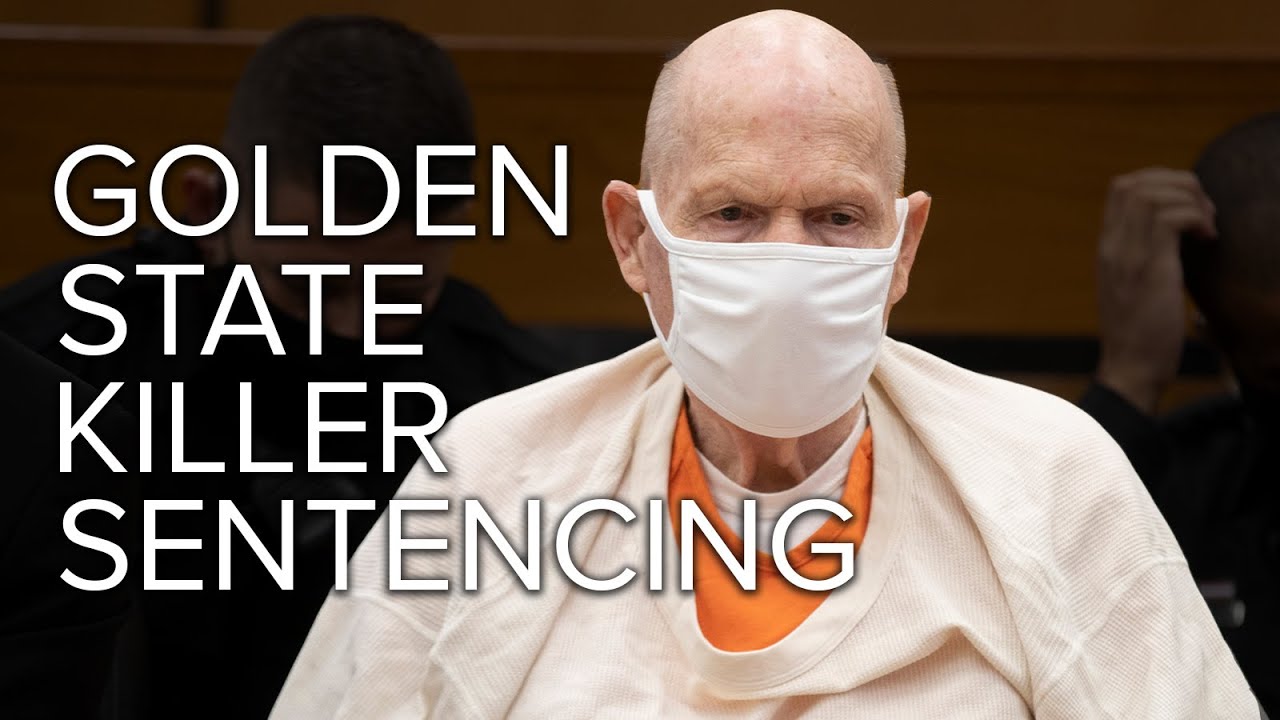
(Watch Joseph DeAngelo Full Court Hearing)

The Legacy of Genetic Genealogy
You cannot talk about DeAngelo’s current incarceration without acknowledging exactly how he got there.
For 32 years, he got away with it. The trail was completely cold. He was living a quiet life in the Sacramento suburb of Citrus Heights, mowing his lawn, yelling at his neighbors, and retiring from a long career as a supermarket truck mechanic.
He thought he had won. He didn’t account for the rise of consumer DNA testing.
Investigator Paul Holes and genetic genealogist Barbara Rae-Venter took DNA left by the killer at a 1980 Ventura County crime scene. They uploaded that raw genetic data into GEDmatch, a public genealogy database.
They weren’t looking for a direct match. They were looking for the killer’s relatives.
The database pinged on a few distant cousins. From there, investigators painstakingly built massive family trees, tracing lineages backward through time until they identified a common ancestor. Then, they moved forward, narrowing down the descendants based on age, location, and physical descriptions.
Eventually, the sprawling family tree pointed directly to one man: Joseph James DeAngelo.
Police secretly collected a DNA sample from the door handle of his car, and another from a discarded tissue in his trash can. Both samples perfectly matched the Golden State Killer’s DNA.
The method pioneered to catch DeAngelo revolutionized modern forensics. Today, genetic genealogy has solved hundreds of cold cases globally, proving that criminals can no longer hide behind time.
A Monster in a Cage
Today, the man who called himself the East Area Rapist, the Original Night Stalker, and the Visalia Ransacker is reduced to a CDCR inmate number.
Joseph DeAngelo will never see the California coastline again. He will never drive a car, walk through a neighborhood at night, or sleep in his own bed. He exists in a sterile, concrete environment where every single choice — when to eat, when to sleep, when to see sunlight — is dictated by a corrections officer.
He wanted to be feared. Now, he is just an aging, isolated inmate waiting for the end of his life in the desolate farmlands of Corcoran.
What are your thoughts on DeAngelo’s sentence? Do you believe life in solitary confinement is a harsher punishment than the death penalty for a serial killer? Share your opinions in the comments below!

