Jeffrey Dahmer’s Arrest: How the Polaroid Evidence Led to His Downfall
July 22, 1991. The sweltering summer heat in Milwaukee felt oppressive, but the true horror was quietly hiding inside Apartment 213. For over a decade, Jeffrey Dahmer operated in the shadows. He lured vulnerable men into his home, murdered them, and disposed of their remains without drawing serious police scrutiny.
His horrific 13-year killing spree seemed unstoppable. Then, one man fought back.
The arrest of Jeffrey Dahmer didn’t stem from a massive FBI manhunt or a brilliant forensic breakthrough. It happened because of a desperate escape, a mundane request for a handcuff key, and a bedside drawer packed with nightmarish Polaroid photos.
Here is exactly how the grisly polaroid evidence brought down one of America’s most notorious serial killers.
Key takeaways
- The Escape: 32-year-old Tracy Edwards narrowly escaped Dahmer’s apartment with a handcuff dangling from one wrist, flagging down a patrol car.
- The Search: Officers entered Apartment 213 solely to find the key to remove Edwards’ handcuffs.
- The Smoking Gun: An officer opened a bedside drawer and discovered over 80 Polaroid photos detailing dismembered bodies and crime scenes.
- The Arrest: The photographic evidence instantly bypassed any excuses Dahmer could invent, leading to an immediate struggle and his arrest.
The Escape That Ended a 13-Year Nightmare
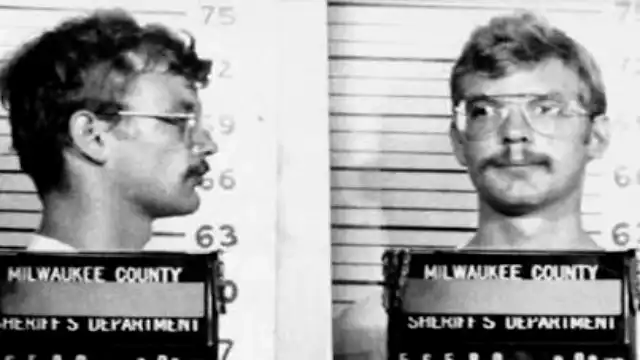
Every serial killer eventually makes a fatal mistake. Dahmer’s mistake was underestimating Tracy Edwards.
Edwards met Dahmer earlier that evening. The killer offered him $100 to hang out, drink beer, and watch a movie. Things escalated rapidly once they stepped inside the Oxford Apartments. Dahmer handcuffed Edwards, pulled a knife, and explicitly told him he intended to eat his heart.
Survival instincts kicked in. Edwards played along, waiting for a split-second distraction. When Dahmer briefly lost focus, Edwards punched him, bolted out the front door, and ran into the humid Milwaukee night.

At 11:30 PM, Milwaukee Police Officers Robert Rauth and Rolf Mueller spotted Edwards wandering down the street. He was shirtless, terrified, and had a pair of handcuffs dangling from his left wrist.
Edwards explained that a “freak” had pulled a knife on him. The officers decided to investigate, primarily to get the key and free Edwards from the metal cuffs. They walked back to Apartment 213. Neither cop had any idea they were about to walk into a slaughterhouse.
Apartment 213: Entering the devil’s den
The moment the officers crossed the threshold, their senses were assaulted. A foul, sickly-sweet odor permeated the air.
Dahmer remained surprisingly calm. When questioned about the handcuffs, he smoothly claimed it was a misunderstanding—just a consensual encounter gone slightly wrong. He was polite, articulate, and completely unbothered by the police presence.
Because Dahmer mentioned a knife during his conversation with Edwards, Officer Mueller decided to do a quick sweep of the bedroom to ensure the weapon was secured. He also needed that handcuff key.
Mueller stepped into the bedroom while Rauth stayed in the living room with Dahmer and Edwards. The bedroom looked chaotic, but one piece of furniture caught Mueller’s eye: an open bedside nightstand drawer.
The Polaroid evidence: A Macabre discovery

(Several relatives of the victims were permitted to speak in place of the deceased.)
Mueller peered inside the drawer, hoping to spot a small metal key. Instead, he found a stack of nearly 80 Polaroid photographs.

He picked them up and started flipping through the deck.
The images were incomprehensible at first. As Mueller’s eyes adjusted to the flash photography, the gruesome reality snapped into focus. These weren’t normal pictures. They were explicit, meticulously posed snapshots of dismembered human bodies. Some photos showed severed heads resting in sinks. Others depicted bodies sliced open, posed in bizarre, grotesque positions.
Dahmer hadn’t just murdered his victims; he documented the entire process. He used his Polaroid camera to capture the different stages of dismemberment to feed his twisted necrophilic urges later.
Why the photos were the ultimate downfall
In many police investigations, catching a killer requires connecting abstract dots. Detectives need blood spatter analysis, missing persons reports, and hours of interrogations.
The Dahmer polaroids bypassed all of that.
- Instant Verification: The photos destroyed any potential alibi. Dahmer couldn’t claim Edwards was lying about the attack when an officer was literally holding a catalog of butchery.
- Irrefutable Intent: Finding a body part might spark a frantic lie about self-defense or an accidental death. Finding a meticulously curated photo album of severed heads proved systematic, intentional murder.
- Crime Scene Location: The background in the photos clearly matched the exact apartment the officers were standing in. The patterned bedsheets and the bathroom sink were identical.
The photos were an undeniable, physical confession.
“For What I Did, I Should Be Dead”
Officer Mueller walked out of the bedroom, his face completely drained of color. He looked at his partner, held up the stack of photos, and uttered four words that changed true crime history:
“These are for real.”

Dahmer realized instantly that the game was over. He lunged toward the officers, triggering a violent wrestling match in the living room. Rauth and Mueller overpowered him, pinning the killer to the floor and snapping handcuffs onto his wrists.
As he lay on the carpet of his own personal house of horrors, Dahmer reportedly muttered, “For what I did, I should be dead.”
The true scope of the nightmare only became clear after the arrest. Backup arrived, and a deeper search of the apartment revealed a human head in the refrigerator, two skulls on top of a computer, and a 57-gallon blue barrel filled with acid and human torsos.
The Legacy of the july 1991 arrest
The discovery of the Polaroid evidence remains one of the most chilling moments in modern law enforcement history. It highlights a terrifying reality: a prolific serial killer operated in plain sight, protected by systemic police failures and his own manipulative charm.
If Tracy Edwards hadn’t fought for his life, Dahmer would have undoubtedly continued his spree. If Officer Mueller hadn’t glanced into that specific drawer, Dahmer might have successfully talked his way out of another police encounter.
Instead, a simple stack of instant film brought an abrupt end to the terror, ensuring Jeffrey Dahmer would spend the rest of his short life behind bars.
What aspect of the Dahmer case do you find most baffling? Was it the sheer volume of evidence he kept, or how he managed to evade suspicion for so long? Drop your thoughts in the comments below!
Find More at The Jeffrey Dahmer Story (2022 Netflix Series)