

Mulholland Drive’s Biggest Mysteries: The Blue Box and Cowboy Explained
Did you finish Mulholland Drive staring at a blank screen in total silence? You aren’t alone. David Lynch built a legendary career out of hijacking our subconscious, and this 2001 dark Hollywood thriller is his absolute masterpiece. But it leaves viewers with massive, lingering questions. What is the deal with that glowing blue box? Who is that weird, eyebrow-less Cowboy?
Here is the exact breakdown of what these iconic symbols actually mean, stripping away the surrealism to reveal the heartbreaking reality underneath.
At a glance
- The Blue Box: This is Pandora’s Box. It holds the devastating reality that Diane Selwyn murdered her ex-lover. Opening it forces the dreamer to wake up.
- The Blue Key: In reality, it’s just a physical receipt from a hitman confirming a successful murder. Inside the dream, Diane’s massive guilt transforms it into a mystical object.
- The Cowboy: He represents the omniscient, unstoppable machine of Hollywood. Psychologically, he is the enforcer of reality, dragging Diane out of her fantasy.
What the hell is going on in Mulholland Drive?
To understand the symbols, you first have to understand the structure of the movie.
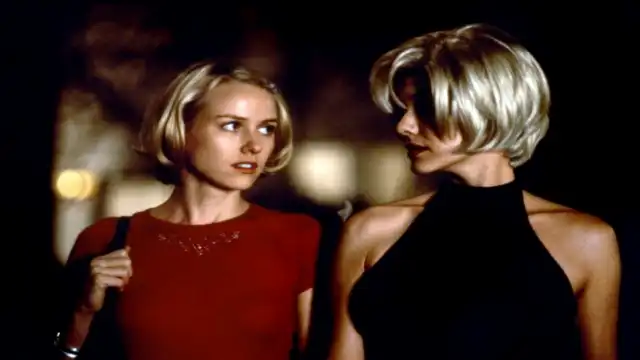
The first two-thirds of Mulholland Drive is not reality. It is a desperate, wish-fulfillment dream constructed by Diane Selwyn (Naomi Watts). Diane is a failed, miserable actress who just hired a hitman to assassinate her ex-girlfriend, Camilla (Laura Harring). To escape the crushing weight of what she has done, Diane goes to sleep and builds a rosy alternate universe.
Inside this mental safe space, Diane becomes “Betty,” a wildly talented and optimistic starlet. Camilla becomes “Rita,” a helpless amnesiac who depends entirely on Betty. Diane rewrites history so she is the hero, not the villain.
But dreams cannot last forever. Reality always bleeds through. That is exactly where the blue box and the Cowboy enter the picture.
The Blue Box
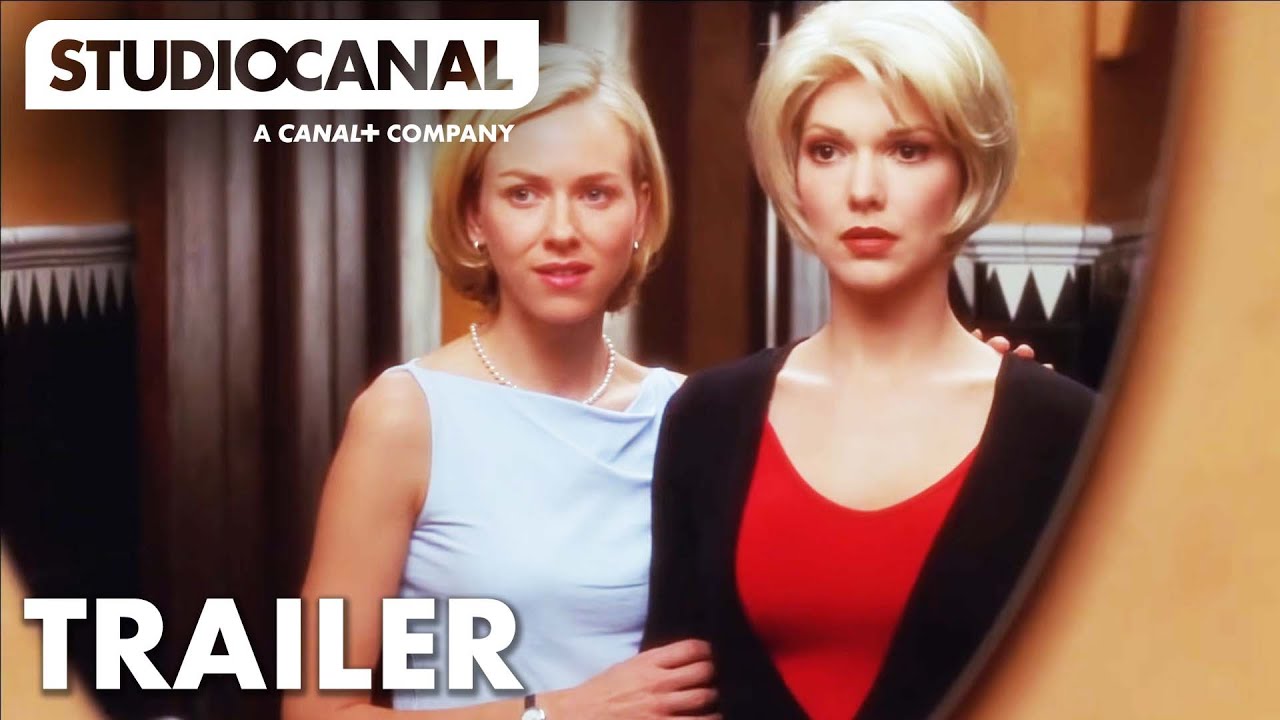
David Lynch famously included ten cryptic clues on the original DVD release of the film. Clue number five asks: “Who gives a key, and why?”
To understand the box, you have to look closely at the key.
The Hitman and the Blue Key
In the real world, Diane meets a grungy hitman at a diner called Winkie’s. She slides him a stack of cash and a headshot of Camilla. The hitman tells her he will leave a standard blue key on her coffee table when the job is done.
Diane naively asks, “What does it open?”
The hitman just laughs at her. Why? Because the key does not literally open anything. It is a mundane signal. The laugh highlights the sheer absurdity of Diane searching for romantic mystery in a brutal contract killing.
Diane simply cannot handle that cold reality. When the blue key actually shows up on her table, her psyche shatters completely. She hallucinates, falls asleep, and builds a dream world where the key must open something important. Her brain invents the blue box to justify the key’s existence.
Club Silencio and the Illusion
Inside the dream, the blue key eventually finds its partner. Betty and Rita discover the key inside Rita’s purse. Later, the box magically appears after a terrifying trip to Club Silencio.
This club scene is the turning point of the movie. The emcee repeatedly shouts, “No hay banda!” (There is no band). Everything the audience hears is a pre-recorded illusion. Rebekah Del Rio sings a breathtaking acapella version of “Llorando” (Crying), only to collapse on stage while her voice keeps playing.
The illusion breaks. This scene practically grabs Diane by the shoulders and shakes her, screaming that her entire “Betty” persona is fake. The sheer cognitive dissonance triggers violent physical shaking in Betty. Immediately after this revelation, they find the blue box.
Opening Pandora’s Box
When they return to the apartment, Rita fits the key into the lock. Betty disappears completely. The box opens, and the camera plunges into total darkness.
What is actually inside the box? Nothing. Just a dark void.
The blue box operates as the ultimate narrative switch. It represents the repressed memories and the horrifying awareness of reality that Diane locked away. When the lid lifts, the fantasy vaporizes. It is a classic Pandora’s Box. Once the brutal truth escapes, you cannot put it back. Opening it forces Diane to wake up and face the music.
The Cowboy
Then there is the Cowboy. He shows up at a dusty, dimly lit corral at night. He speaks in cryptic riddles. He wears a ridiculous hat, lacks eyebrows, and yet remains completely terrifying.
Who is this guy? On a surface level, the Cowboy represents the dark, unstoppable forces of the Hollywood machine. He is the shadowy underbelly pulling the strings behind the glamour. When he forces the arrogant director Adam Kesher to cast a specific actress, no one argues with him. He dictates the rules of the game.
A Warning from the Subconscious
On a deeper psychological level, the Cowboy is the enforcer of reality. Diane’s dream tries to paint her as the innocent victim of a massive, mob-led Hollywood conspiracy. The Cowboy cuts straight through that nonsense.
Look at his dialogue. “You’re too busy being a smart aleck to be thinkin’.” He acts like an exhausted, scolding teacher. He refuses to let the dreamer hide behind irony or ignorance.
“Once if you do good, twice if you do bad”
The Cowboy delivers a very specific, mathematical warning to Adam: “You will see me one more time if you do good. You will see me two more times if you do bad.”
Since Adam is merely a projection inside Diane’s brain, this warning is actually directed at Diane herself. Does she do good or bad?
She ends up seeing him exactly twice.
- Appearance One: He opens her bedroom door at the very end of the dream sequence and softly says, “Hey, pretty girl. Time to wake up.” This is the “good” outcome. He is gently pulling her out of the fantasy before it drives her insane.
- Appearance Two: He flashes briefly in the background during the fateful dinner party in the real world. This represents the “bad” reality. That specific party is the exact moment Diane hits rock bottom. She realizes Camilla is engaged to Adam, her own career is dead, and she has been completely discarded. That same night, fueled by jealousy and rage, she decides to order the hit on Camilla.
Seeing him that second time confirms she “did bad.” She committed the ultimate sin, and her tragic fate is permanently sealed.
The Old Couple and the Final Collapse
You cannot talk about the blue box without mentioning the creepy old couple.
At the beginning of the movie, they are smiling, sweet, and wishing Betty well at the airport. They represent the naive, wide-eyed optimism Diane possessed when she first moved to Hollywood. They were the judges at the jitterbug contest she won back home.
By the end of the film, things change drastically. The old couple crawls out of the dropped blue box. They are shrunk down like tiny demons. They aren’t sweet anymore. They scramble under Diane’s door, grow to full size, and chase her through the apartment while laughing maniacally.
This is the brilliant, tragic climax of the symbolism. Her own dashed dreams and lost innocence — released directly from the box of truth — have morphed into a nightmare. Her guilt literally consumes her, driving her to grab a gun from her nightstand and end her own life.
Neither the box nor the Cowboy are just weird props thrown in to confuse you. They act as essential psychological guardrails.
When you strip away the dazzling surrealism, Mulholland Drive is a very human story about guilt. Diane Selwyn tried to outrun her own conscience. She built a massive, beautiful maze in her mind to hide from the terrible thing she did. The blue box serves as the alarm clock. The Cowboy is the person shaking her awake.
David Lynch forces us to realize a deeply uncomfortable truth. You can build the most elaborate fantasies in the world, but you cannot escape yourself.
What is your take on the Blue Box? Did you interpret the Cowboy differently on your first watch? Drop your theories and thoughts in the comments below!

