
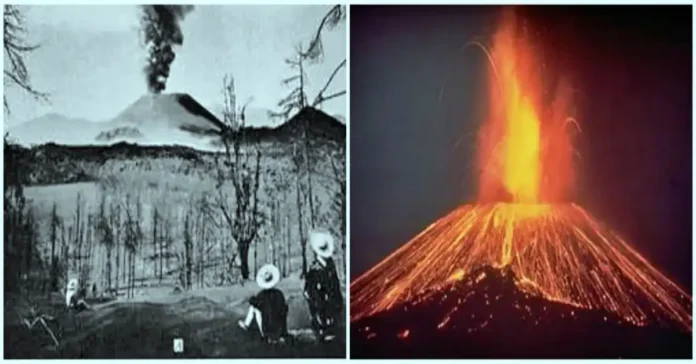
Imagine walking out to your backyard to clear weeds, only to watch the soil heave, split open, and start spitting hot cinder into the afternoon breeze. That sounds like a tall tale from ancient folklore, but it happened in broad daylight in the winter of 1943. The birth of Parícutin gave humanity its very first front-row seat to the entire life cycle of a volcano, transfarming a peaceful Mexican farming valley into a moonscape of jagged black stone.
February 1943: the ground begins to whisper
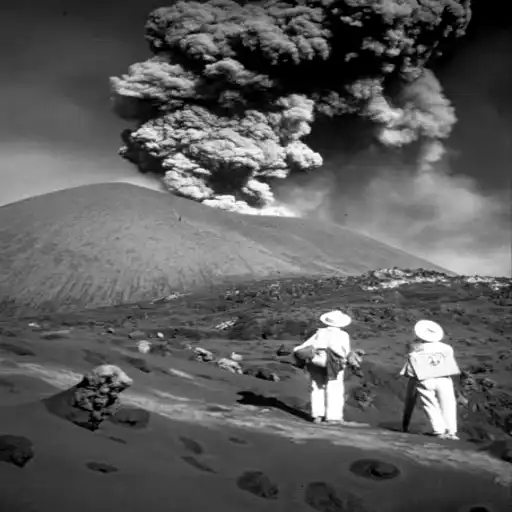
The story starts in the quiet highlands of Michoacán, roughly 200 miles west of Mexico City. The local Purépecha people knew the land intimately. Their families had farmed the fertile volcanic soil for generations, growing corn, beans, and squash among the pine-covered hills.
By early February 1943, something felt deeply wrong.
Dozens of strange, subterranean rumbles began rolling through the valley. Locals heard sounds like rolling thunder on cloudless days. Plates rattled on wooden tables, and minor earth tremors shook the nearby villages of Parícutin and San Juan Parangaricutiro.
What caused those mysterious underground rumbles? Far below the surface, a massive column of molten basaltic magma was forcing its way through cracks in the Earth’s crust, hunting for a way out.
February 20: the day the field split open
On Saturday, February 20, 1943, a farmer named Dionisio Pulido rode out with his wife Paula and their young son to prepare their cornfield for the upcoming spring planting. Around four in the afternoon, Pulido noticed something bizarre near a small depression on his property.
A crack in the dirt had opened up.
| Time | Event | Height |
|---|---|---|
| 4:00 PM (Feb 20) | Fissure opens; ground swells | 2 meters high |
| Midnight | Glowing sparks, red-hot stones, loud detonations | – |
| 24 hours later | Cinder cone reaches | 50 meters (164 feet) |
| Day 7 | Cone shoots up to | 100 meters (328 feet) |
| Year 1 | Volcano stands at | 336 meters (1,102 feet) |
| 1952 (final) | Eruption dies down; final cone stands at | 424 meters |
Pulido later recalled seeing the ground swell more than two meters upward before a plume of gray ash and sulfurous vapor — smelling intensely of rotten eggs — started hissing into the air. he tried smothering the crack with mounds of dirt, but the earth answered back with muffled explosions.
Terrified by the trembling ground and the rising noise, Pulido jumped onto his horse and galloped back to the village of Parícutin, fearing he had disturbed something supernatural.
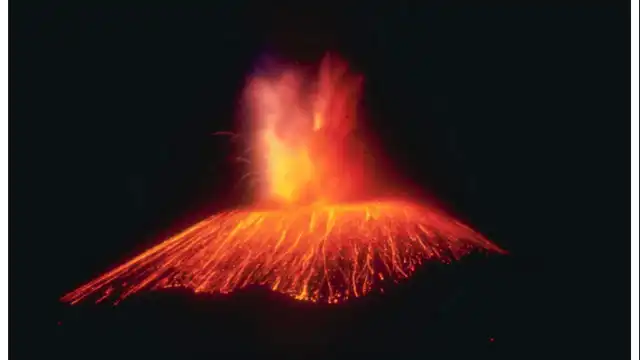
By midnight, the hiss had turned into a roar. Glowing red rocks blasted hundreds of meters into the night sky, raining fire down on the cornfield like giant fireworks. Earth’s newest volcano was born.
From a crack to a mountain: the explosive growth
Cinder cone volcanoes grow with shocking speed. Because they erupt explosive gas-rich magma called pyroclasts, hot fragments of frothy lava (scoria, cinders, and volcanic bombs) pile up directly around the vent.
Within just twenty-four hours, Pulido’s cornfield featured a smoking cone over 50 meters (164 feet) tall.
- Week One: The mound swelled past 100 meters (328 feet), tossing incandescent rocks high enough to be seen from towns miles away.
- Month One: Ash clouds billowed thousands of meters into the atmosphere, drifting over Uruapan and even dusting Mexico City.
- Month Twelve: By the end of its first year, the cone stood an astonishing 336 meters (1,102 feet) tall.
The volcano did not just shoot ash straight up into the air; it soon cracked open along its lower flanks, releasing thick tongues of slow, glowing ‘a’ā lava (rough, blocky lava) that crept across the valley floor at a walking pace.
The nine-year eruption cycle
Geologists divide the life of Parícutin into four distinct stages. Each stage revealed a different personality of the volcano as the underlying gas pressure shifted and the magma chamber emptied.
Quitzocho Stage: The Violent Birth
Feb 1943 – Oct 1943
Intense Strombolian explosions hurled volcanic bombs and cinders into the sky. The main cone built over 90% of its total height during these early months, sending the first lobes of lava out toward surrounding pastures.
Sapichu Stage: The Flank Vent
Oct 1943 – Jan 1944
A subsidiary vent named Sapichu (meaning “little one” in Purépecha) opened on the northeast base of the cone. It unleashed torrential streams of lava that spread out across agricultural fields for miles.
Taquí-Ahuan Stage: The Great Destruction
Jan 1944 – Dec 1944
New vents opened at the southern and western base. Massive lava fields advanced toward nearby settlements, completely engulfing the towns of Parícutin and San Juan Parangaricutiro under meters of solid black rock.
Final Effusive Stage & Dormancy
1945 – March 1952
Explosive power waned significantly. The volcano spent the next seven years slowly oozing lava from side vents, occasionally clearing its throat with short explosive bursts before falling completely quiet on March 4, 1952.
Towns swallowed by stone
Natural wonders often carry immense heartbreak for the communities living nearby. The creeping lava gave people time to pack up their sacred statues, household possessions, and livestock, but it could not save their homes.
Remarkably, no one died directly from the lava or ash flows. The only recorded fatalities occurred when three individuals were struck by volcanic lightning generated within the dense eruption cloud.
Both the village of Parícutin and the town of San Juan Parangaricutiro were wiped from the map.
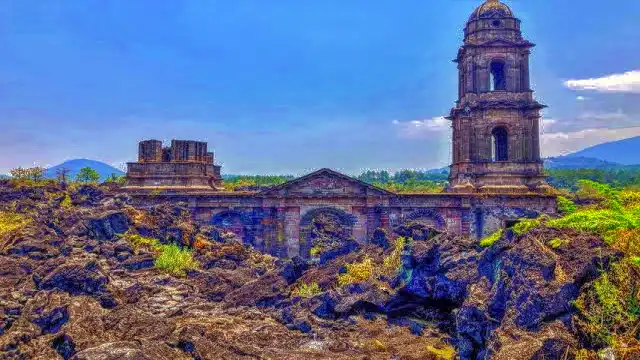
Today, visiting the site of San Juan Parangaricutiro reveals a striking sight: the church of El Señor de los Milagros half-buried in a sea of jagged black basalt. The thick lava filled the sanctuary and swallowed the nave, yet the stone bell tower and the altar survived intact, rising proudly above the petrified field.
Front-row science: the birth of modern volcanology
Before Parícutin, scientists could only study volcanic history by inspecting old, petrified rocks from ancient eruptions. Here, for the first time in modern history, researchers watched every breath of an eruption from day one.
Scientists from around the globe flocked to Michoacán.
- William F. Foshag: A pioneering mineralogist from the Smithsonian Institution, Foshag spent years living near the cone, collecting rock samples, measuring gas temperatures, and capturing thousands of historic color photographs.
- Dr. Jenaro González Reyna: A leading Mexican geologist who partnered with international teams to produce some of the most comprehensive topographic and geologic maps of an active cinder cone ever made.
- Celedonio Gutiérrez: A local resident who kept a detailed day-to-day diary of the volcano’s moods, weather patterns, and tremors, providing invaluable field data when professional researchers had to leave.
- Dr. Atl (Gerardo Murillo): The celebrated Mexican landscape painter bought land near the volcano and climbed its ash-choked slopes almost daily. He produced over 11,000 sketches and paintings alongside an influential geological treatise documenting the mountain’s explosive colors and forms.
Because of this intense monitoring, volcanologists unlocked fundamental truths about how magma degasses, how cinder cones build their steep slopes, and how subduction zones feed regional volcanic fields.
Why Parícutin will never erupt again
Will Parícutin ever wake up and bury another town?
The short answer is no.
Parícutin is what geologists call a monogenetic volcano. Unlike giant stratovolcanoes like Mount St. Helens, Mount Fuji, or Popocatépetl — which have deep, stable magma plumbing systems that erupt over and over for hundreds of thousands of years — monogenetic cones are “one-and-done” events.
| Feature | Parícutin (Monogenetic) | Popocatépetl (Polygenetic) |
|---|---|---|
| Lifespan | Single eruption (9 years) | Hundreds of thousands of years |
| Eruptive Center | Never erupts again | Erupts repeatedly |
| Height Above Base | 424 meters | 3,000+ meters |
| Surrounding Field | Part of 1,000+ cones | Isolated volcanic giant |
Parícutin sits inside the Michoacán-Guanajuato Volcanic Field, a massive volcanic plateau home to more than 1,100 cinder cones, shield volcanoes, and lava domes. Once a single pocket of magma rises from the subducting Cocos Plate and exhausts its energy, that vent closes forever.
The next eruption in the region will not emerge from Parícutin’s crater; it will punch through a completely new spot in the forest or another farmer’s field somewhere in the region.
Visiting Parícutin today
Now classified as dormant and extinct, the 424-meter-high cinder cone has become a magnet for hikers, photographers, and adventurous travelers from across the world.
If you plan to visit the volcano:
- Base yourself in Angahuan: This charming Purépecha village serves as the primary gateway to the lava fields. You can rent a cabin, hire a local guide, or arrange horseback transport.
- Explore the Half-Buried Church: A 30-minute walk through the pines leads to the ruins of San Juan Parangaricutiro. Walking through the altar area on hardened black lava is an unforgettable experience.
- Climb to the Crater Rim: The hike to the summit of the cinder cone takes roughly 4 to 6 hours round trip. The final push up the loose scoria slope is a steep workout, but standing on the rim overlooking the vast basalt lava beds offers sweeping, panoramic views.
- Feel the Heat: Even eight decades after the eruption ceased, rainwater filtering down into the mountain’s roots still escapes from small vents near the summit as warm steam.
The legacy of the cornfield mountain
Parícutin reminds us that the ground beneath our feet is alive. In less than a decade, a simple agricultural field transformed into a world-famous natural monument, reshaping communities and rewriting the science of volcanology. It stands today as a quiet monument to Earth’s immense creative power — and the resilience of the people who rebuilt their lives in its shadow.

