
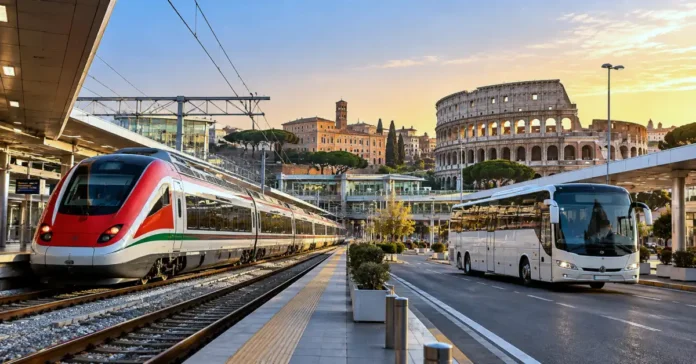
Landing at Rome Fiumicino Airport brings an instant rush of excitement mixed with one urgent question: how do you actually reach your hotel without getting ripped off? Standing by the luggage carousel with a tired back, you face a classic crossroads between a swift train platform and a fleet of waiting shuttle buses. Choosing the right ride comes down to a simple math problem of time, cash, and road traffic.
Cost per minute value equation
Travelers often compare transport based solely on the upfront ticket price. Looking only at base numbers misses the full picture of your vacation time.
Consider how the math plays out when you land. The non-stop fco to termini train, officially known as the Leonardo Express, costs €14 and takes exactly 32 minutes from platform to platform. That works out to roughly €0.44 per minute of travel.
A shuttle bus like the terravision bus rome airport service costs around €6.50 to €7.00 online. The bus ride promises a 50-minute trip on paper. That looks like a bargain at roughly €0.13 per minute.
What happens when highway congestion strikes?
During peak morning hours or late afternoon rushes, Rome traffic can easily push a bus trip out to 75 or even 85 minutes. Suddenly, you are spending an extra 45 minutes on asphalt to save only €7.00.
Are you willing to sell your precious vacation hours back to the universe for less than ten euros an hour? For solo travelers on strict shoe-string budgets, saving seven bucks can buy a hearty plate of cacio e pepe later. For anyone arriving exhausted after an overnight flight, buying back those 45 minutes on the rails is the best money you will spend all week.
The Leonardo Express
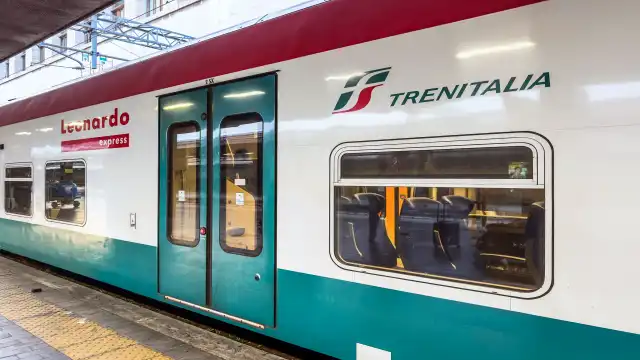
Run by Trenitalia, the Leonardo Express functions like an express pipeline between Fiumicino Airport and track 23 or 24 at Roma Termini. It operates without intermediate stops, departing every 15 minutes during peak daytime hours and every 30 minutes in early mornings and late evenings.
Several distinctive advantages make this train stand out:
- Complete Strike Immunity: Rail strikes in Italy (called scioperi) happen on occasion, causing widespread cancellations across regional routes. Italian transport law protects the Leonardo Express as a guaranteed essential service. Even during a full railway strike, this train runs on schedule, and Trenitalia activates dedicated emergency buses if track infrastructure ever suffers physical disruption.
- No Luggage Restrictions: Bring as many suitcases as you can carry. Nobody weighs your bags, measures dimensions, or charges baggage penalty fees. Overhead racks and dedicated luggage bays at carriage ends keep bags organized and within eyesight.
- Family and Group Discounts: Children under four ride completely free. For every paying adult, one child between the ages of 4 and 11 also rides free. Traveling with friends? Trenitalia offers a “Mini-groups” promotion: four adults traveling together can purchase a group ticket for €40 total instead of €56, knocking the individual price down to €10 per person.
- Onboard Creature Comforts: Trains feature functional air conditioning, standard European electrical outlets at individual seats to recharge dying phones, and wide doors for easy boarding with rolling bags.
The first train departs Fiumicino around 6:38 AM, with the final departure pulling out at 11:38 PM. If your flight lands past midnight, rail service shuts down until morning, forcing you toward night buses or taxis.
Shuttle bus reality: Terravision, SIT, and TAM
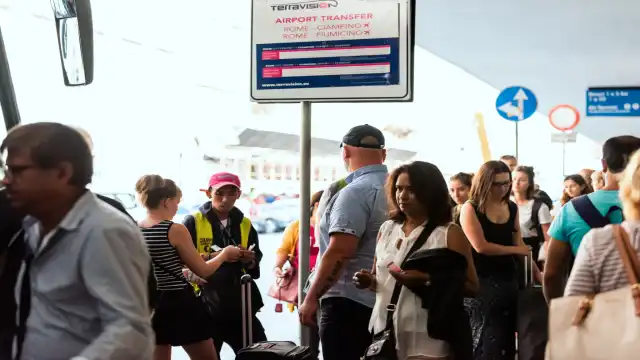
Curbside shuttle buses line up right outside Terminal 3 Arrivals at Fiumicino, offering the cheapest motorized way into central Rome. Popular providers include Terravision, SIT Bus Shuttle, and Rome Airport Bus (operated by TAM).
Tickets bought online in advance range between €6.00 and €7.00 for a one-way trip, while buying from sidewalk ticket desks or curbside coordinators runs around €8.00 to €9.00. Return trips bought together often bring the cost down even further.
Buses sound great until you face the road conditions.
Your bus must navigate the A91 motorway before merging onto the dreaded Grande Raccordo Anulare (GRA), the infamous ring highway circling Rome. From there, the coach crawls through congested avenues like Via Cristoforo Colombo or past Porta Maggiore before reaching Roma Termini.
During non-peak periods — such as late at night or mid-morning on Sundays — a bus trip takes a brisk 45 to 50 minutes.
Hit that same highway on a Tuesday morning between 7:30 AM and 9:30 AM, or during evening rush hour from 5:00 PM to 7:30 PM, and you will stare out the window at gridlocked bumper-to-bumper traffic. Delays can easily stretch your trip past the 75-minute mark.

Bus logistics to consider:
- Seat Scrambles: Even with a pre-booked departure time online, buses fill up on a first-come, first-served basis based on the physical line at the curb. If a flight delay pushes you back or a long queue forms ahead of you, staff will bump you to the next departure thirty to forty minutes later.
- Baggage Stowing: You must haul your heavy suitcases to the side of the bus and slide them into the luggage hold beneath the passenger floor.
- Drop-off Locations: Buses terminate outside the main train station building rather than inside. Terravision drops passengers on Via Giovanni Giolitti 38, while SIT buses drop passengers on Via Marsala near the northern station entrance. Both streets can feel hectic, gritty, and crowded late at night.
Avoiding hefty onboard fines
Nothing ruins a sunny vacation arrival faster than having a stern Italian transit conductor hand you a €50 or €100 penalty fee. Many first-time visitors fall into validation mistakes because Italian transit rules differ fundamentally from systems in North America or the UK.
Here is what you must do depending on how you buy your tickets:
- Paper Tickets Purchased at Machines or Kiosks: If you purchase a physical cardboard ticket from a Trenitalia self-service machine or airport ticket desk, that ticket is completely invalid until stamped. You must insert the ticket into one of the small green-and-yellow (or oval grey) validation stamping machines located along the platform walkway before stepping aboard the train. The machine stamps the date and exact timestamp onto the magnetic strip. Boarding without that physical stamp is considered fare evasion, even if you paid full price thirty seconds earlier.
- Trenitalia Digital Tickets (App or Web): Trenitalia simplified its digital regional ticketing. In the past, passengers had to manually check in via a link before departure. Under current ticketing rules, your digital ticket automatically validates at the train’s scheduled departure time. You do not need to hunt down a machine; simply keep your dynamic digital QR code open on your smartphone screen alongside a valid photo ID matching the name on your purchase.
- Shuttle Bus Tickets: Online bus tickets generally show a bar code or QR code on your phone screen. You present this to the bus agent standing on the sidewalk by the boarding doors. They will scan it or hand you a boarding voucher before you stash your bag in the luggage bay.
Step by step: finding your ride at fiumicino airport
Navigating Terminal 1 or Terminal 3 at FCO is simple if you follow overhead signage rather than wandering aimlessly.
Getting to the Train Station:
After collecting your luggage, clear customs and step out into the arrivals hall. Look up at the overhead signs for the white train graphic labeled Treni / Railway Station.
Take the escalator or elevator up one level to the covered pedestrian skyway. Walk across the skywalk, following the clearly painted tracks and arrows on the walls. The walk takes about five to eight minutes from Terminal 3 and roughly ten minutes from Terminal 1. You will emerge directly into the Fiumicino Aeroporto train station, complete with red-and-white Trenitalia automated ticket kiosks, a manned ticket counter, and turnstiles leading to platforms 1, 2, and 3.
Getting to the Bus Bays:
Exit Terminal 3 on the ground floor outside the baggage claim doors. Turn right and walk along the outdoor covered sidewalk past the taxi ranks.
Walk roughly 150 meters to the dedicated bus parking hub located beyond the far end of Terminal 3. Look for designated bays: Terravision loads at Stop 14, while SIT Bus Shuttle and TAM operate from adjacent numbered bays nearby. Look for uniformed company reps wearing branded vests holding clipboards near each boarding post.
Wildcard alternative: regional FL1 train
What if your hotel is not near Roma Termini?

Thousands of travelers jump on the Leonardo Express out of habit, only to realize Termini sits far across town from their boutique rental in Trastevere or Testaccio. If that sounds like your destination, skip Termini entirely and take the Regionale FL1 train.
The FL1 departs from the exact same airport rail platforms but operates as a commuter train linking suburban Rome.
Key facts about the FL1:
- Ticket Price: Just €8.00 one-way (saving €6.00 compared to the Leonardo Express).
- Stops Served: Trastevere (27 minutes), Roma Ostiense (31 minutes), Roma Tuscolana (41 minutes), and Roma Tiburtina (48 minutes).
- Metro Connections: Roma Ostiense connects directly to the Piramide station on Metro Line B.
- Catch: It does not stop at Roma Termini.
If your accommodation is near the lively dining streets of Trastevere or the Testaccio food market, taking the FL1 is faster, cheaper, and drops you right where you want to be without navigating the chaos of Termini.
Head to head verdict: which one should you pick?
When making the call between the leonardo express vs bus shuttle, match your choice to your specific travel window and traveling party.
Choose the Leonardo Express when:
- You are traveling during peak weekday commuter traffic hours.
- You need to catch a high-speed train (Frecciarossa or Italo) departing Termini for Florence, Venice, or Naples.
- You are a family traveling with children eligible for the free-fare policy.
- You want zero surprises and refuse to sit in freeway gridlock.
Choose the Shuttle Bus when:
- You are traveling solo on a backpacker budget where every euro counts.
- You arrive late at night or early on a Sunday morning when motorways run wide open.
- Your hotel sits right along Via Marsala or Via Giolitti next to the bus drop-off points.
- You do not mind adding an extra 30 minutes of travel time in exchange for saving money on your transfer.
Taking the train delivers predictable peace of mind, while the bus rewards the patient traveler who wants to pocket a few extra coins for their first authentic Roman gelato. Weigh your budget against your arrival schedule, stamp your paper tickets, and start enjoying your Roman holiday.

