
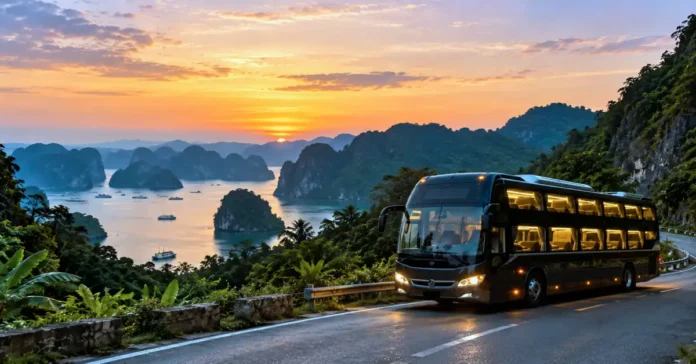
Standard Bunks vs VIP Cabins
Hop online to book a ticket, and you will immediately face a confusing menu of vehicle styles. Vietnamese night transit broadly falls into two distinct categories: old-school mass sleepers and modern luxury pods. Choosing the wrong one can turn an eight-hour night route into a back-wrenching endurance test.
Traditional coaches, known locally as xe khách giường nằm, pack between 38 and 44 narrow berths into a double-decker setup. Three tight rows run down the length of the bus with paper-thin walking aisles between them.
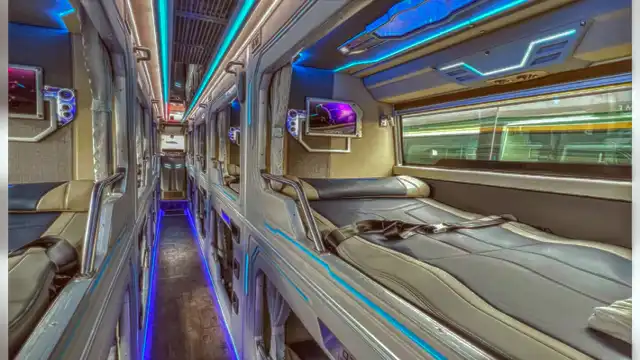
- Berths recline at a fixed angle between 140 and 160 degrees rather than folding completely flat.
- Mattresses measure roughly 50 centimeters wide, leaving zero elbow room.
- Footwells end in cramped plastic cubbies built beneath the passenger ahead of you.
- Metal safety bars run along the side, offering no privacy curtains whatsoever.
Anyone measuring over five feet nine inches (175 cm) will struggle to stretch their legs straight. These workhorses carry locals, packages, and budget backpackers for bargain prices between $9 and $14. They get the job done, but personal space does not exist.
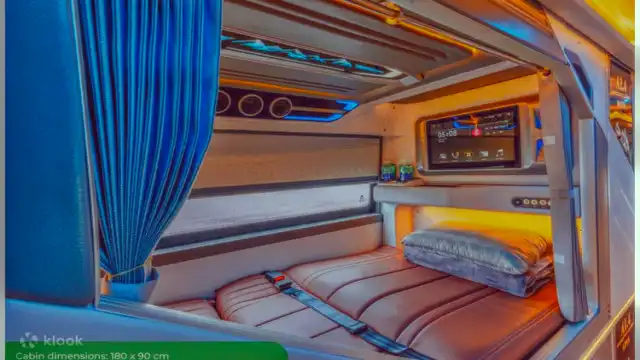
Enter the VIP Limousine cabin bus (xe phòng or xe cabin). These redesigned coaches trade mass seating for private luxury, running only 20 to 24 individual cabins arranged in two spacious columns.
Every passenger receives a fully enclosed private pod shielded by a thick floor-to-ceiling curtain or sliding screen. The mattress lies flatter, stretches past six feet, and often features electric massage vibration pads built into the leather. You get dedicated air conditioning vents, adjustable ambient lighting, multiple USB charging ports, and a small TV screen.
Are they worth the cash upgrade? Without question. VIP cabins run between $16 and $24 for a single berth, with double-berth cabins for couples priced around $28 to $35. Paying an extra ten bucks buys you actual sleep, privacy, and vastly better suspension.
Are sleeper buses in vietnam actually safe?
This question keeps plenty of first-timers up at night. The honest answer: millions of locals and visitors ride them annually without incident, but road realities in Southeast Asia require healthy respect.
Vietnamese highway driving appears chaotic to Western eyes. Drivers treat honking as a defensive language rather than an act of aggression. Tapping the horn alerts motorbikes, stray livestock, and oncoming trucks that a heavy coach is passing. Overtaking on narrow two-lane national highways can feel terrifying from your bunk window, especially around blind curves.

Mechanical safety has improved significantly over recent years. Government transport decrees mandate electronic speed limiters, GPS vehicle tracking, and mandatory driver rest schedules. On long night hauls spanning over eight hours, legitimate bus operators use two alternating drivers to curb behind-the-wheel fatigue.
Seatbelts exist in almost every bunk, though they frequently hide tucked beneath the foam mattress pad. Dig yours out and buckle up before the wheels roll. If an emergency brake happens on a winding mountain road, that simple strap prevents you from sliding onto the floor.
Upper bunk vs lower bunk
Which berth should you pick when reserving your ticket? Picking the right spot shapes your whole experience.
The lower bunk sits low to the chassis, providing far superior stability. Mountain switchbacks on northern routes toward Sapa or Ha Giang generate strong centrifugal pull. Down low, your body stays anchored against the mattress.
- Climbing in and out during late-night bathroom breaks requires zero gymnastics.
- Being closer to the deck means you hear slightly more road friction and engine purr.
- Wandering passengers walking through the dark corridor might occasionally brush against your curtain.
The upper bunk functions like an inverted pendulum. Every sharp bend taken at speed amplifies lateral sway, tossing sleeping passengers from side to side. Reaching the top tier requires stepping on tiny chrome rungs while balancing on a moving vehicle.
Top berths offer elevated isolation from hallway foot traffic. Dust kicked up from the floorboards never reaches you. The view out the picture window stays unobstructed during daytime or dawn arrivals. If you struggle with motion sickness, choose a lower-deck berth near the middle of the bus every single time.
Avoid the dreaded back row at all costs. On older 44-berth models, the rear section ditches single bunks in favor of five uninterrupted beds squeezed side-by-side. Strangers end up sleeping shoulder-to-shoulder with zero boundaries. Rear axles also transmit every road pothole straight into your spine.
Shoe-storage protocol
Before your toes touch the bus interior, you will run into an unbending cultural rule. Street footwear is strictly forbidden on the carpeted decks of Vietnamese sleeper buses.
The bus conductor (lơ xe) will stop you on the entryway steps and hand you a recycled plastic bag. Slip off your shoes, slide them inside the bag, and carry them directly to your berth. Place the bag inside your footwell pocket or by your feet.
Slip-on sandals or flip-flops make life effortless here. Do you really want to unlace hiking boots on a cramped bus staircase while ten impatient travelers wait behind you? Pack slip-ons in your daypack. Most drivers leave a bucket of communal rubber slippers near the door during rest stops, but slipping your bare feet into damp public sandals is an experience best skipped.
Securing gear against petty theft
Accidents grab headlines, but petty theft is the far more common nuisance on long-distance routes. Opportunistic pilfering happens when exhausted travelers pass out in open berths.
Under-bus storage holds your large backpacks and rolling suitcases. Drivers tag these items and hand you a matching paper baggage ticket. The cargo bay stays locked during transit, making exterior bag snatching rare. Rainwater or roadway grime can seep into luggage compartments during heavy tropical downpours, so keep a waterproof cover stretched over your pack.
Personal belongings inside the cabin require constant vigilance.
- Never place your passport, cash, camera, or phone inside the wall pouches or foot cubby.
- Keep small electronics and money in a compact crossbody waist bag worn securely against your chest.
- Sleep with your valuables tucked beneath your personal blanket or pillow.
- Pull the cabin curtains shut before drifting off to prevent wandering hands from scouting your berth.
Top Operators Compared
Bus companies in Vietnam vary dramatically in maintenance standards, punctuality, and staff professionalism.
- FUTA Bus Lines (Phương Trang): The undisputed heavyweight of southern and central Vietnam. Instantly recognizable by their bright orange paint, FUTA operates massive central terminals, strict digital ticketing, and well-maintained buses. Drivers stick to enforced speed regulations and never pick up random hitchhikers along the roadside. Their fleet consists mostly of clean standard sleepers rather than ultra-luxury cabins, making them a reliable workhorse for journeys between Ho Chi Minh City, Da Lat, Nha Trang, and Da Nang.
- Sao Viet: A dominant operator connecting Hanoi, Lao Cai, and Sapa. They specialize in premium double and single VIP cabin coaches with ambient neon lighting, plush bedding, and smooth air suspension. Sao Viet operates dedicated waiting lounges in Hanoi and Sapa with luggage storage facilities.
- Sapa Express & Fansipan Express: Highly regarded northern fleets catering heavily to foreign tourists. Drivers handle mountain passes carefully, cabin interiors smell clean, and an English-speaking guide typically rides along to handle announcements and logistics.
- Local Budget Shuttles (Queen Cafe, Camel Travel): Popular among rock-bottom budget backpackers for coastal routes between Hanoi, Phong Nha, and Hue. Fares stay dirt-cheap, but their buses are noticeably older, mattress foam runs thin, and surprise delays while waiting for freight cargo are common.
Booking strategy: verified platforms vs street stalls
Wandering down the tourist alleys of Hanoi’s Old Quarter or Ho Chi Minh City’s Bui Vien, you will see hundreds of travel agency storefronts advertising overnight bus tickets.
Walking into these roadside agencies often leads to frustrating bait-and-switch tactics. A storefront agent might show you glossy photos of a brand-new VIP cabin bus, only for an ancient 44-bunk rattle-trap to pull up at departure time. Street brokers tack on steep commissions, provide vague pickup points, and offer zero recourse if your bus gets canceled.
Book your tickets directly through verified digital aggregators like Vexere or 12Go Asia.

- Vexere is Vietnam’s native booking system, listing over 500 licensed operators. The platform lets you pick your exact bunk number on an interactive seat map, check real user reviews, and view clear photos of the actual bus class.
- 12Go Asia excels for international travelers who lack Vietnamese banking apps, processing foreign credit cards smoothly with clear English customer support.
Pay close attention to your pickup and drop-off coordinates. Buses rarely pick up from your hotel lobby. Instead, departures happen at specific ticket offices, highway toll plazas, or suburban bus stations (Bến xe). Save the exact address in your offline map app several hours before departure to avoid getting stranded in the wrong district.
Survival Checklist for Overnight Trips
Surviving an eight-hour night bus ride with your sanity intact comes down to small preparations.
Bus air conditioning systems generally run on two modes: off or polar freeze. Even if tropical heat swelters outside, vents blast frigid air throughout the night. Most companies supply a laundered blanket, but carrying a warm fleece hoodie, long sweatpants, and cozy socks will keep you comfortable.
Roadside rest stops occur every two to three hours for roughly twenty minutes. Onboard chemical toilets are rare; the few buses that have them tend to smell foul and suffer poor plumbing. Plan to use the roadside facility whenever the bus pulls over.
Pack your own toilet paper and hand sanitizer in your daypack. Highway rest stations rarely stock paper products, and soap dispensers are often empty.
Do not rely on seat USB sockets to power your phone. Sockets are notoriously loose or push weak voltage that barely trickles current. Charge an external battery bank before boarding so your phone stays fully powered for morning navigation.
Pop motion-sickness pills (thuốc chống say xe) thirty minutes before boarding if your route crosses mountains. Pack foam earplugs and a padded sleep mask to silence midnight horn blasts and block out flashing highway streetlights.
Sleeper buses remain one of the most adventurous, authentic, and economical ways to explore Vietnam. Pick a reputable VIP cabin company, lock in a lower-tier middle bunk, guard your belongings, and wake up refreshed as morning sunlight illuminates your next destination.

