
When a human body dies, internal enzymes and gut microbes normally reduce the delicate brain into liquid soup within a matter of weeks. Yet archaeologists digging up ancient burial grounds keep stumbling across thousands of intact, wrinkled human brains — some resting inside otherwise hollow, bone-dry skeletons for up to 12,000 years. Groundbreaking molecular research from the University of Oxford finally explains how a bizarre chemical freak accident turns fragile brain matter into an indestructible natural polymer.
The archaeological paradox: soft tissue that refuses to rot
Ask any forensic pathologist or mortician, and they will tell you the same thing: brain tissue is notoriously fragile.
Under ordinary conditions, the brain is among the very first organs to self-destruct post-mortem. It is packed with water, rich in fats, and fueled by a heavy concentration of enzymes. Once blood circulation stops, those enzymes immediately start feasting on their own cellular structures in a breakdown known as autolysis. Within days, cellular walls rupture, liquefying the tissue into a grayish sludge.
Yet the dirt beneath our feet tells a completely contradictory story.
Led by molecular palaeontologist Dr. Alexandra Morton-Hayward at the University of Oxford, researchers systematically compiled the world’s largest global database of preserved neural tissues. Their tally, cataloged in a landmark study and highlighted by Smithsonian Magazine and ScienceAlert, uncovered more than 4,400 preserved human brains spanning every inhabited continent on Earth.
The specimens stretch back 12,000 years, hailing from:
- Stone Age hunter-gatherer pits in Sweden
- High-altitude Inca mountaintop sacrifices in the Andes
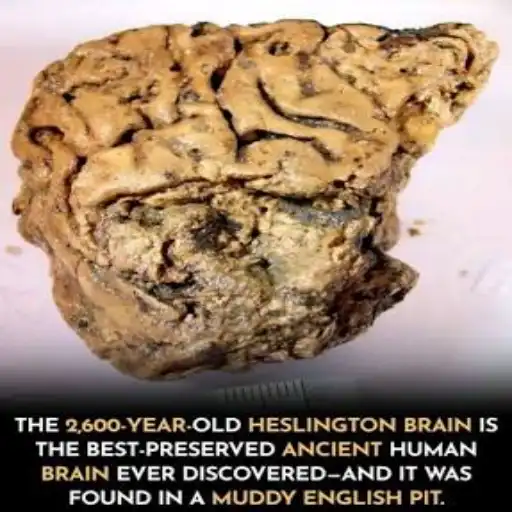
- Iron Age muddy trenches in the United Kingdom (such as the famous 2,600-year-old Heslington brain)
- Civil War mass graves and Victorian-era church crypts
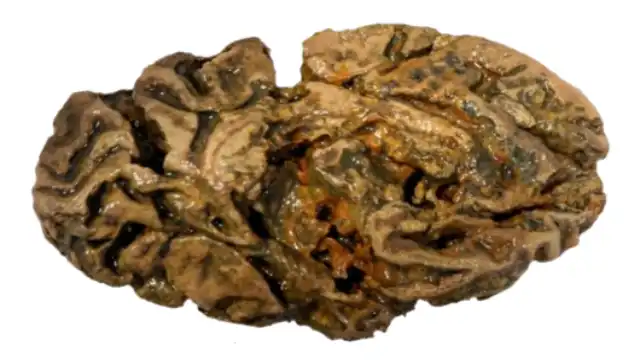
The real head-scratcher? In over 1,300 of these archaeological cases, the brain was the sole surviving soft tissue in the entire grave. Muscles, intestines, heart, kidneys, and skin had all completely dissolved into dust, leaving behind nothing except clean skeletal bones and an intact, rubbery brain resting safely inside the cranium.
How could the softest organ in the human body outlive tough tendons and leathery skin?
The Oxford Experiment: decaying mice to solve the mystery
For decades, archaeologists assumed preserved brains were simply odd freaks of nature — rare flukes caused by accidental mummification, extreme freezing, or harsh chemical embalming. But those classic preservation methods preserve the entire body, not just the brain.
To figure out why the brain specifically gets singled out for eternal survival, Dr. Morton-Hayward’s team designed a controlled laboratory experiment using mouse carcasses.
Mouse Carcass Burial Matrix
| Regime | Condition | Process | Outcome |
|---|---|---|---|
| Oxygen-rich (oxic) | Dry soil vs wet soil | Uncontrolled enzymatic digestion (proteins fragment and dissolve) | Total tissue liquefaction |
| Oxygen-poor (hypoxic) | Wet, waterlogged sediment | Radical-mediated cross-linking (proteins and lipids fuse into insoluble resin) | Stable brain tissue persists |
The scientists buried mice across four distinct environmental setups:
- Dry soil with oxygen (oxic)
- Wet soil with oxygen (oxic)
- Dry soil without oxygen (hypoxic)
- Wet soil without oxygen (hypoxic / waterlogged)
Over six months, they tracked the biochemical breakdown at six key intervals. Using high-resolution liquid chromatography-tandem mass spectrometry, the team mapped out more than 1.26 million individual peptide decay trajectories to see which protein fragments broke down and which held their ground.
The results showed that oxygen availability acts as the master biological switch.
In oxygen-rich burials, proteins fragmented rapidly into smaller bits and washed away. However, in wet, oxygen-deprived environments, decomposition did not stop — it pivoted onto an entirely different chemical track. The dying tissue kicked off a protective reaction that essentially locked the brain’s proteins in place.
The Chemistry: how dead brains turn into indestructible resin
To understand what saves an ancient brain, you have to look at what the organ is built from.
A living brain is roughly 75–80% water and 10–12% lipids (fats), packed with myelin sheaths, structural scaffolding proteins (like neurofilaments and tubulin), and catalytic transition metals such as iron and copper. That exact blend makes the skull a biochemical tinderbox.
1. The Lipid Breakdown and Radical Cascades
When oxygen runs low in a waterlogged grave, aerobic bacteria quickly suffocate and die off. Meanwhile, trace amounts of oxygen and trapped cellular oxidants react with the brain’s dense pool of unsaturated fatty acids.
This triggers a chain reaction known as lipid peroxidation. The fats break apart into unstable, highly aggressive chemical compounds called Reactive Carbonyl Species (RCS).
2. Proteomic Crosslinking: The Natural Superglue
These reactive lipid fragments do not just float away. Instead, they latch onto neighboring structural proteins.
Through a series of spontaneous chemical steps — mirroring the Maillard reaction (the browning reaction that turns bread crust golden and crisps a seared steak) — the carbon molecules form tight covalent bonds called Schiff bases with amino acids.
| Source | Intermediate | Final Effect |
|---|---|---|
| Membrane lipids | Peroxidation → reactive carbonyl species (RCS) | Covalent cross-linking |
| Structural proteins | Redox-active amino acids (lysine/arginine) | Covalent cross-linking |
| RCS + amino acids | Schiff bases and Amadori bonds | Insoluble, hydrophobic protein-lipid web |
| Insoluble, hydrophobic protein-lipid web | — | Enzymes blocked, microbes starved, decay halted |
Transition metals like iron (from hemoglobin) and copper act as natural catalysts, speeding up the cross-linking process.
Instead of cutting the protein chains into bite-sized pieces, the chemical reactions weld adjacent protein filaments together into a tightly knotted, three-dimensional web.
Think of it like mixing the two parts of an epoxy glue. The individual liquid components cure into a rigid, waterproof block. Once this molecular cross-linking takes place, the brain proteins become completely insoluble. The digestive enzymes that normally cause autolysis can no longer find or cleave their target sites. Bacteria cannot digest the tangled matrix.
The organ is effectively tanned from the inside out, transforming into a durable, dark-tan biological sponge.
Why waterlogged soil and the skull create the perfect reactor
Why does this happen to the brain and almost never to the liver, heart, or bicep?
Three unique anatomical and burial factors align to create a natural subterranean laboratory:
- The Cranial Bio-Dome: The skull acts as a rigid, protective ceramic vault. It keeps heavy dirt from squashing the tissue, maintains a micro-chamber with restricted fluid flow, and creates a localized hotspot where reactive chemicals stay concentrated rather than dispersing into the soil.
- Waterlogged, Hypoxic Soils: Wet clay, peat bogs, floodplains, and high water tables keep oxygen from penetrating the grave. Without free-flowing oxygen, common soil microbes cannot colonize the interior of the skull.
- Lipid-to-Protein Proportions: Muscle tissue contains abundant protein but very little fat. Fat tissue contains abundant lipids but minimal protein scaffolding. The brain boasts the ideal, high-density ratio of both, providing the raw ingredients required to construct an impenetrable polymer network.
Comparison: Normal Decomposition vs Molecular Cross-Linking
| Factor | Standard Decomposition (Aerobic Grave) | Molecular Preservation (Waterlogged Hypoxia) |
|---|---|---|
| Environmental Oxygen | Abundant ( readily available) | Severely restricted ( depleted rapidly) |
| Primary Breakdown Driver | Unchecked autolysis and bacterial putrefaction | Radical-mediated lipid-protein cross-linking |
| Fate of Brain Proteins | Hydrolyzed into free amino acids and dissolved | Bound into insoluble, ordered beta-sheet polymers |
| Role of Brain Lipids | Liquefy and leach into surrounding soil | Oxidize into reactive carbonyl species that bind proteins |
| End Result after Centuries | Clean, empty cranium with zero organic soft tissue | Resilient, shrunken, rubbery brain mass |
The chemistry of death mimics brain aging
Here is the most fascinating revelation to come out of the Oxford mouse decay research: the molecular mechanisms that preserve dead brains after burial bear an eerie resemblance to the pathways seen in neurodegenerative disease.
When the researchers analyzed the surviving ancient peptides, they discovered that the proteins most resistant to decay shared specific structural traits:
- They folded into dense beta-sheet secondary structures.
- They were enriched in redox-active amino acids.
- They formed insoluble aggregates nearly identical to the amyloid plaques and tau tangles found in patients with Alzheimer’s disease and Parkinson’s disease.
During life, our cells maintain active antioxidant defense systems to prevent oxidative cross-linking from clumping our proteins together. As we age, or when neurodegenerative diseases take hold, those defenses falter, allowing reactive oxygen species to cross-link proteins into stubborn clumps that the brain cannot clear.
In death, without any cellular defenses left, that exact same clumping process runs wild across the entire organ. The very chemical cascade that destroys cognitive function in life turns out to be the miraculous shield that preserves the physical brain for millennia after death.
What ancient brains can teach modern science
These thousands of preserved brains are far more than archaeological curiosities. They represent untouched time capsules of ancient human biomolecules.
While ancient DNA degrades quickly in warm or wet environments, cross-linked proteins — a field known as palaeoproteomics — are exceptionally tough. By extracting surviving peptide sequences from thousands-of-years-old brains, scientists can reconstruct ancient immune responses, discover historical pathogens, and explore how neurological disorders evolved over thousands of years.
Far from being an inexplicable fluke, the preservation of ancient brains is a predictable outcome of physics and organic chemistry. When the right mix of fat, protein, and trace metals gets sealed inside a waterlogged bone chamber, death does not simply destroy the brain — it turns it to stone.

