

Why March 14 Is Pi Day (3.14): Origins, Larry Shaw, Einstein & Traditions
Have you ever wondered why math nerds go crazy every single March? Specifically, they celebrate a number. Naturally, it involves eating actual pastries. Let’s talk about Pi Day.
Every year on March 14, people across the globe celebrate the mathematical constant π (pi). Consequently, bakeries sell out of pies, and schools throw massive math parties. But why do we do this? Honestly, the story behind this quirky holiday is absolutely fascinating.
First, we will break down what pi actually is. Next, we will explore the wild history of how a physicist named Larry Shaw invented the holiday. Furthermore, we will dive into the bizarre coincidences linking this date to Albert Einstein and Stephen Hawking. Ultimately, you will discover fun facts that will easily make you the smartest person at your next trivia night.
What Exactly Is Pi (3.14)?
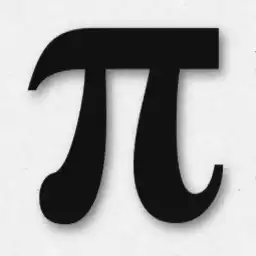
Before discussing the holiday, we must understand the math. What is pi, anyway?
Essentially, pi is the ratio of a circle’s circumference to its diameter. To put it simply, if you measure the outside edge of any circle and divide it by the distance across the middle, you always get the exact same number. Undeniably, that number is roughly 3.14.
However, pi is an irrational number. This means its decimal digits go on forever without ever repeating a pattern. Therefore, it never truly ends. Because the first three digits are 3, 1, and 4, the calendar date March 14 (written as 3/14 in the United States) perfectly matches the number. Thus, Pi Day was born.
Why does this number matter? Well, engineers and scientists use it every day. From launching rockets into space to building bridges, pi is everywhere. Without it, modern engineering would literally collapse.
The Quirky Origins: Who Invented Pi Day?
Believe it or not, this holiday did not start in ancient times. Instead, it began in the late 1980s.
Meet Larry Shaw, the “Prince of Pi”

In 1988, a physicist named Larry Shaw worked at the San Francisco Exploratorium, a famous science museum. During a staff retreat, Shaw and his coworkers started chatting about the mysteries of mathematical constants. Suddenly, Shaw realized something brilliant. The date March 14 matched the first three digits of pi.

Consequently, he decided to throw a party. On that very first Pi Day, Shaw and his colleagues set up a table on the museum floor. They laid out fruit pies and tea. At exactly 1:59 PM (matching the next three digits of pi: 3.14159), the staff marched around one of the museum’s circular spaces.
A Tradition Takes Root
Eventually, the public caught wind of this nerdy celebration. The very next year, the Exploratorium opened the Pi Day festivities to all museum visitors.
Every year, Shaw would lead a lively parade. He would wear a quirky red cap and blast the digits of pi to the tune of “Pomp and Circumstance” on a boombox. Specifically, the participants marched around the museum exactly 3.14 times. Because of his infectious enthusiasm, people started calling Shaw the “Prince of Pi”.
Unfortunately, Shaw passed away in 2017. Nevertheless, his legacy lives on. The Exploratorium still holds a massive Pi Day celebration every single year. Furthermore, they even installed a permanent “Pi Shrine” on the museum floor to honor him.
Albert Einstein and Stephen Hawking

If the date 3/14 wasn’t special enough, the universe decided to add a mind-blowing twist.
A few years after Larry Shaw started the tradition, his daughter Sara noticed an incredible coincidence. Surprisingly, March 14 is also Albert Einstein’s birthday. The world’s most famous physicist was born on March 14, 1879.
Naturally, the Exploratorium added an Einstein birthday party to their Pi Day schedule. Today, the town of Princeton, New Jersey (where Einstein lived for over 20 years), throws massive joint celebrations. For instance, they host Einstein look-alike contests alongside pie-eating competitions.
Sadly, the date holds another massive connection to the physics world. On March 14, 2018, the legendary theoretical physicist Stephen Hawking passed away. Consequently, March 14 acts as the ultimate bookend for modern physics. It marks the birth of Einstein, the death of Hawking, and the celebration of the universe’s most famous number.
Congress Makes It Official
For decades, Pi Day was just a fun, grassroots movement. However, the United States government eventually decided to get involved.
On March 12, 2009, the U.S. House of Representatives passed a non-binding resolution called H. Res. 224. This document officially recognized March 14 as National Pi Day.

Why did politicians care about a math joke? Essentially, they wanted to promote STEM (Science, Technology, Engineering, and Mathematics) education. According to the resolution, American students were falling behind in math and science. Therefore, lawmakers saw Pi Day as a golden opportunity. By officially recognizing the holiday, they hoped schools would use it to engage kids in math in a fun, non-intimidating way.
Later, in 2019, UNESCO went a step further. They designated March 14 as the International Day of Mathematics. Now, it is a truly global phenomenon.
Mind-Blowing Fun Facts About Pi
Do you want to impress your friends on March 14? Share these insane facts with them.
- NASA Only Uses 15 Digits: You might think space agencies need billions of digits to navigate the cosmos. Interestingly, NASA scientists only use 15 decimal places of pi to calculate things like sending rovers to Mars. Using just 15 digits allows them to figure out the circumference of a circle the size of the visible universe with an error margin thinner than a single atom!
- The 105 Trillion Digit Record: Because humans love breaking records, computer engineers constantly try to calculate more digits. In March 2024, an American storage company called Solidigm calculated pi to a staggering 105 trillion decimal places. Unquestionably, this smashed the previous record of 100 trillion set by Google Cloud. It took them 75 days and a massive amount of solid-state drives (SSDs) to achieve it.
- The Human Memory Record: How many numbers can you remember? According to Guinness World Records, a man named Rajveer Meena from India holds the official record for reciting pi. In 2015, he recited 70,000 decimal places while blindfolded. Remarkably, the grueling process took him nearly 10 hours.
- The Indiana Pi Bill Incident: In 1897, the state of Indiana almost legally changed the value of pi. A doctor named Edwin Goodwin convinced politicians to pass a bill essentially stating pi was 3.2. Fortunately, a mathematics professor happened to be visiting the state capitol. He stepped in and stopped the bill before it became law.
Weird and Wonderful Pi Day Traditions
Over the years, people have developed hilarious and awesome ways to celebrate. How should you observe the holiday? Here are a few popular traditions.
1. Eat Pie (Obviously)
Undeniably, this is the best part. Because “pi” and “pie” are homophones (words that sound the exact same), eating baked goods is mandatory. Bakeries across the country offer huge discounts. Usually, you can snag a slice for exactly $3.14. Whether you prefer sweet cherry pie or a savory pizza pie, just make sure it is round.
2. Pi Recitation Contests
Schools everywhere host memorization battles. Teachers challenge students to see who can list the most digits from memory. The winner usually gets bragging rights and, of course, a pie. Recently, in March 2024, a 10-year-old British boy broke a world record for his age group by reciting 280 digits in just 60 seconds!
3. MIT’s Acceptance Letters
The Massachusetts Institute of Technology (MIT) is arguably the most famous nerd haven on Earth. Consequently, they embrace the holiday fully. Every year on March 14, MIT mails out its admission decision letters to prospective students. Specifically, they post the decisions online at exactly 6:28 PM. They call this “Tau Time,” honoring the mathematical constant Tau, which is exactly double the value of pi (6.28).
4. Run a Pi K
Forget the standard 5K. Many running clubs host a “Pi K” on March 14. Runners jog exactly 3.14 miles or 3.14 kilometers. Afterward, they usually refuel with pizza. It is the perfect balance of fitness and junk food.
What About July 22? (Pi Approximation Day)
Wait, there is another holiday? Yes, indeed.
While Americans write their dates as month/day (3/14), much of the world writes them as day/month (14/3). Because 14/3 does not represent pi, other countries celebrate Pi Approximation Day on July 22.

Why July 22? If you write it as 22/7, it forms a fraction. If you divide 22 by 7, you get 3.1428… which is a very close approximation of pi. Therefore, if you miss the March celebrations, you can just wait until summer for round two!
Why We Should Care About a Number
At this point, you might be asking a simple question. Why do we put so much effort into celebrating a string of random numbers?
Ultimately, Pi Day is not really about the math itself. Instead, it is about making learning accessible. For many kids, mathematics feels cold, rigid, and incredibly stressful. When you introduce pie-eating contests, silly parades, and Einstein look-alikes, you remove the fear.
Larry Shaw understood this perfectly. He wanted people to realize that math is just a language we use to describe the universe. It can be fun, messy, and delicious. When a kids successfully memorizes 20 digits of pi, they build confidence. Suddenly, algebra doesn’t seem so scary anymore.
Furthermore, the endless nature of pi reminds us of human curiosity. We will never find the final digit of pi. Regardless, scientists build massive supercomputers just to keep searching. That relentless drive to explore the unknown is the very core of human nature.
Get Out There and Celebrate!
So, what are your plans for March 14?
Now you know the full history. You know about Larry Shaw’s wacky museum parade. You understand the profound connection to Albert Einstein. Moreover, you are armed with enough crazy trivia to shock your math teacher.
Do not let the day pass you by. Call up your local pizzeria and order a large pie. Bake a cherry tart with your kids. Or, if you are feeling exceptionally bold, try to memorize the first 50 digits.
Have you ever participated in a Pi Day contest? Drop a comment below and let us know your favorite 3.14 memories! Also, don’t forget to share this article with your favorite math lover. Happy Pi Day!
Sources help:
- https://en.wikipedia.org/wiki/Pi_Day
- https://en.wikipedia.org/wiki/Larry_Shaw_(physicist)
- https://www.govinfo.gov/content/pkg/BILLS-111hres224ih/pdf/BILLS-111hres224ih.pdf

