

13 Bizarre Food Rituals from Around the World You Won’t Believe
i’ve eaten some weird things on my travels. Fried tarantulas in Cambodia. Century eggs in China. But sometimes, it’s not the food itself that’s strange. It’s the why and the how. The traditions wrapped around a meal can be more shocking than any ingredient.
You see, food is never just food. It’s history. It’s community. It’s a way of looking at the world. And in some places, it’s a reason to do things that seem utterly bizarre to an outsider. Forget your dinner party etiquette. We’re talking about rituals that are raw, strange, and deeply human.
So, ready to see how weird dinner can get?
1. The Christmas KFC Feast in Japan
This one feels like it came from a marketing fever dream, but it’s real. In Japan, Christmas isn’t a national holiday, but they’ve adopted a tradition that has millions lining up. What for? A bucket of Kentucky Fried Chicken.
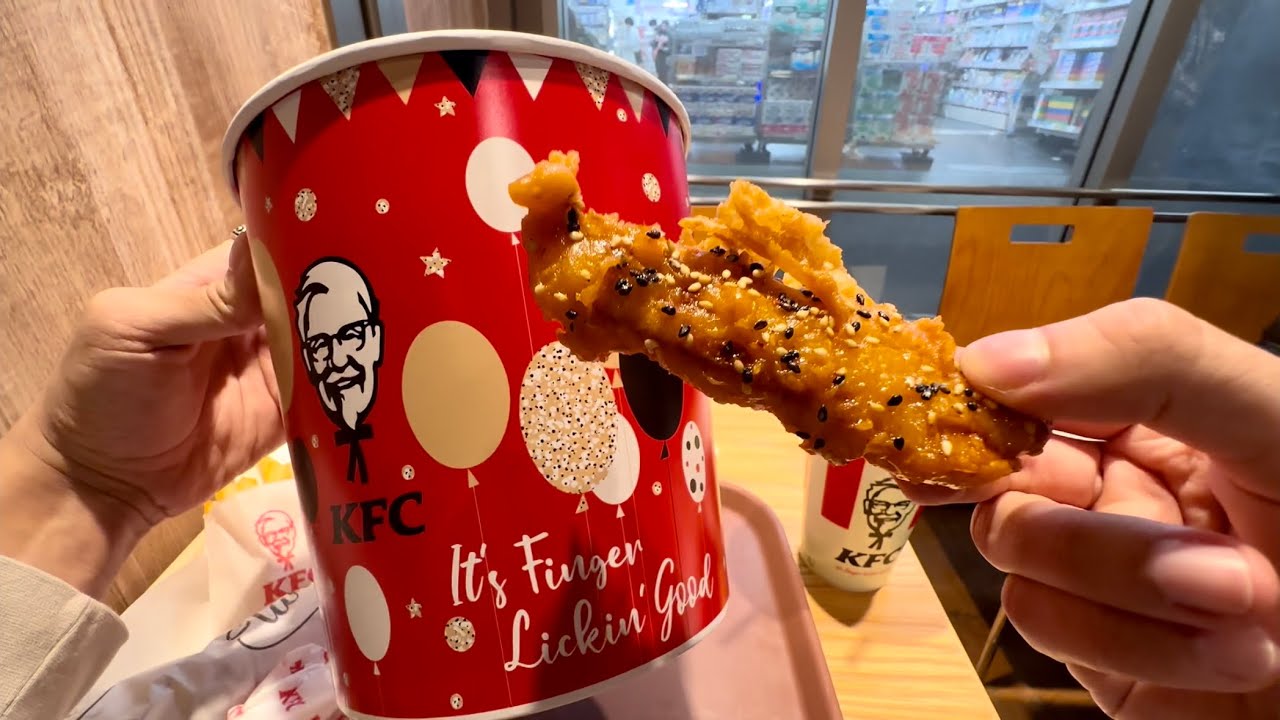
It all started with a brilliant marketing campaign in 1974: “Kurisumasu ni wa kentakkii!” (Kentucky for Christmas!). It presented KFC as a wholesome, American-style way to celebrate. And it worked. Today, an estimated 3.6 million Japanese families chow down on a special Christmas dinner from KFC. It’s so popular you often have to order your “party barrel” weeks in advance or face hours-long queues on Christmas Day. The meal isn’t just chicken; it often includes a special cake and even wine.
2. Feasting with the Dead in Indonesia
In Tana Toraja in the Sulawesi region of Indonesia, life and death have a different kind of relationship. When a person from the Torajan ethnic group dies, they aren’t immediately buried. Instead, their preserved body is kept at home for weeks, months, or even years.
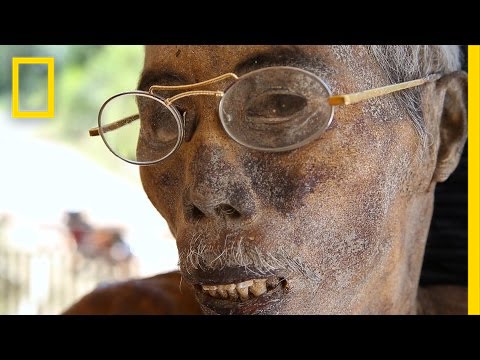
During this time, they are treated as if they’re merely sick. The family speaks to them, cares for them, and yes, feeds them. The deceased is offered food and drink multiple times a day. It’s a way to process grief and show continued love and respect. The formal funeral, a massive and expensive celebration, only happens when the family is ready. It’s a powerful, and to an outsider, startling display of devotion.

3. Drinking Fresh Cow’s Blood in Kenya and Tanzania
This isn’t for the faint of heart. For the Maasai people, a semi-nomadic group in East Africa, cattle are everything. They represent wealth, status, and life itself. So, it makes sense that cattle are a primary source of food. But it’s not just the meat and milk. It’s the blood.
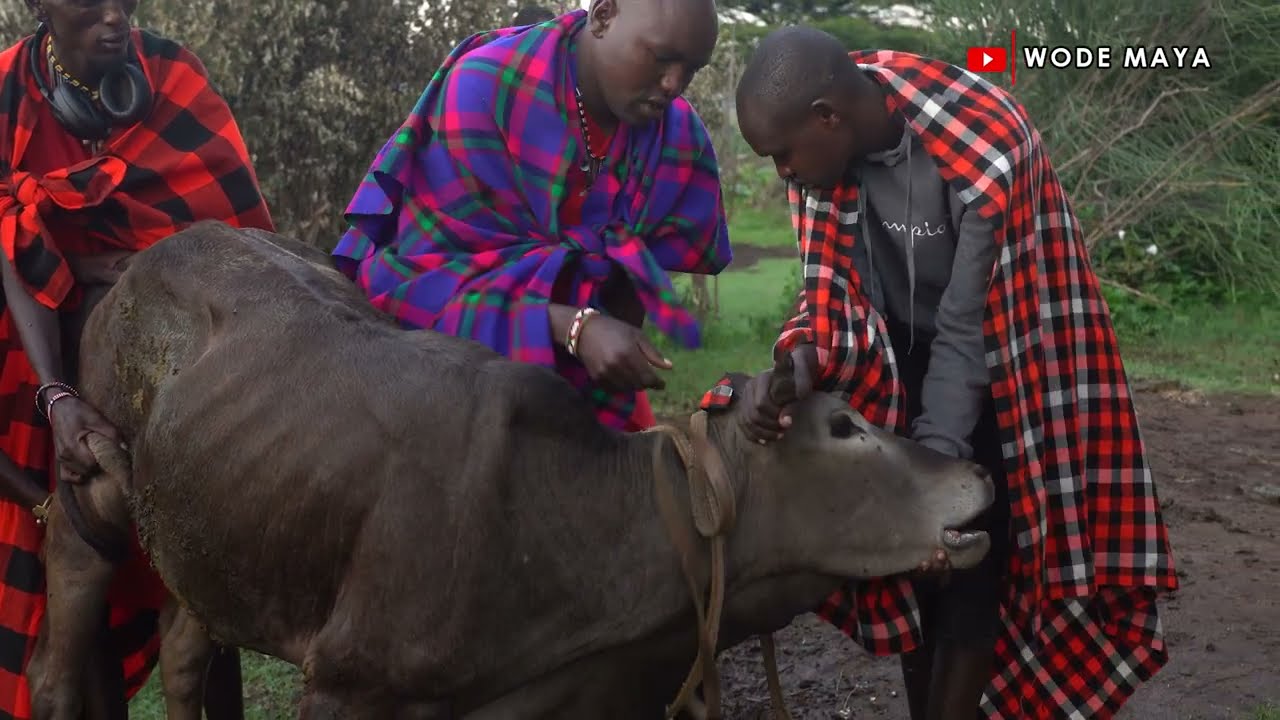
Warriors will carefully puncture a cow’s jugular vein with a special arrow, collecting the blood in a gourd. The wound is then sealed, and the cow walks away unharmed. The blood, rich in protein and iron, can be drunk fresh and warm, sometimes mixed with milk. This practice provides crucial nutrients, especially when other food is scarce. It’s also served on special occasions, like when a woman has given birth or during circumcision ceremonies.
4. The Mad Dash for Cheese in England
What happens when you mix an 8-pound wheel of Double Gloucester cheese with a dangerously steep hill? You get the Cooper’s Hill Cheese-Rolling and Wake in Gloucestershire, England.
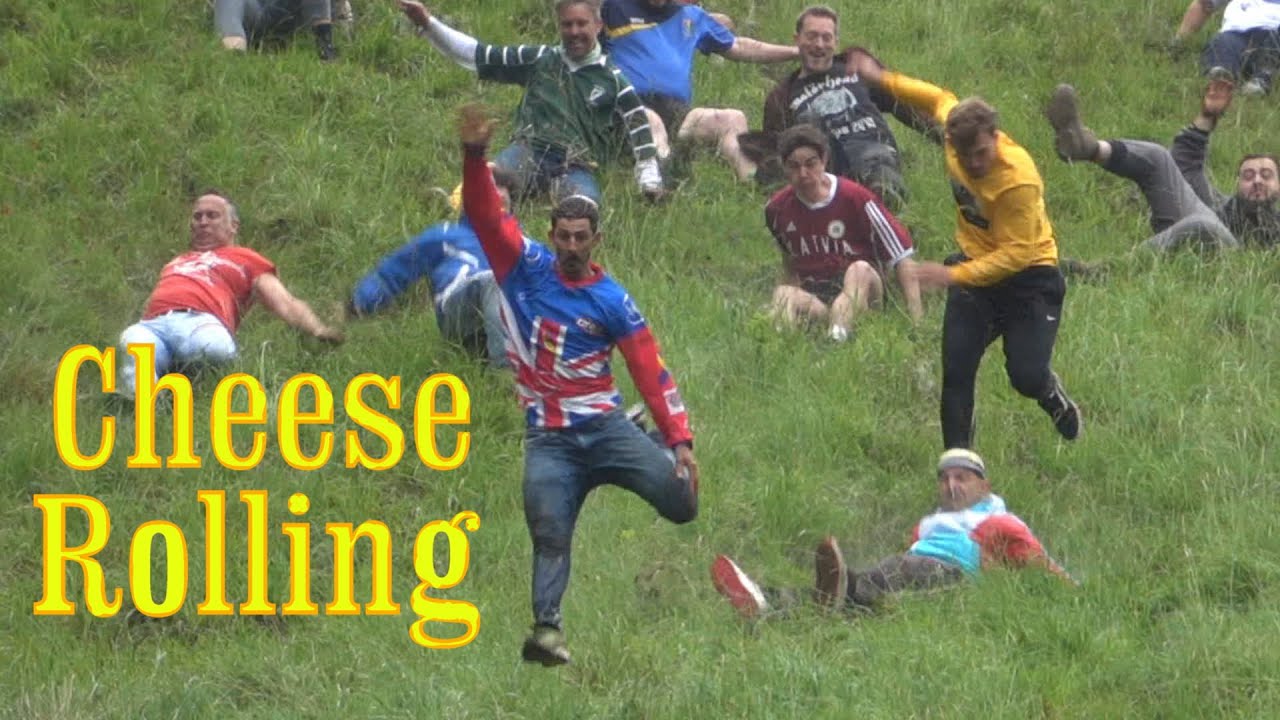
The concept is simple. A wheel of cheese is sent rolling down the hill, and hundreds of people chase it. The first person to the bottom wins the cheese. The reality? People don’t run; they tumble, fall, and slide in a chaotic, often painful, descent. The event has been happening for centuries, possibly with pagan origins celebrating the return of spring. While the official event was canceled in 2010 due to safety concerns, it continues unofficially every year, drawing international crowds and resulting in a predictable number of sprains and broken bones. All for the glory of cheese.
5. A Buffet for Monkeys in Thailand
Every November, the town of Lopburi, Thailand, throws a party for its most famous residents: thousands of mischievous macaques. The locals set up a massive feast for them at the Phra Prang Sam Yot temple.
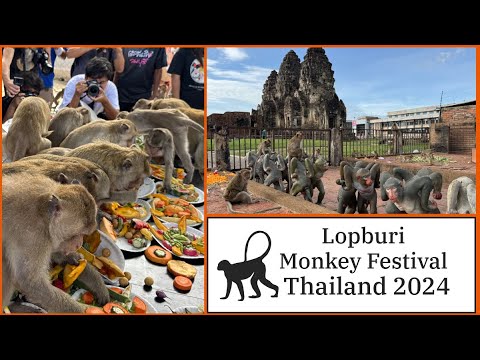
Why? The tradition is a way to thank the monkeys for bringing tourism to the town. Legend says a king once allied with a monkey warrior to save a princess, and the monkeys have been revered ever since. The festival involves tables piled high with an estimated 4,000 kilograms of fruits, vegetables, cakes, and candy. It’s a spectacle of organized chaos as the monkeys swarm the tables, a bizarre and wonderful tribute to a town’s furry inhabitants.
6. Throwing Wine at Each Other in Spain
If you love red wine, how about wearing it? In the small town of Haro, in Spain’s La Rioja wine region, that’s exactly what they do. Every year on June 29th, the feast day of San Pedro, the town erupts into La Batalla del Vino—the Battle of Wine.
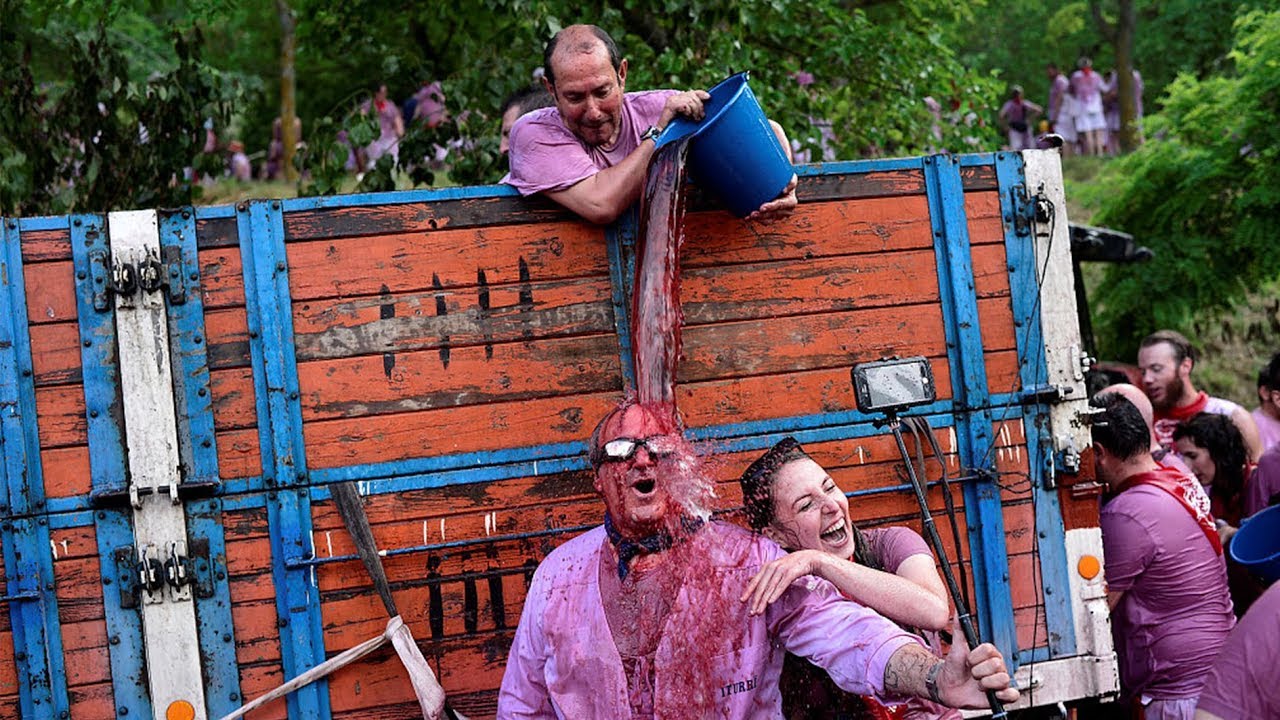
Thousands of locals and tourists, all dressed in white with red scarves, climb a nearby mountain and douse each other with thousands of liters of red wine. They use buckets, water pistols, and whatever else they can find. The origin supposedly dates back to a 13th-century land dispute with a neighboring town that eventually devolved into wine-throwing. Today, it’s just a wild, sticky, joyous celebration.
7. Eating Maggot-Infested Cheese in Sardinia, Italy
Casu marzu means “rotten cheese,” and it’s a name that doesn’t lie. This traditional Sardinian pecorino cheese is famous for containing live insect larvae. Yes, maggots.
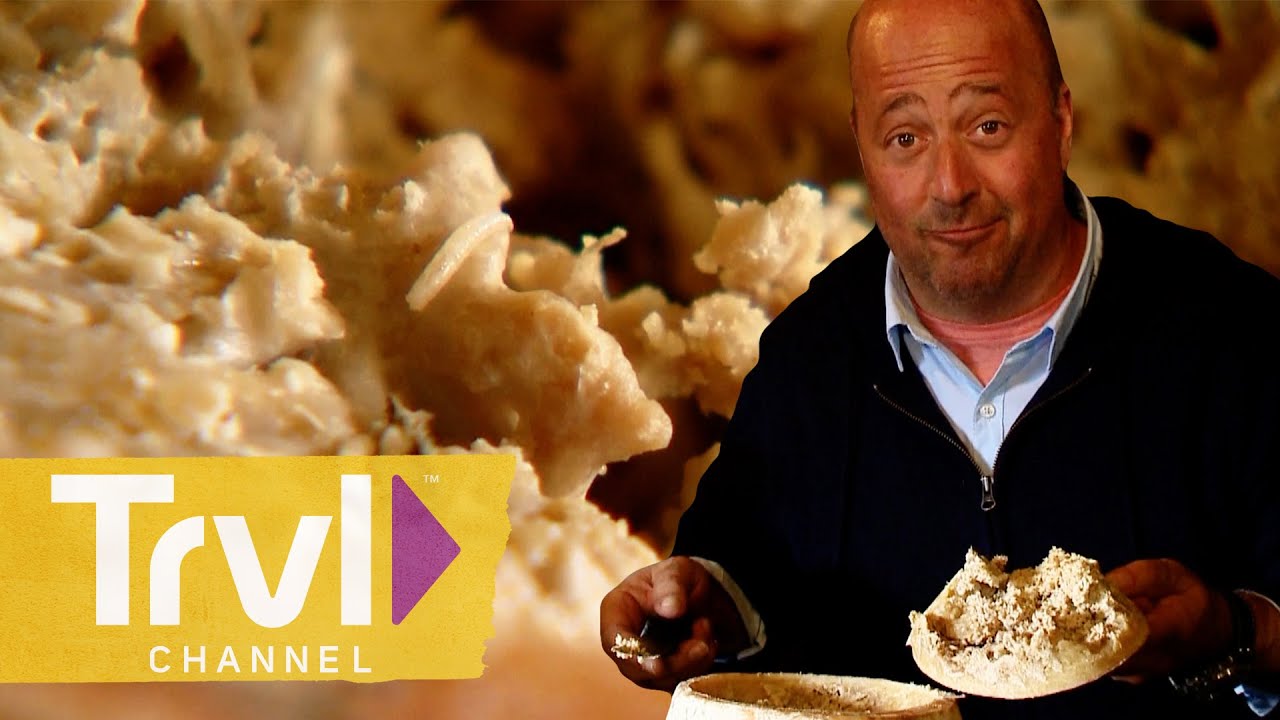
Cheese-fly larvae are intentionally introduced to the cheese. As they eat their way through it, their digestive processes break down the fats, fermenting the cheese and making it incredibly soft and pungent. The tiny, translucent worms can jump up to six inches when disturbed. Some Sardinians clear the larvae out before eating; others eat it, worms and all. The cheese is a treasured delicacy but has been outlawed by the European Union for health reasons, so it now lives on in a legal gray area, a true forbidden food.
8. Hallucinogenic Mushroom Parties in Siberia
For the Koryak people of northeastern Siberia, the harsh, frozen landscape offers little in the way of traditional entertainment. Their solution? Amanita muscaria, the iconic red-and-white toadstool you see in fairy tales.
Historically, Koryak shamans and tribesmen used these hallucinogenic mushrooms for spiritual journeys and communal gatherings. It’s a powerful substance. An interesting—and bizarre—part of the ritual involves urine. The mushroom’s psychoactive compounds are excreted largely unchanged. To conserve the rare mushrooms, it was common practice to drink the urine of someone who had consumed them to recycle the effects.
9. Self-Mutilation at the Vegetarian Festival in Thailand
Don’t let the name fool you. The Phuket Vegetarian Festival, part of a nine-day Taoist celebration called the Nine Emperor Gods Festival, is anything but serene. While many participants adhere to a strict vegetarian diet to purify their bodies, a select few take it much further.
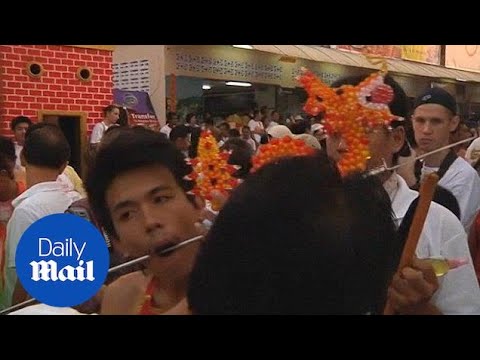
These devotees, known as Mah Song, enter a trance-like state and perform acts of extreme body modification. They pierce their cheeks and bodies with swords, skewers, guns, and any other object imaginable. They believe the gods enter their bodies and protect them from harm. It’s a shocking and bloody spectacle, all done without anesthetic, as a way to take on the sins of the community.
10. Breaking Porcelain for Good Luck in Germany
This German wedding tradition, known as Polterabend, combines a party with a whole lot of smashing. The night before the wedding, guests gather at the bride’s home and smash piles of porcelain plates, pots, and tiles. Anything but glass (which brings bad luck) is fair game.


The noise is meant to scare away evil spirits. But here’s the food ritual part: after the smashing, the couple must work together to clean up the entire mess. It’s their first test of teamwork. All the while, the guests are enjoying food and drinks provided by the couple. It’s a messy, loud, and symbolic way to start a life together.
11. Eating Fermented Shark in Iceland
Hákarl is Iceland’s national dish, and it takes a strong stomach to try it. It’s made from a Greenland shark, whose flesh is poisonous when fresh due to a high concentration of urea and trimethylamine oxide.
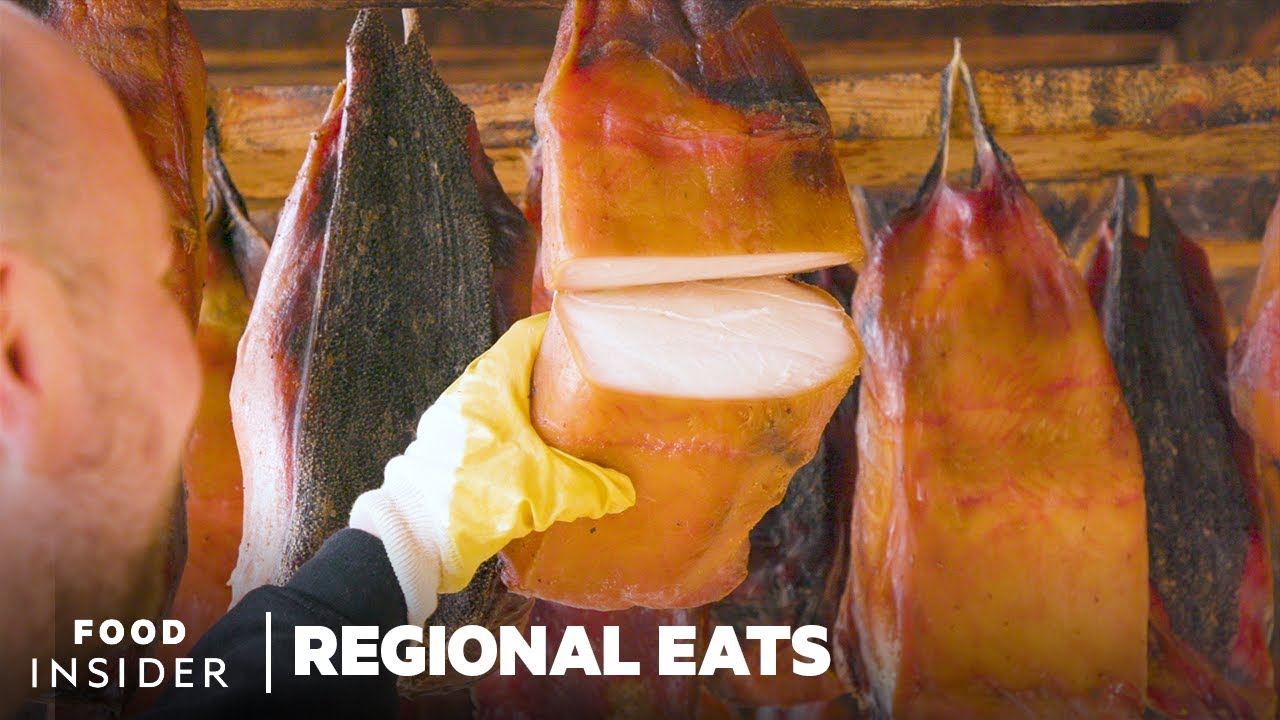
To make it edible, Icelanders have used a centuries-old process. The shark is beheaded, placed in a shallow hole, and covered with sand and stones for 6-12 weeks. This presses the fluids out. Afterward, it’s cut into strips and hung to dry for several more months. The result has a powerful ammonia-rich smell and a strong fishy taste. Most Icelanders eat it during the midwinter festival of Þorrablót, often washed down with a shot of local schnapps called Brennivín.
12. Tossing Pancakes in the UK
On Shrove Tuesday (the day before Ash Wednesday), many Brits partake in a simple but fun ritual: the pancake race. Contestants, often in aprons, must run a course while flipping a pancake in a frying pan.

The tradition dates back to 1445 in Olney, Buckinghamshire. Legend says a woman was so busy making pancakes to use up her rich foods before Lent that she lost track of time. When she heard the church bells ringing for the service, she ran out of her house, frying pan still in hand. Today, pancake races are held all over the UK, a quirky and slightly chaotic way to mark the start of Lent.
13. Serving Sushi on a Naked Body in Japan
Perhaps one of the most controversial rituals is Nyotaimori, the practice of eating sushi or sashimi from the body of a naked woman. The male equivalent is called Nantaimori.
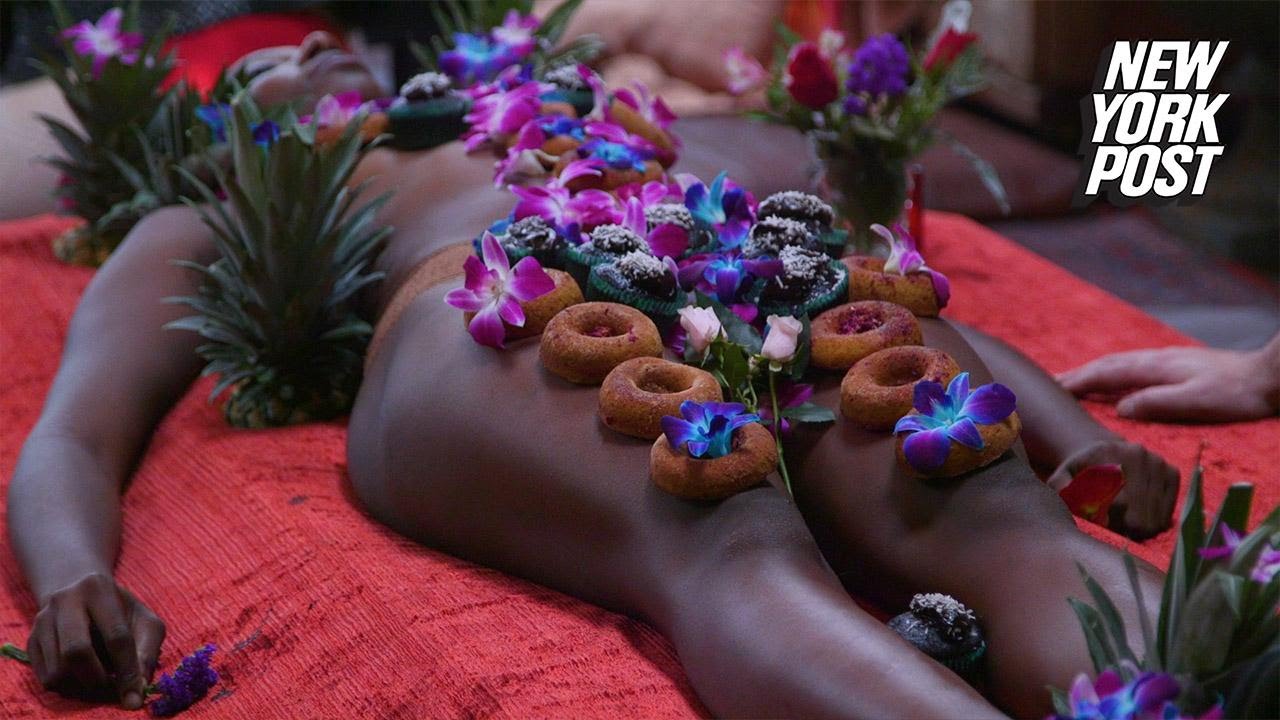
Rooted in Japan’s geisha culture and samurai period, Nyotaimori is a highly ritualized and expensive art form. The model is trained to lie still for hours and must be able to withstand the cold temperature of the food. Food is placed on sterilized leaves on the body, never directly on the skin. While proponents call it a beautiful art form celebrating the human body, critics decry it as objectifying and degrading. It’s a rare and often misunderstood practice that sits at the extreme edge of food traditions.

