

The deep sea is not our friend. Its an alien planet, right here on Earth.
We know more about the surface of Mars than we do about our own ocean floor. According to the NOAA (National Oceanic and Atmospheric Administration), more than 80% of our ocean is unmapped, unobserved, and unexplored.

Down in that 80%? It’s a world of eternal, crushing blackness. The pressure is so intense it’s like having 50 jumbo jets stacked on your thumb. The water is near-freezing. And food is so scarce that “dinner” is what ever dead, rotting “snow” drifts down from the world above.
To survive down here, you can’t be… normal. You have to be a monster. You have to be a ghost. You have to be a living, biological spaceship.
The creatures of the deep are not just “weird.” They are living proof that evolution is a brutal, bizarre, and wildly creative engineer. Ready to meet the real aliens?

Welcome to the Abyss: The Rules of the Game
To understand the what, you have to understand the why. Life in the deep sea (the “abyssopelagic” and “hadalpelagic” zones) is a game played under three impossible rules.
- There is Zero Sunlight. None. It’s pitch black. Always. This means life has to create its own light (bioluminescence) or learn to “see” in other ways (pressure sensors, smell, or massive, ultra sensitive eyes).
- The Pressure is Crushing. The pressure can be over 16,000 PSI, a thousand times more than at the surface. To survive, you can’t have rigid bones or air pockets (like lungs). You must be… soft. Many creatures are gelatinous, with bodies like half-set Jell-O.
- Food is a Luxury. There are no plants. The entire food web is based on “marine snow” (dead plankton, fish poop, and other detritus) or finding another creature. This leads to insane adaptations: huge mouths, expandable stomachs, ultra-low metabolisms, and crazy ways to lure prey.
The 14 Freaks of the Deep
1. The Goblin Shark (Mitsukurina owstoni)
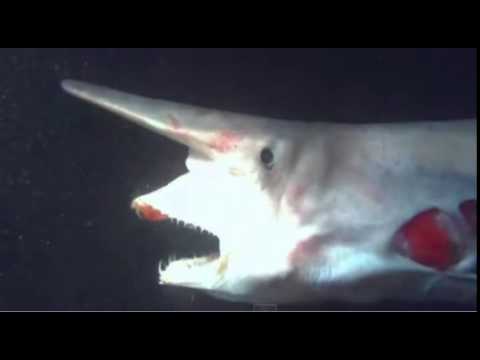
- What it is: A “living fossil” that haunts the deep (down to 4,300 feet). It’s pinkish-grey, flabby, and has a long, flattened snout that looks like a blade.
- Why It’s So Damn Weird: It has a “slingshot” jaw. When prey (a fish or squid) gets close, the shark’s entire jaw catapults forward from its skull, snagging the meal. It’s a full-on Alien xenomorph-style inner-mouth.
- The Science (The “Why”): The Goblin Shark is not a fast or powerful swimmer. It’s a slow, stealthy ambush predator. Its snout is covered in ampullae of Lorenzini—special sensing organs that detect the tiny electrical fields of its prey in the dark. Once it senses a meal, it doesn’t need to chase it. It just gets close and lunches its face.
2. The Vampire Squid (Vampyroteuthis infernalis)
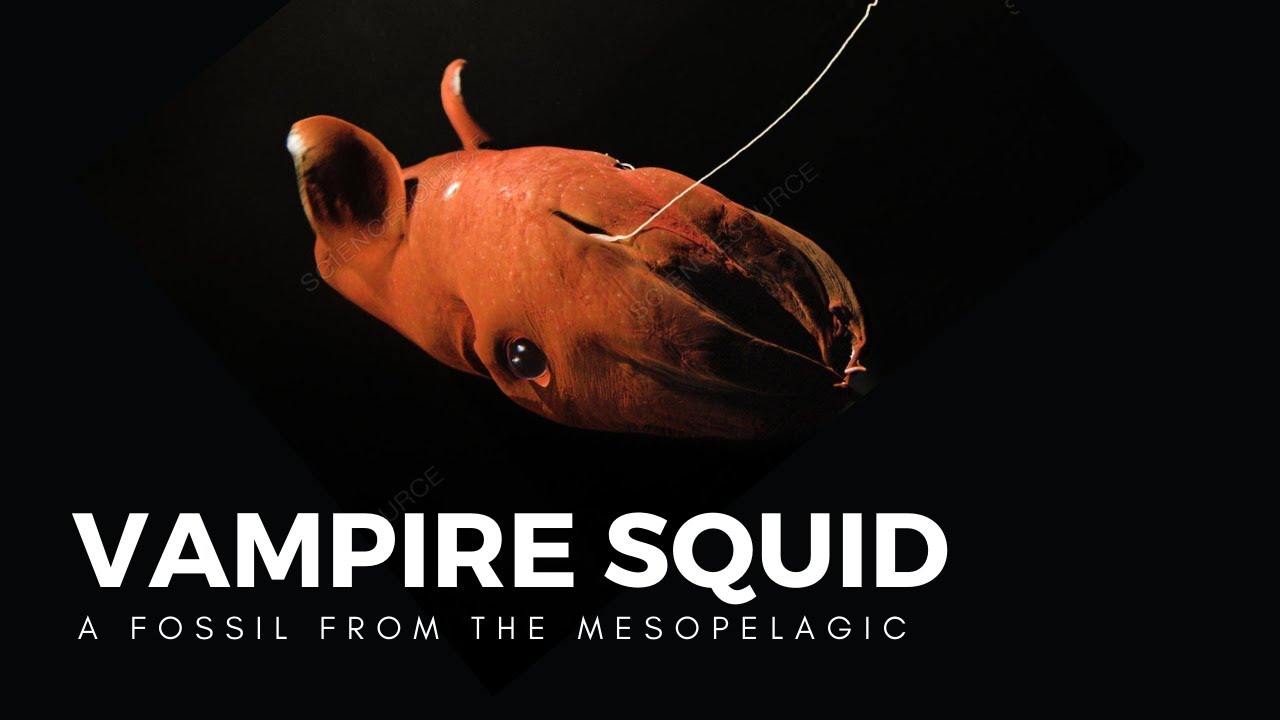
- What it is: This creature is so unique it has its own scientific order. It’s not a squid. It’s not an octopus. It’s… something else. It lives in the “oxygen-minimum zone,” where the water is so harsh most life can’t survive.
- Why It’s So Damn Weird: Its name is a lie. It’s not a blood-sucking vampire. It gets its name from its dark, webbed arms, which it can pull over its body like a cloak. When threatened, it doesn’t ink. It squirts a cloud of bioluminescent, glowing snot that dazzles the predator while the squid vanishes.
- The Science (The “Why”): In a world with almost no oxygen or food, you can’t be a high-energy predator. The Vampire Squid is a floating garbage disposal. It eats “marine snow.” It uses two long, sticky filaments to catch the falling debris and scrapes it into its mouth.
3. The Barreleye (Macropinna microstoma)
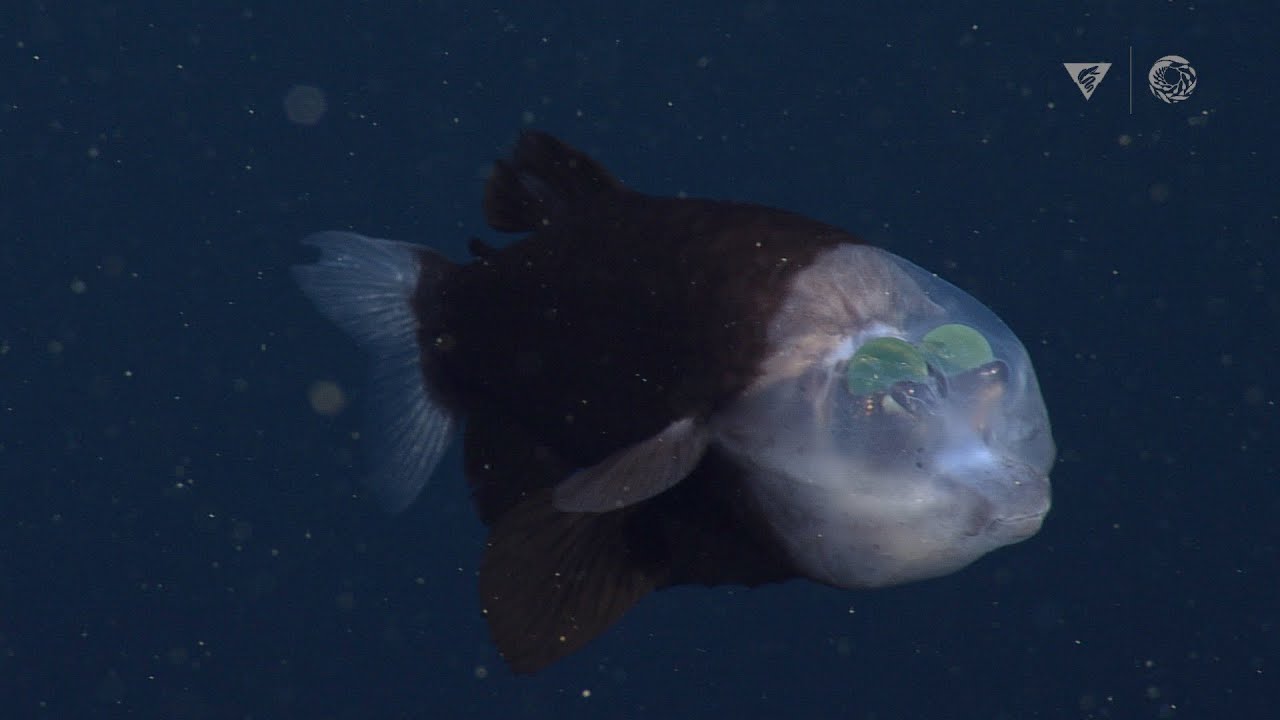
- What it is: A small, bizarre fish that lives at depths where the tiniest sliver of sunlight can penetrate.
- Why It’s So Damn Weird: Its head is completely transparent. You can see its brain. But the weirdest parts are its eyes: they are two giant, green, tube-shaped orbs inside its head, and they are almost always looking straight up.
- The Science (The “Why”): The Barreleye is a food-thief. It hovers motionlessly in the dark, looking up for the silhouettes of prey caught in the tentacles of siphonophores (like floating jellyfish). Its transparent “canopy” protects its sensitive eyes, which can rotate to look forward once it finds a snack.
4. The Anglerfish (Melanocetus sp.)
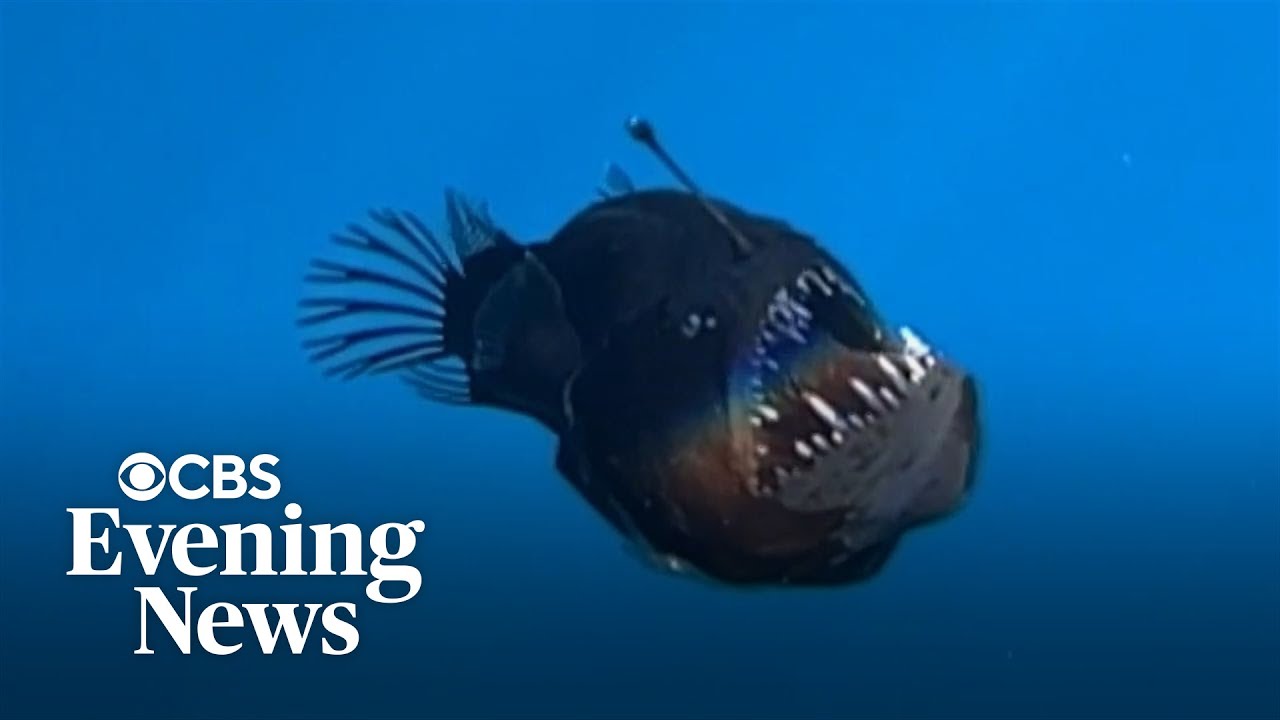
- What it is: The original deep-sea nightmare. The one you know. A lumpy, globular, all-mouth predator that lives in the blackest parts of the ocean.
- Why It’s So Damn Weird: It has a built-in fishing rod. A long, fleshy appendage (the esca) grows from its head, and at the tip is a “lure” filled with bioluminescent bacteria. It just sits in the dark, dangling this light, waiting for a smaller fish to get curious. Then… chomp.
- The Even Weirder Part: The males are tiny. To mate, a male finds a female (who can be thousands of times his size), bites her, and… fuses to her. His body dissolves. His circulatory system joins with hers, and he becomes nothing but a parasitic, attached set of testicles, providing sperm on demand. That’s commitment.
5. The Blobfish (Psychrolutes marcidus)
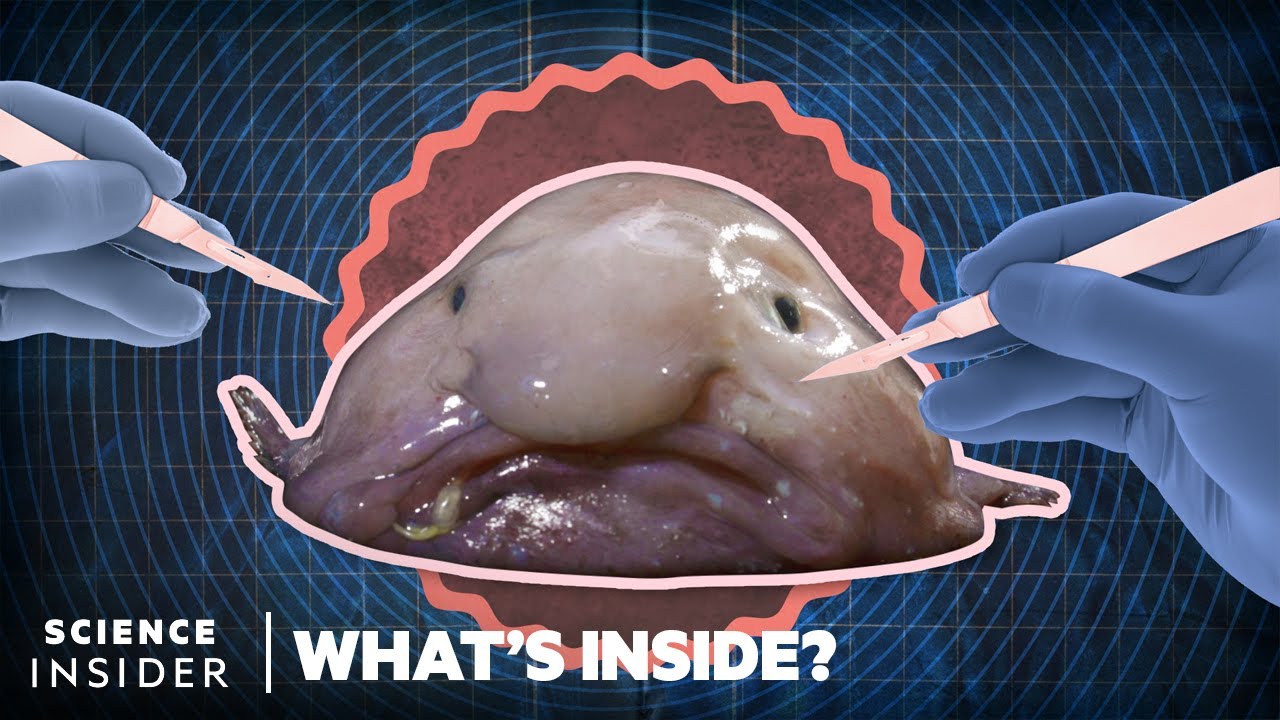
- What it is: The sad-faced, gelatinous puddle that was voted “World’s Ugliest Animal.”
- Why It’s So Damn Weird: This poor guy is the poster child for being taken out of context. At its home, 3,000 feet down, it looks like a normal, if slightly-lumpy, fish.
- The Science (The “Why”): At crushing depths, a gassy swim bladder (like normal fish have) would collapse. The Blobfish‘s “flesh” is a gelatinous, fatty goo that is slightly less dense than water. This allows it to float effortlessly just above the sea floor, using almost no energy, waiting for food to drift into its mouth. When we drag it to the surface, its body explodes from the lack of pressure. We turned it into that sad puddle. We are the monsters.
6. The Gulper Eel (Eurypharynx pelecanoides)
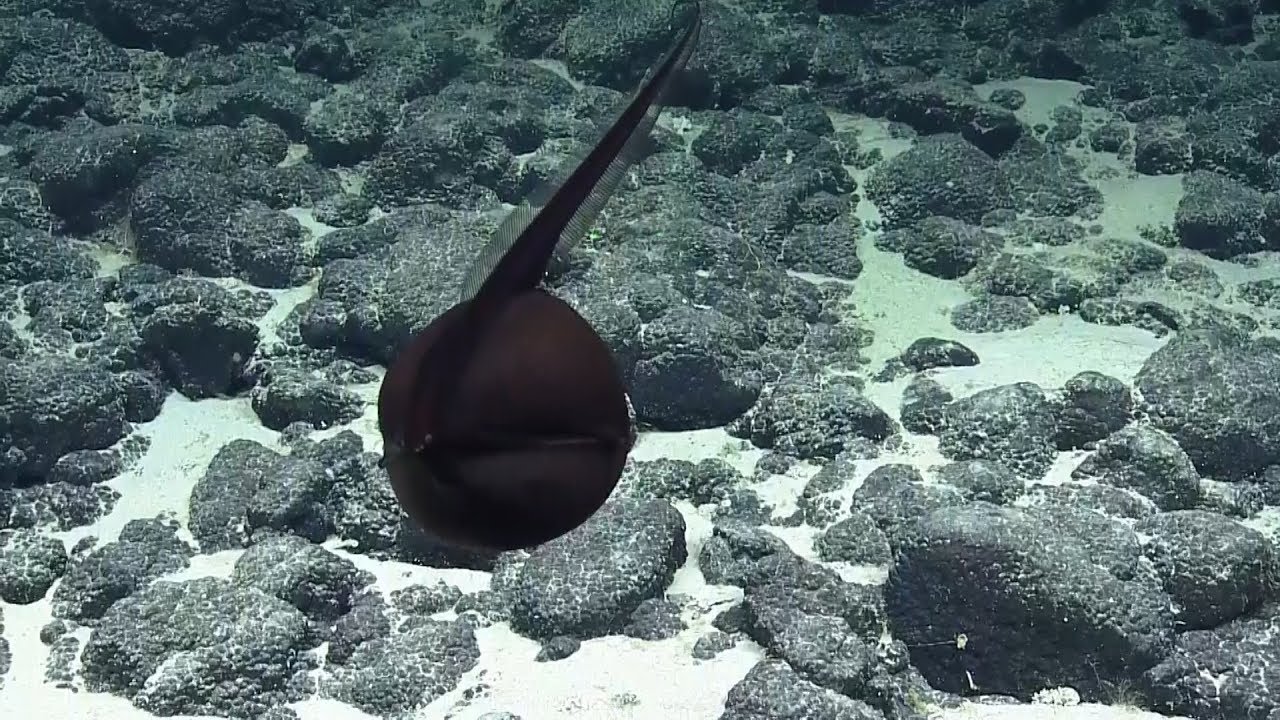
- What it is: Not really an eel. This thing is basically a swimming stomach. It’s a long, black, whip-like creature whose most prominent feature is… all of it.
- Why It’s So Damn Weird: Its mouth is, no exaggeration, about a quarter of its entire body length. Its jaw unhinges like a snake’s, and its stomach can stretch to accommodate a meal much larger than itself.
- The Science (The “Why”): This is a “low-opportunity” hunter. In the deep, you might get one chance at a meal this month. The Gulper Eel evolved to make sure that chance counts, no matter how big the meal is. It’s a low-energy, floating garbage bag.
7. The Frilled Shark (Chlamydoselachus anguineus)
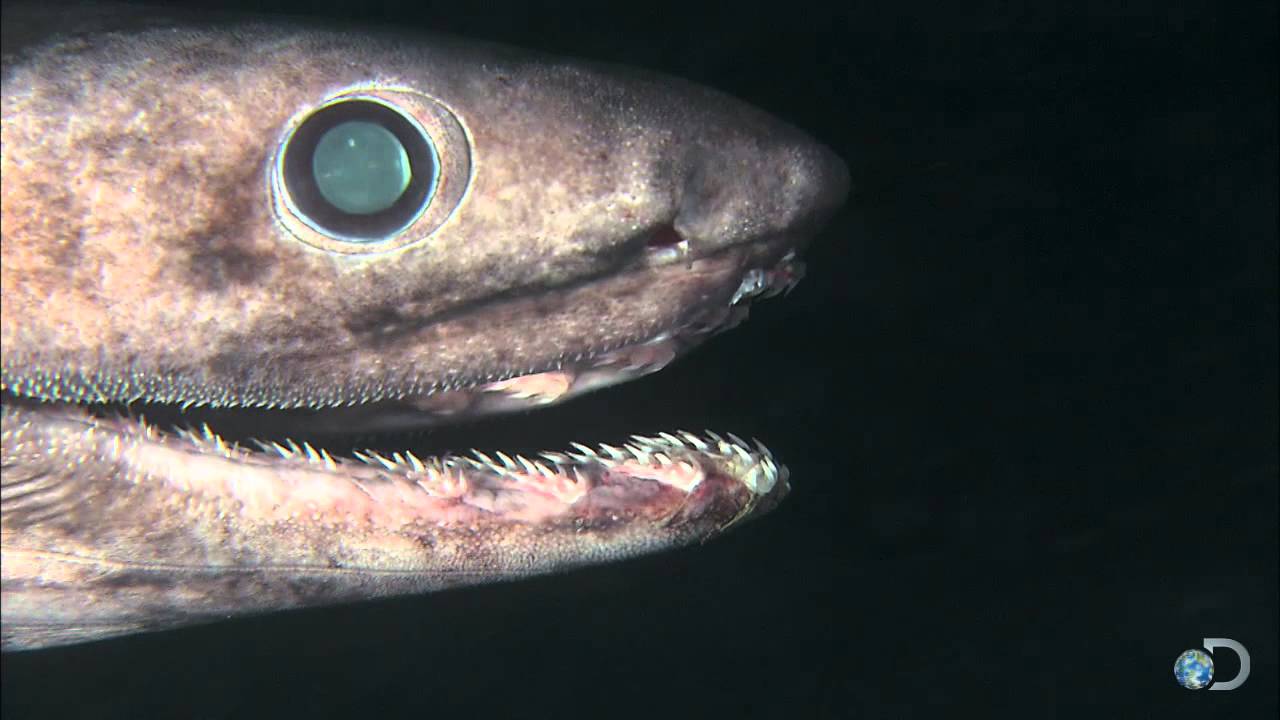
- What it is: A 6-foot-long “living fossil.” It’s more eel than shark, with a snake-like head and six pairs of frilly, old-school gills.
- Why It’s So Damn Weird: Its teeth. It has 300 of them, arranged in 25 backward-facing, needle-sharp rows. It’s a living trap. Anything that swims into that mouth is not swimming out.
- The Science (The “Why”): This shark is a relic, barely changed in 80 million years. It likely hunts by lunging and swallowing its prey whole, using its terrifying teeth to ensure the struggling victim can only go one way: down.
8. The Giant Isopod (Bathynomus giganteus)
- What it is: A roly-poly (or woodlouse). But 14 inches long.
- Why It’s So Damn Weird: It’s a deep-sea-horror-movie-bug. It’s a scavenger, a “deep-sea roach” that crawls along the ocean floor in the dark, eating sunken whale carcasses and other dead things.
- The Science (The “Why”): Food is scarce, so the Giant Isopod has a terrifyingly slow metabolism. It can go for long periods without food. One in captivity famously went five years without a single meal.
9. The Black Swallower (Chiasmodon niger)
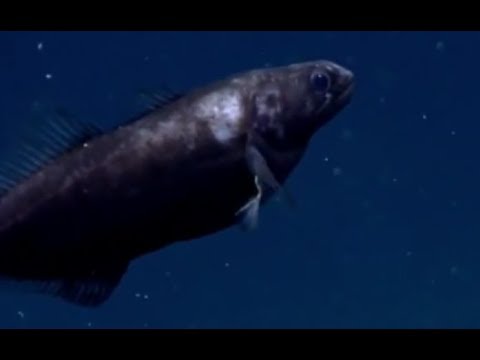
- What it is: A small, unassuming black fish. Its nickname? The “great swallower.”
- Why It’s So Damn Weird: It has a very, very specific talent. It can swallow fish 10 times its own mass and twice its own length. Its stomach stretches out like a grotesque balloon, and you can see the dead fish perfectly preserved inside.
- The Science (The “Why”): Sometimes, its eyes are bigger than its stomach… literally. They are often found dead at the surface, having swallowed a fish so large that its meal began to decompose and produce gas before it could be digested, floating the poor, greedy Swallower to the surface.
10. The Dumbo Octopus (Grimpoteuthis sp.)
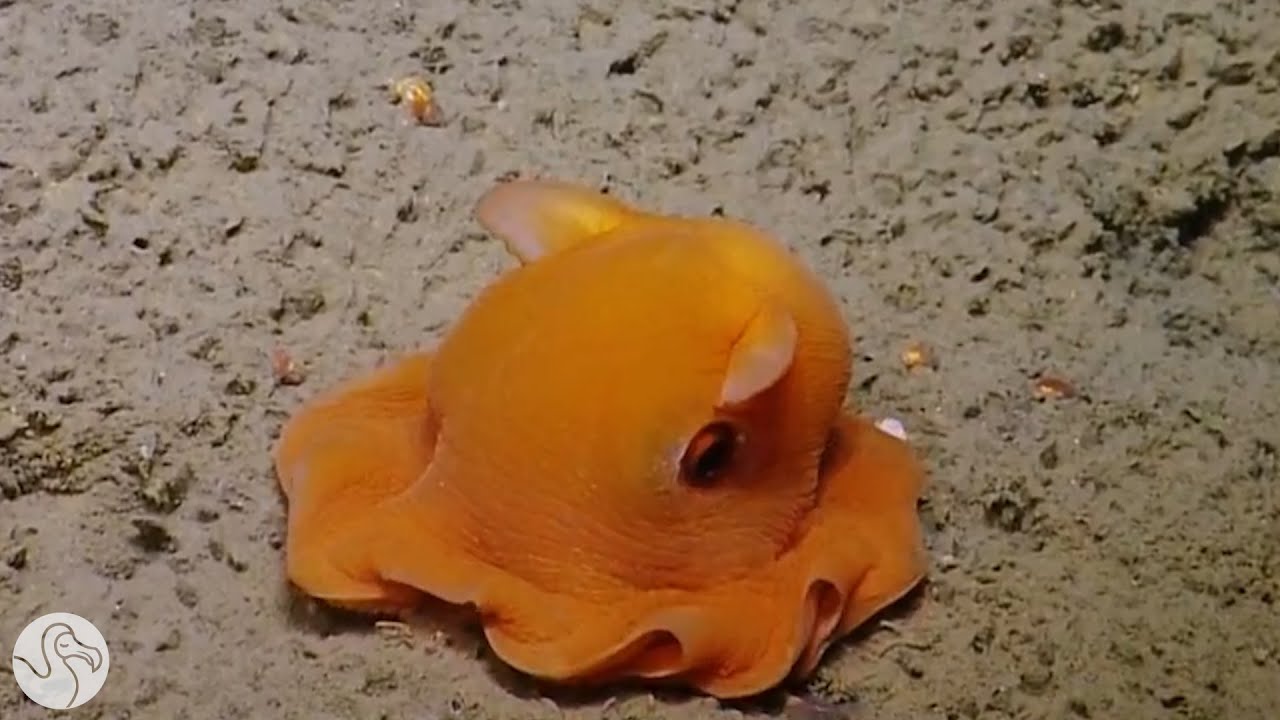
- What it is: The “cute” one. A small, gelatinous octopus that lives at extreme depths.
- Why It’s So Damn Weird: It has two large, ear-like fins on the side of its head that look just like the ears on Disney’s Dumbo. It flaps these “ears” to gracefully “fly” through the water.
- The Science (The “Why”): Unlike other octopuses, it doesn’t have an ink sac (no one to hide from in the dark). It also swallows its prey whole. It’s a gentle, drifting, and surprisingly adorable little alien.
11. The Stargazer (Astroscopus sp.)
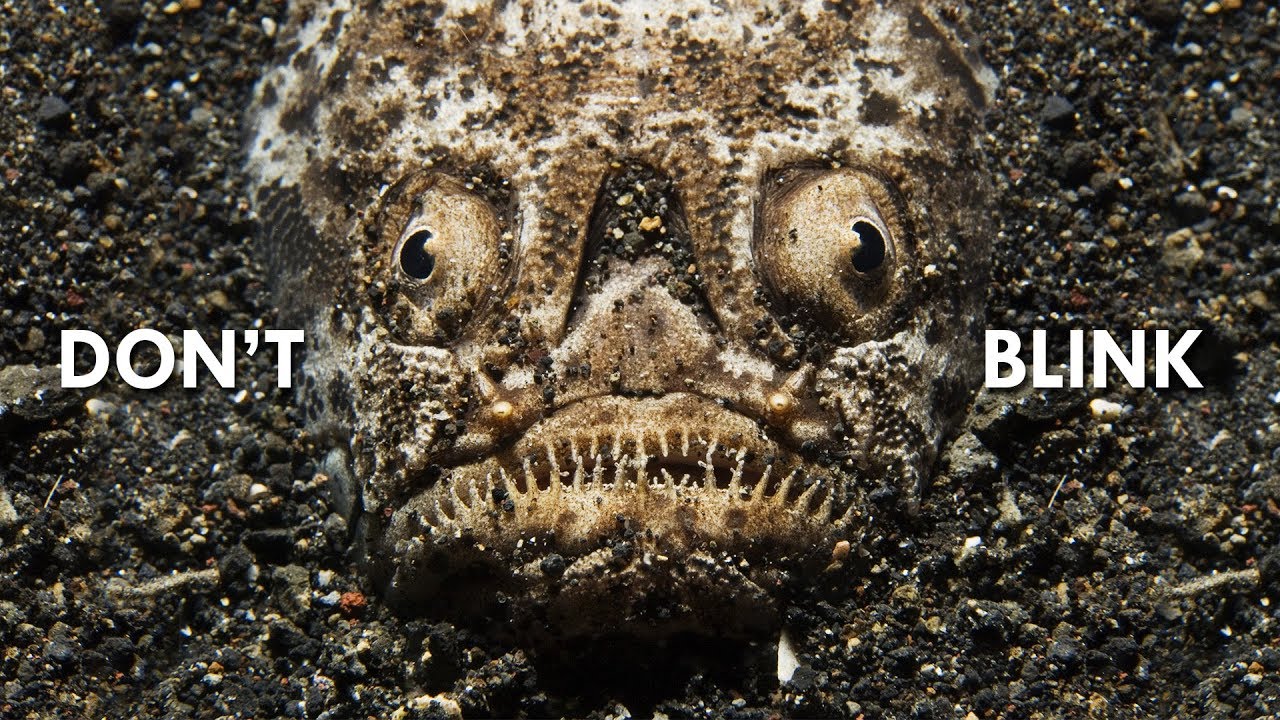
- What it is: A fish that has truly mastered the “nope” lifestyle. It’s a thick, ugly fish with a face that is permanently pointed upwards.
- Why It’s So Damn Weird: It buries itself completely in the sand, leaving only its two bulging, top-mounted eyes and its fanged mouth visible. It waits for a crab or fish to wander over, and then it explodes upwards. Oh, and one more thing: it has two organs behind its eyes that can discharge an electric shock to stun its prey.
- The Science (The “Why”): This is the ultimate ambush predator. Why waste energy swimming when you can turn yourself into a living, electric bear trap?
12. The Sea Pig (Scotoplanes)
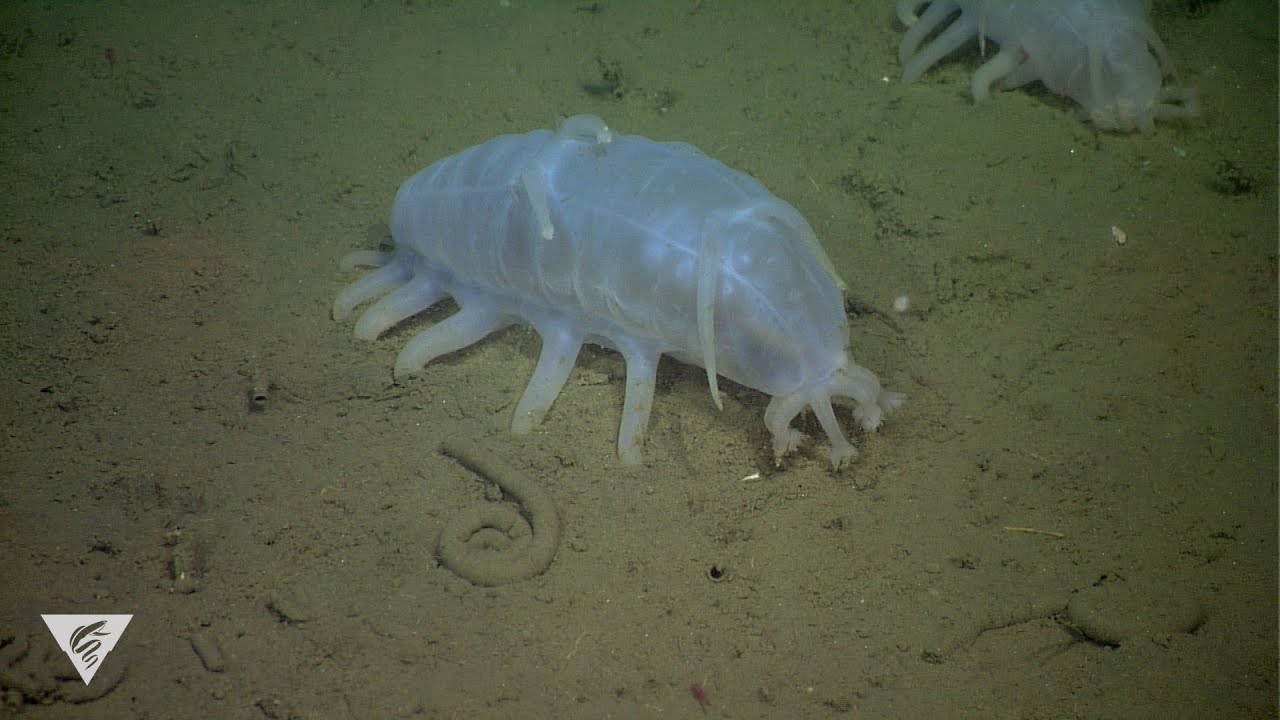
- What it is: A type of sea cucumber. It is not a pig.
- Why It’s So Damn Weird: It’s a plump, pink, semi-translucent blob with 5-7 pairs of “legs” (which are actually hydraulic tube-feet). They are the vacuum cleaners of the abyss, moving across the mud in large herds, hoovering up detritus.
- The Science (The “Why”): They are a crucial part of the deep-sea “cleanup crew.” They are basically soft, walking intestines, processing the mud for any and all nutrients.
13. The Telescope Octopus (Amphitretus pelagicus)
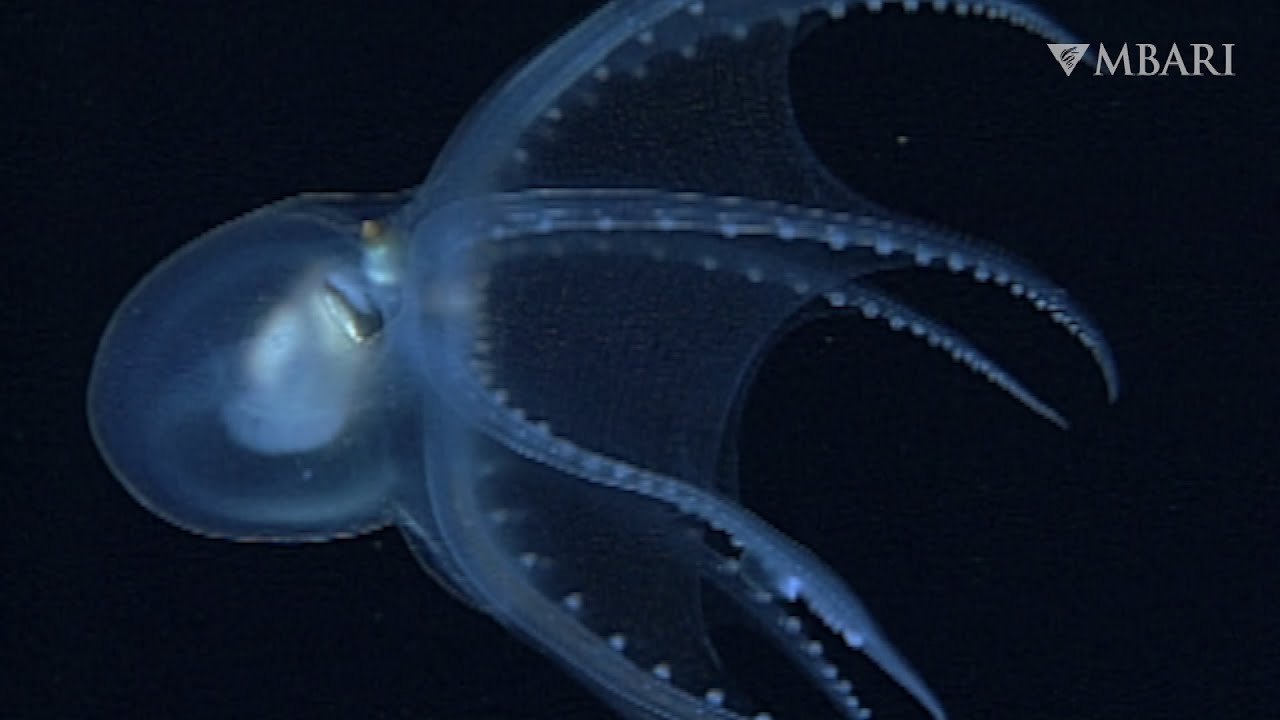
- What it is: A nearly-transparent, gelatinous octopus that drifts in the mid-water.
- Why It’s So Damn Weird: Its eyes. They are tubular, stalk-like, and can rotate. This gives it a massive field of vision in the dim light, allowing it to spot predators and prey from any angle. It’s a living surveillance drone.
- The Science (The “Why”): The tubular-eye shape is a classic deep-sea adaptation. It’s all about maximizing the gathering of any stray photons of light.
14. The Siphonophore (Praya dubia)
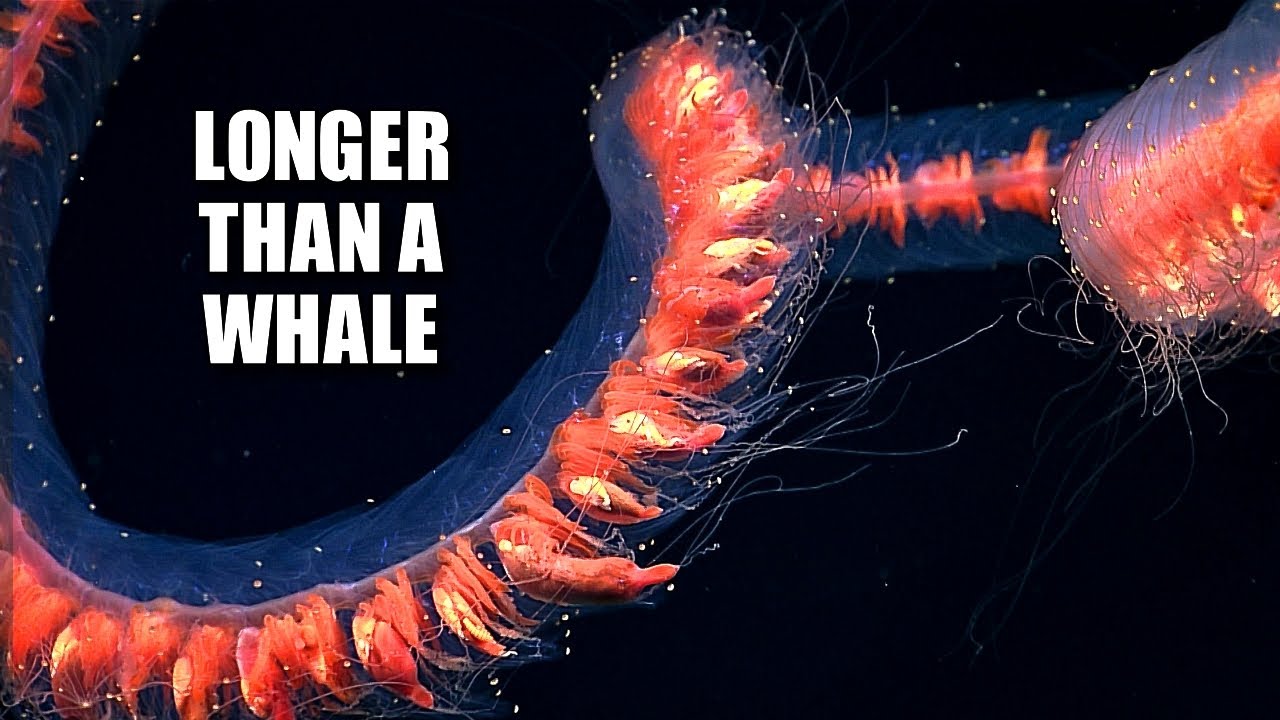
- What it is: This is the one that breaks your brain. It looks like a single, 130-foot-long, stringy jellyfish. It is not one animal.
- Why It’s So Damn Weird: It’s a colonial organism. It’s a floating team of thousands of tiny, specialized clones called zooids. Each zooid is like a separate “person” with one job. Some are the “engine” (a pulsing bell for swimming). Some are just mouths for eating. Some are just stingers for defense. Some are just gonads for reproduction.
- The Science (The “Why”): This is a completely different path of evolution. Instead of one complex body, the siphonophore evolved to be a “super-organism” of tiny, simple bodies, all working together. It is, quite literally, a living, floating alien city.
Why We Must Protect These “Freaks”
These creatures aren’t monsters. They are survivors. They are the result of 4 billion years of evolution playing a game on “impossible mode.”

Right now, we are damaging this hidden world before we’ve even had a chance to understand it. Destructive practices like deep-sea trawling (scraping the ocean floor with giant nets), climate change (which warms and acidifies the water), and deep-sea mining are threatening these ecosystems.
We are, in our ignorance, burning a library of life we haven’t even learned to read. These creatures, in all their bizarre, “ugly” glory, are a part of our planet’s heritage. They are a reminder that the world is bigger, stranger, and more full of wonders than we can possibly imagine.
What’s your favorite deep-sea weirdo? Did I miss one that haunts your dreams? Drop your pick in the comments below!

