

Orang Pendek: Sumatra’s “Bigfoot” – Sightings, Footprints & The Strongest Evidence Explained
Think your walking through a forest so dense that sunlight struggles to touch the ground. You’re in Sumatra, Indonesia, and you hear a rustle. You expect a tiger or a sun bear. Instead, you see something that makes your brain stutter: a small, muscular figure walking on two legs, looking shockingly human, yet covered in fur.
This isnt a scene from a movie. It’s a scenario reported by hundreds of witnesses – from local farmers to western scientists – for over a century. They call it Orang Pendek (Indonesian for “Short Person”).
Unlike the towering, blurry Sasquatch of North America, Orang Pendek is different. It’s grounded in a specific, scientifically plausible reality. It doesn’t have glowing red eyes or supernatural powers. It eats ginger roots, leaves footprints that puzzle primatologists, and inhabits one of the last great unexplored rainforests on Earth.
Let’s look at the hard facts. Here is the most up-to-date, breakdown of the Orang Pendek mystery as of now.
What Exactly Is Orang Pendek?
Forget the “monster” label. If Orang Pendek exists, it’s an animal – flesh, blood, and bone.
Witnesses consistently describe a creature that is:
- Bipedal: It walks upright on two legs, not knuckle-walking like a chimp or gorilla.
- Compact: Standing about 3 to 5 feet (0.9 to 1.5 meters) tall.
- Powerful: Immense upper-body strength, described as “built like a boxer” with broad shoulders.
- Human-like: A face that is startlingly human, often with a distinct nose and non-ape-like eyes.
- Coat: Hair color varies from honey-brown to black or dark grey.
The Habitat: A Green Fortress
This creature is said to live in Kerinci Seblat National Park (KSNP) in central Sumatra. This place is massive – over 13,000 square kilometers of rugged volcanic terrain. It’s the kind of place where a tiger can disappear for years without being seen. If an unknown ape wanted to hide, this is exactly where it would be.
The Strongest Evidence: Why Scientists Are Paying Attention
Most cryptids rely on shaky videos. Orang Pendek relies on physical traces that have stumped experts.
1. The Footprints
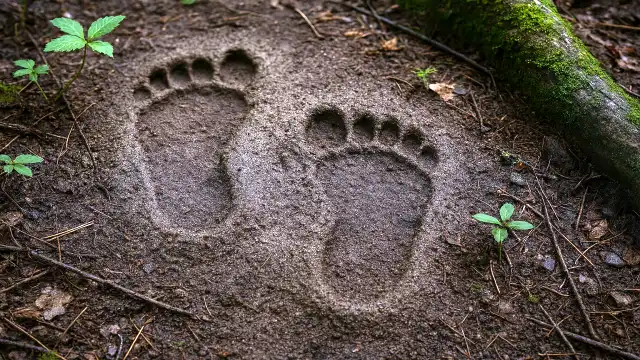
This is where things get interesting. Plaster casts of alleged Orang Pendek footprints don’t look like human feet, and they don’t look like sun bear tracks (a common misidentification).
- Anatomy: The prints show a broad, short foot with a divergent big toe (like an ape) but a heel and arch structure that suggests upright walking (like a human).
- Expert Analysis: Dr. David Chivers, a primate biologist from the University of Cambridge, famously examined casts found by expedition leader Adam Davies. His conclusion? The prints showed a unique blend of features from gibbon, orangutan, chimpanzee, and human. He stated, “It definitely walks erect.”
2. The DNA Conundrum (The “Smoking Gun”?)
In the early 2010s, hair samples collected from KSNP were sent to Copenhagen University for analysis. The results were… confusing, to say the least. And that confusion is actually compelling.

- Morphology (The Look): Under a microscope, the hairs looked like they belonged to an orangutan – reddish and ape-like. However, orangutans are not known to live in that part of Sumatra (they are found hundreds of miles north).
- Genetics (The Code): When Dr. Tom Gilbert ran the DNA, the results came back as human or “very closely related to human.”
What does this mean?
Skeptics say the sample was contaminated by the human collectors. Believers argue this is exactly what you’d expect from a new species of great ape that shares a significant amount of DNA with us – a “cousin” that split from our evolutionary tree recently enough to confuse a standard DNA test.
3. The Credible Witnesses
We aren’t talking about guys looking for attention.
- Debbie Martyr: An investigative journalist who originally went to Sumatra to debunk the myth. Instead, she became one of its staunchest defenders after seeing the creature herself multiple times in the 1990s. She later led Tiger Protection Units in the park, giving her immense credibility.
- Jeremy Holden: A wildlife photographer who has spent decades in the rainforest. He claims to have seen the animal and has spent years trying to camera-trap it.
“I saw an animal that walked on two legs… it was immensely strong, with huge shoulders, but it was short. It looked like nothing recorded in the scientific books.” – Debbie Martyr
The “Biker Video” Viral Clip: Fact or Fake?
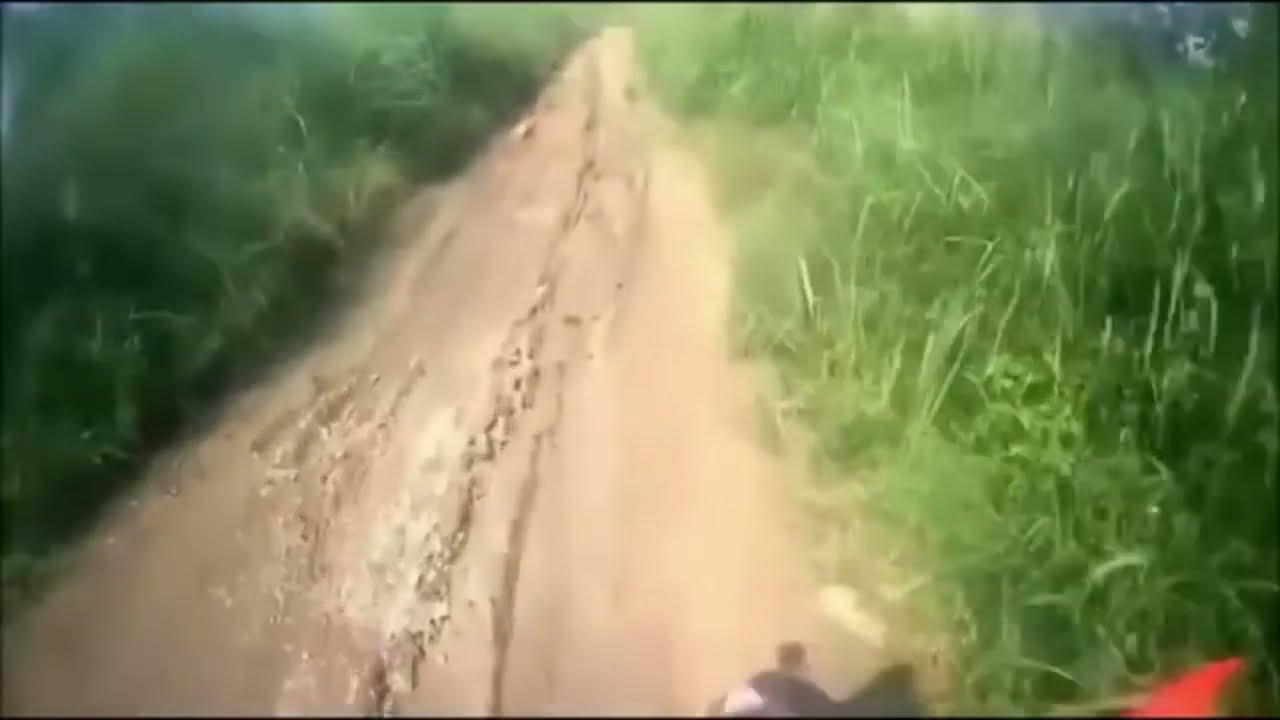
You might have seen a viral video from 2017 showing a group of dirt bikers in Aceh (northern Sumatra) chasing a small, naked figure carrying a stick. The figure runs incredibly fast and disappears into the tall grass.
Is this Orang Pendek?
Probably not.
- Location: The video was filmed in Aceh, far north of the core Orang Pendek habitat in Kerinci.
- Appearance: The figure looks distinctly human – possibly a member of the Mante tribe, a semi-mythical group of forest-dwelling people, or simply a smaller local individual.
- Movement: The running style was very human, lacking the distinct “waddle” or power described in Orang Pendek reports.
Verdict: Treat this video as a curiosity, not evidence. It muddies the water rather than clearing it.
Why Hasn’t It Been Found Yet? (The 2026 Perspective)
We have drones, satellite imagery, and AI-powered camera traps. Why don’t we have a 4K video of this thing?
1. The “Needle in a Haystack” Problem
Kerinci Seblat is dense. You can walk five feet past an elephant and not see it. Recent camera trap studies (2023-2024) have successfully documented rare animals like the Sumatran striped rabbit and clouded leopards. However, these cameras are set up on trails used by tigers. If Orang Pendek is intelligent and avoids trails (as primates often do), it would easily bypass these traps.
2. The “Sun Bear” Factor
Skeptics have a strong case here. The Sun Bear lives in the same forest. It can stand on its hind legs. It leaves footprints that, when overlapping or degraded by rain, can look remarkably like a short, broad humanoid foot. Many “sightings” are undoubtedly misidentified bears. But experienced observers like Martyr know the difference between a bear standing up (snouty, ears, unstable) and an ape walking (flat face, confident stride).
3. Ecological Niche
There is a theory that Orang Pendek is a relic population of Orangutans that adapted to life on the ground. Or, even more radically, a surviving species of Homo floresiensis (the “Hobbits” found on the nearby island of Flores). If they are intelligent hominids, they likely know that humans = danger.
Scientific Verdict: Is It Real?
Here is where the scientific community stands today.

| Evidence Type | Credibility Score | Notes |
| Eyewitness Accounts | ⭐⭐⭐⭐ | High consistency across decades and demographics. |
| Footprint Casts | ⭐⭐⭐ | Anatomically distinct, but hard to prove without a body. |
| Hair/DNA | ⭐⭐ | Inconclusive. Contamination vs. new species is unresolved. |
| Photo/Video | ⭐ | No definitive footage exists. |
The Consensus:
Most mainstream biologists treat Orang Pendek as “unproven folklore.” However, a significant minority of field researchers believe there is something biological behind the stories. The discovery of the Tapanuli Orangutan in 2017 proved that large primates can still hide in Sumatra.
What’s Next?
As of late 2024 and 2025, no massive new expedition has cracked the case. However, conservation efforts in Kerinci Seblat are ramping up to protect tigers from poaching. This increased monitoring is our best bet. The more cameras we put in the deep jungle, the higher the chance of an accidental photo bomb by a short, bipedal ape.
Final Thought:
We live in an age where we think we know everything. Orang Pendek is a humble reminder that we don’t. Whether it’s a new species of ape, a lost tribe of hominids, or just a sun bear seen through the fog of imagination, the mystery is alive.
And until we have a body, the forest keeps its secrets.
Want to Join the Hunt?
You don’t need a pith helmet. Support conservation groups like Fauna & Flora International or the Kerinci Seblat Tiger Protection Units. Saving the habitat saves the mystery – and maybe, just maybe, saves the Orang Pendek before we even get to meet him.
Share this article if you believe there are still mysteries left to find!
FAQs
1. What is the Orang Pendek?
The Orang Pendek is a mysterious, reportedly bipedal creature said to live in the rainforests of Sumatra, Indonesia. Often described as short, muscular, and ape-like, it is considered one of Southeast Asia’s most famous cryptids.
2. Is the Orang Pendek real?
There is no confirmed scientific proof that the Orang Pendek exists. However, decades of eyewitness reports, footprint casts, and local folklore continue to fuel debate among researchers, explorers, and cryptozoologists.
3. Where is the Orang Pendek said to live?
Most Orang Pendek sightings come from Kerinci Seblat National Park in Sumatra, one of the largest protected rainforests in Southeast Asia, known for its dense jungle and rare wildlife.
4. What evidence exists for the Orang Pendek?
Reported evidence includes:
Footprint casts larger than human but smaller than orangutan
Eyewitness encounters from locals and Western explorers
Audio recordings and broken vegetation patterns
No DNA or physical remains have been verified.
5. Is the Orang Pendek Sumatra’s version of Bigfoot?
Yes, the Orang Pendek is often called “Sumatra’s Bigfoot” because of its similar cryptid status—an elusive, bipedal creature reported in remote wilderness areas.
6. Could the Orang Pendek be a misidentified animal?
Many scientists believe sightings may be misidentifications of known animals such as: Sun bears
Orangutans, Gibbons Poor visibility, dense jungle, and fear can distort perception.
7. How tall is the Orang Pendek described to be?
Most descriptions place the Orang Pendek between 3 and 5 feet tall, shorter than humans but taller than most apes, with long arms and powerful legs.
8. Has anyone ever captured Orang Pendek on video?
No clear, verified photo or video evidence exists. Several claimed recordings circulate online, but none have been authenticated by experts.
9. What do local people believe about the Orang Pendek?
Local Sumatran tribes often consider the Orang Pendek a forest-dwelling humanoid or spirit, sometimes describing it as intelligent and avoiding humans rather than attacking them.
10. Is the Orang Pendek a missing link in human evolution?
Some theories speculate it could be an unknown primate or relict hominin, but mainstream science rejects this idea due to lack of fossil or genetic evidence.
11. Why is the Orang Pendek still unproven?
Reasons include:
Extremely dense rainforest terrain
Low population density
Limited scientific expeditions
No recoverable physical remains
12. Are scientists still searching for the Orang Pendek?
While no major scientific institutions actively hunt for it, independent researchers, documentarians, and cryptozoologists continue to investigate reported sightings.
13. When was the most recent Orang Pendek sighting?
Reports continue into recent years, mostly from locals and hikers, though sightings remain anecdotal and unverified.
14. Is the Orang Pendek dangerous?
There are no confirmed reports of the Orang Pendek attacking humans. Most accounts describe it as shy, avoiding contact, and retreating when spotted.
15. Why is the Orang Pendek so popular online?
Interest comes from:
Mystery and folklore,
Comparisons to Bigfoot,
Viral cryptid content on YouTube, TikTok, and Instagram,
The lack of definitive answers,

