

Exploring the life, works, poetry, and controversies of one of the greatest poets of the English Renaissance.
Have you ever wondered who inspired the great writers of the English language? Unquestionably, Edmund Spenser is often called the “poet’s poet.” Why? Specifically, literary giants like John Milton, John Keats, and Lord Byron actively looked up to him. Naturally, his skill with words was entirely unmatched in the 16th century. Consequently, he completely changed the game for English literature.
However, Spenser was not just a guy writing pretty verses about knights and dragons. Instead, his life was a wild mix of brilliant art and brutal politics. Furthermore, his historical legacy remains deeply divided today. For instance, he gifted us the beautiful epic The Faerie Queene. Conversely, he actively participated in the violent English colonization of Ireland.
Therefore, let’s dive into this comprehensive Edmund Spenser biography. Ultimately, we will explore his famous poems, memorable quotes, surprising facts, and the dark history he left behind.
Early Life and Education
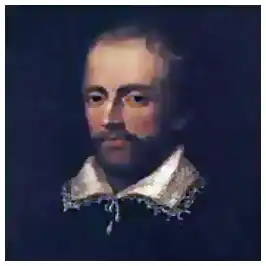
You might think famous Renaissance poets were all born rich. Actually, that was not the case for Spenser. Namely, he was born in London around 1552 or 1553. Interestingly, his father, John Spenser, was simply a journeyman clothmaker. As a result, the family did not have a lot of money.
Despite their modest income, young Edmund hit the books hard. Initially, he attended the Merchant Taylors’ School. There, he diligently learned Latin, Greek, and Hebrew. Subsequently, he moved on to Pembroke College, Cambridge, in 1569. Because he was totally broke, he enrolled as a “sizar”. Basically, a sizar was a student who did chores around the college in exchange for significantly cheaper tuition.
During his time at Cambridge, he made powerful friends. For example, he met Gabriel Harvey, a well known scholar who heavily influenced his writing. Moreover, Spenser eagerly soaked up the religious and political ideas of the time. Eventually, he earned his Master of Arts degree in 1576. Soon after, he stepped out into the real world, fully ready to make a name for himself.

The Masterpiece: The Faerie Queene
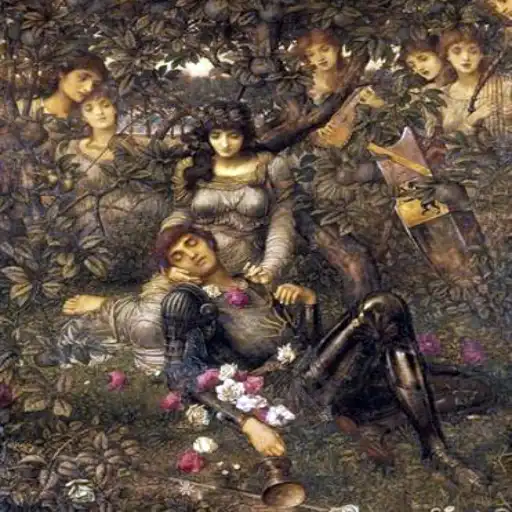
If you know anything about Edmund Spenser poems, you undoubtedly know The Faerie Queene. Undeniably, it is his ultimate masterpiece. Historically, he published the first three books in 1590, followed by three more in 1596.
So, what is it exactly about? In short, it is a massive epic poem and a fantastical allegory. Essentially, Spenser wrote it to celebrate the Tudor dynasty and suck up to Queen Elizabeth I. He desperately wanted to secure a permanent job at court. Consequently, the Queen loved the poem so much that she gave him a pension of fifty pounds a year. Back then, that was serious cash!
Here are a few reasons why The Faerie Queene remains totally legendary:
- The Spenserian Stanza: Believe it or not, he literally invented a new way to write poetry. Specifically, this stanza uses nine lines with a unique A-B-A-B-B-C-B-C-C rhyme scheme.
- Virtues as Characters: Each book specifically focuses on a different knight. Furthermore, every knight perfectly represents a specific virtue, like Holiness, Temperance, or Chastity.
- Epic World Building: Long before The Lord of the Rings, Spenser built a complex universe. Indeed, his world was packed with scary monsters, dark magic, and heroic quests.
Other Famous Edmund Spenser Poems
While The Faerie Queene gets all the hype, his shorter works are just as mind blowing. Clearly, the man knew exactly how to write a killer love song.
1. The Shepheardes Calender (1579)
Undoubtedly, this was his breakout hit. Basically, it features twelve poems, dedicating one for each month of the year. Additionally, it uses a pastoral style, meaning it talks about shepherds and innocent country life. However, underneath the farm talk, Spenser was actually criticizing the messy politics and religion of his day.
2. Amoretti (1595)
Most poets back then wrote about distant, untouchable women. Conversely, Spenser wrote Amoretti to track his real life courtship of Elizabeth Boyle, his second wife. Ultimately, this beautiful collection of 89 sonnets shows the realistic ups and downs of trying to win someone’s heart.
3. Epithalamion (1595)
Following Amoretti, he wrote this stunning piece specifically for his own wedding day. In fact, modern scholars still consider it the greatest wedding poem ever written in the English language.

Unforgettable Edmund Spenser Quotes
Sometimes, a poet hits the nail right on the head. Throughout his career, Spenser dropped some serious wisdom. Here are a few of the very best Edmund Spenser quotes:
- “For there is nothing lost, that may be found, if sought.”
Meaning: Always keep trying. Truly, if you look hard enough, you can fix your mistakes or find exactly what you are missing. - “Sleepe after toyle, port after stormie seas, Ease after warre, death after life, does greatly please.”
Meaning: After a long, hard struggle, finally resting feels incredibly good. - “Fierce warres and faithful loves shall moralize my song.”
Meaning: Notably, this famous line comes from the opening of The Faerie Queene. Essentially, he promises his epic story will be packed with both intense action and true romance.
The Controversial Legacy: Ireland and Beyond
Now, we must immediately address the elephant in the room. You simply cannot write a comprehensive Edmund Spenser biography without directly looking at his dark side. Unfortunately, his time in Ireland provides a harsh reality check.
In 1580, Spenser went to Ireland to work directly for the English government. During this bloody period, England was brutally conquering the native Irish people. Eventually, Spenser grabbed a massive piece of land in County Cork. There, he completely took over Kilcolman Castle. Basically, he was living the high life on stolen land.
Worse still, he wrote a horrifying political pamphlet called A View of the Present State of Ireland (1596). In this text, his extreme ideas were terrifying. Specifically, he argued that the English should use “scorched earth” tactics. He desperately wanted to create intentional famines to starve the Irish rebels into submission. Moreover, he suggested completely wiping out the Irish language and their traditional laws.
Naturally, karma eventually caught up with him. During the Nine Years’ War in 1598, angry Irish rebels violently attacked his home. Consequently, Kilcolman Castle was burned straight to the ground. Shortly after fleeing back to London, Spenser died in poverty on January 13, 1599.
5 Surprising Facts About Edmund Spenser
Need some quick trivia for your next literature class? Here are five fun facts about his fascinating life:
- Buried with the Greats: Spenser proudly rests in Poets’ Corner at Westminster Abbey. Interestingly, his grave is located right next to Geoffrey Chaucer.
- A New Sonnet Style: He completely invented the “Spenserian sonnet”. Specifically, this format links rhymes together to create a much smoother flow.
- Lost Masterpieces: Originally, the poet planned for The Faerie Queene to have 12 books. Sadly, only six were officially finished before his sudden passing.
- Word Creator: Believe it or not, he coined the exact word “braggadocio.” Ultimately, he used it to perfectly describe a cocky, arrogant person.
- A Generous Queen: Queen Elizabeth I personally ordered his royal pension to be paid. Surprisingly, she did this even though her own treasurer tried hard to block it.
Frequently Asked Questions (FAQs)
What is Edmund Spenser most famous for?
Undeniably, he is most famous for writing The Faerie Queene. Essentially, this massive epic poem celebrated Queen Elizabeth I and explored deep moral virtues. Today, it remains one of the longest and most important poems in the English language.
Why is he called the “poet’s poet”?
Interestingly, other famous writers actually gave him this nickname. Because he invented new poetic forms, later legends like John Keats and John Milton intensely studied his work to improve their own writing. Basically, he was the guy the professionals looked up to.
Did Edmund Spenser hate the Irish?
Unfortunately, the historical evidence points to yes. While living in Ireland, he wrote A View of the Present State of Ireland. Specifically, this brutal document called for the violent suppression of Irish culture, traditional laws, and even promoted intentional famine.
Who was Edmund Spenser’s wife?
He was formally married twice. First, he married Machabyas Childe. Later, he married Elizabeth Boyle in 1594. Consequently, he wrote his famous sonnet sequence, Amoretti, and the beautiful wedding song, Epithalamion, entirely for Elizabeth.
How Should We Remember Him?
So, how do we fairly judge Edmund Spenser today? Without a doubt, the real answer is highly complicated. As a writer, he was an absolute genius. He skillfully stretched the English language to its limits and created lasting beauty. Meanwhile, as a colonial official, he strongly supported terrible cruelty against the Irish.
Ultimately, reading his classic work requires serious balance. We can certainly admire his artistic brilliance while remaining totally honest about his massive human flaws. History is rarely simple. Therefore, his complex life proves that perfectly.
What do you think about Spenser’s dual legacy? Does his brutal political history change how you read his beautiful poems? Drop a quick comment below, share this article with your fellow literature fans, and let’s keep the conversation going!
Sources help:
- Wikipedia.org
- https://www.ebsco.com/research-starters/history/edmund-spenser
- https://www.britannica.com/biography/Edmund-Spenser
- https://www.poetryfoundation.org/poets/edmund-spenser
- https://www.luminarium.org/renlit/spensquot.htm
- https://irelandtour.sunygeneseoenglish.org/historical-documents/edmund-spenser-view-of-the-present-state-of-ireland-1596/
- https://en.wikipedia.org/wiki/A_View_of_the_Present_State_of_Irelande

