

Alexander Nowell: The Man Who Invented Bottled Beer and Shaped History
Imagine this: It’s 1568. Queen Elizabeth I is on the throne, Shakespeare is just a toddler, and beer? Well, beer is flat. It’s served in wooden casks, drunk fresh, and has about as much fizz as a puddle. Enter Alexander Nowell.
He wasn’t a brewer. He wasn’t a scientist. He was the Dean of St. Paul’s Cathedral, a pious man who spent his days preaching Protestantism and his free time trying to outsmart fish in the River Ash. Yet, thanks to a moment of forgetfulness (and a serious fishing addiction), Nowell stumbled upon a discovery that would eventually revolutionize the world’s favorite beverage.
He didn’t just find a lost bottle; he found the “gun” that fired the starting shot for the modern beer industry.
Fishing Trip Gone Wrong (Or Right)
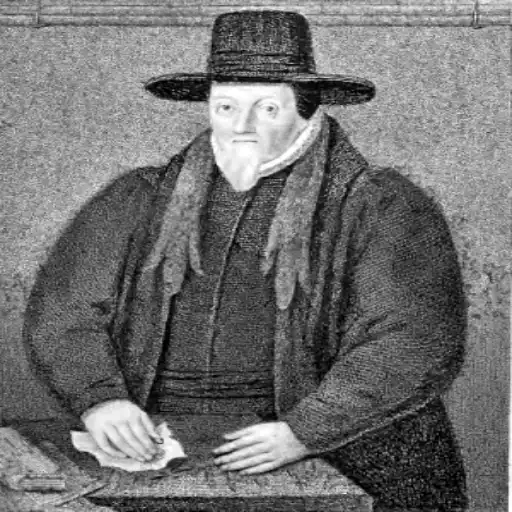
Let’s set the scene. Alexander Nowell was a man who loved angling almost as much as he loved God. One summer day in 1568, he packed his gear for a fishing trip to Much Hadham in Hertfordshire. Like any sensible Englishman, he brought provisions: bread, cheese, and a bottle of home-brewed ale.
In those days, bottling beer wasn’t “a thing.” You drank ale from a tankard, straight from the barrel. Putting it in a bottle was just a temporary way to carry it from Point A to Point B.
Nowell, likely distracted by the prospect of a big catch, left his bottle in the tall grass along the riverbank. Maybe the fish were biting, or maybe he was fleeing in a hurry (more on his habit of fleeing later). Regardless, the bottle sat there.

For days. When he finally returned to the spot, he didn’t expect much. But when he uncorked the bottle, he didn’t get a sad trickle of stale ale. He got a BANG.
Historian Thomas Fuller, writing in 1662, described the moment perfectly:
“He found no bottle, but a gun, such was the sound at the opening thereof.”
What happened?
The Science Behind the “Gun”
Nowell had accidentally mastered secondary fermentation.
- The mix: The ale contained live yeast and residual sugars.
- The seal: The cork trapped the gases produced by the yeast as it ate the sugar.
- The result: Carbon dioxide (CO2) built up under immense pressure.
Until that moment, most folks drank flat, cask-conditioned ale. Nowell’s “gun” proved that beer could be stored, kept fresh, and crucially become carbonated in a vessel. He hadn’t just preserved his lunch; he’d created a sparkling, effervescent drink that was centuries ahead of its time.
Who Was Alexander Nowell? (More Than Just a Beer Guy)
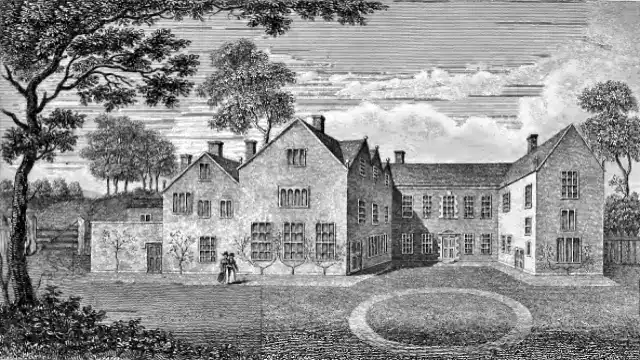
It’s easy to peg Nowell as just “the beer guy,” but his resume was stacked long before he heard that cork pop.
1. The Survivor
Nowell was a master of survival. During the reign of “Bloody” Queen Mary, who was aggressively restoring Catholicism, Nowell was a marked man. He famously fled to Germany to avoid execution (this is where the “fleeing” part of his fishing story sometimes gets conflated). He spent years in exile, absorbing Calvinist views, before returning to England when Elizabeth I took the crown.
2. The Educator
He wasn’t just catching fish; he was catching minds. Nowell wrote the Catechism, a Q&A summary of Christian principles that became a staple in Anglican education for centuries. If you were a schoolboy in Elizabethan England, you knew Nowell and you probably hated memorizing his work.
3. The Philanthropist
He re-founded the Middleton School and poured money into Brasenose College, Oxford. He was known for being charitable, often giving away his catch to the poor. A guy who gives you free fish and invents fizzy beer? That’s a hero.
Did He Really Invent Bottled Beer?
Here’s where we have to be real with you. Did Alexander Nowell file a patent for “The Portable Ale Dispenser”? No.
Historians argue that while Nowell is the legendary father of bottled beer, the reality is a bit messier.
- Glass was weak: Elizabethan glass bottles were hand-blown and fragile. If you bottled beer with too much sugar, you didn’t get a drink; you got a glass grenade.
- Domestic vs. Commercial: Nowell’s discovery remained a domestic trick for a long time. It wasn’t until the 17th century, with the invention of stronger glass (thank you, coal-fired furnaces), that bottling became commercially viable.
However, Nowell is credited with the discovery of the phenomenon. He was the first to famously document the result of leaving ale in a sealed glass container. He showed that beer could improve with age in a bottle, rather than just spoiling.
Why we are writing about this today
Think about the last time you cracked open a cold one. That hiss? That foam? That ability to transport a brew from a factory in Munich to a fridge in Mumbai?
It started on a riverbank in Hertfordshire.
Before bottled beer, ale was local. You drank what was brewed nearby because it couldn’t travel without going flat or sour. Nowell’s accidental discovery planted the seed for:
- Exportation: Beer could eventually be shipped across oceans (Hello, IPAs!).
- Consistency: Sealed environments meant better quality control.
- The Experience: That refreshing “bite” of carbonation we all crave.
The Legacy of the “Fishing Dean”
Alexander Nowell died on February 13, 1602, at the ripe old age of roughly 95. He lived through the reigns of four monarchs, survived exile, shaped the Church of England, and left us with a legendary anecdote that changed drinking culture forever.
Next time you’re at a pub or a barbecue, and someone hands you a bottle, spare a thought for the Dean. He went looking for a trout and caught a revolution instead.
Quick Facts: Alexander Nowell
- Born: ~1507 in Lancashire, England
- Died: February 13, 1602
- Famous For: Being the Dean of St. Paul’s, writing the Catechism, and the “Gun Bottle” incident.
- Key Date: 1568 (The legendary year of the discovery).
Raise a Glass to History!
History isn’t just dates and dust; sometimes it’s fizzy, accidental, and delicious. Want to learn more about the weird origins of your favorite foods and drinks? Subscribe to our newsletter for weekly deep dives into the accidental history that shaped our world!
Sources help & References:
- Fuller, T. (1662). The History of the Worthies of England.
- Walton, I. (1653). The Compleat Angler.
- Cornell, M. (2010). Amber, Gold and Black: The History of Britain’s Great Beers.
- https://en.wikipedia.org/wiki/Alexander_Nowell
- https://www.athirstforfirsts.co.uk/post/first-bottled-beer

