

Have you ever wanted to peek behind the curtain of ancient Renaissance magic? Imagine stepping into a candlelit room, drawing geometric shapes on parchment, and reciting words meant to control the very forces of the universe. Naturally, this sounds like a scene straight out of a fantasy movie. However, for centuries, ceremonial magicians treated this as a very real, very serious science.
At the absolute center of this magical world sits one legendary book: The Key of Solomon, or the Clavicula Salomonis.
Undoubtedly, it is the most famous grimoire (a textbook of magic) in Western history. Furthermore, it fundamentally shaped modern occultism, influencing secret societies and pop culture alike. But did a biblical king actually write it? How do you use its famous planetary seals? And, more importantly, where can you read it today?
Let’s get right into the truth behind the text. We will separate historical facts from internet fiction, right now.
Key Takeaways
- The Real Origins: Despite the legendary title, King Solomon did not write this book. In reality, it dates back to the 14th or 15th-century Italian Renaissance.
- Two Distinct Books: Book I focuses on conjurations and spells. Meanwhile, Book II reads like a strict instruction manual for ritual preparation, tools, and attire.
- Angelic, Not Demonic: Unlike other dark spellbooks, the Clavicula Salomonis heavily relies on the power of God and angelic names to perform its operations.
- The Defining Translation: S.L. MacGregor Mathers translated the definitive English version in 1889 using manuscripts from the British Museum.
- Public Access: Today, the text is entirely in the public domain. Consequently, you can easily download it from academic and esoteric archives.
What Actually is the Key of Solomon?
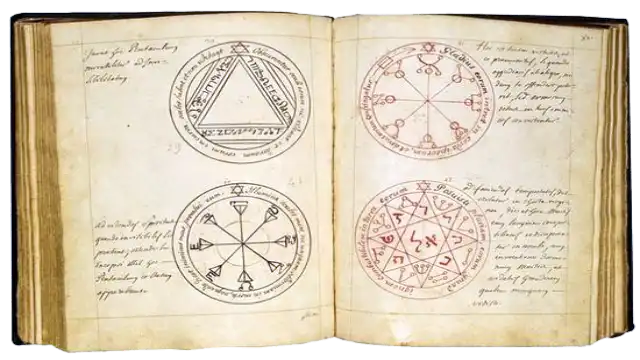
First things first, what exactly is a grimoire? Simply put, it is a magical instruction manual. The Key of Solomon represents the ultimate blueprint for Western ceremonial magic.
Specifically, the text outlines detailed procedures for performing magical “experiments.” These operations require precise planetary timings, specific tools, and a deeply devout mindset. Interestingly, the magic within these pages is not what modern people would call “black magic.” Instead, the author insists that all magical power flows directly from God. Therefore, the magician must fast, pray, and remain spiritually pure before attempting any rituals.
Did King Solomon Really Write It?
Hold your horses. We need to clear up a massive historical misconception.
According to the book’s own introduction, the text is the deathbed testament of the biblical King Solomon, written for his son Rehoboam. The story claims Solomon distilled all his divine, angelic wisdom into this single volume.
Is this true? Absolutely not.
Historians classify the Clavicula Salomonis as a “pseudepigraphical” text. Basically, this means the author used a famous historical figure’s name to give the book instant credibility. Why would they do that? Well, during the Middle Ages, King Solomon was highly revered as a master of spirits and wisdom. Attributing a spellbook to him was the ultimate marketing tactic.

In truth, historians trace the original texts back to the 14th or 15th-century Italian Renaissance. Scholars note that it heavily blends Jewish Kabbalah, Arabic alchemy, and Greco Roman magical traditions. According to academic archives, some of the oldest surviving manuscripts, like the Greek Magical Treatise of Solomon (Harley MS 5596), date to the 15th century and share closely related content.
Inside the Clavicula Salomonis: The Two Books
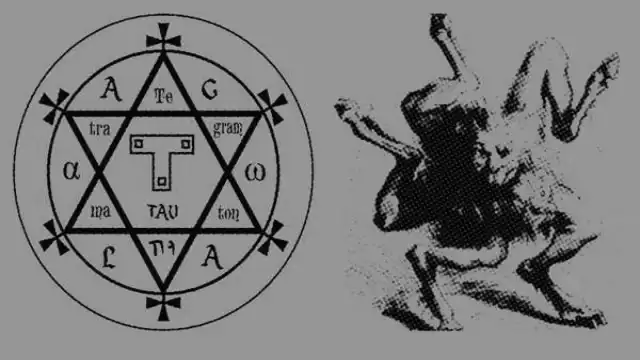
If you open the Key of Solomon, you will not find a chaotic mess of random spells. Instead, it is highly structured. The text is neatly divided into two distinct books, each serving a vital purpose.
Book I: The Conjurations and Operations
Think of Book I as the “action” section. Here, the text details various magical operations, spells, and conjurations.
Specifically, it provides instructions on how to achieve very specific goals. Do you need to find stolen treasure? Are you trying to secure romantic love? Perhaps you wish to become invisible? Book I has a chapter for that.
However, it is not as simple as waving a wand. To succeed, the magician must strictly observe planetary hours. This means calculating the exact position of the planets and the moon to ensure the cosmos align with your specific magical intention. For instance, a spell for love must occur on the day and hour of Venus. Conversely, a spell involving conflict or protection must happen under the fiery influence of Mars.
Book II: The Preparation and Tools
Meanwhile, Book II reads like an extremely strict survival guide for the aspiring wizard. It outlines everything you must do before attempting the spells in Book I.
Honestly, the requirements are exhausting. The book details:
- Purification: The magician must fast, pray, and bathe in spiritually cleansed water.
- Attire: You cannot just wear sweatpants. The text demands specific linen robes, spun by a virgin, and pure white shoes.
- Magical Weapons: You must construct and consecrate specific tools, including the magical sword, the wand, the sickle, and the dagger.
- Inks and Parchment: You cannot use a regular ballpoint pen. The book requires you to mix your own inks using materials like bat blood or specific resins, written on virgin parchment.
Ultimately, Book II emphasizes that magical success heavily depends on intense discipline. The spirits will not respect a sloppy magician.
The Magical Seals and Pentacles
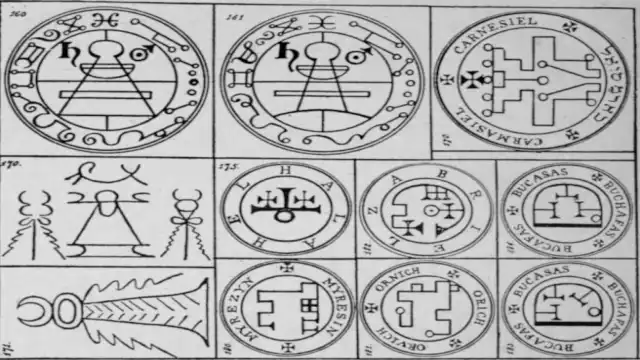
One of the most recognizable features of the Clavicula Salomonis is its extensive collection of pentacles. If you have ever seen an intricate, circular geometric design featuring Hebrew letters in an occult movie, you have likely seen a Solomonic pentacle.
These seals are not merely decorative. Indeed, they are the very engines of the book’s magic.
The grimoire assigns different pentacles to the seven classical planets: Saturn, Jupiter, Mars, the Sun, Venus, Mercury, and the Moon. Each planet governs a specific domain of human life.

- Saturn: Used for binding, restricting, and dealing with obstacles.
- Jupiter: Associated with wealth, peace, and massive success.
- Mars: Built for war, defense, and courage.
- The Sun: Grants glory, honors, and worldly power.
- Venus: Rules over love, friendship, and attraction.
- Mercury: Enhances intellect, communication, and business.
- The Moon: Controls dreams, illusions, and travel.
To use these seals, the practitioner must draw them perfectly during the correct planetary hour. Furthermore, they must invoke the specific angels written around the borders. Without a doubt, these intricate drawings remain a staple in modern esoteric practices.
The Greater Key vs. The Lesser Key of Solomon
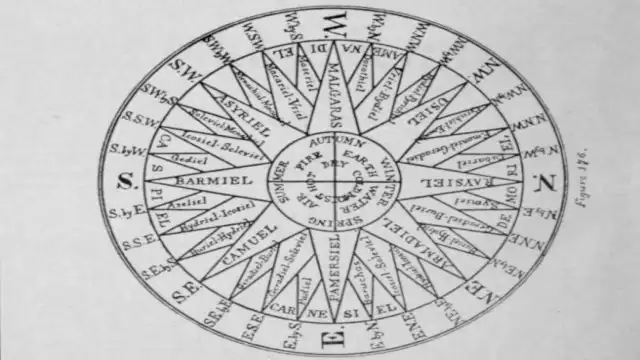
Here is where things usually get confusing. People frequently mix up the Key of Solomon with another famous book called the Lesser Key of Solomon (also known as the Lemegeton).
Let’s clear up the confusion. They are completely different books.
The Key of Solomon (The Greater Key):
As we have discussed, this is the Clavicula Salomonis. It focuses heavily on planetary magic, angelic invocations, and personal discipline. Generally, it is considered much older and slightly “safer” because it relies on the authority of God to perform planetary experiments.
The Lesser Key of Solomon (Lemegeton):
This text emerged later, roughly in the 17th century. It is heavily focused on demonology. Specifically, its most famous section-the Ars Goetia-catalogues 72 demons that King Solomon supposedly trapped in a brass vessel. If you are reading about summoning terrifying demons with animal heads, you are reading the Lesser Key, not the Greater Key.
Consequently, scholars view the Greater Key as the foundational text of Renaissance angelic magic, while the Lesser Key represents the darker, edgier cousin.
The Famous S.L. MacGregor Mathers Translation
If the original manuscripts were scattered across Europe in Latin, Italian, and Hebrew, how did this obscure book become a global phenomenon? We owe it all to a Victorian occultist named S.L. MacGregor Mathers.
Mathers was a fascinating character. He was a co founder of the Hermetic Order of the Golden Dawn, a deeply influential secret society in late 19th-century Britain. In 1889, Mathers took it upon himself to translate the Clavicula Salomonis into English.
He did not just translate a single book. Instead, Mathers spent countless hours in the British Museum, poring over multiple fragmented Latin, French, and Italian manuscripts. He carefully cross referenced them to create one cohesive, functional English edition. Published as The Key of Solomon the King, his work introduced Renaissance magic to the modern English speaking world. According to Cambridge University Press, this 1889 edition represented the “fountain head and storehouse of Qabalistical Magic” for the Victorian era.
The L.W. de Laurence Piracy
Interestingly, the Mathers translation has a bit of scandalous history attached to it. In 1914, an American publisher named L.W. de Laurence essentially pirated Mathers’ work.

De Laurence published it under the title The Greater Key of Solomon. However, he cheekily altered the text to advertise his own mail-order business. For example, right in the middle of a sacred ritual instruction, he would insert a line telling the reader to “burn one half teaspoonful of Temple Incense” which, conveniently, you could buy directly from his catalog.
Despite the blatant plagiarism, the de Laurence edition heavily popularized the text in North America and the Caribbean, profoundly influencing regional folk magic practices.
Where to Download and Read The Key of Solomon Today
Are you ready to dive into the actual text? Fortunately, you do not need to sneak into the restricted section of the British Library to find it. Because the manuscripts and the Mathers translation are centuries old, the content is firmly in the public domain.
Here is where you can find reliable, full text translations and downloads today:
- The Internet Archive & Project Gutenberg: Both platforms host free, downloadable PDF and EPUB versions of the 1889 Mathers translation. They are formatted perfectly for modern e-readers.
- The Wellcome Collection: This incredible museum and library in London offers free digital access to high resolution scans of the original 1889 publication. You can view the original layout and the beautifully printed pentacles.
- Esoteric Archives (esotericarchives.com): For the true history nerds, Joseph H. Peterson’s site is an absolute goldmine. He provides incredible side by side comparisons of the Mathers translation alongside older Latin and French manuscript variations.
- The National Library of Israel: For those interested in the Hebrew variations, digitized versions of 18th-century Hebrew adaptations of the Clavicula Salomonis are available for viewing in their massive online manuscript database.
A Quick Word of Caution
Before you download the PDF and start drawing planetary seals on your living room floor, remember context is key.
This grimoire is a fascinating historical artifact. It provides a massive window into the psychological and spiritual mindset of Renaissance thinkers. They desperately wanted to organize and control a chaotic universe. Whether you view the book as a legitimate spiritual tool or simply a brilliant piece of historical literature, treat it with intellectual respect.
Unlocking the Past
Ultimately, The Key of Solomon remains an unparalleled masterpiece of Western esotericism. It bridges the gap between ancient medieval superstitions and the structured ceremonial magic of the modern era.
Although King Solomon never actually penned the words, the brilliant scholars, monks, and occultists who did created something undeniably enduring. They crafted a complex system that demanded discipline, immense faith, and an understanding of the cosmos. Thanks to translators like S.L. MacGregor Mathers, and the digitization efforts of modern libraries, this ancient wisdom is now available to anyone with an internet connection.
So, will you download a copy tonight? The secrets of the planetary spheres are waiting.
Did this deep dive into Renaissance magic spark your curiosity? If you found this historical breakdown helpful, share it with a fellow history buff or occult enthusiast! Also, leave a comment below, if you could safely test just one spell from the Key of Solomon, what would it be?
This exploration was updated on March, by our team.

