

Émilie Sagée (Emilie Sagee): The Full Account, Doppelgänger, Bilocation & the 1860 Testimony
A boarding school in rural Latvia. 42 witnesses. One teacher who couldn’t see her own double, and paid a catastrophic price for it.
Key Takeaways:
- Who: Émilie Sagée, French schoolteacher, born January 3, 1813, in Dijon, France.
- What: Her exact double, a doppelgänger, appeared in front of dozens of witnesses repeatedly during 1845-46.
- Where: Pensionnat von Neuwelcke, a girls’ boarding school in Livonia (modern-day Latvia).
- Source: First documented in Footfalls on the Boundary of Another World by Robert Dale Owen (1860).
- The witness: Julie von Güldenstubbe, 13 years old at the time, the only direct eyewitness on record.
- Outcome: Sagée was fired from 19 schools. She disappeared into Russia. Her fate is unknown.
You’re sitting in embroidery class. Through the garden window, you can clearly see your French teacher gathering flowers in the afternoon sun. Perfectly ordinary. Then, the teacher supervising your class steps out for a moment, and her armchair is suddenly no longer empty. Your French teacher is sitting in it. Motionless. Watching you. But she’s also still outside in the garden, moving in slow, languid circles.
That’s not a horror story I made up. That happened. Allegedly. And not just once, but dozens of times, in front of over 40 students, across a full school year. The woman at the center of this strange chapter of history? Émilie Sagée.
So, was she real? Did it actually happen? And why does this case still fascinate researchers, skeptics, and paranormal scholars more than 180 years later? Let’s dig in.
Who Was Émilie Sagée?
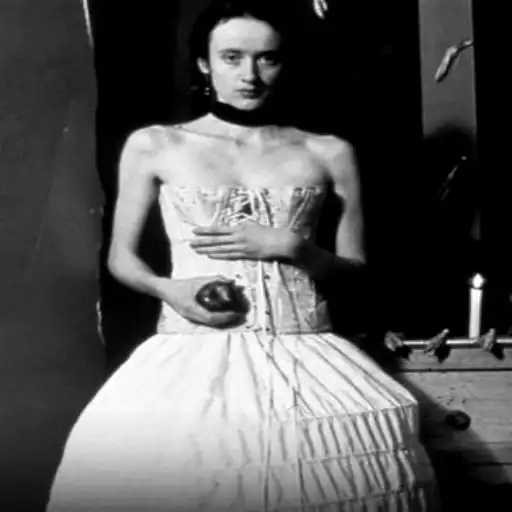
Born January 3, 1813, in Dijon, France, Émilie Sagée came of age in a time when a single woman’s entire livelihood depended on her ability to stay employed. Teaching was one of the few respectable paths available. So she pursued it and pursued it hard.
By the time she arrived in Latvia in 1845, she had already worked at 18 different schools across Europe since the age of 16. That’s roughly one job per year. Suspiciously frequent, right? The official accounts from those earlier positions offered no clear reason for such rapid turnover, no misconduct, no poor reviews. Just… she kept moving.
At 32, she accepted a post at the Pensionnat von Neuwelcke, an elite boarding school near the village of Jaunveļķi in Livonia, run under Moravian direction. It catered exclusively to daughters of Baltic German nobility. The school housed around 42 students, aged 8 to 18. Émilie was described by staff as warm, capable, and enthusiastic, a genuinely good teacher.
Then things got strange. Fast.
The Incidents: What Witnesses Reported
The following events were recorded in testimonies compiled from student accounts, primarily through Julie von Güldenstubbe, the 13-year-old daughter of a Baltic German baron. Julie later passed her account to her brother, who relayed it to Robert Dale Owen, who published it in 1860. That chain matters, but let’s look at what was actually described.
Incident 1: The Chalkboard Double
While Sagée stood writing on the blackboard, her exact double appeared right beside her, mimicking every gesture. The real Sagée held chalk and actually wrote. The double made the same motion, but held nothing. Thirteen students in the room watched it happen simultaneously.

Incident 2: The Mirror Moment
A student named Antonie de Wrangel was being helped by Sagée when she glanced into a nearby mirror, and saw two Mademoiselles Sagée hooking her dress. Side by side. Doing the exact same thing.
Incident 3, Most Documented: The Garden and the Chair (42 Witnesses)
All 42 students were gathered for embroidery. Through the window, they watched Sagée in the garden gathering flowers. When the supervising teacher left the room, Sagée’s double appeared, sitting in the now-empty armchair, motionless, as the real Sagée remained visible outside. Two students approached and tried to touch it. Their hands passed through with what they described as a faint, cobweb-like resistance. The apparition then slowly faded.
Observation: The Energy Pattern
Students and staff noticed a consistent pattern: whenever the double appeared, Sagée herself looked pale and sluggish, as if drained. The moment the double vanished, she snapped back to normal. Sagée never saw her own double. She only knew it appeared by watching the fear spread across people’s faces around her.
“Ah! The nineteenth time! It is very, very hard to bear!”- Attributed to Émilie Sagée, upon being dismissed from Neuwelcke (Robert Dale Owen, 1860)
That line is haunting precisely because it’s so human. Not supernatural, just exhausted. A woman who had watched her livelihood collapse nineteen times, for something entirely beyond her control.
The 1860 Testimony: Where It All Comes From
Here’s the honest truth about sourcing this story: everything flows from a single chain.
1845-46: Events allegedly occur at Pensionnat von Neuwelcke, Latvia. Julie von Güldenstubbe, age 13, witnesses them firsthand.
1857-59: American politician and spiritualist Robert Dale Owen collects paranormal testimonies for a book project.
1860: Footfalls on the Boundary of Another World is published by J.B. Lippincott & Co., Philadelphia. Owen documents the Sagée case based on Julie’s account, passed through her brother. The book is now preserved in the Library of Congress.
1905 French writer Charles du Prel references the case in La Mort et l’Au Delà, naming the teacher “Emilie Saget”, possibly a variant name, or a memory alteration.
1921: French astronomer Camille Flammarion revisits the case in Death and Its Mystery, noting he personally knew the Güldenstubbe siblings and found them “sincere, perhaps a little mystical, but of unexceptionable integrity.”
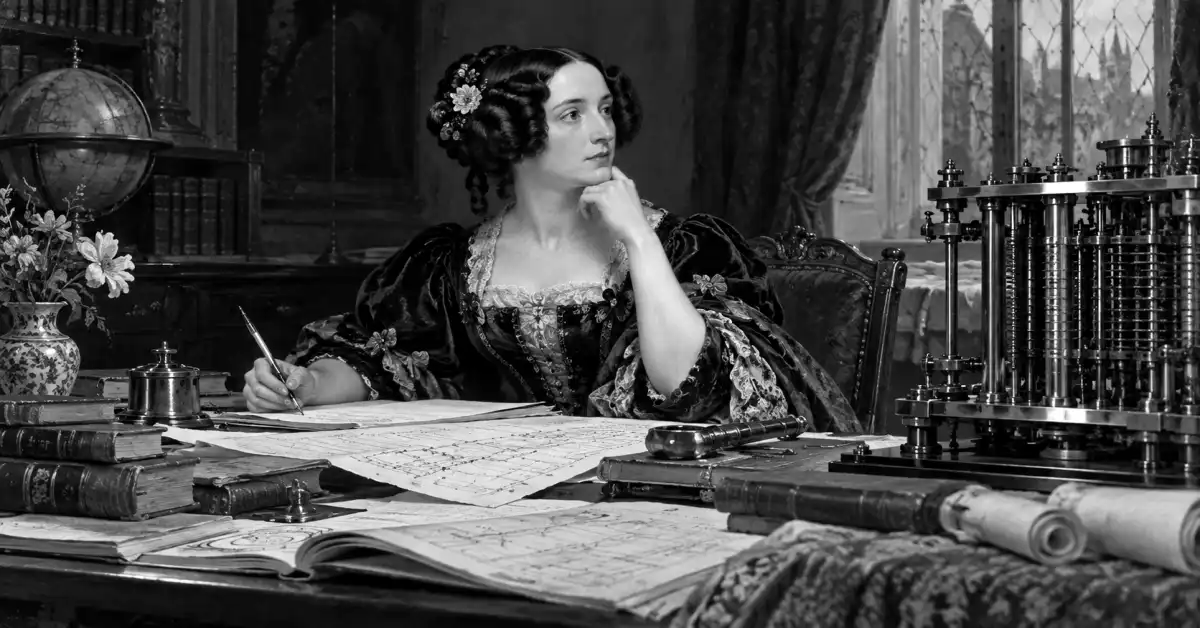
Owen was no tabloid hack. He served in the U.S. House of Representatives (elected 1843) and was the U.S. Minister to Naples. He was a serious, credentialed person with a genuine interest in what he called the “boundary” between physical and spiritual reality. That doesn’t make the story true, but it does mean the recorder was thorough, not sensational.
The problem? Julie is the sole direct witness on record. No other Neuwelcke student ever came forward. No school documents confirm its location definitively. No family name “Sagée” appears in French civil registries between 1891 and 1990. The only birth record that could match is for one “Octavie Saget,” born January 3, 1813, in Dijon, same date, similar name. Coincidence, or the same person using an alias to escape a tarnished reputation?
Doppelgänger vs. Bilocation: What’s the Difference?
These terms get used interchangeably, but they’re actually distinct concepts, and the distinction matters for how we interpret the Sagée case.
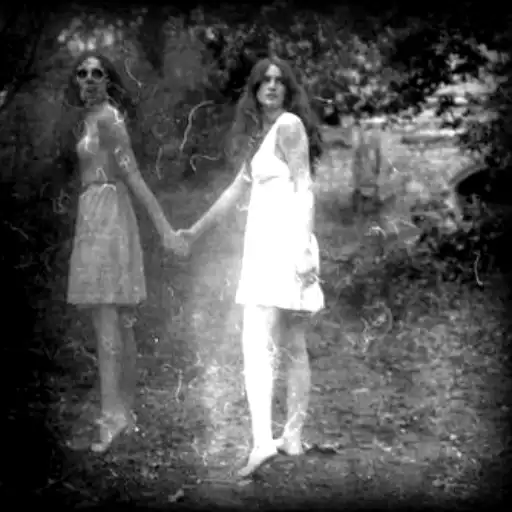
A doppelgänger (German: “double walker”) is typically defined as a ghostly duplicate of a living person, usually seen as an omen, often tied to death or misfortune. The double appears independently, sometimes far from the original, and often behaves autonomously.
Bilocation, meanwhile, describes the ability to be present in two locations at once, body or spirit. It’s historically associated with Catholic saints like Padre Pio and Francis of Assisi, where multiple credible witnesses attested to seeing the person in two cities simultaneously.
The Sagée case sits awkwardly between both. Her double appeared nearby, often mimicking her movements precisely, more doppelgänger behavior. But in the garden incident, she was genuinely present in two separate spaces at once, classic bilocation. Most paranormal historians classify it as bilocation, while skeptics point to the mimicry aspect as evidence of projection or mass suggestion.
The Theories: What Could Explain This?
Psychic Projection
Some parapsychologists suggest Sagée unconsciously projected a “thought form”, a mental construct made briefly visible to others. The energy drain observed supports this: projection would consume significant psychological or biological resources.
Mass Hysteria
Isolated rural boarding school. Young girls. High stress environment. One person reports something strange, and suddenly the group believes it too. This is a well-documented psychological phenomenon, though typically the described vision would be less consistent and detailed across 42 people.
Quantum Parallel Dimensions
Fringe but discussed: quantum mechanics permits the theoretical existence of parallel realities. Could a version of Sagée from an adjacent timeline have “bled through”? It’s speculative, but it’s the kind of idea that quantum physicists have at least theoretically entertained as a thought experiment.
Fabrication
The simplest explanation: Julie made it up, or embellished, shaped by her deep involvement in the French Spiritualist movement. Owen was a known spiritualist seeking compelling stories. The incentive structure for a compelling narrative existed.

The Verdict (Such As It Is)
No honest analyst can call this “proven.” But it also can’t be easily dismissed. The level of specific, consistent detail across multiple witnesses, the chalk, the cobweb-like resistance, the energy drain, the garden scene, is harder to explain as pure invention than if the accounts were vague or varied wildly.
What we can say with confidence: this is one of the most detailed, multi-witness, consistently documented accounts of a doppelgänger phenomenon in recorded 19th-century history. Whether that means it happened, or simply that Julie was a gifted storyteller, depends on your prior beliefs.
What Happened to Émilie Sagée?
After Neuwelcke dismissed her, parents pulled 12 of the 42 students specifically because of the doppelgänger incidents, Sagée moved in with a sister-in-law. Even there, the young children in the household reportedly said they saw “two Aunt Émilies.” The phenomenon followed her home.
Then she left for the interior of Russia. And after that, nothing. Julie lost track of her entirely. No death record. No further sightings documented. No memoir. The woman who could appear in two places at once simply… vanished from history.
It’s the part of the story that sticks. The loneliness of it. Nineteen jobs lost. A phenomenon she never chose, never saw, and never controlled. A double that everyone else could see but her.
Why This Case is interesting today
The Sagée case isn’t just a ghost story. It’s a window into how the 19th century processed the inexplicable. The 1840s and 50s saw a massive surge in spiritualism across Europe and America. The Society for Psychical Research wouldn’t be founded until 1882, but the intellectual hunger for documented, rigorous accounts of paranormal phenomena was already there, and Owen’s book fed it.
Moreover, the core questions the case raises haven’t aged. What are the limits of individual consciousness? Can the self extend beyond the body? What do mass witness reports actually prove? These remain legitimate questions in psychology, neuroscience, and philosophy of mind.
The case has been cited in academic discussions of autoscopy, the neurological experience of seeing one’s own body from outside, and in historical analyses of collective witness behavior. It sits at the intersection of folklore, psychology, and historical inquiry in a way that makes it genuinely interesting beyond just the creep factor.
“The facts remain difficult to prove; however, the story remains a classic of the annals of the paranormal.”- Wikipedia, citing Flammarion, Owen, and Alexander Aksakov
Further Reading & Primary Sources
- https://www.loc.gov/item/10032956/
- https://en.wikipedia.org/wiki/%C3%89milie_Sag%C3%A9e
- https://www.curiousarchive.com/emilie-sagee-bilocation-doppelganger/
- https://en.wikipedia.org/wiki/Bilocation
This case is one of dozens like it. Share this article with someone who loves unsolved history, or save it for your next research project.
This exploration was updated on March, cross-referenced against the Library of Congress digital archive, Wikipedia’s cited sources, and Camille Flammarion’s 1921 Death and Its Mystery.

