

Imagine sitting in a quiet classroom. You’re stressed about exams, the air is thick with humidity, and the teacher is droning on about geography. Suddenly, three girls in the corner start giggling. At first, it’s that stifled, forbidden kind of chuckle that makes your stomach hurt. The teacher glares. They try to stop. They can’t.
Then, you start laughing. The girl next to you starts laughing. Within hours, half the school is in hysterics. But here’s the kicker: nobody is having fun.
This isn’t the plot of a psychological thriller. This actually happened. On January 30, 1962, in the newly independent nation of Tanganyika (modern-day Tanzania), a “laughter epidemic” swept through a mission school and spread like wildfire across the region. It shut down 14 schools, affected over 1,000 people, and baffled scientists for decades.
Was it a virus? A curse? Or something much more human? Let’s dive into one of history’s most bizarre mysteries.
The Spark: January 30, 1962
The setting was the Kashasha Mission School, a boarding school for girls located on the western coast of Lake Victoria. The students were mostly from the Haya ethnic group, living in a strict, British-run environment that felt worlds apart from their home villages.
It started with just three girls.
We don’t know what the initial trigger was—maybe a joke, maybe a stumble, maybe nothing at all. But these three students began to laugh uncontrollably. And we aren’t talking about a quick “LOL” moment. This was a visceral, body-shaking fit that refused to end.
It Wasn’t Just “Giggles”
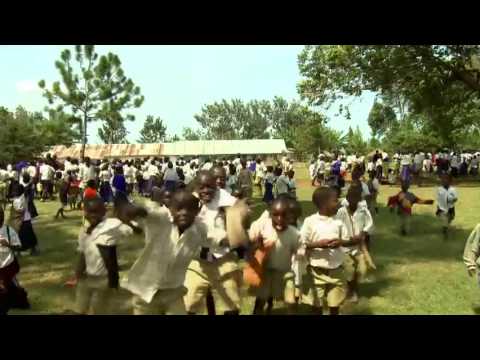
By the end of the day, the laughter had spread to nearly 60% of the students. But if you think this sounds like a joyful scene from Mary Poppins, think again. The medical reports from the time, specifically those by doctors A.M. Rankin and P.J. Philip, paint a much darker picture. The symptoms weren’t just laughter. They included:

- Crying: Students would alternate between manic laughter and sobbing.
- Restlessness: Girls were running aimlessly, unable to sit still.
- Fear: Many reported feeling terrified, with some claiming they felt “things moving around in their heads.”
- Violence: In some cases, students lashed out if people tried to restrain them.
This wasn’t a party. It was a panic attack on a massive scale.
The Spread: From School to Village
The school administration was horrified. They couldn’t teach, they couldn’t pray, and they definitely couldn’t control the chaos. On March 18, 1962, they made a desperate decision: close the school.
They sent the 159 students home to their villages in the Bukoba district. They thought separating the girls would break the “chain of infection.”
They were wrong.
Sending the girls home was like tossing lit matches into dry grass. As the students returned to villages like Nshamba and Ramashenye, they brought the symptoms with them.
- In Nshamba: 217 villagers started laughing.
- In Ramashenye: 48 girls at a middle school caught it.
- In Kanyangereka: Another outbreak flared up.
The epidemic didn’t discriminate. While it started with adolescent girls (a common demographic for this type of phenomenon), it eventually affected men, women, and children across the region. It rolled through the community in waves, lasting for roughly 18 months before finally burning out.

The Diagnosis: What Was Actually Happening?
So, if it wasn’t a biological virus, what was it? Doctors tested the food for toxins. They checked the water. They looked for infections. Everything came back negative.
The consensus among scientists today, including researchers like Christian F. Hempelmann, is that this was a textbook case of Mass Psychogenic Illness (MPI), also known as mass hysteria.
How MPI Works
MPI sounds like “it’s all in your head,” but the physical symptoms are 100% real. It usually happens when a close-knit group of people is under extreme, shared stress. The body needs a release valve.
- The Trigger: One person snaps under pressure and exhibits a symptom (laughter, fainting, shaking).
- The Subconscious Copy: Others in the group, feeling the same stress, subconsciously mimic the behavior.
- The Domino Effect: Seeing others “sick” validates the fear, causing more people to fall ill.
In Kashasha, the laughter wasn’t a reaction to humor; it was a scream of anxiety.
The “Pressure Cooker” of 1962
To understand why these girls were so stressed, we have to look at the world they were living in.
1. A Nation in Transition
Tanganyika had won its independence from Britain in December 1961—just a month before the outbreak. The entire country was in a state of flux. The excitement of freedom came with the heavy burden of “what comes next?” For the first generation of students in a free nation, the pressure to succeed was crushing.
2. Cultural Clash
The Haya people had deep-rooted traditions, including ancestor worship and strict social codes. The mission schools, however, were run by European orders that often dismissed these beliefs as “superstition.”
Students were stuck in the middle. At home, they respected the elders and the spirits; at school, they were told to reject them. This cognitive dissonance—the mental stress of holding two contradictory beliefs—created an internal warzone.
3. The “Good Girl” Syndrome
Boarding schools are notorious for stripping away privacy and individuality. The girls at Kashasha were under strict surveillance. They had no outlet for their teenage angst, their fears, or their frustrations. When one girl finally “broke” and started laughing, it gave the others permission to lose control, too.
Why It Still Matters
We like to think we are too smart for mass hysteria today. We have iPhones and WebMD; we wouldn’t start laughing just because someone else did, right?
Don’t be so sure.
The Tanganyika Laughter Epidemic reminds us that emotions are contagious. We see modern echoes of this all the time—from “phantom illnesses” spreading via TikTok to panic buying toilet paper during a crisis. We are social creatures. When the herd panics, we panic. When the herd laughs, we laugh.
This event challenges the way we look at mental health. It proves that stress isn’t just a personal problem; it can be a community crisis. It shows us that when you bottle up anxiety for too long, it will find a way out—and it might be the last thing you expect.

FAQ: Unraveling the Mystery
Q: Did anyone die from the laughter?
A: No. Despite the intensity of the attacks, there were no fatalities directly caused by the laughter. However, many suffered from exhaustion, fainting, and rashes.
Q: Was it really laughter?
A: Yes and no. Witnesses described it as laughter, but it wasn’t the happy kind. It was often mixed with screaming, crying, and hyperventilating. It was a distress signal, not a chuckle.
Q: Why were only young people mostly affected?
A: MPI typically hits groups with low social power who are in strict environments—like schools or factories. Adolescents, especially girls in the 1960s, were under immense pressure to conform, making them more susceptible to this kind of psychological release.
Q: Could it happen again?
A: Absolutely. Mass psychogenic illnesses happen globally every year. In 2011, a similar outbreak of “tics” spread through a high school in Le Roy, New York. As long as humans experience high stress in groups, our brains will find strange ways to cope.
Q: Is “laughter epidemic” the scientific name?
A: Not really. It’s the popular name. A doctor would call it Mass Psychogenic Illness or Mass Sociogenic Illness. But “Laughter Epidemic” is the name that stuck in the history books.
Are You Listening to Your Stress?
The girls of Kashasha didn’t have a way to say, “I’m overwhelmed.” So, their bodies said it for them. In our high-pressure world, it’s a good reminder to check in on your own mental health.
If you found this slice of history fascinating, share this article with a friend (just don’t start giggling too much). Have you ever experienced a “contagious” emotion in a group? Tell us in the comments below!
Sources: wikipedia.org, semanticscholar.org

