

Alfred the Great: How the Battle of Edington Saved England, His Reforms, and Legacy
Alfred the Great saved England by defeating the Viking Great Heathen Army at the Battle of Edington in 878, forcing their leader Guthrum to convert to Christianity. Beyond the battlefield, he secured the future of Wessex by revolutionizing the military with fortified towns (burhs), creating a rotational army system, and sparking an educational renaissance that revived literacy and law.
Quick Facts: King Alfred the Great
- Reign: 871 – 899 AD
- Born: 849 AD, Wantage, Oxfordshire
- Died: October 26, 899 AD (Aged ~50)
- Key Achievement: The only English monarch titled “The Great” for saving Wessex and laying the foundations for a unified England.
The Crisis: Vikings & The Great Heathen Army
Let’s set the scene. By 870 AD, England was on the brink of total collapse. The Great Heathen Army—a massive coalition of Viking warriors—had already smashed through the kingdoms of Northumbria, East Anglia, and Mercia. They weren’t just raiding anymore; they were conquering.
Wessex, led by a young King Alfred, was the last kingdom standing. In January 878, the Vikings, led by the warlord Guthrum, launched a surprise attack on Alfred at Chippenham during Christmas celebrations. It was a disaster. Alfred barely escaped with his life, retreating into the marshes of Athelney.
Picture this: The King of Wessex, hiding in a swamp, living off the land, conducting guerrilla raids. Most leaders would have surrendered. Alfred planned a comeback.
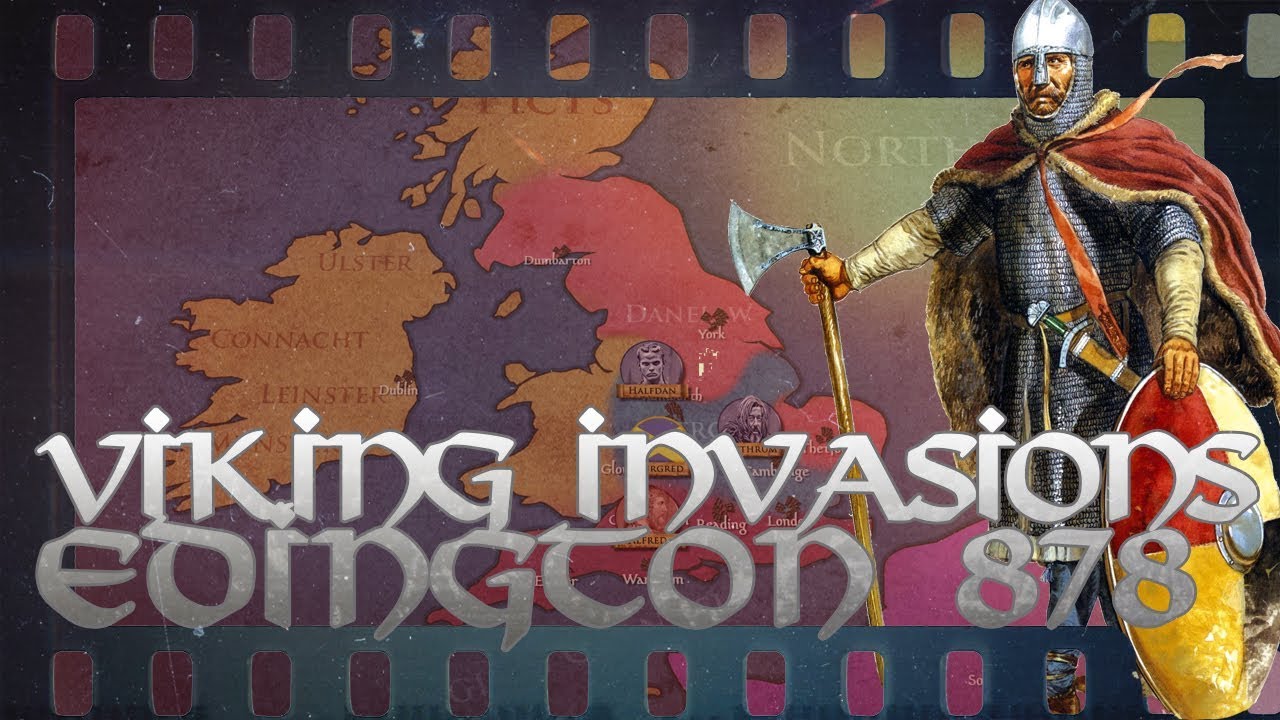
The Battle of Edington (878): The Turning Point
This is where history shifted gears. In May 878, Alfred rode out from the marshes to Egbert’s Stone (near modern-day Wiltshire), rallying the fyrd (militia) from Somerset, Wiltshire, and Hampshire.

What Happened at Edington?
The armies met at Edington (Ethandun). Alfred’s forces used a dense shield wall tactic—a strategy where soldiers lock shields together to create an impenetrable barrier. The fighting was brutal and lasted all day.
According to the monk Asser, Alfred’s biographer, the Saxons “overthrew the pagans with great slaughter.” The Vikings broke and fled to their fortress at Chippenham. Alfred didn’t just let them go; he besieged them for two weeks until hunger forced them to surrender.
The Treaty of Wedmore
The victory wasn’t just military; it was diplomatic. Alfred forced Guthrum to accept the Treaty of Wedmore, which included:
- Viking Surrender: They had to leave Wessex.
- Baptism: Guthrum converted to Christianity, with Alfred as his godfather.
- The Danelaw: A boundary was drawn, splitting England. The Vikings kept the north and east (the Danelaw), while Alfred secured the south and west.
Military & Administrative Reforms
Alfred knew winning one battle wasn’t enough. The Vikings would be back. To secure the peace, he completely overhauled how England defended itself.
The “Burghal Hidage” (Forts)
Alfred built a network of over 30 fortified towns called burhs (the origin of “borough”). The idea was simple but brilliant: no village in Wessex was more than 20 miles (a day’s march) from a fortress.
- The System: The Burghal Hidage, a document from his reign, lists 33 forts.
- Impact: If Vikings raided, the locals could retreat to the burh. It turned easy targets into hard nuts to crack.
The Navy
Often called the “Father of the English Navy,” Alfred didn’t actually invent ships, but he drastically improved them. He commissioned larger vessels—some with 60 oars—designed to be faster and steadier than the Viking longships. He wanted to fight the enemy at sea before they could land.
The Fyrd (Army) Reform
Previously, the fyrd consisted of farmers who couldn’t stay away from their harvest for long. Alfred split the army into two rotations. Half the men fought while the other half farmed. This ensured Wessex always had a standing army without starving the population.
Education, Law, & Legacy
Alfred believed a kingdom without wisdom was doomed. The Viking wars had decimated literacy; priests couldn’t even read Latin. Alfred decided to fix the mind of England as well as its shield.
The Educational Renaissance
He invited scholars from Wales and the Continent (like Asser and Grimbald) to his court. Alfred personally translated key Latin texts into Old English, including:
- Pastoral Care by Pope Gregory
- Consolation of Philosophy by Boethius
He famously argued that learning shouldn’t just be for the church—young nobles should learn to read their own language.
The Doom Book (Legal Code)
Alfred compiled the Doom Book (Domboc), a code of laws that combined the Ten Commandments with the best laws from former Saxon kings like Ine and Offa. It established a sense of justice that went beyond tribal blood feuds, emphasizing fairness and royal authority.
Primary Sources & Historiography
How do we know all this? relies on two main contemporary sources:

- Asser’s Life of King Alfred: Written in 893 by a Welsh monk who knew Alfred personally. While it’s highly favorable (essentially royal propaganda), it offers incredible detail on his personality and illness (likely Crohn’s disease).
- The Anglo-Saxon Chronicle: Commissioned during Alfred’s reign, this set of annals provides the timeline of the Viking wars.
Modern historians like Richard Abels and Michael Wood confirm that while these sources are biased, the archaeological evidence of the burhs and coinage backs up the narrative of Alfred’s transformative reign.
Quick Timeline
- 849: Born in Wantage.
- 871: Becomes King after his brother Æthelred dies; fights nine battles in one year.
- 878: Forced into hiding at Athelney; wins Battle of Edington.
- 886: Recaptures London; recognized as “King of the Anglo-Saxons.”
- 890s: successfully defends against new Viking attacks using his new burh system.
- 899: Dies and is buried in Winchester.
FAQs
Why is he called Alfred the Great?
He is the only English monarch with this title because he prevented the total Viking conquest of England and laid the political, military, and educational foundations for the future nation.
Did Alfred really burn the cakes?
Probably not. The famous story of him burning a peasant woman’s cakes while distracted by his problems appears in later sources (10th/11th century) and is likely a legend to humanize him.
Where did the Battle of Edington take place?
It took place near Edington in Wiltshire. The exact site is debated, but it is traditionally associated with the bratton Camp hillfort and the nearby White Horse monument.
Watch & Learn
- YouTube: “Alfred the Great and the Battle of Edington” by Kings and Generals – A fantastic breakdown of the military tactics used.
- YouTube: “The White Horse King” (Documentary) – Explores the archaeology behind the legend.
- Instagram/TikTok: Search #AngloSaxonHistory for quick visual tours of Winchester and the Alfred Jewel.
Ready to dive deeper into history? Alfred’s legacy isn’t just in books; it’s in the map of England itself. Share this article with a history buff or student who needs the real story behind the legend!
Sources: wikipedia.org, worldhistory.org

