

If you think the movie Brotherhood of the Wolf (Le Pacte des Loups) was wild, wait until you hear the actual history.
Between 1764 and 1767, a remote region in south-central France became the hunting ground for a “monster” that didn’t just kill it massacred. We aren’t talking about a few sheep going missing. We’re talking about over 100 men, women, and children ripped apart in broad daylight.
King Louis XV sent his best soldiers. Professional wolf hunters came from across Europe. They shot it, stabbed it, and poisoned it. But the killings didn’t stop.
For nearly 300 years, historians and cryptozoologists have argued over one question: What exactly was the Beast of Gévaudan?
Was it a prehistoric survivor? An escaped lion? Or was it, as some dark theories suggest, a serial killer using an animal as a weapon? Let’s crack open the autopsy reports and separate the Hollywood myth from the terrifying reality.
The Terror Begins: “Like a Wolf, But Not a Wolf”
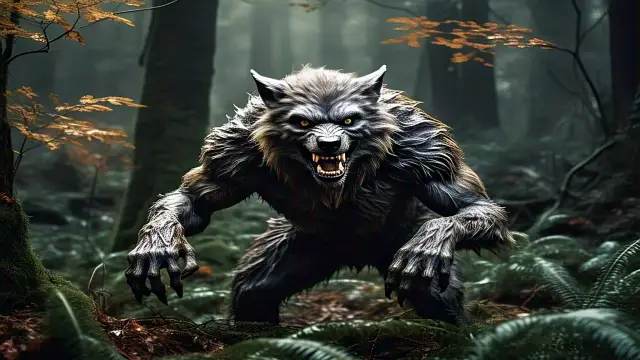
It started in the summer of 1764. A 14-year-old shepherdess named Jeanne Boulet was tending her flock when she was attacked. She became the first official victim. Unlike normal wolf attacks, the predator didn’t go for the sheep it went straight for the human.
Survivors described something that defied logic.
- The Size: Bigger than a wolf, roughly the size of a calf or a donkey.
- The Appearance: Reddish-brown fur with a dark stripe down its back. A long, thin tail with a “tuft” at the end (like a lion).
- The Head: Massive, with a flat snout and jaws that could crush a human skull.
But here is where it gets weird. Witnesses claimed the Beast had “human-like” intelligence. It avoided poisoned bait. It ignored livestock to hunt women and children specifically. And most chillingly? It survived direct musket fire.
In October 1764, two hunters shot the Beast from ten paces away. It fell, rolled over, and then just… got up and ran away. This wasn’t just an animal anymore; to the locals, it was a demon.
The Top 3 Theories: From Hyenas to Serial Killers
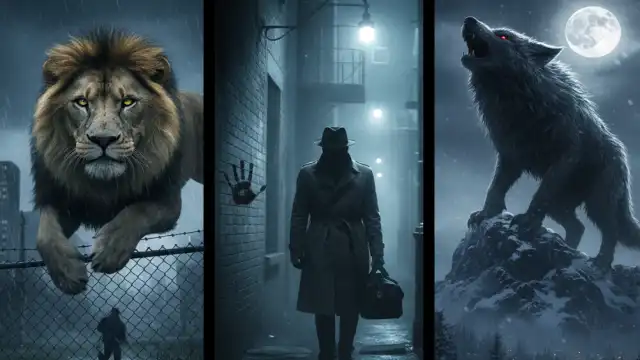
Modern historians and scientists have debated the Beast’s identity for centuries. Based on 18th-century autopsy notes and modern forensic analysis, here are the three most plausible explanations.
1. The “Escaped Lion” Theory
This is the theory that aligns best with the physical descriptions. In the 18th century, wealthy nobles often kept exotic menageries. If a sub-adult male lion escaped, it would explain:
- The Tail: Wolves have bushy tails; lions have thin tails with a tuft.
- The Attack Style: Wolves slash and tear. The Beast was reported to decapitate its victims a feat of strength typical of big cats, not canines.
- The Bulletproofing: A lion’s loose skin and dense muscle can sometimes absorb low-velocity musket balls that would kill a wolf.
- The Behavior: Lions are ambush predators. They stalk, crouch, and pounce. Wolves run their prey down.
Why it fits: The “tufted tail” description appears in multiple witness accounts. A young lion’s mane (or lack thereof) would look strange to French peasants who had never seen one.
2. The Serial Killer & “Armored Dog” Conspiracy
This is where history gets dark.
Some historians, like the proponents of the theory popularized by the film Brotherhood of the Wolf, suggest a human element. The theory goes that a sadistic human possibly a local noble or the hunter Jean Chastel was controlling the animal.
- The Evidence: Some victims were found with their heads removed cleanly, almost surgically. Others were found naked with their clothes folded neatly nearby. Animals don’t fold clothes.
- The Hybrid: Was the Beast a mastiff-wolf hybrid clad in leather armor? It sounds like fiction, but a large dog trained for war could explain the “bulletproof” scales (armor) and the lack of fear toward humans.
The Verdict: While compelling, the “folded clothes” detail is likely a myth added later. However, the idea that a human was using the chaos to cover up their own murders remains a popular, albeit unproven, theory.
3. The “Super Wolf” Pack
The most scientifically grounded theory is less Hollywood but equally terrifying. France in the 1760s was infested with wolves over 10,000 of them.
Zoologists argue the “Beast” wasn’t one animal, but a pack of man-eating wolves.
- The Logic: Attacks happened miles apart on the same day. Unless the Beast could teleport, there had to be more than one.
- The “Hybrid” Twist: It’s possible the dominant alpha was a Wolf-Dog Hybrid. These hybrids are often larger than wild wolves and, crucially, they lack the fear of humans. A hybrid would be bold enough to enter villages and strong enough to maul adults.
The Autopsy: What Did They Actually Kill?
The attacks officially ended in June 1767, when a local hunter named Jean Chastel shot a massive animal. (Legend says he used a silver bullet blessed by a priest, but that’s likely folklore).
Unlike previous kills, this one stopped the massacre. But what was it?
The Marin Report, a historical document detailing the autopsy by Dr. Boulanger, gives us the cold, hard data:
- Stomach Contents: The animal’s stomach contained the shoulder bone of a young child. This was definitely a man-eater.
- Measurements: It weighed 109 livres (approx. 53 kg or 117 lbs). That is huge for a wolf, but small for a lion.
- Teeth: The report describes 42 teeth the exact dental formula of a canid (wolf/dog), not a feline.
The Conclusion? The animal killed by Chastel was likely a large wolf-dog hybrid. Its red fur and strange proportions suggest it wasn’t a purebred European wolf, which explains why locals didn’t recognize it.
Why The Mystery Persists
So, if they killed it, why are we still talking about it?
Because the math doesn’t quite add up. Chastel killed one beast, but witness descriptions varied wildly for three years. Some saw a wolf. Some saw a striped tiger-like creature. Some saw a monster that stood on two legs.
It is highly probable that the “Beast of Gévaudan” was a perfect storm:
- A few large, man-eating wolves (or hybrids) acting aggressively.
- Mass Hysteria: Every shadow became the Beast.
- A Serial Killer? It is entirely possible that a human murderer used the wolf attacks as cover for their own crimes, accounting for the “decapitated” and “undressed” bodies.
The Monster Was Real
Whether it was a lion, a hybrid, or a man in a mask, one thing is undeniable: The fear was real.
For three years, the people of Gévaudan lived in a horror movie. They couldn’t let their children play outside. They couldn’t walk to church alone. They were hunted by something that the King himself couldn’t stop.
Next time you hear a twig snap in the woods, remember: sometimes the monsters are real, and sometimes, they don’t look like anything you’ve seen in a textbook.
Quick Facts:
- Location: Lozère (Gévaudan), France.
- Dates: 1764–1767.
- Death Toll: Estimated 113 killed, 49 injured.
- Killed By: Jean Chastel (June 19, 1767).
- Identity: Most likely a Wolf-Dog Hybrid, though “Escaped Lion” remains a strong theory.
Frequently Asked Questions
Is the movie Brotherhood of the Wolf based on a true story?
Yes and no. While the 2001 film (Le Pacte des Loups) uses real historical characters—including the naturalist Grégoire de Fronsac and the hunter Jean Chastel—the plot is heavily fictionalized. The real Beast was likely a wolf or hybrid, not a lion imported from Africa clad in bone armor. Additionally, the character of Mani (the Iroquois martial artist) is a fictional addition, though the panic and political tension depicted in the film are historically accurate.
Did a silver bullet really kill the Beast?
No, this is a modern myth. Historical records show that Jean Chastel killed the creature with a standard lead musket ball (likely a mixture of buckshot). The idea of the “silver bullet” was actually invented by the novelist Henri Pourrat in the 1940s to spice up the story. Writers later adopted this trope for werewolf fiction, but in 1767, Chastel just used a well-aimed shot, not magic.
Where is the body of the Beast of Gévaudan today?
It no longer exists. After Jean Chastel killed the beast, its body was roughly taxidermied and sent to the royal court at Versailles. However, by the time it arrived, it had begun to rot and smelled so terrible that the King ordered it to be disposed of immediately. There is no skeleton or stuffed hide in any museum today; all we have are the original autopsy reports and sketches from the era.
Was the Beast of Gévaudan a werewolf?
Scientifically, no. However, the Gévaudan attacks are largely responsible for our modern perception of werewolves. The creature’s ability to survive bullets, its reported “human-like intelligence,” and its preference for killing women and children fueled local superstitions about shapeshifters (loup-garou). While it was biologically an animal, the fear it caused was supernatural.
How many people did the Beast actually kill?
Estimates vary between 60 and 113 deaths. The official study by historian Jean-Marc Moriceau lists 113 fatalities and 49 injuries, making it one of the deadliest man-eating animal events in recorded history. Unlike typical wolf attacks which were usually singular events caused by rabies, the Beast of Gévaudan hunted for food (predation) over a span of three years.
Why couldn’t the King’s soldiers kill it sooner?
The terrain and the animal’s cunning. The Gévaudan region is filled with dense forests, swamps, and rocky gorges, making it perfect for an ambush predator and difficult for soldiers in formation. Furthermore, the Beast learned to recognize the uniforms of the King’s dragoons. It would vanish when soldiers arrived and attack neighboring villages instead, leading locals to believe it had a supernatural spy network.
What do you think? Was it just a big wolf, or was Jean Chastel hiding a darker secret? Drop a comment below with your theory!

