

The Truth Behind Werewolf Legends: 6 Real Historical Cases
Werewolves aren’t real. the idea of a man sprouting fur and fangs under a full moon is pure folklore, a campfire story designed to give us a delicious shiver. We know this. It’s fiction.
But what if the stories were real?
History is littered with chilling, documented accounts of men and women who were accused, tried, and sometimes executed for being werewolves. These aren’t vague legends whispered through the generations. They are court records, eyewitness testimonies, and tales of savage crimes that terrified entire communities. The people in these stories didn’t just believe in werewolves; they saw the bloody evidence with their own eyes.
These accounts peel back the curtain on a time when the line between man and monster was terrifyingly thin. They force us to ask a deeply unsettling question: were these people truly beasts, were they victims of mass hysteria, or were they something far more familiar and frightening—a human predator hiding behind a supernatural mask?
Forget Hollywood. This is the real history of the werewolf. And it’s far more horrifying than any movie.
1. The Sorcerer of Dole: Gilles Garnier (1573)
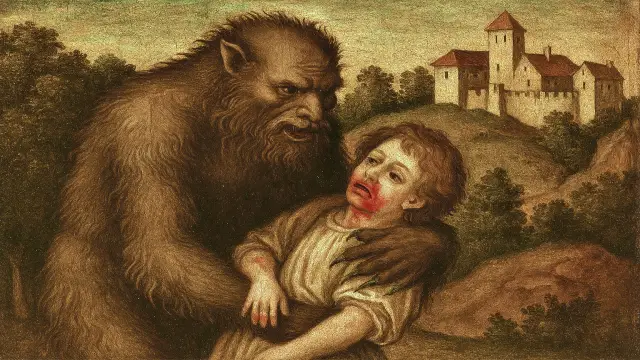
In the late 16th century, the French countryside of Dole was a place of deep fear. The Thirty Years’ War had ravaged the land, leaving behind poverty, famine, and packs of hungry, aggressive wolves that roamed the forests. It was a perfect storm of desperation and paranoia. And in the middle of it, children began to disappear.
Eyewitnesses spoke of a shadowy beast—not quite a wolf, not quite a man—stalking the vineyards and fields. The terror reached a fever pitch when, in 1573, authorities issued a decree giving locals permission to hunt and kill this “werewolf” on sight.
It didn’t take long for them to find a suspect: Gilles Garnier, a reclusive hermit living on the outskirts of town.
Under interrogation (which, let’s be clear, almost certainly involved brutal torture), Garnier confessed to everything, and the details were stomach-churning. He claimed to have made a pact with a demon in the woods. In exchange for an ointment that allowed him to shapeshift into a wolf, he would hunt for the demon. His prey of choice? Children.
Garnier described, in graphic detail, killing a 10-year-old girl, tearing her flesh with his teeth and hands, and taking parts of her body home to eat with his wife. He confessed to strangling another boy, and to viciously attacking other children, consuming them raw in the woods. His testimony was a perfect blend of local superstition and grizzly, verifiable crimes. The missing children were real. The mutilated bodies were real.
The Verdict?
Gilles Garnier was found guilty of lycanthropy and witchcraft. He wasn’t just executed; he was burned at the stake, a punishment reserved for the most heinous heretics.
The Real Story: Was Garnier a shapeshifter? Almost certainly not. Historians and psychologists now believe he was likely a serial killer suffering from severe mental illness, possibly clinical lycanthropy (a delusion where one believes they are an animal). In a time of intense religious fervor and superstition, a community terrified by both real wolves and starvation found an easy scapegoat. Garnier’s horrific crimes were real, but they filtered his actions through the only lens they had: the supernatural. He wasn’t a monster from folklore; he was a monster of the human variety, and that’s infinitely more terrifying.
2. The Werewolf of Bedburg: Peter Stumpp (1589)
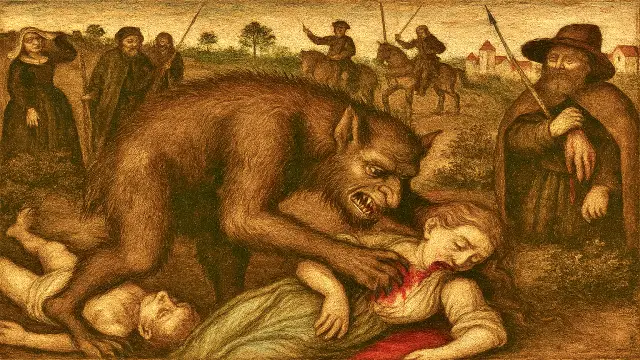
The tale of Peter Stumpp is perhaps the most infamous “true” werewolf story of all time, largely because it was so widely publicized. After his trial, pamphlets detailing his horrific deeds were circulated across Europe, becoming the 16th-century equivalent of a viral true-crime podcast.
For 25 years, the town of Bedburg, Germany, was stalked by a relentless predator. Livestock were found slaughtered, their bodies ripped apart with inhuman strength. Worse, men, women, and children vanished, only to be found later, partially eaten. The locals blamed a ravenous wolf, but no ordinary wolf could be so cunning, so cruel.
The legend says that a group of hunters finally cornered the massive beast. As they closed in, it seemed to shimmer and change, and standing where the wolf had been was a man they all knew: the quiet, wealthy farmer, Peter Stumpp. He was missing his left hand, which matched an injury the “wolf” had sustained when its paw was cut off in a trap.
Stumpp confessed to a reign of terror that was almost unbelievable in its depravity. He claimed the Devil had given him a magical belt of wolfskin that allowed him to transform. In his wolf form, he admitted to killing and eating 14 children (including his own son, whose brains he allegedly devoured), two pregnant women, and countless farm animals. His confession also included incest and cannibalism.
The Verdict?
The punishment for Stumpp was one of the most brutal ever recorded. He was tied to a breaking wheel, his flesh was torn with red-hot pincers, his limbs were broken with an axe, and he was finally beheaded. His daughter and mistress, implicated as accomplices, were flayed and burned alive. As a final, gruesome warning, his head was mounted on a pole atop a carving of a wolf.
The Real Story: Like Garnier, Stumpp was almost certainly a sadistic serial killer. The “magic belt” was a convenient supernatural explanation for crimes that were otherwise incomprehensible to the 16th-century mind. The region was in the midst of the Cologne War, a period of intense political and religious strife. Accusations of Protestantism and witchcraft were flying, and Stumpp’s trial was as much a political statement as it was a criminal proceeding. He was the perfect villain for a terrified populace, a man whose real-world atrocities were so profound they had to be the work of the Devil.
3. The Gandillon Family: A Pack of French Werewolves (1598)
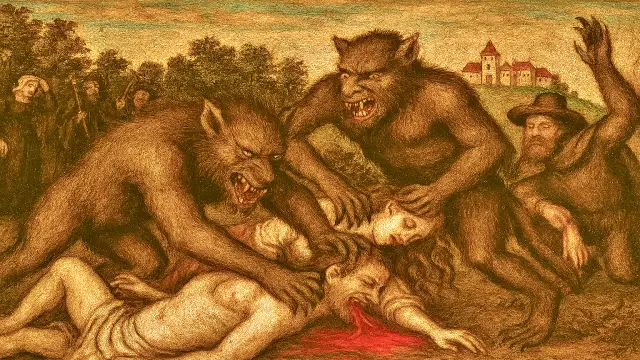
Not all werewolf accusations targeted lone hermits. Sometimes, an entire family was condemned. Such was the case of the Gandillons in the Jura Mountains of France, a tale that reads like a rural horror film.
The story began when a teenage boy, Benoist Bidel, was found dead, his body savaged by bites. His sister claimed she saw a huge wolf running from the scene. A hunt was organized, and the hunters cornered a wolf, wounding it. As the story goes, the wolf limped away and was tracked to a nearby cottage, where they found a woman named Perronette Gandillon tending to an identical wound.
That was all it took.
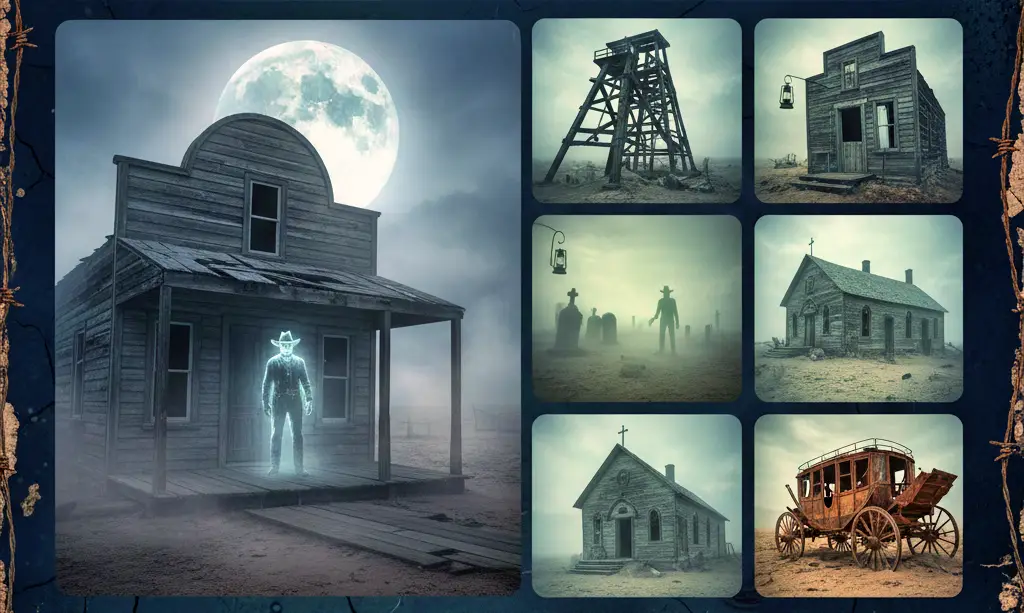
Under torture, Perronette confessed to being a werewolf and implicated her brother, Pierre, and her nephew, Georges. The whole family was accused of attending Sabbats, consorting with demons, and shapeshifting to murder children. Pierre Gandillon, in his confession, gave a chillingly simple reason for his crimes: he enjoyed the taste of human flesh.
The Verdict?
The Gandillon family was torn apart. Perronette was torn to pieces by a furious mob before she could even be executed. Her brother Pierre was also lynched. Georges was put on trial, found guilty, and publicly strangled and burned. It was a complete eradication, fueled by mob justice.
The Real Story: This case is a textbook example of mass hysteria. The Gandillon family were likely poor outcasts, making them easy targets. The death of Benoist Bidel, whether by an actual wolf or a human attacker, created a spark. The family’s low social standing, combined with the era’s obsession with witchcraft, turned that spark into an inferno. The forced confessions, extracted under duress and torture, simply confirmed the mob’s pre-existing biases. The Gandillons weren’t a pack of werewolves; they were victims of a community that needed someone to blame for its fears.
4. The Boy Werewolf of Bordeaux: Jean Grenier (1603)
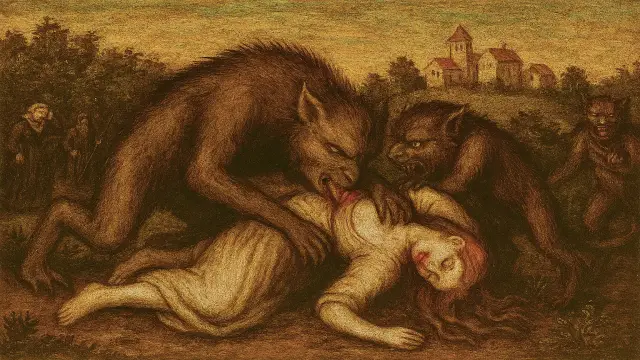
The case of Jean Grenier is different. It’s not just horrifying; it’s profoundly sad. Grenier was a 14-year-old beggar boy who wandered the Gascony region of France. When several children disappeared or were found dead, suspicion eventually fell on him.
Unlike the others, Grenier wasn’t caught in the act. He openly boasted about his double life. He told other children that he was a werewolf, that he had a wolfskin, and that at night, he ran with a pack of nine other werewolves. He described, in detail, killing and eating at least three or four children. He claimed to only eat the flesh of young girls because they were more tender.
When brought before the court in Bordeaux, he didn’t recant. He repeated his stories, claiming a man known as the “Lord of the Forest” had given him the power to transform. His testimony was so consistent and detailed that many believed him.
The Verdict?
This is where the story takes a turn. The judge, Pierre de Lancre, was a notorious witch-hunter. He was ready to burn the boy at the stake. However, a younger commissioner named de la Tourette saw something else in Jean Grenier. He saw not a monster, but a deeply disturbed, malnourished, and likely abused child. He argued that Grenier was suffering from “insanity and lycanthropic delusion.”
Remarkably, the court agreed. Instead of executing him, they sentenced Jean Grenier to spend the rest of his life in a monastery. He died there seven years later, still believing he was a werewolf.
The Real Story: The Grenier case is one of the first recorded instances where clinical lycanthropy was used as a legal defense. The court chose a path of (relative) compassion over superstition. Grenier was almost certainly not a killer. He was a neglected child whose mind had created a powerful, terrifying fantasy to cope with the horrors of his reality—a reality of starvation, loneliness, and fear. His “confessions” were likely a cry for attention from a boy who had never had any.
5. The Beast of Gévaudan (1764-1767)
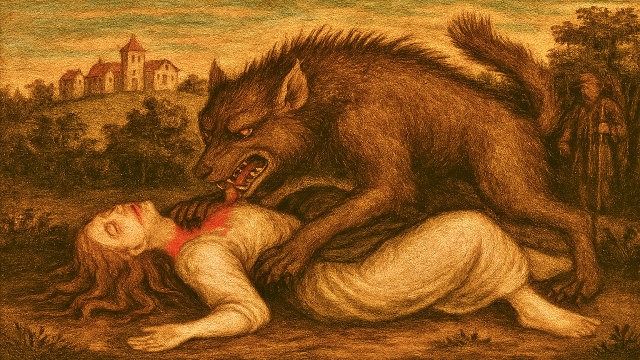
This is the king of all historical monster stories. It’s not a tale of a single person accused of a crime; it’s the documented account of a real, physical creature that slaughtered over 100 people in the French province of Gévaudan. This was no secret. The story was a national sensation, and King Louis XV himself sent his best hunters to kill the beast.

For three years, a creature described as a “beast of enormous size, with a reddish-brown coat, a long wolf-like snout, and a massive, powerful tail” stalked the countryside. Its attacks were unnervingly precise. It ignored cattle and livestock, targeting humans almost exclusively, often ripping out their throats. It was intelligent, avoiding traps and ambushes with an almost human-like cunning.
Hunters, soldiers, and noblemen all tried and failed to kill it. The King’s own men brought back a large wolf, claiming victory, but the killings continued. The terror only ended in 1767 when a local farmer named Jean Chastel shot and killed a massive, unusual-looking wolf using a silver bullet (yes, this is one of the historical origins of that myth). After Chastel killed the beast, the attacks stopped for good.
The Verdict?
There was no trial, only a body count. The creature Chastel killed was examined and found to have human remains in its stomach.
The Real Story: What was the Beast of Gévaudan? This mystery endures today. Theories range from a pack of unusually large wolves to an exotic animal, like a striped hyena, that had escaped from a menagerie. But a more sinister theory persists: that the “beast” was actually a human serial killer, possibly working with a trained animal like a large mastiff wearing armor made of boar hide (which would explain its strange appearance and resistance to bullets). Some historians even point the finger at Jean Chastel’s own family, suggesting he killed the creature to cover up his own son’s crimes. Whatever the truth, the Beast of Gévaudan was a real predator that left a trail of real victims, blurring the line between animal and monster forever.
6. The Werewolf of Ansbach (1685)
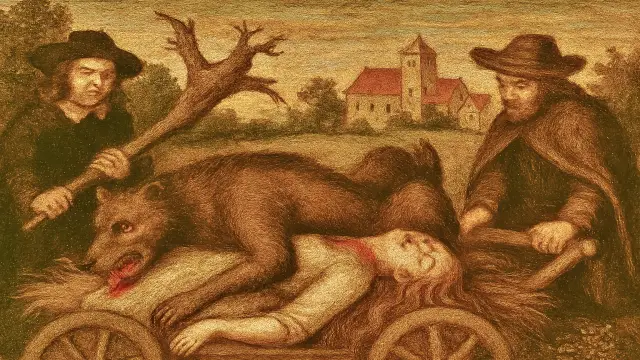
In the Principality of Ansbach, Germany, a large wolf was terrorizing the community, killing livestock and menacing the townspeople. In a place and time steeped in superstition, the locals didn’t see just an animal. They saw a shapeshifter.
Specifically, they believed the wolf was the reincarnation of their cruel and despised late mayor, who had recently died. It was divine punishment, or perhaps the mayor’s evil spirit clinging to the mortal world.
The townsfolk organized a massive hunt, eventually managing to chase the wolf out of the forest and into a well, where they killed it. But the story doesn’t end there. Their belief in its supernatural identity was so strong that they decided to put the wolf’s corpse on trial, in a way. They dressed the dead animal in the former mayor’s clothes, put a wig on its head, and hung it from a gibbet for all to see. They even severed its snout and attached a mask of the late mayor’s face.
The Real Story: The Ansbach case is a fascinating example of collective delusion and symbolic revenge. There was no shapeshifter, of course. There was just a wolf, doing what wolves do. But for the people of Ansbach, that wolf became a vessel for all the hatred and fear they felt toward their deceased leader. The bizarre, ritualistic mutilation of the wolf’s body wasn’t about killing a monster; it was about performing a public exorcism. They were symbolically punishing the man they couldn’t touch in life, proving to themselves that they had triumphed over his “evil.” It’s a chilling reminder that sometimes, people need a monster so badly they’re willing to create one from thin air.
Monster in the Mirror
These stories are unsettling, not because they prove werewolves are real, but because they prove what humans are capable of. In every case, the real monster was fear. Fear of the unknown, fear of starvation, fear of our neighbors, and fear of the darkness that can hide within the human heart. Whether it was a deranged killer like Peter Stumpp or a terrified community like the one that destroyed the Gandillon family, the true horror came from people, not beasts.
So the next time you hear a werewolf story, remember the history. The truth is rarely about a man becoming a wolf. It’s about how easily a man can become a monster.
Which of these stories do you find the most terrifying? Do you know any local legends about shapeshifters or strange creatures? Share your thoughts in the comments below!

