

The Hello That Changed History
Remember where you were when you heard about the sheep? It’s been nearly three decades since Dolly, the world’s most famous ball of wool, bleated her way into history. Born in July 1996 and revealed to a stunned public in 1997, Dolly wasn’t just a farm animal; she was a biological earthquake. She proved that an adult cell a simple udder cell could be rebooted to create a brand-new, genetic copy of an organism.
Fast forward to Present. The panic about “armies of human clones” has faded, replaced by something far more nuanced and scientifically thrilling. We aren’t photocopying people, but we are rewriting the rules of biology. From “woolly mice” born in labs to cloned champions in equestrian sports, the legacy of that Scottish sheep is alive and kicking.
So, what have we actually learned? Is the science safe? And are we really about to see a woolly mammoth walk again? Let’s cut through the noise and look at the facts.
1. The Health Verdict: Do Clones Age Faster?
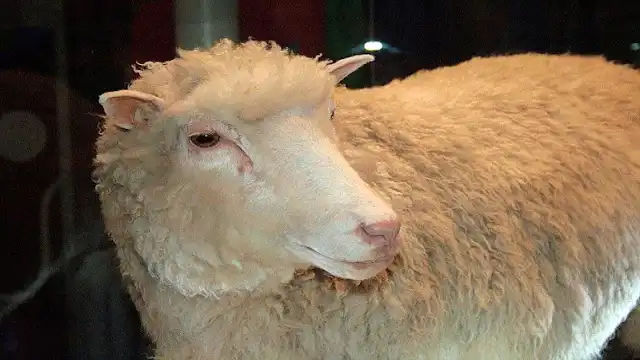
For years, a dark cloud hung over cloning: the fear of premature aging. Dolly developed arthritis young and died at age six from a lung infection (common in sheep kept indoors, but suspicious nonetheless). Critics screamed, “See? Cloning creates broken animals!”
But science loves a good control group.
The “Nottingham Dollies” Study
Researchers at the University of Nottingham spent years monitoring Dolly’s four identical “sisters” Debbie, Denise, Dianna, and Daisy created from the same cell line. The verdict?
- They aged normally.
- No premature arthritis.
- Normal metabolic health.
By the time they reached age nine (equivalent to human 70s), they were thriving. This was a massive mic drop for biology. It proved that Somatic Cell Nuclear Transfer (SCNT) the cloning method doesn’t inherently doom an animal to bad health. The errors were in the technique, not the concept, and we’ve gotten much, much better at it.

Key Takeaway: Cloning isn’t a death sentence. With refined methods, cloned animals today live healthy, full-length lives.
2. The Science: From Copying Sheep to Curing Disease
Dolly was never really about making more sheep. She was a proof of concept for Stem Cell Research.
When scientists realized they could reprogram an adult cell to start over, it sparked a gold rush. This directly led to the Nobel Prize-winning discovery of Induced Pluripotent Stem Cells (iPSCs) in 2006.
Why does this matter to you?
Instead of controversial embryonic cloning, scientists can now take your skin cell, turn it back into a stem cell, and grow heart tissue, neurons, or insulin-producing cells that match your body perfectly.
Current Status:
- Therapeutic Cloning: Still used in research to study diseases, but largely superseded by iPSCs for treatment.
- Reproductive Cloning: Routine in agriculture. High-value bulls, racehorses, and even beloved pets (for a hefty $50,000 price tag) are cloned regularly in countries like the US, China, and South Korea.
3. The “Jurrasic Park” Reality: De-Extinction is Here
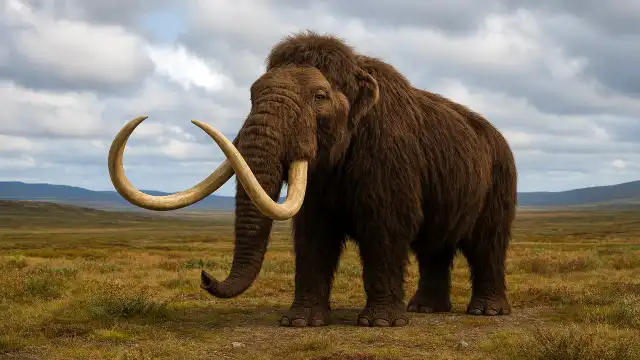
This is where things get wild. The technology pioneered by Dolly has merged with CRISPR gene editing to launch the era of “De-extinction.”
The Heavy Hitters: Colossal Biosciences
As of late 2025, the de-extinction movement has moved from “cool idea” to “tangible results.” The goal isn’t just to make a cool zoo exhibit; it’s to restore lost ecosystems.
Current Projects & Timelines (Updated)
| Species | Goal | Status as of 2026 |
| Woolly Mammoth | Restore Arctic tundra | Breakthrough: “Woolly mice” with mammoth traits born March 2025. Elephant-Mammoth hybrid embryos are in development. |
| Thylacine (Tasmanian Tiger) | Apex predator for Tasmania | Genome 99.9% reconstructed. Lab-grown marsupial tissue successful. |
| Dodo | Rewild Mauritius | Early stages. Partnership with Mauritian Wildlife Foundation established. |
- “Woolly Mice?” Yes, you read that right. In 2025, scientists successfully edited mouse genomes to express mammoth traits (like cold-resistant hemoglobin and hair density) to test the genes before putting them into elephants. It’s a small step for a mouse, a giant leap for de-extinction.
4. The Ethics: Where Do We Draw the Line?
While we’ve accepted cloned cows, the “human question” remains the third rail of bioethics.
The “Yuck Factor” vs. Medical Miracle
- Reproductive Human Cloning: Still a hard NO. The consensus is global. The risks (psychological identity issues, potential for physical defects) outweigh any “benefit.” Plus, who wants to be a copy?
- Therapeutic Cloning: This is where the battleground is. Is it okay to create a cloned embryo just to harvest stem cells and cure diabetes?
- Proponents: “It saves lives.”
- Opponents: “It destroys potential life.”
Legal Landscape:
Most nations, including the UK and many US states (like the recent 2025 updates in Alabama), have strict bans on reproductive human cloning. However, therapeutic cloning regulations vary, creating a patchwork of “bio-havens” where research accelerates.
If you could clone a lost child, would you? Most of us recoil at the thought, but for grieving parents, the line between “unnatural” and “hope” is blurry. Science can do it. Ethics says we shouldn’t.
5. The Future: What’s Next?
We are standing on the edge of a Bio-Revolution.
- Conservation 2.0: Cloning is becoming a “backup drive” for nature. Zoos are freezing DNA of endangered species (like the Northern White Rhino) to clone them back if they go extinct.
- Organ Manufacturing: We are inching closer to growing human-compatible organs in pigs (xenotransplantation). Dolly’s tech helps ensure these organs aren’t rejected by our immune systems.
- The “Designer” Debate: As cloning meets gene editing, we aren’t just copying; we are improving. Disease-resistant livestock is already here. Are “optimized” humans next? (Don’t hold your breath regulatory bodies are watching this like hawks).
Dolly’s Final Baa
Dolly the sheep didn’t just give us a cool science fact; she forced us to look in the mirror. She showed us that biology is flexible, that “impossible” is just a temporary label, and that with great power comes the need for even greater wisdom.
Twenty-five (going on thirty) years later, the fear has settled, and the work has begun. We aren’t living in a dystopia of carbon-copy humans. Instead, we’re curing diseases, saving species, and understanding the very building blocks of life.
So, here’s to Dolly. She was just a sheep, but she taught us how to be better shepherds of our own future.
What do you think? Should we bring back the Mammoth, or is nature best left alone? Drop a comment or share this article to keep the debate alive.
For the Curious
- SCNT (Somatic Cell Nuclear Transfer): The classic cloning method. Take an egg, remove its nucleus, insert a nucleus from an adult body cell, and zap it with electricity to start division.
- iPSCs (Induced Pluripotent Stem Cells): Adult cells turned back into stem cells without using embryos. The ethical alternative to cloning.
- De-extinction: The process of reviving extinct species using cloning and gene editing (CRISPR).
- Telomeres: The protective caps on DNA. Short telomeres were once thought to doom clones to early death, a theory largely debunked by recent studies.
Frequently Asked Questions
Did Dolly the Sheep actually die from being a clone?
This is the biggest myth in cloning history. While Dolly died young (age six) from lung disease and arthritis, modern research confirms this wasn’t caused by the cloning process itself. Detailed studies on her four identical sisters (the “Nottingham Dollies”) showed they lived long, healthy lives with no premature aging. The early failures were due to the immaturity of the 1990s technology, not a flaw in the biology of cloning. Today’s SCNT techniques are vastly safer and more efficient.
How much does it cost to clone a pet in 2026, and is it really them?
As of 2026, cloning a dog or cat costs between $35,000 and $50,000 USD, depending on the service provider (mostly based in Texas, China, and South Korea). However, buyers beware: You are buying a genetic twin, not a reincarnation. While they will look identical, their personality is determined by environment and upbringing. Your cloned dog won’t remember the tricks your old dog knew. It’s nature, but without the nurture.
Are we officially bringing back the Woolly Mammoth?
Not exactly “bringing back,” but rather “re-engineering.” The project led by Colossal Biosciences is technically creating an Arctic Elephant-Mammoth Hybrid. By editing the genome of an Asian Elephant to include mammoth traits (cold tolerance, fat layers, shaggy hair), they are creating a functional proxy to restore the ecosystem. The 2025 birth of “mammoth-edited mice” was the proof-of-concept needed to move toward elephant embryos.
Is it legal to clone humans for medical purposes?
This depends entirely on why and where. Reproductive cloning (making a baby copy of a human) is banned in almost every country with bioethics laws. However, Therapeutic cloning (creating embryos to harvest stem cells for curing diseases like Parkinson’s) is legal and regulated in nations like the UK and specifically permitted in certain US research hubs. This distinction is the main battleground of bioethics in the mid-2020s.
Are we eating cloned meat in supermarkets?
You likely aren’t eating a clone, but you might be eating a clone’s offspring. Cloning is too expensive to use for daily burgers. Instead, farmers clone “super-stud” bulls or prize-winning pigs to use for breeding. The FDA and European food safety agencies have declared that meat and milk from the offspring of clones are biologically indistinguishable from conventional livestock and perfectly safe to consume.
Sources help:
- https://en.wikipedia.org/wiki/Dolly_(sheep)
- https://www.sciencenews.org/article/dolly-sheeps-cloned-sisters-aging-gracefully
- https://blog.cirm.ca.gov/stem-cell-research/cloning-breakthrough-dolly-the-sheep-has-sister-clones-and-theyre-healthy/
- https://pmc.ncbi.nlm.nih.gov/articles/PMC2323472/

