

Are We Alone in the Universe? The Latest Evidence for Life Beyond Earth
We’ve all asked it: Are we alone? Today, that question isn’t philosophical. It’s testable. Missions are gathering data. Telescopes are parsing alien atmospheres. And scientists aren’t just looking, they’re measuring.
But before we dive in, let’s get one thing straight: No confirmed extraterrestrial life has been found yet. Not on Mars. Not in the clouds of Venus. Not beneath icy moons. Yet, Still, the evidence landscape is shifting fast. What was speculation a decade ago is now rigorous science.
What’s New in the Search for Life (Update)
Here’s the short version the headlines you need:
- NO confirmed life yet, but multiple promising signals are underway.
- James Webb Space Telescope (JWST) is reading atmospheres of distant worlds.
- Europa Clipper is en route to a prime ocean world.
- Enceladus plume data now shows more complex molecules.
- Classics like Mars methane and Venus phosphine remain controversial.
In short: we’re seeing real potential, not just hopeful speculation.
Where We’re Looking, And Why It Matters
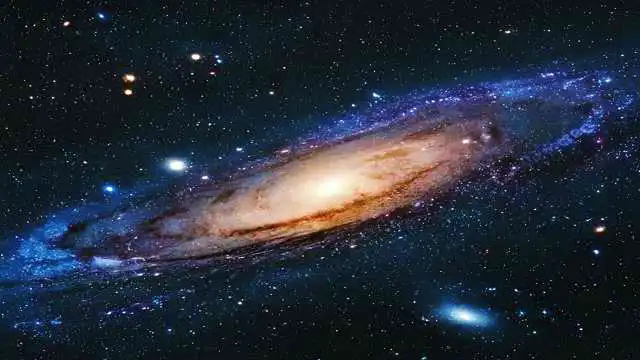
Space is huge. So we focus on worlds with the basic ingredients for life: liquid water, energy, and chemistry.
Ocean Worlds in Our Backyard
Europa (Jupiter) & Enceladus (Saturn) stand out:

Enceladus
- Spews icy jets from its south pole, plumes rich in water and organics, New data reanalyses hint at more complex organics than previously known, This suggests a rich chemical environment where life could emerge.
Europa
- Beneath the thick ice shell: a global ocean, Europa Clipper (launched 2024) will begin multiple flybys in the 2030s to map ice thickness, chemistry, and possible plume activity.
Why this matters:
Subsurface oceans with energy sources are exactly where life thrives on Earth.
Mars: The Methane Puzzle
Mars has fascinated us for decades. Why? Methane was detected in quirky spikes by landers and rovers, On Earth, methane is often biological, But recent analysis suggests those detections might be false positives, artifacts, local chemistry, or instrument quirks, So the methane story evolved from exciting clue to cautious debate.
Venus: Clouds with Controversy
In 2020, scientists claimed detection of phosphine, a molecule linked to life on Earth, high in Venus’ clouds, But follow-up studies found inconsistent results and very low upper limits instead.
Bottom line? No confirmed phosphine and no life detection yet, BUT… the fact we can attempt this from Earth or orbit is itself amazing.
Exoplanets: Worlds Around Other Stars
This is where the search gets truly cosmic, Thanks to JWST, we can now:
- Detect methane and carbon dioxide in the atmosphere of distant small planets.
- Study atmospheres of planets similar in size to Earth.
For example, K2-18 b, a “hycean” world, shows signs of both methane and CO₂. That doesn’t prove life, but it means we can measure these atmospheres at distances once thought impossible.
Evidence vs. Interpretation, What Scientists Really Want
Here’s the hard truth: One molecule does not equal life, Scientists look for patterns, not snap judgments.
Good Evidence Would Include:
- Multiple molecules pointing toward life (like oxygen + methane), Consistent observations from different instruments, Atmospheric context that rules out non-biological chemistry.
Bad Evidence Includes:
- A single molecule without context, Signals that disappear with better data, Artifacts caused by instruments or data processing.
How Scientists Search for Life — Real Techniques
Science isn’t magic, it’s methodical:

- In-situ sampling
Best for nearby worlds. Landers or fly-through plumes collect real samples. - Remote spectroscopy
Best for distant exoplanets. Telescopes split light into chemical fingerprints. - Radio searches (technosignatures)
Looking for artificial signals, but nothing confirmed so far.
Each method has limits, and strengths, that complement the others.
Recent Studies You Should Know
Here’s what’s shaping the debate:
- JWST’s methane + CO₂ detection on K2-18 b, proof we can study atmospheres of small worlds.
- Re-analysis of Enceladus plume particles, more complex organics than thought.
- Debates over Venus phosphine, underscores the need for multiple confirmatory measurements.
- Mars methane re-evaluations, a cautionary tale about confirmation.
The pattern is clear: science evolves because new data changes the story.
Why We Don’t Have an Answer… Yet
So why no life? Because science is careful:
- Signals are weak and noisy.
- Planets are distant and telescopes have limits.
- False positives happen we’ve seen that with phosphine and methane.
- The standards for proof are high and they should be.
We want confidence not headlines.
What’s Coming Next, What to Watch For
Here’s where real progress could happen:
Europa Clipper flybys detailed chemistry of an ocean world.
More JWST spectra small, Earth-like atmospheres.
Future missions to icy moons possible in-situ ocean probes.
Technosignature expansions smarter, broader searches.
Each of these could nudge us closer to an answer or reshape the question entirely.

Practical Takeaways
- We don’t have life yet. Period.
- But we’re observing real chemical clues in multiple environments, The search has become measurable science, not just theory, This decade matters more than any before.
Your Next Step: Stay Curious
This isn’t just science it’s participation.
Read mission updates.
Ask questions.
Demand reproducibility.
Celebrate good science not hype.
Who knows? In your lifetime, we might get the answer or new questions that matter just as much.
CTA
Like this post? Share it with a friend who loves space.
Subscribe for monthly updates because the next major discovery could be right around the corner, Keep watching the skies — and the science behind them.
Sources You Can Trust:
(Every claim here is backed by peer-reviewed research or reputable science organizations.)
- NASA, JWST atmospheric discoveries: science.nasa.gov
- NASA, Europa Clipper Mission Info: science.nasa.gov
- Revisiting Enceladus plume organics: AGU/Journal research
- Debates over Venus phosphine detection: peer-reviewed spectroscopy studies
- Mars methane reliability discussions: current astrobiology research

