

Ivan Milat and the Backpacker Murders: What Happened in Belanglo Forest and How He Was Caught
Picture this: It’s the early 1990s in Australia. The sun is blazing, the vibes are laid-back, and hitchhiking is just what you do. It’s the ultimate rite of passage for young adventurers from all over the globe Brits, Germans, Aussies looking to see the vast, rugged beauty of the land Down Under. They stand on the side of the Hume Highway, thumbs out, trusting that the next car will take them one step closer to paradise.
But for seven young souls, that ride didn’t lead to a hostel or a beach. It led to Belanglo State Forest.
If you grew up in Australia during this time, you know the name Ivan Milat. It’s a name that killed the innocence of hitchhiking forever. But if you’re new to this story, buckle up. We’re going to dive deep into one of the most terrifying chapters in true crime history not just the what, but the how and the why. We’ll look at the forensic breakthroughs, the sheer luck that broke the case, and the brave man who got away.

The Vanishing: Adventure Turned Nightmare
Between 1989 and 1992, young backpackers started disappearing along the Hume Highway in New South Wales. At first, nobody panicked. Hitchhikers are transient by nature; they change plans, run out of money, or go off the grid to camp for weeks. Police initially dismissed frantic calls from parents, assuming these “missing” kids were just enjoying their freedom a little too much.
But the families knew better. Deborah Everist and James Gibson, two 19-year-old Aussies, vanished in 1989. Then came Simone Schmidl (Germany), followed by the couple Gabor Neugebauer and Anja Habschied (Germany). Finally, in 1992, British friends Caroline Clarke and Joanne Walters dropped off the face of the earth.
Seven people. Similar profiles. Same highway. Where were they?
Belanglo State Forest: The Grim Discovery
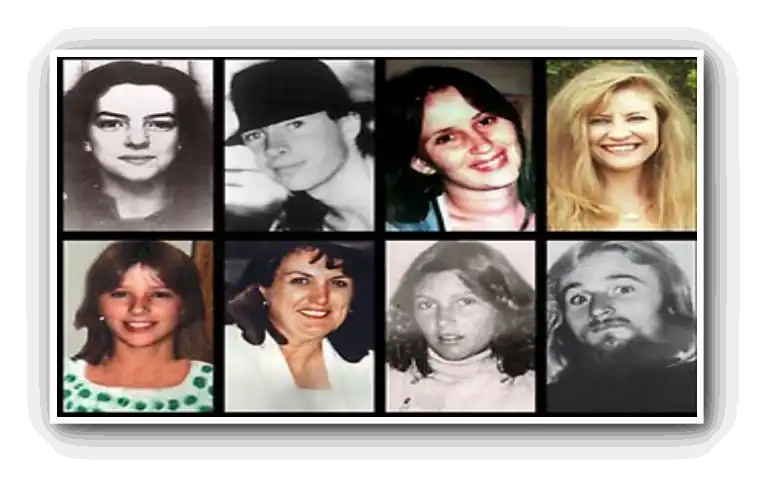
The answer came on September 19, 1992. Two runners were orienteering in the dense, pine-needle-covered terrain of Belanglo State Forest when they stumbled upon something that looked out of place. It was a decaying body.
Police quickly descended on the scene and found a second body nearby. They were identified as Caroline Clarke and Joanne Walters. The details were horrific. Walters had been stabbed repeatedly, while Clarke had been shot in the head 10 times a detail that suggested she had been used for target practice.
The “Backpacker Murders” investigation had officially begun.
Over the next year, police scoured the forest. It was a massive operation. In October 1993, a local man looking for firewood found a human skull and a large bone. Police returned and uncovered the remains of James Gibson and Deborah Everist. Just a month later, in November 1993, the bodies of Simone Schmidl, Gabor Neugebauer, and Anja Habschied were found in shallow graves.

The condition of the bodies told a brutal story:
- Stab wounds: Many victims were paralyzed by spinal stabs, a method used to incapacitate them.
- Headshots: Execution-style killings with a .22 caliber rifle.
- Decapitation: One victim, Anja Habschied, had been beheaded. Her skull has never been found.
This wasn’t a crime of passion. This was a hunter.
Task Force Air: Hunting the Hunter
The NSW Police formed Task Force Air, a massive investigative team dedicated to catching the killer. But they had a problem. They had no DNA (the technology wasn’t advanced enough yet regarding the samples they had), no witnesses, and a suspect list that seemed infinite.
They needed a needle in a haystack. They started profiling the killer. They knew he was likely:
- Local to the area or knew the forest well.
- Comfortable with guns and knives.
- Driving a 4WD vehicle (essential for the rough terrain of Belanglo).
- A “blue-collar” worker with time on his hands.
Profiling helped, but it didn’t give them a name. They needed a break. And that break came from thousands of miles away, from a man who had been looking over his shoulder for three years.
The One Who Got Away: Paul Onions
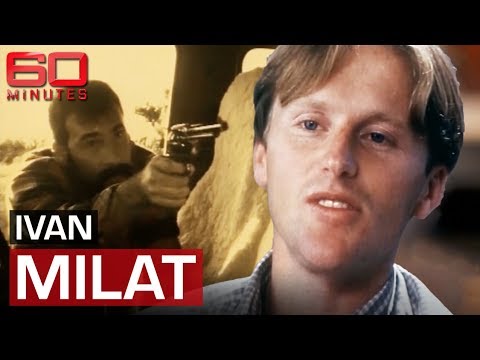
This is the part of the story that gives you chills. In January 1990, a British backpacker named Paul Onions was hitchhiking south of Sydney. A rugged, friendly guy with a handlebar mustache pulled over in a silver Nissan Patrol 4WD. He introduced himself as “Bill.”
Bill seemed normal at first. But as they drove closer to Belanglo State Forest, the conversation got weird. Bill started asking aggressive questions about who knew where Paul was. Then, he slowed down.
“Robbery?” Paul thought.
Bill pulled over, reached under his seat, and pulled out a revolver and a length of rope.
Paul Onions didn’t freeze. He didn’t beg. He ran.
He unbuckled his seatbelt, threw the door open, and sprinted onto the highway while Bill fired shots at him. Imagine the adrenaline bullets whizzing past you as you try to flag down cars speeding at 100 km/h. Most cars swerved around him, thinking he was crazy. Finally, a brave motorist named Joanne Berry stopped. Paul dove into her van, shouting, “He’s got a gun! He’s got a gun!”
They sped off to the police station. Paul gave a statement, describing the man and the car. But here’s the tragedy: the report was filed away and lost in the bureaucracy. Paul went back to the UK, alive but shaken.
The Call That Changed Everything
Fast forward to 1993. Paul Onions saw news reports about the bodies found in Belanglo. He recognized the location. He called the Australian High Commission in London. “I think I know who did this,” he said.
Task Force Air flew Paul back to Australia. They put him in a car and drove him to the police station where he had made his original report. But more importantly, they showed him a video lineup of potential suspects.
Without hesitation, Paul pointed to suspect number four.
“That’s him. That’s the man who tried to kill me.”
Suspect number four was Ivan Milat.
Inside the House of Horrors
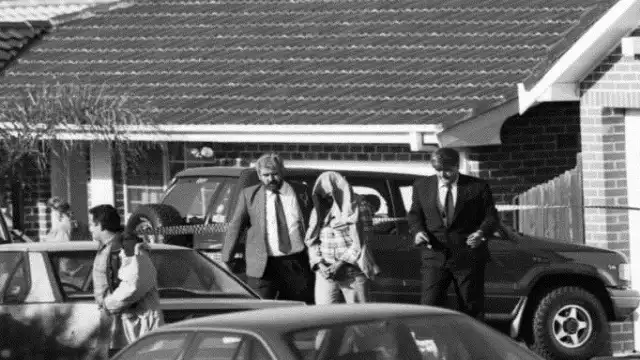
On May 22, 1994, heavily armed police raided Ivan Milat’s home in Eagle Vale, Sydney. What they found inside sealed his fate. It was a hoarder’s den of incriminating evidence. Milat hadn’t just killed these people; he had kept their possessions as trophies.
Key Evidence Found in Milat’s Home:
- The Weapon: Parts of a Ruger 10/22 rifle were found hidden in a wall cavity. Ballistics matched this gun to the cartridge cases found at the crime scenes.
- Camping Gear: Sleeping bags, tents, and water bottles belonging to the victims were found in his closets.
- Cameras: He had the cameras of several victims.
- Clothing: Perhaps most chillingly, police found shirts and jackets belonging to the victims. In a photo later found, Milat’s girlfriend was wearing a shirt that belonged to one of the murdered women.
It was undeniable. The “Bill” who attacked Paul Onions and the monster of Belanglo were the same man.
The Trial and Verdict
The trial began in 1996. Milat pleaded not guilty. His defense was… audacious. He tried to pin the crimes on his own family members, suggesting his brothers were the real killers and he was being framed.
The jury didn’t buy it. The evidence was overwhelming. The ballistics, the trophies, and the powerful testimony of Paul Onions left no room for doubt.
The Sentence:
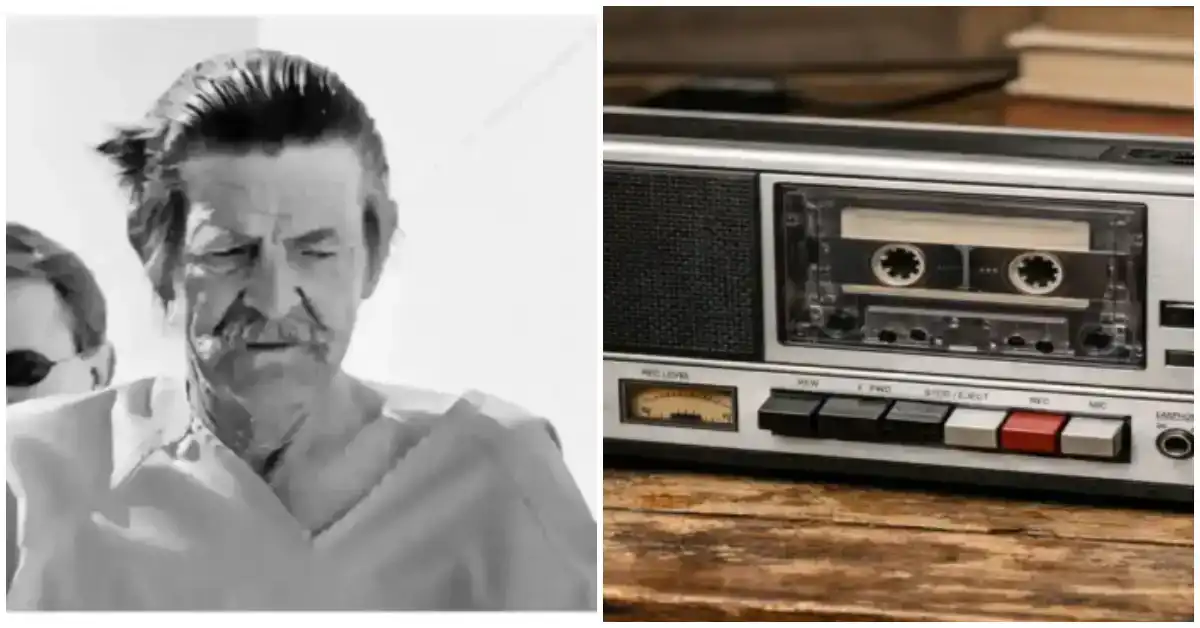
On July 27, 1996, Ivan Milat was found guilty of seven counts of murder and one count of attempted murder (Paul Onions). He was sentenced to seven consecutive life sentences plus 18 years, without the possibility of parole.
He was told by the judge: “You are a serial killer.”
Did He Act Alone?
To this day, one question haunts investigators: Did Ivan Milat have an accomplice?
Many experts argue that controlling two victims at once (as was the case with the couples) would be incredibly difficult for one person.
- How do you march two people into a forest, tie them up, and kill them without one fighting back or running?
- DNA tests on a hair found at the scene were inconclusive at the time.
Milat always protected his family, even while trying to blame them. Some believe a brother or an associate may have been present, but no one else was ever charged. It remains one of the great “what ifs” of Australian criminal history.
The End of the Road
Ivan Milat died in prison on October 27, 2019, from terminal esophageal cancer. He was 74. Until his dying breath, he never confessed. He took his secrets and potentially the names of other victims to the grave.
His death marked the end of a dark era, but the scars remain. The Belanglo State Forest is still there, beautiful but forever tainted. And the families of the seven young backpackers live with the loss every single day.
Why This Case Matters Today
The Backpacker Murders changed how we travel. It killed the carefree “thumb a ride” culture of the 70s and 80s. It taught us that evil can hide behind a friendly smile and a silver 4WD. But it also showed us the power of resilience Paul Onions’ survival instinct and the relentless dedication of the police who refused to let these cases go cold.
Key Takeaways for the True Crime Buff:
- Trust your gut: Paul Onions survived because he acted on a bad feeling immediately.
- Forensics is king: Ballistics and “trophy” evidence were the nails in Milat’s coffin.
- The “One” Witness: Sometimes, a massive case hinges on a single person coming forward.
Do you think Ivan Milat acted alone? Or is there another killer who walked free? Share your theories in the comments below!
Sources help: ABC News Australia, The Guardian, Crime Library

