

Imagine a world without words. No internal monologue and way to ask for water, no concept of “I” or “you.” For thirteen years, this was the silent, terrifying reality of a girl known to the world only as Genie.
Her discovery in 1970 didn’t just break hearts; it broke the entire field of linguistics.
Genie wasn’t just a victim of horrific abuse; she became the unwilling subject of “The Forbidden Experiment” a scientific quest to answer a question that had plagued philosophers for centuries: Is language innate, or is it learned? And more chillingly: If you miss the window to learn it, is it closed forever?
This isn’t just a history lesson. It’s a deep dive into one of the most controversial case studies in psychology, re-examined through the lens of modern science and ethics.
The Discovery: A Child in the Shadows
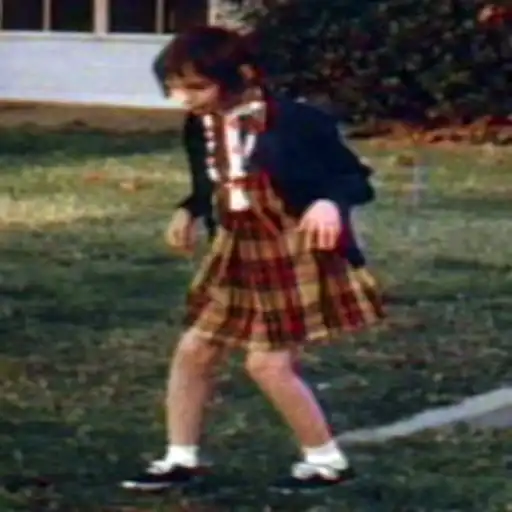
On November 4, 1970, a woman named Irene Wiley walked into a welfare office in Los Angeles. She was blind in one eye, fleeing an abusive marriage, and looking for disability benefits. But the social worker behind the counter didn’t look at Irene. She was staring at the child beside her.
The girl was small, withered, and moved with a strange, bunny-like hop. She held her hands up in front of her like paws. She spat constantly. And she was silent.
The social worker guessed she was six or seven years old. She was thirteen.
The House of Horrors
Police investigations revealed a nightmare that is hard to even comprehend. For over a decade, Genie’s father, Clark Wiley, had kept her locked in a bedroom in their Arcadia home.
- Restraint: By day, she was strapped to a child’s potty chair. By night, she was bound in a crib with chicken wire.
- Silence: Clark detested noise. If Genie vocalized, he beat her with a wooden plank. He didn’t speak to her; he barked and growled at her like a dog.
- Isolation: She had no toys, no radio, no TV. Her only visual stimulation was two inches of sky visible through the top of a covered window.
When she was found, Genie weighed just 59 pounds. She couldn’t chew solid food. She couldn’t fully extend her limbs. And linguistically? She was a blank slate.

The Science: The “Forbidden Experiment” Begins

Why “forbidden”? Because you can’t ethically deprive a child of language just to see what happens. But when a tragic case like Genie’s appears, science is handed a grim opportunity.
The National Institute of Mental Health (NIMH) poured funding into studying her. A “Genie Team” was assembled, including psychologist David Rigler and a young linguist named Susan Curtiss.
The Critical Period Hypothesis
The stakes were huge. Linguist Eric Lenneberg had proposed the Critical Period Hypothesis (CPH), arguing that if a human doesn’t learn language by puberty (around age 12), the brain loses its plasticity, and the window closes forever.
Genie was 13. She was the perfect test case. If she could learn fluent English, the theory was wrong. If she couldn’t, the theory held water.
What Did Genie Learn?
At first, the progress was miraculous.
- Vocabulary: She was a sponge. She learned hundreds of words rapidly orange, mother, go, blue.
- Non-verbal Communication: She was incredibly expressive, using gestures and drawings to tell stories of her abuse that she couldn’t yet speak.
- Intelligence: Despite being labeled “retarded” by her father, tests showed she was highly intelligent, especially in spatial reasoning.
But then, the wall appeared.
While she could say “Applesauce buy store,” she couldn’t master grammar. She never grasped pronouns (“I” vs. “You”) or active/passive voice. She spoke in what linguists call “telegraphic speech.”
The Verdict: Genie did learn language, but she never learned grammar. Her case suggested that while vocabulary can be learned at any age, the part of the brain responsible for organizing words into complex sentences (syntax) might indeed have an expiration date.
“Genie provided evidence that language is not a single package. You can learn words without learning the rules that glue them together.” – Dr. Susan Curtiss
The Ethical Controversies: Research vs. Rescue
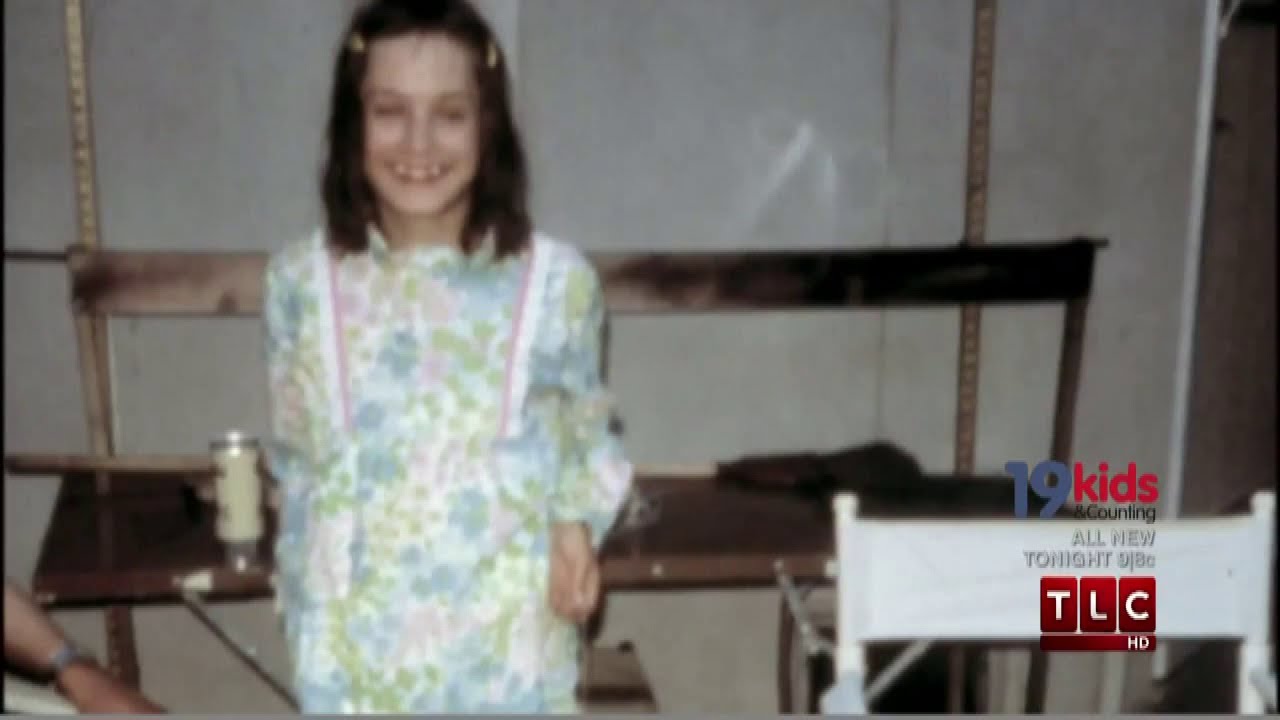
Here is where the story gets murky. Was the Genie Team saving her, or were they studying her?

The Conflict of Interest
Genie lived with the scientists. She stayed with Jean Butler (her teacher) and later lived with David Rigler (the lead psychologist) for four years.
- The Problem: The people responsible for her therapy were the same people building their careers on her data.
- The Rigler Years: While she lived with the Riglers, she was tested constantly. Critics argued she was being “trained” like a lab rat rather than raised like a child.
- The Mother’s Lawsuit: In 1979, Genie’s mother, having regained some independence, sued the hospital and the researchers for excessive testing, alleging they prioritized “prestige and profit” over Genie’s welfare. The suit was settled in 1984, but the damage was done.
The Funding Cut
In 1974, the NIMH reviewed the project. They found the research “disorganized” and felt the scientific returns were diminishing. They pulled the plug.
Almost overnight, Genie lost her support system. The Riglers, no longer funded to care for her, gave her up.
The Aftermath
This is the hardest part to read. After the study ended, Genie was bounced between foster homes. In some of these homes, she was abused again.
- In one foster home, she was punished for vomiting. terrified, she stopped opening her mouth.
- She regressed into silence.
- She lost the ability to use the language she had painstakingly learned.
The girl who had once captivated the world with her resilience was failed by the very system designed to protect her.
Where is Genie Wiley Today? (2025-2026 Update)
You won’t find recent photos of Genie, and that’s by design.
- Status: As of early 2026, Genie is believed to be alive. She would be approximately 68 or 69 years old.
- Location: She resides in an adult foster care facility in Los Angeles, California. Her location is kept strictly confidential by the state to protect her privacy.
- Family: Her mother, Irene, passed away in 2003. Her brother, John (who was also a victim of their father’s abuse), died in 2011.
Reports from the early 2000s described her as happy but largely non-verbal, communicating mostly through sign and gesture. She is no longer a subject of study; she is simply a ward of the state.
Modern Insights: What We Know Now
Looking back at the Genie Wiley case with 2026 eyes, we see things differently.
1. Trauma vs. Biology
Early researchers focused heavily on the “Critical Period.” Today, psychologists emphasize Complex Trauma. A 2023 study in the Journal of Child Psychology and Psychiatry highlighted that early-life adversity (like extreme neglect) physically alters brain structure. Genie’s failure to learn grammar might not just be about a “missed window” it was likely also due to the chronic, toxic stress that flooded her developing brain with cortisol, damaging the neural pathways needed for learning.
2. The “Forbidden Experiment” is truly forbidden
Current ethical standards (APA guidelines) would never allow the blurred lines of the 1970s. Today, a therapist cannot be a researcher for the same patient. The conflict of interest is too high. Genie’s case is now taught in Psychology 101 not just for linguistics, but as a cautionary tale of research ethics.
Key Takeaways
- Language is Modular: Genie proved you can have a high IQ and a large vocabulary but still lack the ability to use grammar.
- The Critical Period is Real (mostly): While not absolute, the brain’s ability to master syntax does seem to close around puberty.
- Love Isn’t Enough: Despite the affection of some researchers, Genie needed stability, not just scientific curiosity. The abrupt loss of her support system was as damaging as the initial abuse.
Wrap
The story of Genie Wiley is a mirror. It forces us to look at what makes us human. Is it language? Is it connection?
Genie was stripped of both, yet she fought to connect. She hoarded plastic buckets because she had nothing else to hold. She stared at the moon because it was the only thing she knew outside her room.

She taught science that the brain is resilient, but fragile. She taught us that language is a gift we often take for granted. But mostly, she taught us that our responsibility to the vulnerable must always always outweigh our curiosity.
What do you think? Was the research on Genie justified if it helped us understand the brain, or was it just another form of exploitation?
Frequently Asked Questions About Genie Wiley
Is Genie Wiley still alive in 2026?
Yes. As of early 2026, Genie is believed to be 68 or 69 years old and living in an adult foster care facility in Los Angeles. Her exact location is a closely guarded state secret to protect her from further exploitation. While she is safe, reports suggest she has reverted to being largely non-verbal.
Did Genie ever learn to speak fluently?
No. While Genie learned hundreds of words and could communicate through gestures, she never mastered grammar or syntax (the rules of sentence structure). Her case proved that while vocabulary can be learned at any age, the brain’s “critical window” for learning how to construct sentences likely closes around puberty.
Why is Genie’s case called “The Forbidden Experiment”?
It is called “forbidden” because it is unethical to intentionally isolate a child to study language deprivation. Genie’s tragic discovery gave scientists a rare, grim opportunity to test theories on human nature and language that they could never legally or morally test otherwise.
What happened to Genie’s father, Clark Wiley?
Clark Wiley avoided prison by committing suicide shortly after Genie’s discovery in 1970. He left a note claiming, “The world will never understand.” His death meant he never faced justice for the severe abuse and isolation he inflicted on his daughter.
Why did Genie stop talking again?
After the research funding was cut in 1974, Genie was moved into state foster care where she experienced severe abuse and harassment. The trauma caused her to regress, and she largely stopped vocalizing, refusing to open her mouth due to fear of punishment a tragic reversal of her early progress.
Did the scientists exploit Genie?
This is a major subject of debate. In 1979, Genie’s mother sued the researchers for excessive testing, arguing they prioritized scientific prestige over Genie’s wellbeing. While the scientists claimed they were helping her, the “Genie Team” disbanded the moment the government funding dried up, leaving her vulnerable to the foster system.
If this story moved you, share it to raise awareness about the long-term effects of child neglect. Want to learn more about the resilience of the human brain? Subscribe for our next deep dive into the mysteries of psychology.
Sources help:
- https://eclass.uoa.gr/modules/document/file.php/MEDIA221/%CE%91%CE%BD%CE%B1%CE%B3%CE%BD%CF%8E%CF%83%CE%BC%CE%B1%CF%84%CE%B1/The%20story%20of%20Genie%2C%20by%20Geoff%20Rolls.pdf
- https://www.ipl.org/essay/Genie-Wiley-Case-Study-Psychology-PKMCC9QBG5PV
- https://riojournal.com/article/20696/

