

Sokushinbutsu: How Japanese Monks Mummified Themselves Alive (Full Ritual Explained)
Imagine having the willpower to starve yourself for six years, adhering to a diet so strict it’s literally called “wood-eating,” and then burying yourself alive in a stone box with nothing but a bamboo tube for air.
It sounds like the plot of a dark fantasy novel, but in the mountains of Yamagata Prefecture, Japan, this was real life.
This is the story of Sokushinbutsu (即身仏) the “Buddhas in this very body.” Between the 11th and 19th centuries, a select group of Shingon Buddhist monks attempted the ultimate act of religious discipline: self-mummification. They didn’t die and then get mummified like the Egyptian pharaohs. They mummified themselves while they were still breathing.
Why would anyone do this? How is it biologically possible? And can you actually visit these “Living Buddhas” today?
The “Why”
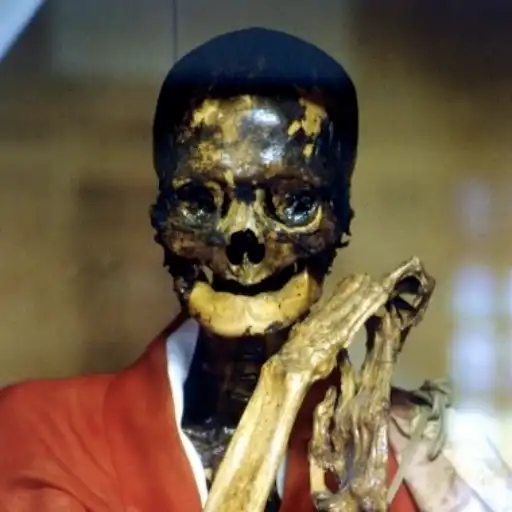
First things first we need to clear up a massive misconception. To the modern mind, this looks like a slow, torturous suicide. But to the practitioners of Shugendō a syncretic blend of Buddhism, Shinto, and mountain worship this was the exact opposite of death.
It was a path to eternal life.
These monks believed in Sokushin Jōbutsu, or attaining Buddhahood in this lifetime. They weren’t trying to escape the world; they were trying to save it. They believed that by preserving their physical bodies in a state of eternal meditation (nyūjō), they could become spiritual guardians for their communities.
Think of it as a spiritual battery. By enduring unimaginable suffering, they believed they were absorbing the pain of others famine, disease, poverty and leaving behind a physical vessel that would continue to radiate protective energy for millennia.
They didn’t see themselves as “dying.” They were simply entering a meditation so deep that the boundary between life and death dissolved.
The Process: A 3,000-Day Descent into Immortality

The ritual wasn’t a weekend retreat. It was a grueling, multi-year biological hack designed to dehydrate the body from the inside out and make the flesh toxic to bacteria and insects.
The process was broken down into three specific cycles, each lasting 1,000 days (roughly three years). If you failed at any point, your body would rot, and you’d just be a dead monk, not a Living Buddha.
Cycle 1: The “Wood-Eating” Diet (Mokujikigyo)
For the first 1,000 days, the monk would abandon all agricultural grains. No rice, no wheat, no beans.
- The Menu: Strictly nuts, seeds, berries, and fruits foraged from the mountain forests.
- The Goal: To strip the body of all fat. Fat is the first thing to putrefy after death, so it had to go.
- The Routine: This wasn’t just a diet. The monks continued rigorous physical training, climbing steep mountain paths and meditating under freezing waterfalls to accelerate the fat-burning process.
Cycle 2: The Starvation Mode
If the first three years sounded tough, the next 1,000 days were a nightmare. The diet became even more restrictive.
- The Menu: Pine needles, tree bark, and roots.
- The Physical Toll: At this stage, the body would begin to consume its own muscle for energy. The monk became a living skeleton. The water content in the body dropped drastically, essentially starting the drying process while the heart was still beating.
Cycle 3: The Toxic Tea and The Tomb
As the end of the second cycle approached, the monk would begin drinking a special tea made from the sap of the Urushi tree (Toxicodendron vernicifluum).
- Why Urushi? This is the same sap used to make Japanese lacquerware. It contains urushiol, the toxic compound found in poison ivy.
- The Effect: Drinking it caused violent vomiting and sweating, purging the body of its last remaining fluids. Crucially, it deposited toxins into the tissues, making the flesh poisonous to maggots and parasites that would otherwise consume the corpse.
Finally, the monk would step into his grave a stone tomb or pine box barely large enough to sit in the lotus position. He was buried 3 meters deep, with only a bamboo tube connecting him to the surface for air.
The Final Test
Inside the tomb, the monk would sit in total darkness, meditating and ringing a small bell once a day to signal he was still alive.
- Day 1: Ring.
- Day 10: Ring.
- Day 20: Ring.
- Day X: Silence.
When the bell stopped ringing, the attendants knew the monk had entered the final trance. They would remove the bamboo air tube and seal the tomb completely.
They left him there for another 1,000 days.
Only then would they open the grave. If the body was preserved dried out, skin tight against the bone, no decay he was raised, dressed in ceremonial robes, and enshrined in a temple as a Sokushinbutsu. If he had rotted? He was quietly reburied with little fanfare.
How Did It Actually Work?

You might be wondering, “Is wood bark and toxic tea really enough to mummify a human?”
Yes and no. The diet and the urushi tea were critical, but modern researchers have found another secret ingredient: Arsenic.
The sacred spring waters of Mount Yudono where many of these monks trained are naturally rich in arsenic. By drinking this water for years, the monks were essentially embalming themselves alive. Arsenic is a potent preservative (taxidermists used to use it). It kills the bacteria that cause decomposition.
So, it was a “perfect storm” of preservation:
- Zero Body Fat: Nothing for bacteria to eat.
- Severe Dehydration: No moisture for mold to grow.
- Toxicity: A body saturated with arsenic and urushiol.
Famous Living Buddhas
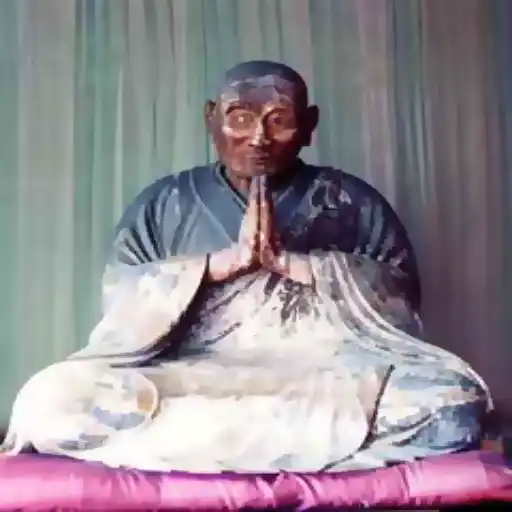
History suggests hundreds of monks attempted this. Only about 24 are confirmed to exist today. Here are the most legendary among them.
1. Shinnyokai Shonin (1687–1783)
- Location: Ryusui-ji Dainichibo Temple
- The Story: Perhaps the most well-preserved of them all. Shinnyokai was a gentle soul who turned to asceticism to end a devastating famine. He succeeded in becoming a Sokushinbutsu at the ripe old age of 96. When you see him today, his skin is still intact, stretched grey and taut over his facial bones. He looks like he’s just taking a very long breath.
2. Tetsumonkai Shonin (1759–1829)
- Location: Churenji Temple
- The Story: This guy was a rebel. Originally a woodcutter, he allegedly killed a samurai in a brawl and fled to the temple for sanctuary. To repent, he dedicated his life to altruism. Legends say he once gouged out his own eye to offer it to the deities in exchange for curing an epidemic in Edo (Tokyo). His mummy is striking he leans slightly forward, his remaining eye socket staring into eternity.
3. Tetsuryukai Shonin (1820–1881)
- Location: Nangakuji Temple
- The Controversy: Tetsuryukai is technically an “illegal” mummy. The Meiji government banned the practice as “barbaric” in 1879. Tetsuryukai and his disciples ignored the law. He was sealed in his tomb after the ban, making him the last known successful Sokushinbutsu. His existence was kept a secret for decades to avoid trouble with the authorities.
Where to See Them Today (A Travel Guide)
If you have the stomach for it, you can visit these monks in Yamagata Prefecture. They aren’t in museums; they are still in the temples where they served, treated as holy relics, not exhibits.
- Dainichibo Temple (Tsuruoka City): Home to Shinnyokai Shonin. The temple staff often perform a purification ritual for visitors before you view him.
- Churenji Temple (Tsuruoka City): Home to Tetsumonkai. The atmosphere here is ancient and heavy with incense.
- Kaikoji Temple (Sakata City): The only temple with two Sokushinbutsu (Chukai and Enmyokai). seeing two side-by-side really drives home the scale of this practice.
- Nangakuji Temple (Tsuruoka City): Home to the “illegal” monk, Tetsuryukai.
Pro Tip for Travelers: These are sacred religious sites. Photography of the mummies is strictly forbidden in almost all cases. Show respect. Dress modestly. This isn’t a haunted house; it’s a place of worship.
The End of an Era
Why don’t we see monks doing this today?
In 1877, Emperor Meiji issued a decree banning “self-mummification” and opening the tombs of those currently in the process. The government wanted to modernize Japan and viewed these folk practices as backward and superstitious.
While a few (like Tetsuryukai) defied the ban, the tradition effectively died out by the early 20th century. Today, the Shingon sect still practices mountain asceticism (standing under waterfalls, walking on fire), but the ultimate sacrifice of Sokushinbutsu is a relic of the past.
Conclusion
Sokushinbutsu sits right on the razor’s edge between horror and holiness. It’s easy to judge the practice through a modern lens, seeing only the starvation and the suffering. But if you look closer, you see a level of conviction that is almost impossible to comprehend.
These men loved their communities enough to die for them slowly, painfully, and intentionally. They turned their own bodies into monuments of faith. Whether you see them as saints or tragedies, one thing is undeniable: they achieved their goal.
Centuries later, we are still talking about them. They are still here.
Frequently Asked Questions (FAQs)
What is the difference between Sokushinbutsu and Egyptian mummies?
Egyptian mummies were preserved after death by removing organs and using chemicals. Sokushinbutsu monks mummified themselves while alive through a 3,000-day process of starvation and dehydration, keeping their internal organs intact.
What did the monks eat during the Mokujikigyo diet?
They followed the “wood-eating” diet, consuming only pine needles, tree bark, nuts, and river stones. This wasn’t just for fasting; it was a biological hack to remove all body fat and bacteria before entering the tomb.
Is the practice of Sokushinbutsu still legal in Japan?
No. The practice was criminalized by the Meiji government in 1877 as part of Japan’s modernization efforts. The last recorded monk to successfully self-mummify did so illegally shortly after the ban.
Can you still visit real Sokushinbutsu monks today?
Yes. There are roughly 16 to 24 confirmed Sokushinbutsu remaining. The most famous are enshrined in temples across Yamagata Prefecture, specifically at Dainichibo and Churenji Temples near Mt. Yudono.
Did every monk who attempted self-mummification succeed?
No. The failure rate was high. Many monks died of starvation or infection before the process was complete, and others rotted in the tomb. Only those whose bodies were perfectly preserved were raised and worshipped as Buddhas.
Why did the monks drink tea made from the Urushi tree?
Urushi sap is toxic (used for lacquerware). Drinking it induced violent vomiting to dehydrate the body and, crucially, made the flesh poisonous to keep maggots and insects from eating the body after death.
Are Sokushinbutsu monks considered dead or alive?
In the Shingon Buddhist tradition, they are not dead. They are considered to be in a state of eternal deep meditation (nyūjō), suspended between life and death to watch over and protect mankind.
Ready to explore the hidden side of Japan?
If this story fascinated you, don’t just read about it go see it. Yamagata Prefecture is one of the most culturally rich, untouched regions of Japan. Plan your pilgrimage to the Dewa Sanzan mountains today and witness the Living Buddhas for yourself. Just don’t forget to pack a snack… you’ll appreciate it more than ever.
Sources help:
- https://www.penn.museum/sites/expedition/the-buddhas-of-mount-yudono/
- https://www.dainichibou.or.jp/en/
- https://papers.iafor.org/wp-content/uploads/papers/acas2020/ACAS2020_57744.pdf
- https://www.tohokukanko.jp/en/attractions/detail_1196.html

