

Rain, Salt, or Sand? A Practical Field-Guide to Sphinx Erosion Features
The Great Sphinx of Giza. It’s stared out at the desert for millennia, guarding the pyramids, its face a silent enigma. But the real mystery might not be who it is, but what has been chewing on it for thousands of years.
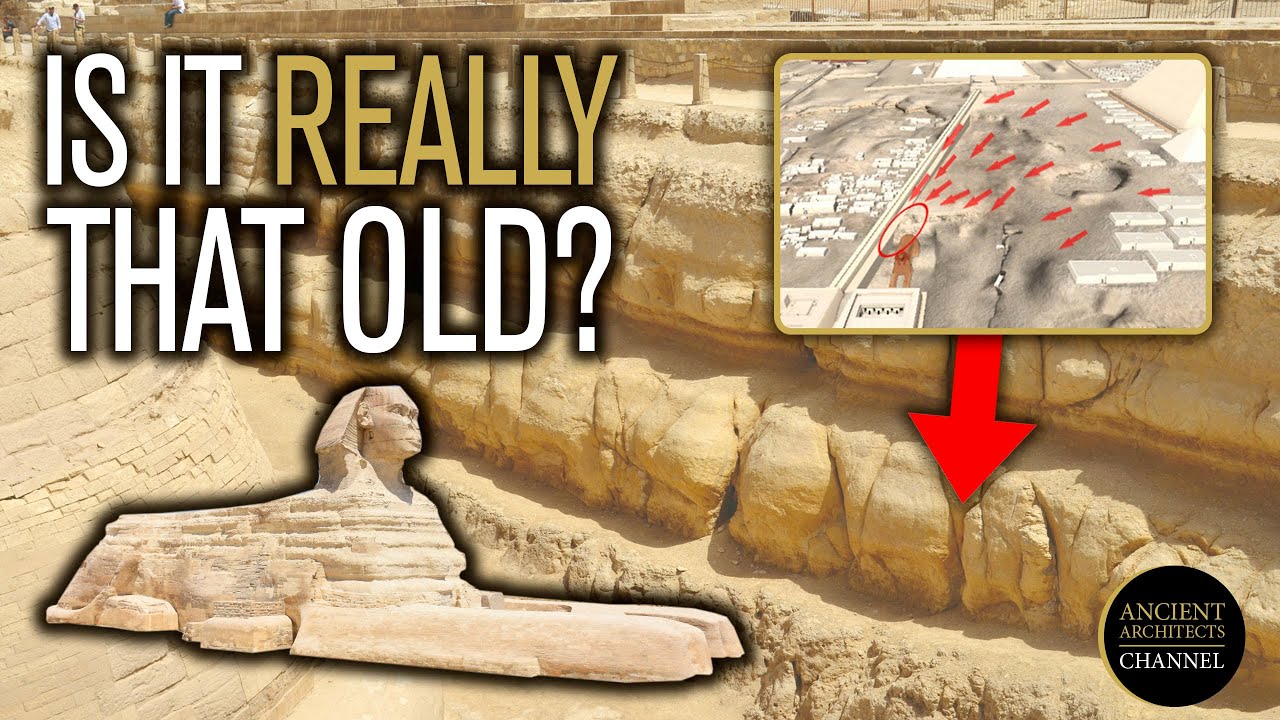
Look closely at the Sphinx and the limestone walls of its enclosure. You’ll see deep vertical fissures and a rounded, rolling profile. It looks… melted. Mainstream Egyptology tells us the Sphinx was carved around 2500 BCE and that wind and sand did this. End of story.
But is it?
Let’s be real, the evidence is a bit more complicated. Several theories are fighting for dominance, and they all hinge on how you read the rock. So, grab your imaginary geologist’s hammer. We’re going on a field trip to figure out what really carved the Sphinx.
Theory 1: The Rainwater Hypothesis
This is the big one, the theory that throws a wrench in the conventional timeline. In the early 1990s, geologist Dr. Robert Schoch looked at the Sphinx and saw something that didn’t fit the desert story: classic signs of water erosion.

The Evidence
The argument is simple. Wind erosion, driven by sand, tends to create horizontal grooves. It sandblasts softer rock layers more than harder ones, leaving a distinct, layered look. You can see this on other monuments on the Giza plateau.
But the Sphinx and its enclosure walls are different. They show:
- Deep Vertical Fissures: These are channels running from top to bottom. Think about how heavy rain pours down the side of a dirt hill, carving out little gullies. That’s the idea here. Sandstorms don’t do that.
- Rounded, Undulating Profiles: The rock surfaces are rounded and rolling, a pattern geologists associate with precipitation runoff over long periods. It looks less like it was sandblasted and more like it was worn down by a constant flow of water.
The Big Problem? The Timeline.
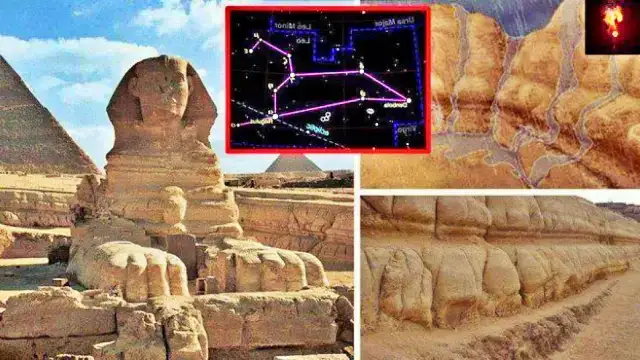
Here’s where it gets spicy. For the Sphinx to have been eroded by that much rain, it would have needed to be standing in a much wetter climate. The kind of climate Egypt had… thousands of years before 2500 BCE.
According to paleoclimatology, the Sahara was a savanna teeming with life during a period known as the African Humid Period, which ended around 3000 BCE. For Schoch’s theory to hold, the Sphinx would have to be at least 2,000 years older than we think, placing its origins somewhere around 5000-7000 BCE.
Could an advanced culture have existed that far back to carve such a monument? That’s a question that makes many historians very uncomfortable.

Theory 2: The Salt Weathering Takedown
Okay, so the water theory is compelling. But other geologists have a counterargument that doesn’t require rewriting history books: salt weathering, also known as haloclasty.
The Evidence
The limestone of the Giza plateau is porous, like a hard sponge. For centuries, groundwater has seeped up into the rock through capillary action (the same way a paper towel sucks up a spill). This water contains dissolved salts.
Here’s how the damage happens:
- Moisture Seeps In: Morning dew, condensation, and moisture from the air get absorbed by the limestone near the ground.
- Salt Crystallizes: As the sun heats the rock, the water evaporates, leaving the salt crystals behind inside the rock’s pores.
- Expansion and Destruction: These salt crystals grow and expand, exerting immense pressure. Think of it like ice expanding in a crack and breaking a rock apart, but on a microscopic scale. This process, called haloclasty, effectively causes the limestone to flake and crumble from the inside out.
Proponents of this theory argue that this process perfectly explains the deep weathering seen at the base of the Sphinx, which is more severe than the weathering on its upper parts. It also explains the crumbling state of the enclosure floor. They suggest that ancient quarrying and fluctuating water tables could have accelerated this process, creating the deep fissures without needing thousands of years of rain.
Theory 3: The “It’s Just Wind and Sand” Defense
This is the classic, mainstream view. For over a century, the official explanation was that the erosion on the Sphinx was caused by wind and sand, a process called aeolian erosion.
The Evidence
Let’s be fair, Giza is a windy, sandy place. The idea that billions of sand particles, whipped up by the wind over 4,500 years, would wear down the monument makes perfect sense.

- Differential Erosion: As mentioned before, wind-driven sand scours away softer rock layers faster than harder ones. You can see clear evidence of this on many structures at Giza.
- The “Neck” Problem: The Sphinx’s head is made of a harder, more durable layer of limestone than its body. This is why the head is much better preserved and why the neck is so comparatively thin—the softer rock of the body simply eroded away much faster.
However, the wind-only theory struggles to explain those deep vertical fissures. Wind erosion is primarily a horizontal force. It can’t easily account for the rain-carved appearance of the enclosure walls. Egyptologist Mark Lehner, one of the foremost experts on the Sphinx, has acknowledged the water erosion features but suggests they could have been created by rain that fell after the Sphinx was carved in 2500 BCE, combined with the effects of salt and natural weaknesses in the rock.
So, What’s the Verdict?
The truth is, it’s probably not just one thing. It’s a cocktail of destruction.
- The rainwater hypothesis best explains the large-scale, primary erosion patterns, especially the vertical channels on the enclosure walls. The visual evidence is hard to ignore, even if the timeline it suggests is controversial.
- The salt weathering theory excellently explains the intense, crumbly decay seen near the ground level and on the enclosure floor. This is an ongoing process you can see happening today.
- The wind and sand theory accounts for the general smoothing, the undercutting of certain layers, and the dramatic erosion of the Sphinx’s neck.
It’s likely that the Sphinx was carved, then weathered by thousands of years of heavy rainfall (pointing to an older origin). Then, as the climate dried out, 4,500 years of wind, sand, and destructive salt weathering were piled on top, creating the complex, multi-layered erosion we see today.
The Sphinx isn’t telling a simple story of wind versus water. It’s telling a long, complicated story about climate change, geology, and the relentless power of time itself. And that, perhaps, is the greatest mystery of all.
What do you think? Have you seen the Sphinx in person? Do the rocks look like they were carved by rain or sand? Drop your theory in the comments below!

