

In the vast, frozen wilderness of Canada, there are stories that cling to the landscape like frost. The most chilling of them all comes from the shores of Angikuni Lake—a tale of an entire village that vanished into thin air. One moment, it was a bustling community of Inuit hunters and their families. The next, it was a ghost town, its silence screaming louder than any sound.
The story is a staple of paranormal lore, a perfect, unsolved mystery.
But the official record is just as silent as the village itself. There is no police report, no census data, no historical account of a mass disappearance at Angikuni Lake. According to the authorities, it never happened.
So, we have a problem. A famous mystery with no actual event. Is it just a campfire story? Almost certainly. But the legend refuses to die. And that begs the question: why?
Maybe we’re looking for the wrong kind of truth. The historical record shows nothing because the event wasn’t historical. It wasn’t a crime, and it wasn’t a tragedy. What if it was a miracle? What if the lost village of Angikuni Lake didn’t vanish, but ascended?
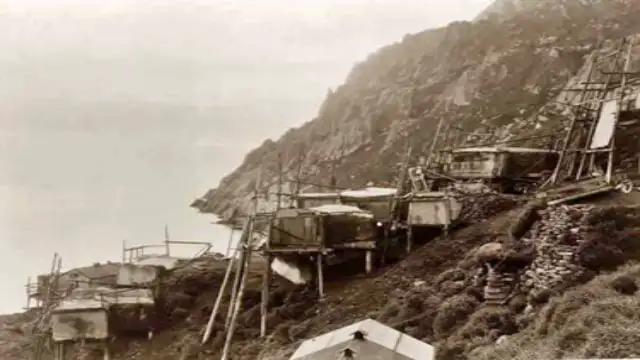
Quick Facts About the Angikuni Lake Legend
- Location: Angikuni Lake, Nunavut, Canada
- First Reported: 1930, in a newspaper story by journalist Emile Kelleher
- Key Figure: Fur trapper Joe Labelle (likely fictional)
- The Claim: An Inuit village of 30–1,000 people mysteriously vanished without a trace
- Details of the Tale:
- Pots of food left cooking but frozen in place
- Rifles and kayaks abandoned
- Starved sled dogs still tied up
- A disturbed grave with the body missing
- The RCMP’s Position: The Royal Canadian Mounted Police deny the event ever happened and have no records of it
- Origins of the Myth: Popularized in 1959 by Frank Edwards’ book Stranger than Science
- Historical Evidence: None — researchers consider it folklore, not fact
- Why It Persists: It’s a chilling mystery that blends survival, the supernatural, and cultural fears of erasure
Let’s dive into the legend, the reality, and a theory that exists in the space between.
The Legend of the Vanishing Angikuni Lake Village
The story, as it’s most often told, goes like this.
It’s November 1930. A seasoned fur trapper named Joe Labelle is making his way through the desolate landscape near the Kazan River. He knows this territory well and is heading for an Inuit village he considers a second home, a bustling little community on the shores of Angikuni Lake.
But as he gets closer, something feels wrong. It’s too quiet. There’s no smoke from the cook-fires. No children laughing. No dogs barking. An unnatural silence hangs in the freezing air.
He walks into the village and the scene grows even more disturbing.
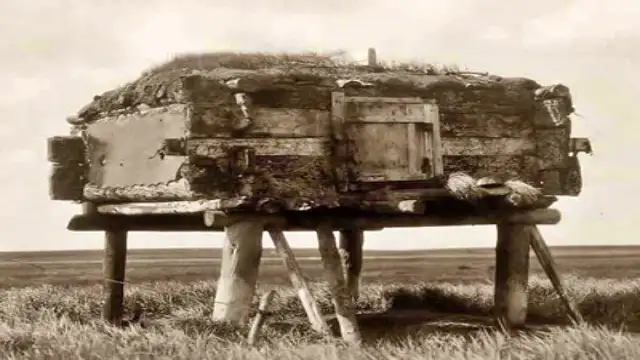
- The huts and tents are all there, but they’re empty.
- He finds pots of caribou stew hanging over fire pits, long since frozen solid. The people left in the middle of preparing a meal.
- Kayaks are pulled up on the shore, not stored away for the winter as they should have been.
- Inside the dwellings, he finds rifles leaning against the walls. No Inuit hunter would ever abandon their rifle. It was their life.
- Then, the most horrifying discovery of all: a team of sled dogs, still tied to their posts, having starved to death. Their bodies are half-buried in the snow.
- To add a final, sacrilegious twist, Labelle discovers that a grave in the village cemetery has been opened, its stones piled neatly to the side, and the body within is gone.
Shaken, Labelle mushs on to the nearest telegraph office and alerts the Royal Canadian Mounted Police (RCMP). The Mounties arrive, investigate, and find nothing. No tracks leading away from the village. No signs of a struggle. Nothing. The entire population, a number that ranges from 30 to over 1,000 in various retellings, had simply ceased to exist.
Did the Angikuni Lake Disappearance Really Happen?
It’s an incredible story. It’s also, by all credible accounts, completely fabricated. the historical evidence for the Angikuni vanishing is zero.
There Are No Records
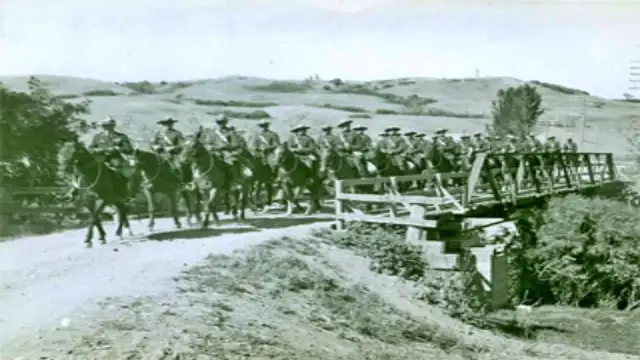
This is the nail in the coffin. The Royal Canadian Mounted Police, the supposed investigators of this bizarre event, have repeatedly and publicly stated that the story is fiction. Their own website features a page dedicated to the legend, clarifying: “There is no official record of this event ever having happened.” They have scoured their archives. There is no report from a Joe Labelle. There is no large-scale search for a missing village. Nothing.
The Source of the Myth
So where did the story come from? It wasn’t an ancient Inuit legend passed down through generations. Its first known appearance was in a November 1930 article by a journalist named Emile Kelleher, published in The Danville Bee. Kelleher claimed to have heard the story from a trapper.
The tale then lay dormant for decades until it was revived and heavily popularized in the 1959 book Stranger than Science by Frank Edwards, a radio personality and writer with a known penchant for sensationalism and a casual relationship with facts. From there, it entered the canon of modern paranormal folklore.

It Just Doesn’t Add Up
The details of the story fall apart under scrutiny.
- The Population: The number of vanished villagers fluctuates wildly with each telling. A settlement of even a few hundred people, let alone a thousand, would have been a significant community, not some undiscovered hamlet. There’s no record of it.
- The Location: The story takes place in a vast, sparsely populated region. Pinpointing the exact location of this supposed village is impossible.
- The Name: There is no record of a trapper named Joe Labelle operating in that specific area during that time. He appears to be as fictional as the vanishing act itself.
The mystery of Angikuni Lake isn’t what happened to the villagers; it’s how a piece of journalistic fiction became an enduring paranormal legend.
But What If…? A Journey into the Spirit World
Okay. So the story isn’t true in the historical, boots-on-the-ground sense. It’s a legend. A myth. But myths are powerful. They stick around because they speak to deeper truths and fears.
So let’s do something different. Let’s treat the legend not as a failed history lesson, but as a parable. Let’s assume the core event—a village choosing to leave our world behind—is true, just not in a way our modern minds can easily process.
What if the reason there’s no evidence is that the event wasn’t physical, but metaphysical? What if the shamans of the village, seeing a bleak future, didn’t lead their people on a desperate march, but moved the entire community into the spirit world?
The Coming “Ice Age”
In this theory, the catastrophe the villagers were fleeing wasn’t a literal Ice Age of glaciers and snow. They were masters of that environment. The threat was far worse: a spiritual Ice Age.
Think about it. By the 1930s, the outside world was encroaching fast. Trading posts, new technologies, new religions, and new laws were changing the Inuit way of life forever. Their connection to the land, their ancient traditions, their spiritual beliefs—it was all being threatened with a slow, grinding extinction. This was the “Great Forgetting,” a cultural deep-freeze that would erase their identity more completely than any blizzard.
The Shaman’s Gambit
Faced with an enemy they couldn’t fight with spears or rifles—the slow creep of cultural assimilation—the village shamans made a radical choice. They chose not to fight, not to run, but to shift.
This wasn’t some simple magic trick. It would have been the culmination of generations of spiritual practice. A monumental ritual to thin the veil between the physical world and the spirit world—a place the Inuit knew was just as real as the ice beneath their feet. The goal was to move their entire society—the living, the dead, their cultural essence—across that veil, preserving it forever from the encroaching modern world.
The empty village “found” by the fictional Joe Labelle wasn’t a crime scene. It was a chrysalis. The physical shell left behind after the spirit had taken flight.
Reinterpreting the Clues
Viewed through this lens, the eerie details from the legend transform from clues in a mystery to artifacts of a spiritual ascension.
- The Frozen Stew and Abandoned Rifles: These weren’t signs of a sudden departure. They were objects of severance. To pass from one world to the next, you must release your attachments to the old one. Leaving behind food and the tools of survival was a powerful, symbolic act. It was a declaration that they no longer needed physical sustenance or protection. They were placing their trust entirely in the spirit world.
- The Starved Dogs: This is the most tragic element of the tale. In this interpretation, it’s the most profound sacrifice. The dogs, loyal and deeply connected to the physical plane, could not make the journey. Their bond with their masters was a final, powerful anchor to this world that had to be cut. Their deaths were a necessary, heartbreaking price for the village’s transcendence. Their spirits, however, would have been honored and guided to rejoin their masters.
- The Desecrated Grave: This was no act of vandalism. It was an act of wholeness. The shamans didn’t just save the living; they saved the entire lineage. They opened the grave to bring the spirits of their ancestors with them, ensuring the community would remain unbroken. They left no one behind.
A Legend’s True Meaning
The Angikuni Lake story persists not because we think a crime went unsolved. It persists because it speaks to a deep part of us that fears being erased, and that hopes for a reality beyond our own.
It’s a story of ultimate cultural preservation. A tale of a people who, faced with the end of their world, chose not to assimilate or to die out, but to step outside of history itself. They chose to become a legend, a whisper on the wind, forever free in a reality we can only guess at.
The village of Angikuni Lake didn’t vanish. It just went home.
The legend of Angikuni Lake is a powerful piece of North American folklore. What does this story mean to you? Is it a ghost story, or a myth about survival? Share your interpretation in the comments.
Disclaimer: “This story is folklore and not a verified historical event.”

